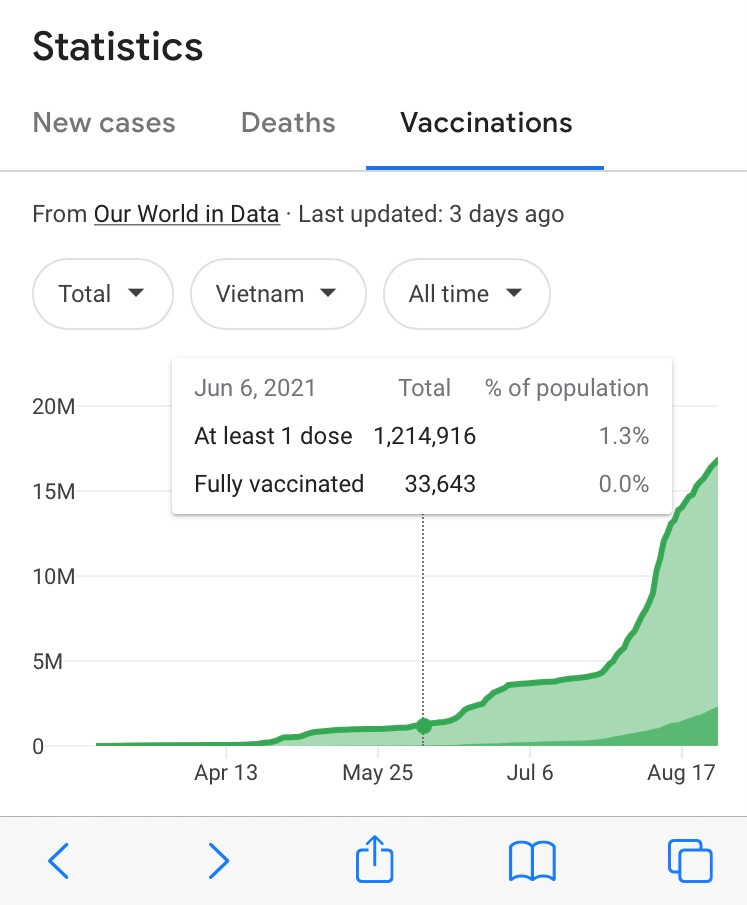
Vietnam: Covid cases skyrocket only after mass vaccination program begins.
As Reuters reported on August 26: “Vietnam has deployed soldiers to the streets of Ho Chi Minh City to help enforce the country's strictest movement curbs yet which prevent people from leaving home, even for food.”
Apparently this plan… has a few flaws.
As a reader wrote in this morning:
“On August 23 they have implemented this so-called Directive 16 for two weeks which is like martial law at this point...
“Areas in the red zones are not allowed to shop at supermarkets for two weeks. Supposedly their plan was to have the military do the shopping for you and they can deliver it at your doorstep…
“As you can surmise, it’s a nightmare. [There is now] a mobile app for food and essential stuff but the supermarkets are inundated with orders it can’t cater to everyone. So much for the military doing the shopping…”
Where all this goes remains to be seen. Presumably the Vietnamese government will not starve its citizens to death to reduce case counts for a virus that roughly 997 out of every 1,000 people survive. (Though, at this point, who can be sure?) But the Vietnamese economy and global clothing and shoe supply chains are already starting to feel the pinch.
—
But maybe the biggest question of all remains unanswered: why now?
Inevitably, the media and government are blaming the Delta variant. But the variant was widespread worldwide well before the explosion in cases Vietnam saw two months ago.
But Vietnam did see one big change this summer: the beginning of a mass vaccination program. Vietnam didn’t depend on Chinese vaccines, either (not surprising, given the long history of conflict between the two countries). It has mostly used the AstraZeneca DNA/AAV vaccine, along with the Pfizer and Moderna mRNA vaccines - the same trio that have dominated Europe.
As of early June, almost no one in Vietnam was vaccinated. Today, almost 20 percent of the country has received at least one dose.
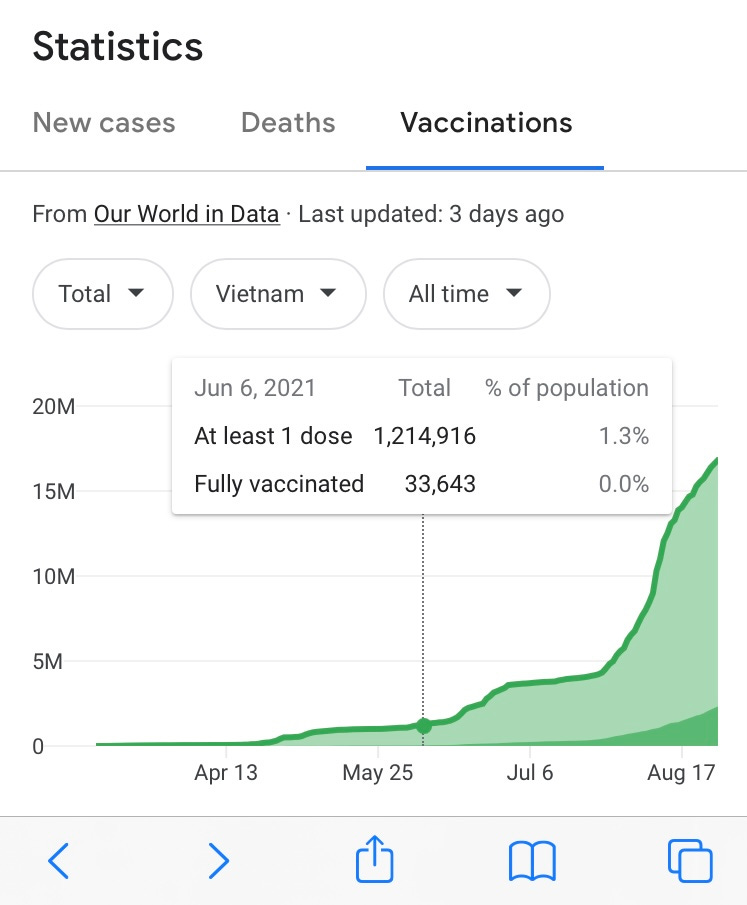
The pattern is exactly the same as we saw in Israel and Britain in January, and many other countries over the spring. The first dose of mass vaccination campaigns is associated with a huge spike in cases.
Too many countries have seen this trend for it to be called coincidental. The question is what’s causing it. Possibilities include post-vaccine behavioral changes (hot vaxxed summer!), vulnerable people clustering together at vaccination sites, or (most likely) some short-term vaccine-driven suppression of the immune system.
Given that we know now peak mRNA vaccine protection lasts a matter of months at most, the post-first-dose spike is even more important in judging the costs and benefits of vaccines. But vaccine advocates will not even acknowledge the existence of the post-first-dose spike, much less admit that it leaves the case for mass vaccinations even murkier than before.
No matter.
Whether they choose to admit the truth or not, Vietnam’s experience proves again that virus gonna virus. Extreme measures may temporarily delay the spread of Sars-Cov-2 (at enormous cost to civil liberties). But without a permanent and effective vaccine, every country - and every person - will eventually be exposed. And right now, we are nowhere near a permanent and effective vaccine. |