We've detected that you're using an ad content blocking browser plug-in or feature. Ads provide a critical source of revenue to the continued operation of Silicon Investor. We ask that you disable ad blocking while on Silicon
Investor in the best interests of our community. If you are not using an ad blocker but are still receiving this message, make sure your browser's tracking protection is set to the 'standard' level.
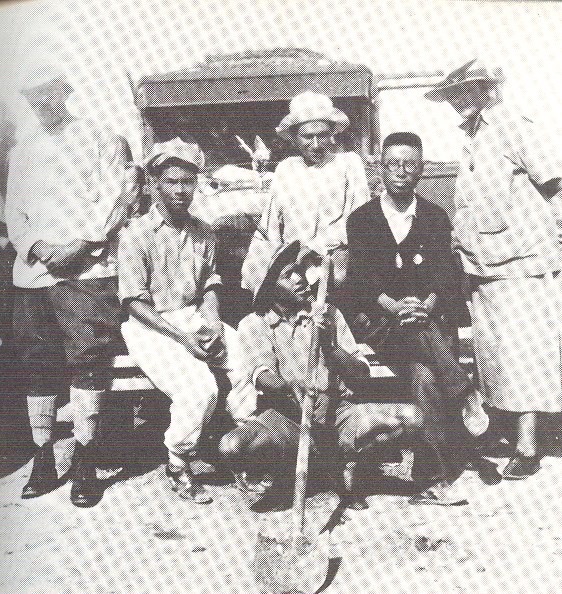
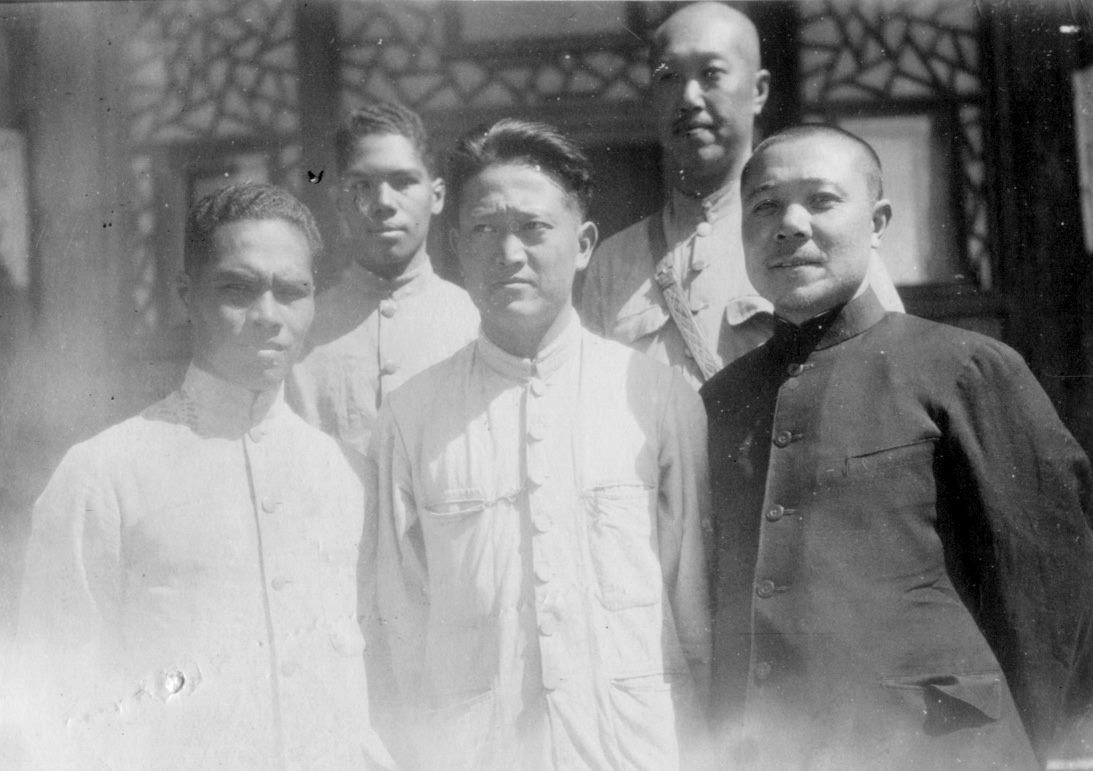
I attach a photo, Borodin on the left, my uncle Percy next to him, my dad Jack w/ shovel, a Russian interpreter behind my dad, and some Chinese guy called Chang, and your cousin on the far right …
Here is a pic of Percy making tea. The group’s great escape was quite civilized, crossing the Gobi Desert in a fleet of Dodge cars.
Percy tagged by Jack, both youngsters, negotiated safe-passage with various warlords along the way, without invoking shock & awe they did not possess. The group made it to the Metropole Hotel in Moscow in good order. They did well.
And I researched by <<Google-enabled, crowd-sourced, NSA-snooped internet>> to see what the Metropole looked like in the good old dayz, for the actual view when we visited in summer 2019 is a replica on the original location.
Update from 1979, my uncle Percy’s book noted …
“After listening to two verses, Borodin, who had been in a semi-doze induced by the effects of the sulfur bath, came awake. He opened his eyes, which were gray, fixed her with a glare, and said fiercely, ‘For God's sake, woman, sing the Internationale.’”
“Anna Louise burst into tears, got up, and walked away.”
In case you forgot what the Internationale goes …
Though Borodin likely was referring to the Russian version, equally stirring, and perhaps more martial
In China, they sing both the French and the Chinese versions
See the article in its original context from November 18, 1979, Section BR, Page 3 Buy Reprints View on timesmachine TimesMachine is an exclusive benefit for home delivery and digital subscribers.
About the Archive
This is a digitized version of an article from The Times’s print archive, before the start of online publication in 1996. To preserve these articles as they originally appeared, The Times does not alter, edit or update them.
Occasionally the digitization process introduces transcription errors or other problems; we are continuing to work to improve these archived versions.
THE place is Lintung, a hot-springs spa in North China on the road to Mongolia. The setting is the fairytale palace built for the pleasure of the emperors of the Tang Dynasty, which ruled the great Confucian empire from the 7th to the 10th century. The time is the summer of 1927, a year of cataclysmic political upheaval created by the violent rivalries of two hostile wings of the Kuomintang (Nationalist Party), two opposed wings of the Chinese Communist Party, and a congeries of warlords — all frightfully complicated by the intervention of the Comintern on behalf of Moscow, where Joseph Stalin was having his own problems with Leon Trotsky, and the ineffectual efforts of Western nations to stem the revolutionary tide on behalf of their citizens with financial interests in China.
CHINA CALLED ME
My Life Inside the Chinese Revolution. By Percy Chen.
423 pp. Boston: Little, Brown and Co. $15.
The male lead is Michael Borodin, also known as Grusenberg, the middle-aged representative of the Comintern, who has been forced to take flight across the Gobi Desert; he is apprehensive about the welcome he will receive in Moscow. The female lead is Anna Louise Strong, a 42-year-old Journalist from Nebraska who has attached herself to Borodin's motorcade as she was to attach herself to other “progressive” movements until her death in China in 1970 at the age of 84. The narrator is Percy Chen, the 26-yearold, Trinidad-born son of Eugene Chen, Foreign Minister of the left-wing Kuomintang's Wuhan Government, which has just collapsed, crushing all Borodin's hopes and destroying all his accomplishments.
The narrator enters to find Borodin reclining on a chaise longue on the terrace of a pavilion set in the middle of an ornamental pool. Anna Louise Strong,
“who had a crush on Borodin,” is seated on a stool at the great man's feet. She is singing in a light, sweet voice the old carol “While Shepherds Watched Their Flocks by Night.” The narrator continues:
“After listening to two verses, Borodin, who had been in a semi-doze induced by the effects of the sulfur bath, came awake. He opened his eyes, which were gray, fixed her with a glare, and said fiercely, ‘For God's sake, woman, sing the Internationale.’”
“Anna Louise burst into tears, got up, and walked away.”
That bittersweet account of a romantic interlude between two of the more famous foreigners involved in the eventual birth of the Chinese People's Republic is representative of the best passages in Percy Chen's account of “My Life Inside the Chinese Revolution.” His informal, episodic autobiography is fascinating for such glimpses of the makers of modern China in dishabille.
When Percy Chen was on the scene, his bright eye provided his gently malicious pen with first-rate, firsthand material. When Percy was not on the scene, his secondhand account of the complex politics of China too often falters, verging on unintelligibility. That muddle, obviously, is as much the fault of the editor as the author: Illogical transitions and references lacking antecedents demonstrate that the published version was hewn from a much longer manuscript. Those lapses leave the reader hopelessly confused. Percy Chen cheerfully admits that, like his father, the Foreign Minister, he speaks virtually no Chinese, Percy Chen also sugars his account of the Chinese Revolution, which, it emerges, he saw from the fringe. For one thing, he performs the difficult feat of describing the present-day People's Republic without mentioning the Great Proletarian Cultural Revolution, the Gang of Four, economic difficulties or the progressive demystification of Chairman Mao Zedong.
Nonetheless, the irreverent spirit of the small (fivefoot,three-inch) retired barrister, now living in Hong Kong, is attractive. A cocky and strangely endearing man, Percy Chen offers telling vignettes of the two formative periods when he was on the scene: the time of turmoil in 1926-27, and the bitter wartime exile in Chungking of the Nationalist Government, whose consequent decay made inevitable the victory of the highly motivated and puritanical Communists.
Join a subscriber-only event. Connect with our journalists. See the lineup.