China stealing American skilled labor :0)))
FBI might redouble efforts for and on behalf of CCP
bloomberg.com
China Initiative Set Out to Catch Spies. It Didn’t Find Many
A three-year-old Department of Justice program has produced few convictions—and lots of complaints about racism and FBI misconduct.
December 14, 2021, 6:00 PM GMT+8
Inside a Kansas City courtroom, Peter Zeidenberg is growing frustrated. The wiry, gray-haired lawyer isn’t making much headway persuading a judge to throw out evidence obtained as a result of what he calls misconduct by the Federal Bureau of Investigation. His client, Franklin Tao, a former University of Kansas chemical engineering professor facing 20 years in prison, is furiously scribbling notes and passing them to his defense team.
“They were looking for a spy, looking for evidence of espionage of trade secrets,” Zeidenberg says, his voice rising in exasperation. But they found none, he says, because there wasn’t any. “At the end of the day, they just have a conflict-of-interest form where the box wasn’t checked.”
Tao is accused of failing to disclose ties to a Chinese university while employed in Kansas. His prosecution is part of the China Initiative, a sweeping effort by the Department of Justice, the FBI, and other federal agencies launched in November 2018. One primary goal was to counter Chinese espionage in America’s corporations and research labs by rooting out spies and halting the transfer of information and technology to China. The FBI says it has opened thousands of investigations involving China since then. But recent setbacks—six cases dropped in July and a directed acquittal in September—have revealed law enforcement errors and prosecutorial overzealousness.
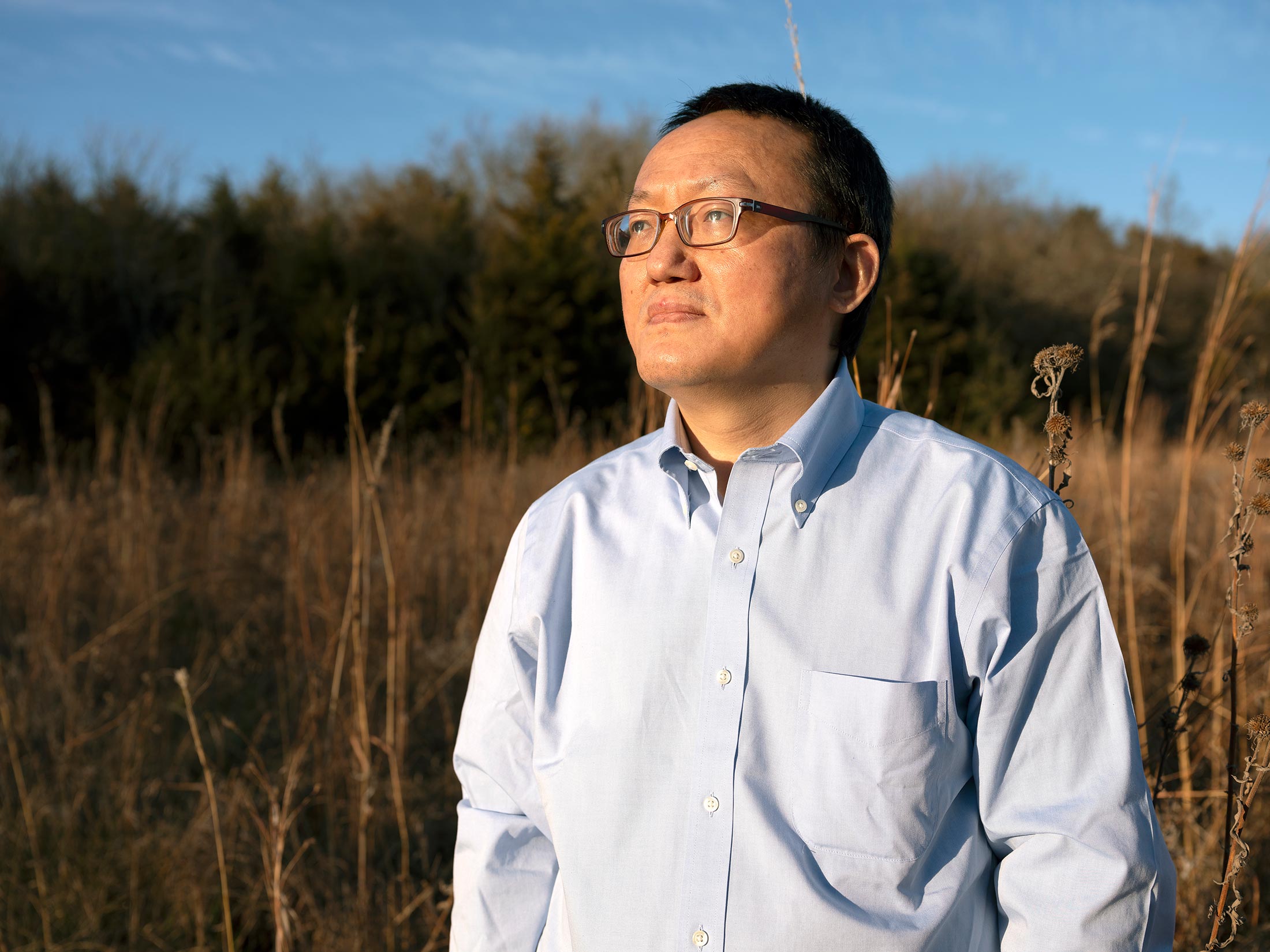
Franklin Tao was the first professor indicted by the Justice Department after it announced the China Initiative in 2018.
Photographer: Arin Yoon for Bloomberg Businessweek
Advocacy groups say the prosecutions reflect racial bias, fueled by tensions with China, that contributed to a 71% rise in incidents of violence against Asian Americans from 2019 to 2020. Attorney General Merrick Garland has pledged to review the program. “They have turned the China Initiative into an instrument for racial profiling,” says Judy Chu, a Democratic representative from California who is the first Chinese American woman elected to Congress. “They have turned it into a means to terrorize Chinese scientists and engineers. Something has gone dramatically wrong.”
A Bloomberg News analysis of the 50 indictments announced or unsealed since the start of the program and posted on the Justice Department’s China Initiative web page reveals a further problem: The China Initiative hasn’t been very successful at catching spies. The largest group of cases, 38% of the total, have charged academic researchers and professors with fraud for failing to disclose affiliations with Chinese universities. None of them has been accused of spying, and almost half of those cases have been dropped. About half as many China Initiative cases concern violations of U.S. sanctions or illegal exports, and a smaller percentage involve cyber intrusions that prosecutors attributed to China. Only 20% of the cases allege economic espionage, and most of those are unresolved. Just three claim that secrets were handed over to Chinese agents.
The Justice Department declined to comment on the analysis, saying there’s no definition of what a China Initiative case is. It removed several unsuccessful prosecutions from the website in November. But Wyn Hornbuckle, a spokesman, cited what he called significant successes prosecuting crimes tied to China. He said in an email that the department brings cases based on conduct, not ethnicity.
China has long had aspirations to move up the science and technology innovation ladder, and it has often taken shortcuts to do so. Its methods, documented in court cases predating the China Initiative, have included state-directed espionage, hacking, and theft of technology. Prosecutors have unveiled foiled technology transfers involving semiconductors, modified rice seeds, turbines, and battery storage. A case against Chinese telecom giant Huawei Technologies Co. accuses it of stealing robot technology from T-Mobile US Inc., allegations the company has denied. “China wants the fruits of America’s brainpower to harvest the seeds of its planned economic dominance,” John Demers, then head of the Justice Department national security division that oversees the China Initiative, said when the program was announced. He told Politico in April 2020 that each of the 93 U.S. attorneys’ offices was expected to come up with at least one case.
But most economic espionage cases listed on the China Initiative website, the Bloomberg analysis shows, involve accusations of profiteering or career advancement by individuals—such as the alleged stealing of technology for a pediatric diagnostic kit from an Ohio hospital to set up a company in China—rather than state-directed spying. Many of these indictments portray the thefts as being for the benefit of China, what Seton Hall University law professor Margaret Lewis calls a conflation of individual motives with a country’s policy goals. That has led to the criminalization of “China-ness,” she says. “When you label something China Initiative, the way our brains work, we know that will turn our attention to people who have connections,” she says. “How could you not see people connected to China as part of a threat?”
The first China Initiative indictment of a professor came less than a year after the program was announced, on Aug. 21, 2019. It was Franklin Tao.
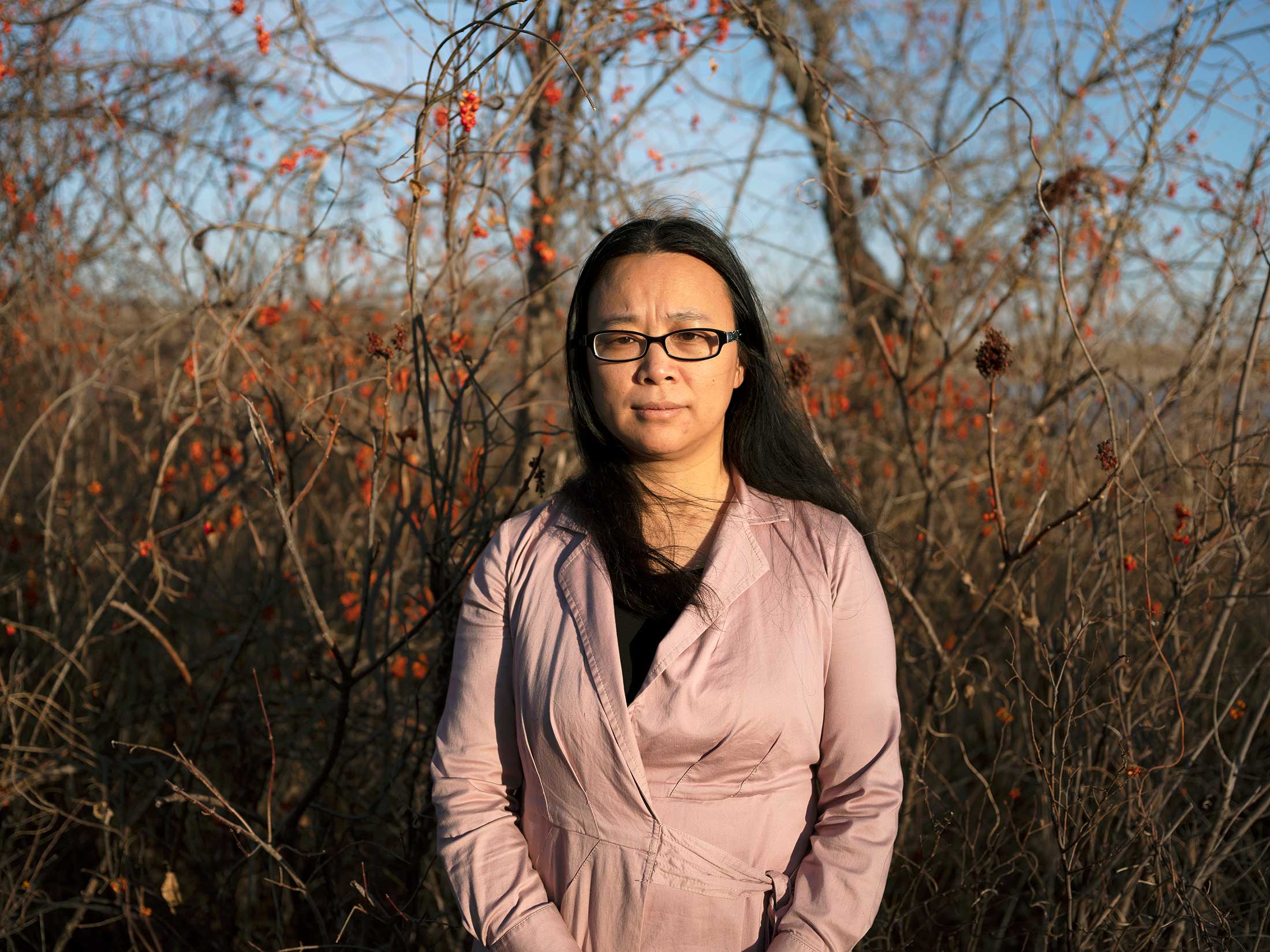
Hong Peng, Tao’s wife, is working three jobs as an ultrasound technician.
Photographer: Arin Yoon for Bloomberg Businessweek
“We came here to pursue the American dream,” says Hong Peng, 45, sitting in a hotel restaurant, digging into the pocket of her denim jacket for a tissue. Peng, who’s married to Tao, is wearing her long hair in a girlish ponytail. A naturalized U.S. citizen, the mother of two high-school-age children, and an evangelical Christian, she is also an ultrasound technician working three jobs since her husband lost his.
On the eve of Tao’s October pretrial hearing, Peng is lamenting the family’s now-precarious financial position. It’s hard for her not to cry. Her GoFundMe campaign had raised $320,000, but there’s no money left. She and her husband had to pledge their house in exchange for bail and to borrow hundreds of thousands of dollars from family in China and members of their church in Lawrence, Kan., to pay legal fees. Peng was a radiologist in China, but she hasn’t been able to take her medical boards in the U.S. and fears she never will. Running from shift to shift at three hospitals, catching naps in her car, leaves her ragged. She was able to pay only half of Tao’s August legal bills, and September’s have already come due. “It’s just unfair,” she says through tears. “He didn’t do anything wrong.”
Tao, 50, is a Princeton-educated scientist who came to the U.S. almost 20 years ago. As a tenured associate professor at the University of Kansas, he did research into a type of chemical process called catalysis, which can reduce energy consumption and cost, receiving grants from the U.S. Department of Energy and the National Science Foundation.
In 2019, Tao got into a dispute with a co-author of a research paper who didn’t think she was being given sufficient credit and demanded $310,000, citing what she called “spiritual hurts,” according to documents filed in the case. When Tao rebuffed her, she replied in an email that “my counterattack will be very strong and very extreme” and warned that she would report him to the FBI as a “tech spy.”
The documents also show that the co-author, who isn’t identified by name, used fake email accounts to levy the accusations and hacked into Tao’s email, even during a meeting with FBI agents. The FBI used that information to obtain a search warrant—evidence of what Zeidenberg calls agency misconduct and the results of which he wants to have ruled inadmissible. The co-author’s spying accusations didn’t stick, but Tao was charged with failing to disclose in conflict-of-interest filings his recruitment discussions with China’s Fuzhou University. The FBI search found emails between Tao and the university that the prosecution says contain a contract to teach in China. The defense says Tao was only in job discussions, didn’t sign the contract or take the job, and continued his teaching duties in Kansas, which didn’t constitute a violation of disclosure rules. Tao pleaded not guilty to the charges.
Lawyers for academics who have been charged in China Initiative cases have argued that disclosure rules for universities and for receiving federal research funding aren’t clear. They also maintain that collaboration is a cornerstone of scientific innovation, that the research is intended for publication, and that U.S. universities had long encouraged their faculty to develop links with China. Gang Chen, a naturalized American nanotechnologist and engineer at the Massachusetts Institute of Technology, was also charged with failing to disclose ties to a university in China, even though MIT’s president said his school engineered the collaboration and handled grant funding. The university is paying his legal fees as he fights the charges.
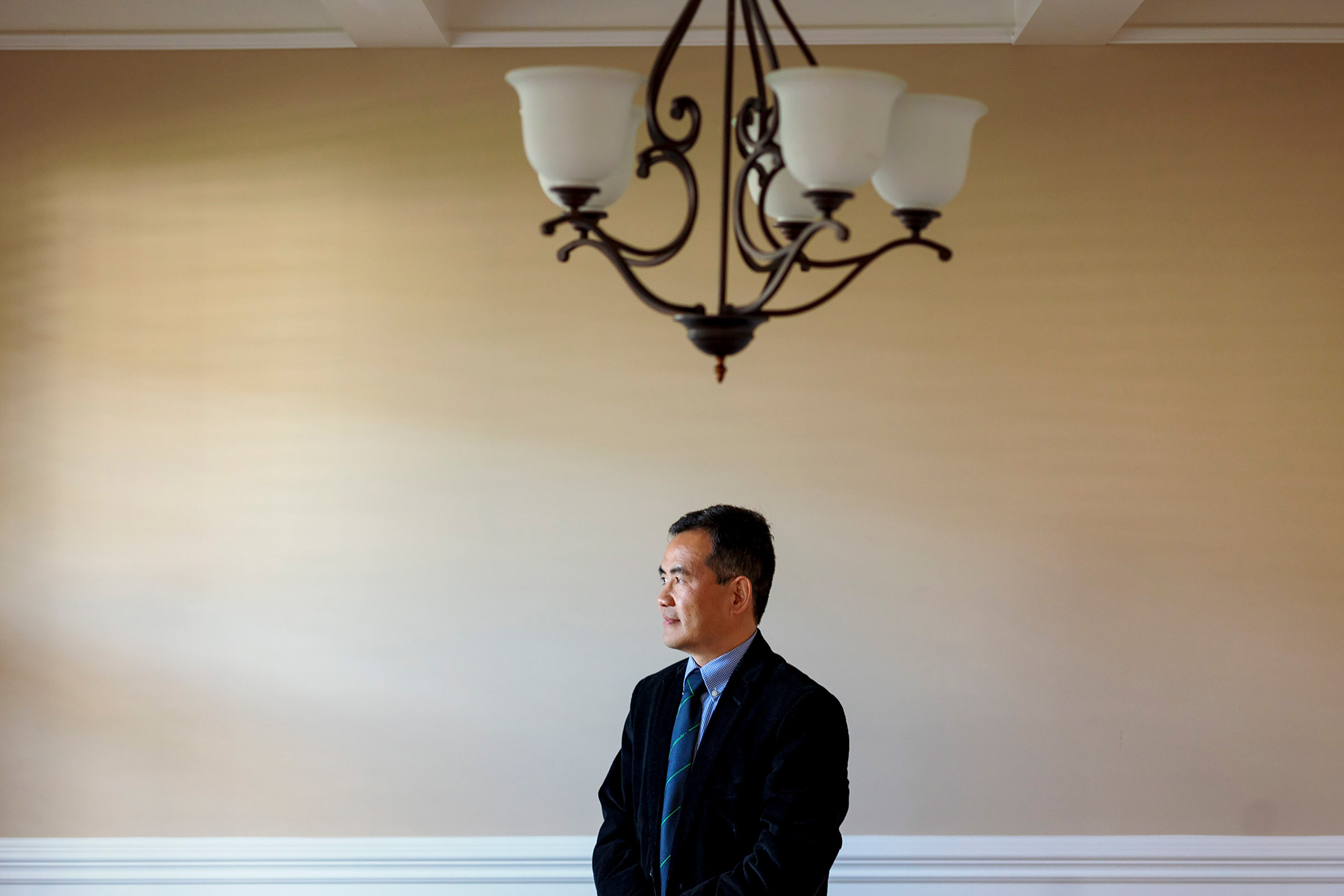
Anming Hu, a University of Tennessee professor charged with fraud for failing to disclose lectures at a Chinese university, was acquitted in September by a judge who concluded there was no evidence of guilt.
Photographer: Shawn Poynter/New York Times/Redux
Anming Hu, another professor charged with fraud, was told by the University of Tennessee that he only had to disclose income from lectures in China in excess of $10,000, according to court documents. He earned $3,000 but was indicted anyway. In September, a federal judge ordered an acquittal in the case after concluding there was no evidence of fraud. He also chided the FBI for telling the university it was pursuing Hu as a spy, when it knew that wasn’t the case. He was offered his job back in October, and a university spokeswoman says officials are working with the naturalized Canadian citizen to secure a work visa.
In one of the cases dropped in July, involving a researcher charged with visa fraud, the FBI had failed to disclose evidence of disagreement within the bureau over whether researchers should be held accountable because the disclosure requirement “lacks clarity.”
Concern that Chinese universities paying U.S. researchers could incentivize future technology transfers is what led to the indictment of Harvard University nanoscientist Charles Lieber, says Andrew Lelling, the former U.S. attorney in Boston who brought the indictment and helped develop the China Initiative. Lieber, who allegedly received $50,000 a month, $158,000 in living expenses, and $1.5 million to establish a lab at Wuhan University of Technology, failed to disclose the arrangements to the National Institutes of Health and the Department of Defense, which had funded his Harvard research, according to his indictment. He pleaded not guilty and sued Harvard for not supporting him. His criminal trial is scheduled to begin on Tuesday.
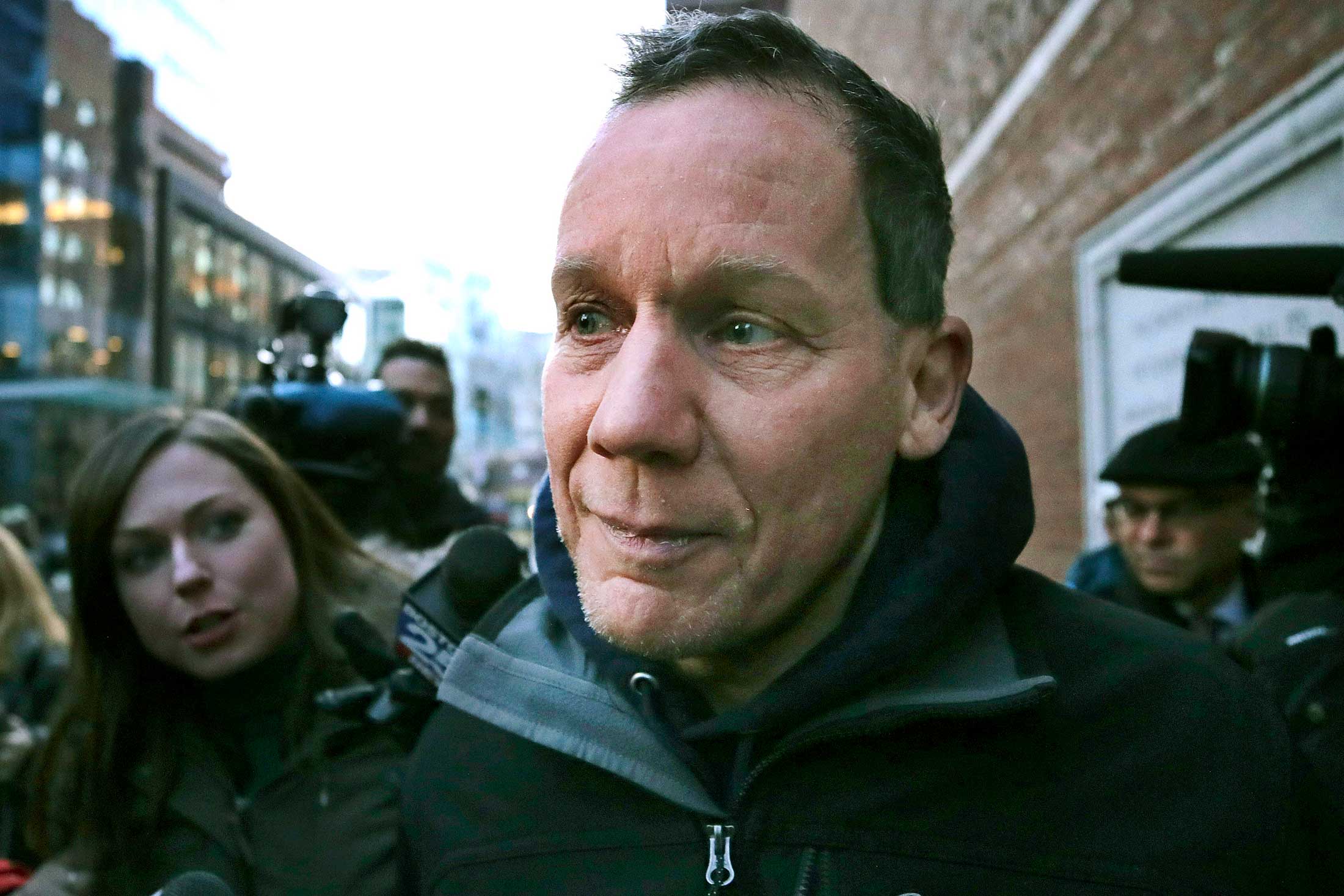
Harvard University chemistry professor Charles Lieber leaves federal court in Boston in January 2020 after his arrest on allegations he hid his involvement in a program designed to recruit people with technical expertise to China. His trial is scheduled to begin this week.
Photographer: Charles Krupa/AP
When the China Initiative was rolled out, the second of its 10 stated goals was to implement an “enforcement strategy concerning nontraditional collectors,” including researchers who are “being coopted into transferring technology contrary to U.S. interests.” That supposition exaggerates the threat and misunderstands the nature of scientific cooperation, says David Zweig, a professor emeritus at Hong Kong University of Science and Technology and an authority on China’s talent migration. Yes, China has used talent programs to attract U.S.-based professors for lectures and research, Zweig says. And Chinese students work in U.S. research labs with the expectation they’ll return to China. “It is not the transfer of knowledge that became the issue but the partner, China, who is now seen by the U.S. government as a strategic competitor.”
John Hemann, a former deputy U.S. attorney in San Francisco who prosecuted the first announced China Initiative case and later, in private practice, defended a medical researcher charged with visa fraud, says the program has “gone off the rails.” His client, Chen Song, a neurologist from a Beijing hospital working on a brain study at Stanford University, was charged with misrepresenting whether she still served in the People’s Liberation Army. Her case was among those dropped in July. “It’s morphed into something that’s completely away from what the point of what this exercise was in the first place,” Hemann says. “It’s a political problem and an economic problem, not a problem to be solved by criminal prosecutions.”
Nathan Charles, another former prosecutor, counters that the federal cases didn’t go far enough. Now he’s in private practice, and his website advertises an “ultra-aggressive” approach. The 42-year-old former Navy SEAL was working as a prosecutor in the counterespionage section of the Justice Department’s national security division when the China Initiative began. He attended meetings at the White House to develop a coordinated strategy and says he advocated a hard line. He worked on the Franklin Tao and Anming Hu indictments, arguing they should be charged with being agents of a foreign government under the Espionage Act of 1917. He was overruled.
“From my perspective, the Justice Department wasn’t being nearly aggressive enough in their prosecutions,” Charles says from behind a desk in a shared co-working office space in Rockville, Md., just outside of Washington. A lot of prosecutors and law enforcement officials favored using the 1917 law to get “at what’s going on,” he says.
That’s because China’s Ministry of Education provides universities the direction and priorities that are then acted on by professors coming from the U.S. to lecture or do research, he says: “It’s the Chinese Communist Party that has set the research goals and priorities of the universities. The goal is to advance the interests of the Chinese Communist Party. Period.”
In both the Tao and Hu cases, their research in chemistry and high-tech welding techniques touched on areas that the Chinese government has said it wants to develop, and their potential use in the energy industry turns them into national security issues, Charles says. He says he pushed to have China and the Chinese Communist Party also named in the indictments as parties to the fraud, but that didn’t happen. “A lot of other things are going on, but because of the way we charge the case, none of those other things are coming to light.”
It’s a similarly blurred line between the party, state, and private enterprise in the economic espionage cases, says Lelling, the former U.S. attorney in Boston who’s now a partner at Jones Day. “A lot of the cases are for personal gain, but on the China side, there isn’t the bright line between the public and the private sector,” he says. “Under Chinese law, the government may be able to take what it wants from a private entity based in China.”
The reason there are more cases alleging disclosure gaps than ones involving theft of trade secrets, Lelling says, is that espionage cases take longer to investigate. Still, he says, the government should consider pulling back on charging researchers for not disclosing ties with China because the point has been made. “Prosecution is one of the sharpest knives in the drawer for dealing with it,” Lelling says. “One of the questions I always ask is, is this too much? Is this proportional? You cannot appropriately respond to China by just prosecuting people. You can’t do nuanced foreign policy by just using the Justice Department.” In a LinkedIn post on Dec. 3, Lelling called for shutting down parts of the program “to avoid needlessly chilling scientific and business collaborations with Chinese partners.”
Asian American advocacy groups say those sharp knives have opened a new chapter in a shameful history that includes Chinese exclusion laws, the internment of Japanese Americans during World War II, and depictions of Chinese as a “thousand grains of sand” in the failed 1990s prosecution of Wen Ho Lee for allegedly stealing nuclear secrets from the Los Alamos National Laboratory.
The term “non-traditional collectors” to describe researchers with links to China is the latest way of labeling Asian Americans as perpetual foreigners in what the Committee of 100, a Chinese American advocacy group, calls “the new Red Scare.” The organization published a report in September based on a review of 190 economic espionage cases brought since 1996. It showed that defendants with Asian surnames were more than twice as likely to be falsely accused and, if convicted, faced harsher punishment.
When the U.S. drove out hundreds of scientists and students believed to be Communist sympathizers in the previous Red Scare of the 1940s and ’50s, one of those who returned to China, Qian Xuesen, became the father of that country’s nuclear missile program. Now, a new chill is sending hundreds of researchers back to China and deterring countless others from coming to the U.S.
One who left is Qing Wang, a 56-year-old medical researcher whose pioneering work identified genes for heart arrhythmia that causes sudden death in young adults. A naturalized U.S. citizen since 2005, Wang worked at the Cleveland Clinic for 21 years. Then, one morning in May 2019, FBI agents arrested him at home. He was charged with fraud for failing to disclose his research in China. His case was listed on the Justice Department’s China Initiative website, then removed in July when the charges were dropped after he produced a letter from the hospital giving him written authorization to teach in China.
“I’m a victim of this China Initiative,” says Wang in a Zoom interview from China, where he has been living since September. “It’s not fair. It is racial profiling.”
Wang, who left behind his wife and two college-age daughters, says he just wants his career back. But the Cleveland Clinic hasn’t offered to reinstate him or to apologize—a spokeswoman for the hospital says Wang was fired following an internal review that found he violated its policies—and he’s in discussions with five Chinese universities for a full-time teaching job. Wang says the FBI and prosecutors don’t understand that researchers like him publish their work openly in scholarly journals and don’t keep any secrets, let alone transfer them. There’s no small irony here, he says: The U.S., seeking to stop such people from transferring their knowledge and research to China, has driven some of those very people back to China.
The FBI says there’s nothing racially motivated about its China Initiative investigations. Agents are simply pursuing possible criminal activity that poses a risk to national security without regard to race, ethnicity, or national origin, a bureau spokesman said in an email. “Stolen research, network intrusions, covert operations—these are some of the ways the Chinese government threatens the economic well-being, national security, and democratic values of the United States,” a narrator intones on an Oct. 12 FBI podcast. Then, repeating a line from a speech by FBI Director Christopher Wray, he says: “Let’s be clear: This is not about the Chinese people, and this is certainly not about Chinese Americans. When we speak of the threat from China, we mean the threat posed by the government of China and the Chinese Communist Party.”
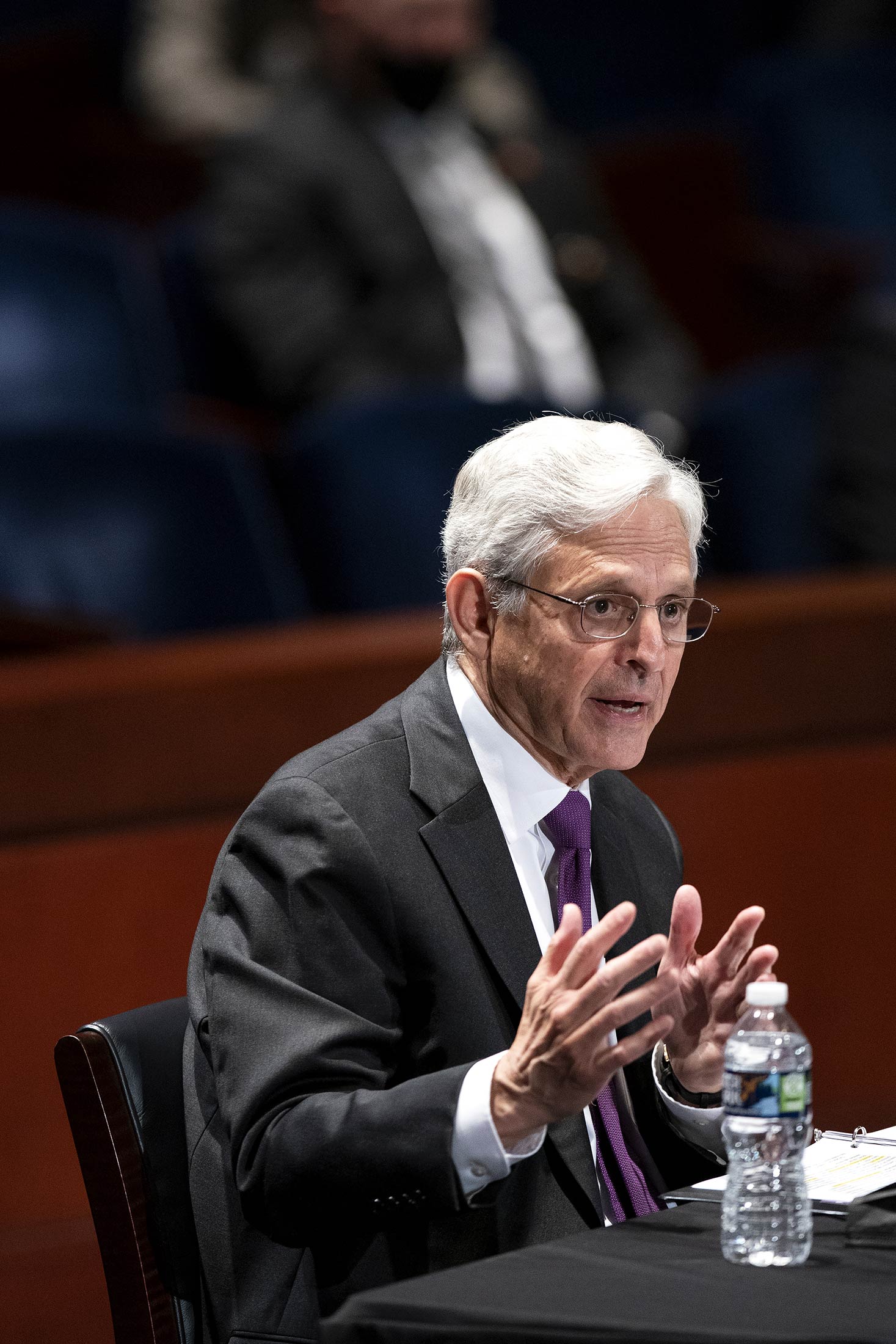
U.S. Attorney General Merrick Garland speaks in October at a House Judiciary Committee hearing where he promised the China Initiative would be reviewed.
Photographer: Greg Nash/The Hill/Bloomberg
More than 1,600 scholars and administrators from more than 200 universities have petitioned Garland to end the China Initiative, saying it disproportionately targets researchers of Chinese origin. During an appearance before the House Judiciary Committee in October, Garland said there’s no excuse for discrimination, though he confirmed that new investigations were being opened daily. “I can assure you that cases will not be pursued based on discrimination, but only on facts justifying them,” he pledged. He told the committee that Matthew Olsen, the new head of the department’s national security division, will review the program.
That’s not much consolation for Franklin Tao, whose trial is scheduled to begin in April. At the October hearing in Kansas City, Judge Julie Robinson ruled the evidence obtained by the search warrant admissible, despite what she called FBI omissions about its “unreliable informant.”
Unlike his wife, Tao never applied for U.S. citizenship. His mother in Chongqing, China, was ill, and he didn’t want to have to apply for a visa if he needed to travel to see her. But for a green card holder like him, a felony conviction could mean deportation.
A half-dozen members of the couple’s evangelical church were in court to show their support. They sat with Hong Peng in a spectators’ row. During a break, after Zeidenberg lost another motion, a pastor placed his hands on her shaking shoulders and prayed. At the end of the day, on the way out of the building, Zeidenberg turned to Tao with words appropriate not only for the day’s losses but also perhaps for the whole ordeal: “I’m sorry.” — With Chris Strohm and Peter Waldman
Sent from my iPad |



