| | | <direct access to low cost fossil fuel is relatively uncommon>
I'm sorry but data collected by the U.S. Energy Administration show Natural Gas (a fossil fuel) is, not only the most heavily used fuel for electric generation, but that it's also been increasing.
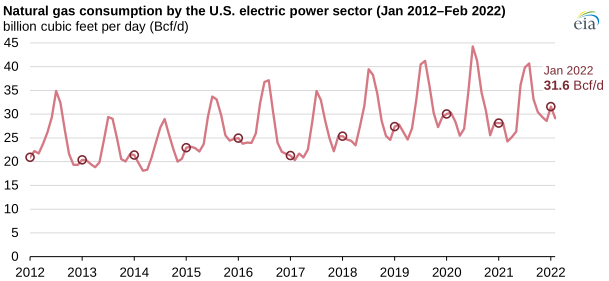
< Natural gas consumed by U.S. electric power sector sets January record in 2022
5/12/22
Source: U.S. Energy Information Administration, Natural Gas Monthly
In January 2022, natural gas consumed for electric power in the United States averaged 31.6 billion cubic feet per day (Bcf/d), the highest January average on record and the highest amount for any winter month. Natural gas consumed for electric power this past January was higher than in previous Januaries because of high demand for electricity throughout a colder-than-average January combined with less coal-fired electric power generation.
Natural gas consumption in the electric power sector peaks in the summer when demand for electricity is highest—largely driven by demand for air-conditioning. A smaller peak occurs during the winter, when homes and businesses use heat pumps, electric radiators, space heaters, and other electric heating equipment to heat buildings. The spring and fall seasons have the lowest natural gas consumption for electric power and the lowest overall electricity consumption.
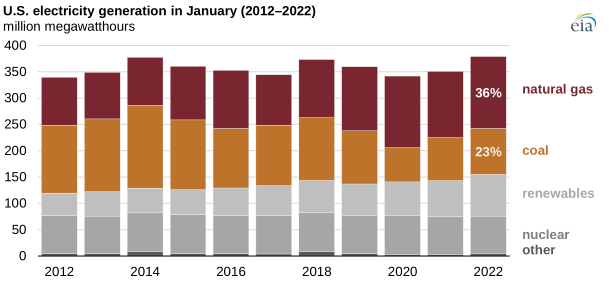
This past January was the coldest January since 2014, which resulted in the highest monthly electricity demand for any January on record. In January 2022, natural gas-fired generators provided 36% of the nation’s electricity, and coal provided 23%. In the previous five Januaries (2017–21), those shares had been much more similar: natural gas at 33% and coal at 27%, on average.
Source: U.S. Energy Information Administration, Electric Power Monthly
In the electric power sector, natural gas-fired generation units typically compete with coal-fired generation units to provide the lowest-cost wholesale electricity price for power suppliers. Natural gas-fired electric power generation has been higher this past winter than recent winters, in part, because of coal supply constraints and historically low levels of coal stocks at power plants. Coal stocks for the electric power sector fell to 80 million tons in September 2021, which is 37% lower than the five-year average. Recent wholesale power market consumption of unusually high-priced natural gas indicates that the competition between these two energy sources has changed.
Source: U.S. Energy Information Administration, Electric Power Monthly
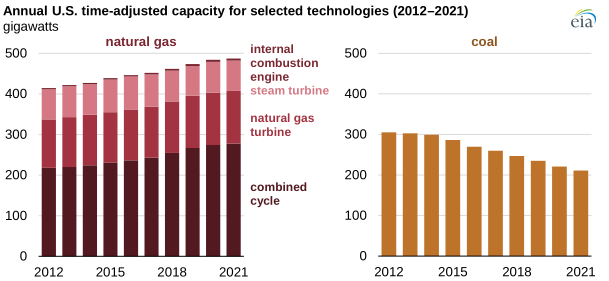
Combined-cycle natural gas-fired power plants normally compete directly with coal-fired power plants for the largest share of electricity generation. Net summer capacity (or the maximum output that generating equipment can supply to system load at the time of summer peak demand) has been increasing for natural gas and declining for coal. Natural gas-fired generation capacity at combined-cycle power plants has increased from 218 gigawatts (GW) in 2012 to 278 GW in 2021. By comparison, the capacity of coal-fired power plants has declined from 305 GW in 2012 to 211 GW in 2021.
eia.gov |
|



