Following up ...
Message 33585021
Pentagon struggles to understand how Beijing mastered technology that tests constraints of physics ... Some Pentagon experts believe the projectile was an air-to-air missile. Others think it was a countermeasure to destroy missile defence systems so that they could not shoot down the hypersonic weapon during wartime. ... the puzzle might have an answer, one not quite expected, because currently there are not peer-competitor hypersonic weapons threatening China, since the supposed peer-, or self-certified peer, is actually not so peer-peer
in any case, let's wait & see
scmp.com
China just got closer to defeating hypersonic weapons with reusable tech
- Chinese engineers say they’ve solved a big problem that could allow major advances in air defence
- System is based on a drone that can fly at Mach 5
Published: 6:00am, 27 Jan, 2023
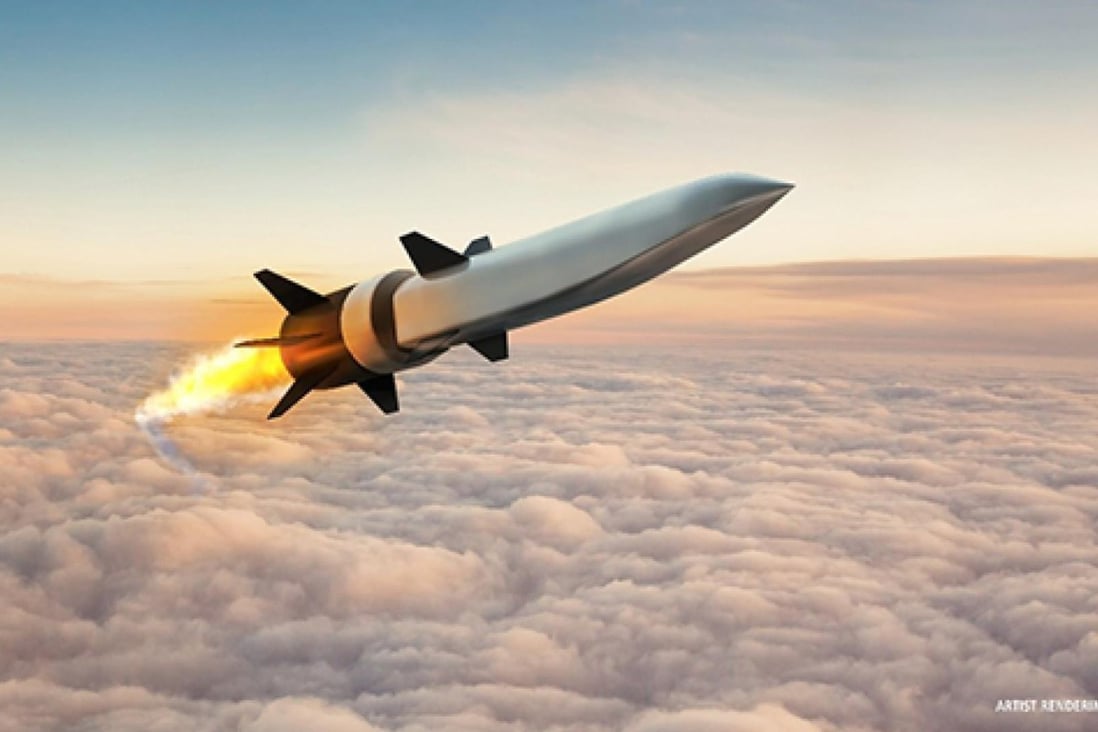
Chinese engineers say they’ve solved a major mathematical problem that could be a big leap in the country’s air defence. Photo: Raytheon Missiles & Defense
A team of Chinese aerospace engineers say they have overcome a major barrier in protecting the country from a potential hypersonic weapon attack.
The achievement came in the development of a reusable air defence system, which is based on an unmanned aircraft powered by an air-breathing engine that can fly at more than five times the speed of sound over a long distance, the scientists said.
By using early warning satellites and ground radar stations, the aircraft can predict the trajectory of an incoming hypersonic missile, and then launch a small kinetic energy weapon to neutralise the threat in mid-flight.
With the attack over, the aircraft can then return to an airport and be prepared for its next mission, according to the researchers.
But implementing this advanced system design had proved challenging.
The effort ran into a sophisticated mathematical problem, according to research team leader Yin Zhongjie, from the Shanghai Institute of Mechanical and Electrical Engineering, a defence contractor that develops drones for the Chinese military.
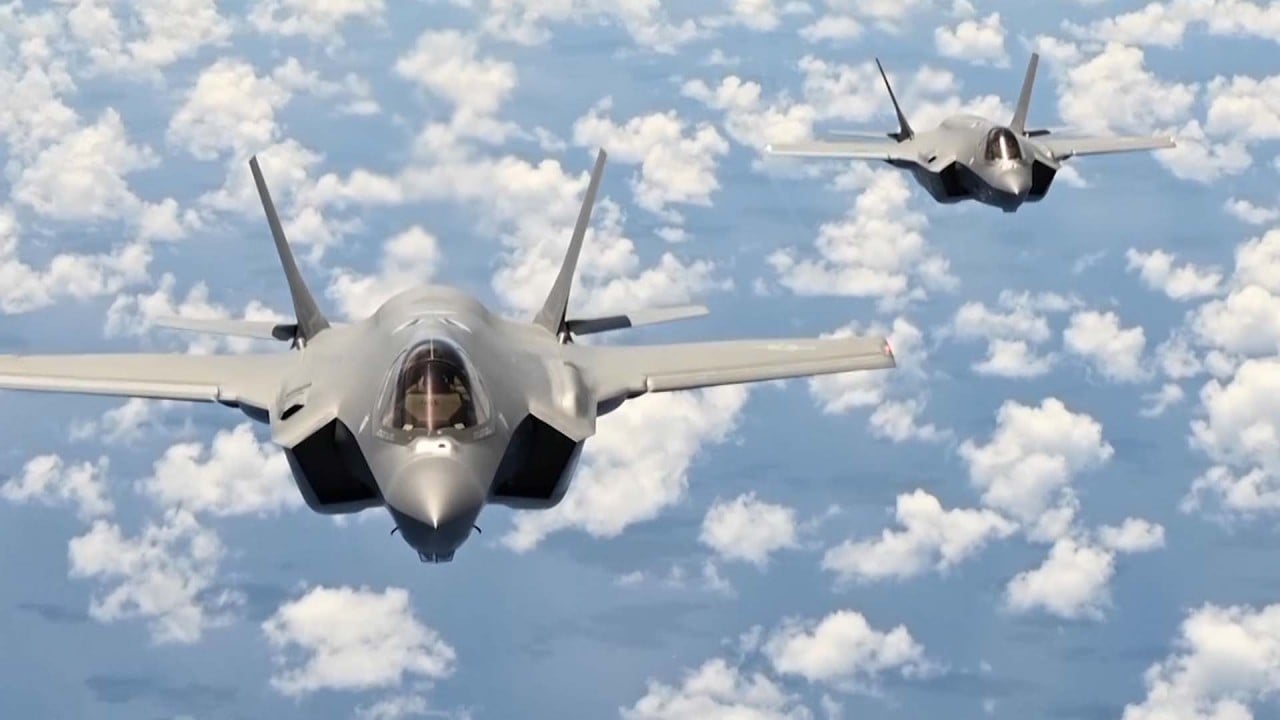
02:11 Autonomous ‘wingman’ drone technology being developed for tomorrow’s ‘Top Gun’ fighter pilots
Existing algorithms for midcourse interceptions are written for conventional missile platforms powered by rocket motors, said Yin and his colleagues in a paper published in the domestically peer-reviewed journal Aerospace Technology on January 1.
If a flight trajectory was planned for an air-breathing hypersonic aircraft using those equations, it could lose control or even crash, they said.
Hypersonic engines, such as a scramjet, rely on high aircraft speeds to compress hot, fast-moving air to ignite fuel in a combustion chamber with no moving components.
The hypersonic aircraft can therefore fly further and more efficiently than rocket-powered missiles since they do not need to carry their own oxygen. In addition, such aircraft are not subject to the yank or roll that rockets undergo, which can significantly alter airflows and choke the engine.
And there are some other mathematical problems, according to Yin.
To accurately predict the course of a hypersonic threat, which not only travels extremely fast but also makes complex manoeuvres, a practical algorithm can require many calculations.
But the on-board computer on the aircraft can provide only a fraction of the resources needed to make such calculations, the researchers said.
Computer simulations suggested the new algorithm developed by Yin’s team tended to chart a flight path that took more time to complete than usual because more constraints needed to be considered.
Still, the calculations were accurate enough to steer the aircraft to within 6.8km (4.2 miles) from the target, well within the kill zone of a kinetic weapon that could be deployed by the aircraft, the paper said.
The flight computers could handle the task easily because the algorithm had significantly simplified the calculation process.
The Chinese team said that their new method was in large part based on the work of David Benson, then a graduate student at MIT. In his PhD thesis completed in 2004, Benson proposed a mathematical solution known as Gauss pseudospectral transcription that could significantly reduce the complexity of flight control for launch vehicles.
Benson now works as a principal member of the technical staff at Charles Stark Draper Laboratory, a leading research institute involved in the development of cutting-edge defence technology, including hypersonic weapons in the US, according to his LinkedIn account.
Yin’s team said that they had also used an algorithm developed by Nasa for its X-33 hypersonic aircraft. Though it was near completion, the X-33 project never took flight and was cancelled in 2001 by Nasa, citing technical difficulties.
In recent years, hypersonic weapon technology has seen rapid development in Russia and China. In response, in 2020, the US military launched the Glide Phase Interceptor (GPI), a programme aimed at building up an effective midcourse air defence system against hypersonic threats.
The huge, complex system includes a new generation of spy satellites that can detect and track a hypersonic missile launched from any location on the planet.
The programme awarded major defence contracts last year to companies like Northrop Grumman and Raytheon to develop ground to air hypersonic missiles based on proven platforms that employ missiles powered by rocket engines.
Critics have said the strategy would be expensive because in a real battle, several hypersonic missiles could be needed to intercept one incoming threat.
Directed energy weapons, such as lasers and high-powered microwaves, can operate with considerably lower cost, but their effective range is limited by weather conditions and the need for large facilities to supply energy.
The Chinese government has invested heavily in the development of air-breathing hypersonic flight technology. Universities are being funded to build and fly prototype aircraft powered by advanced propulsion systems, including scramjet and rotating detonation drive.
Last July, a team with Northwestern Polytechnical University in Xian, Shaanxi province carried out a test flight of a hypersonic aircraft with a scramjet engine powered by low-cost kerosene.
Since then, China’s foreign ministry has accused the US National Security Agency of hacking into the university’s campus network and stealing data related to sensitive technology. |



