We've detected that you're using an ad content blocking browser plug-in or feature. Ads provide a critical source of revenue to the continued operation of Silicon Investor. We ask that you disable ad blocking while on Silicon
Investor in the best interests of our community. If you are not using an ad blocker but are still receiving this message, make sure your browser's tracking protection is set to the 'standard' level.
Pentagon think tank warns against ‘long war’ in Ukraine
While both Moscow and Kiev think they will benefit from continued fighting, such a turn of events does not serve Washington’s best interests, the Pentagon’s think tank RAND Corporation argues in a new report published on Friday.
Authored by Samuel Charap and Miranda Priebe, “ Avoiding a Long War” ( rand.org ) accepts the prevailing premises about the conflict, but notes that US interests “often align with but are not synonymous with Ukrainian interests.” According to the authors, the conflict has already inflicted significant economic, military and reputational damage on Russia, so its “further incremental weakening is arguably no longer as significant a benefit for US interests.”
The price to the West has not been insignificant either, from the disruption to energy, food and fertilizer markets to the cost of “keeping the Ukrainian state economically solvent,” which will only “multiply over time.”
NATO’s military aid to Ukraine “could also become unsustainable after a certain period,” while Russia may “reverse Ukrainian battlefield gains,” they said. The conflict is “absorbing senior policymakers’ time and US military resources,”distracting Washington from other global priorities, such as China, while pushing Moscow closer to Beijing.
In short, the consequences of a long war – ranging from persistent elevated escalation risks to economic damage – far outweigh the possible benefits.
The study describes President Vladimir Zelensky’s vision of victory, in which Ukraine would recover all the territories it lays claim to and force Russia to submit to war crimes trials and reparations, as “optimistic” and “improbable.”
Moscow, “perceives this war to be near existential” and has signaled “a high level of resolve,” the authors caution, raising the probability it might use nuclear weapons if it feels threatened.
Prospects for some kind of negotiated peace are “poor in the near term,” the report acknowledges, as Kiev believes Western support will continue indefinitely, while Moscow has been given no reason to believe the sanctions will ever be lifted.
The US could “condition future military aid on a Ukrainian commitment to negotiations,” while giving Kiev security commitments, but “not as binding as US mutual defense treaties” or NATO membership, the report suggested. Washington should also give Moscow assurances regarding Ukraine’s neutrality and set “conditions for sanctions relief.”
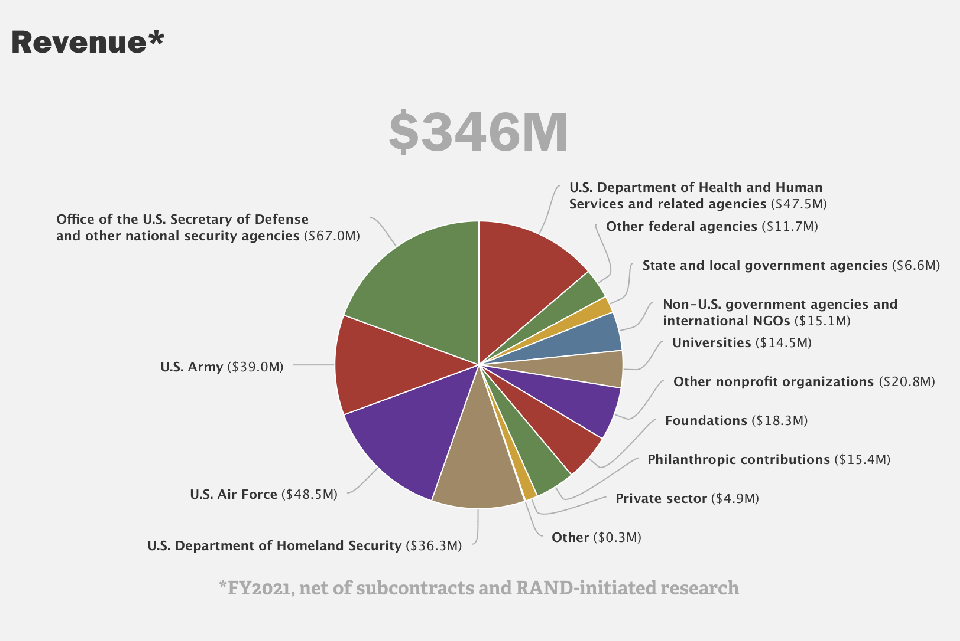
Founded in 1948 by the US military-industrial complex, RAND has provided the Pentagon with policy advice for decades. In 2019, the think tank provided a blueprint for “overextending and unbalancing” Russia that included economic sanctions, sending weapons to Ukraine, promoting uprisings in Central Asia and even deploying more nuclear weapons to Europe. By contrast, the advice on how to avoid escalation with Moscow while arming Kiev, from July last year, seems to have had little to no effect.