We've detected that you're using an ad content blocking browser plug-in or feature. Ads provide a critical source of revenue to the continued operation of Silicon Investor. We ask that you disable ad blocking while on Silicon
Investor in the best interests of our community. If you are not using an ad blocker but are still receiving this message, make sure your browser's tracking protection is set to the 'standard' level.
on longterm planning, it is heart-warming to see how parents try to do better for their kids, way before they are born
I had purchased two sets of Chinese language classic books of the usual more than a decade before the Coconut came along, and never even thought about having a Jack. One set in comic strip form, and the other the formal text form.
There of course are statutes in China, and even though many were destroyed all different ways over the eons, some were always, and ‘always’ in China means always, protected, whatever the wars, revolutions, and same such, and whenever damaged, repaired.
One example, that of General Yue Fei, along with the graves of his son and him, and the enemies of the people who murdered general Yue, for all of eternity, irrespective of ruling party
I highlight what each generation of leaders must at least try to live up to, and that essentially means certain topics are unlikely to be negotiable. Just a guess.
Through such a lens, what motivates Xi becomes obvious, to be remembered well by his electorates. Running against that wall is likely to be fairly fruitless if not counterproductive.
Yuefei Temple, Hangzhou Nestled in the southeastern corner of Tangyin County, the Yue Fei Temple holds within its doors a bit of the region’s rich history. The temple was constructed in memory of Yue Fei, a courageous general who lived during the Southern Song dynasty.
Built in 1450 during the Ming Dynasty, the 6000-square-meter temple is filled with over 40 colorful statues, over 300 steles, and countless inscriptions by Chinese celebrities of the past. These are found in over 100 different halls and rooms, which give you plenty of things to see when you visit.
Aside from learning more about the history and culture of China, visitors at the Yue Fei Temple will, above all, learn more about Yue Fei’s past. Born to a farmer, Yue Fei grew up to become a well-known militarist and eventually became a valiant general who fought against the Jin invaders from the north. Skilled in martial arts, Yue Fei joined the army at twenty years old. As a sign of his loyalty, he had himself tattooed on his back by his mother with the phrase ‘Loyal and Devoted to the Nation’. He died at the early age of 39 years old without compromising his loyalty to his country.
Top Things to do The Yue Fei Temple is a great place to visit when you’re in the mood for sightseeing and historic tours. Although it does not offer any activities, you will witness much of China’s past through its exhibits. The temple itself is a sight to behold, as it is considered one of the best-preserved ancient Chinese structures in the area. Thus, in 1961, the temple was declared as a major national protected monument by the State Council.
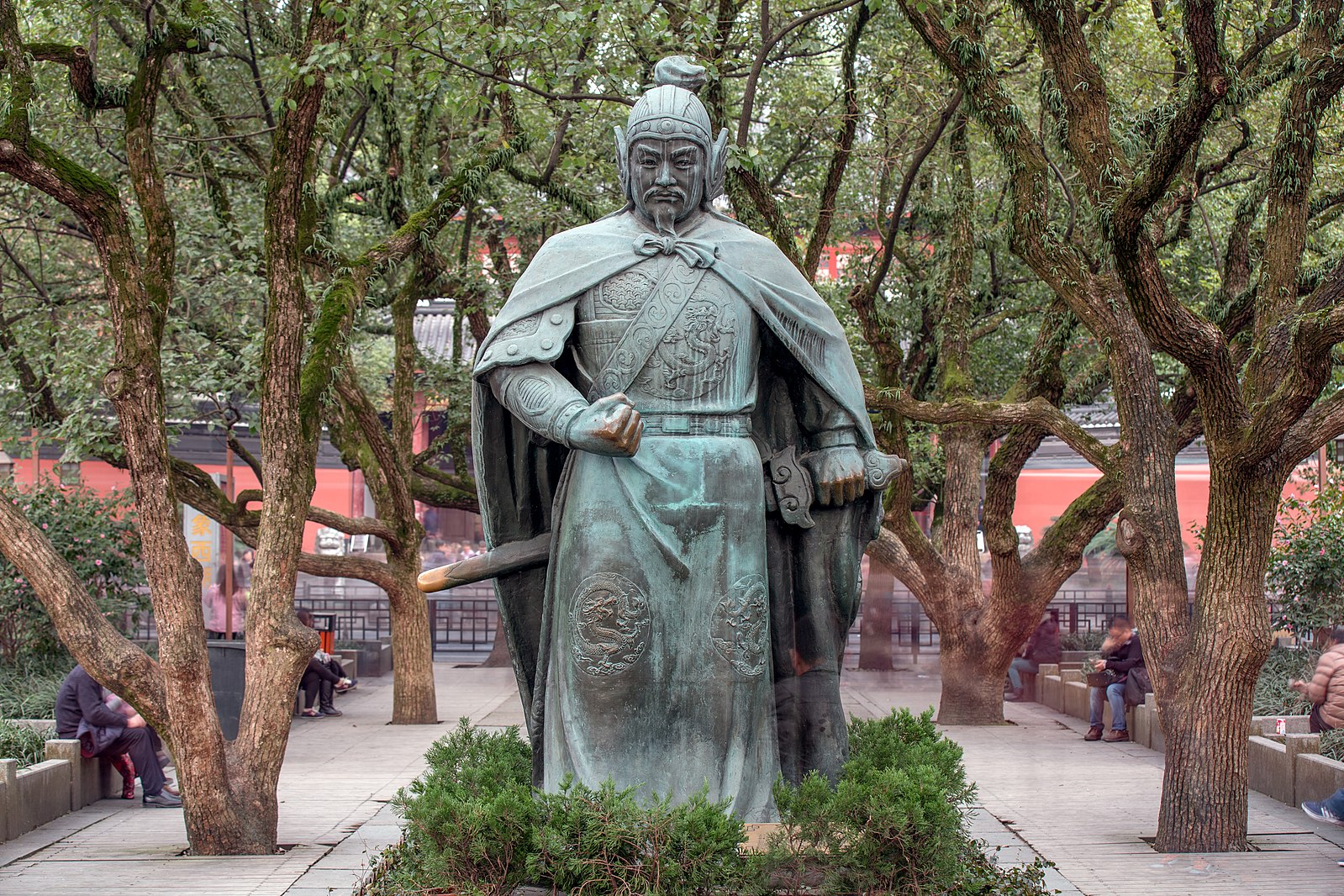
Visitors should also check out the Jingzhongfang, also known as the Tower of Devotion and Loyalty; the wooden tower is the first part of the temple to be established. It has two walls on both sides where the Chinese characters for Fealty and Loyalty are written. The tower has a rather dramatic scene immortalized inside it. Once you step into the hall, you will see a huge brass statue of Yue Fei as well as five iron statues of the five murderers who killed him including the Prime Minister of Southern Song, his wife, a court official, and Zhang Jun, a general.
All the statues have their hands tied behind their backs, and a couplet on the gate summarizes the story behind the scene. The couplet says: “The green hill is fortunate to be the burial ground of a loyal general; the white iron was innocent to be cast into the statues of traitors.” This tells of the death of Yue Fei, one of the much-admired national heroes in the history of China who was executed after being framed for crimes that he did not commit. Behind Yue Fei’s statue is a plaque with the inscription ‘Recover Our Lost Territories’ in what is said to be Yue’s original calligraphy.
Visitors are also encouraged to visit Yue Fei’s mausoleum, where they can pay tribute to the loyal and brave Chinese general. The tomb is found to the left of the Loyalty Garden and is mostly a rounded tomb built with rocks. It houses not just Yue Fei but also his son Yueyun. On the tomb’s wall, there is a carving that says ‘Be Loyal to the Motherland’, which is known as the life motto of the loyal general. Although the temple has undergone multiple reconstructions over the years, the tombs and the tomb sculptures are still the original ones built during the 12th century, albeit some very meticulous restorations.
Aside from the statues and the tombs, visitors should also view the collection of hundreds of carvings and steles, which tell of poems written by prominent authors throughout Chinese history. Most of the poems are dedicated to the national hero.
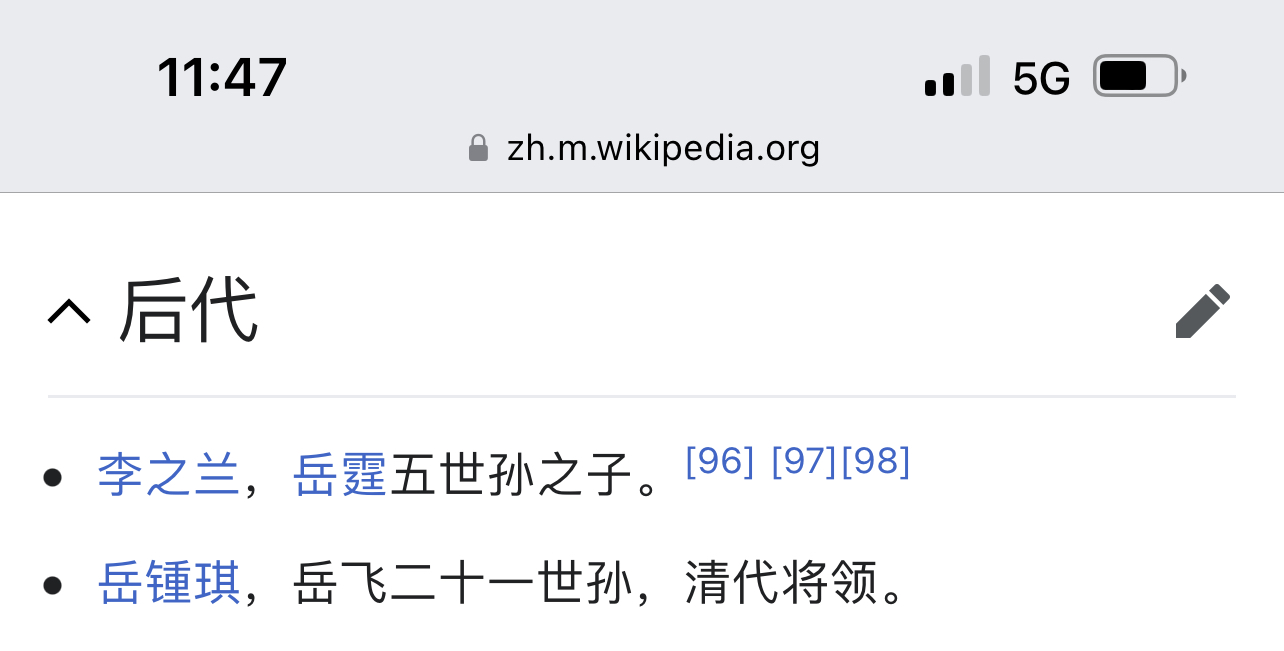
Also peruse re yue fei and descendants today, and had seen material elsewhere shall hunt up that they are in military academies in China mainland as well as Taiwan
Appreciate the work of YouTubers - loving it. NFW I can visit all the sites even as important to see
Also re Yang Jia warrior family
Enjoy the channels! I intend to watch every episode w/ the Jack.
Brings legends to life through graves. Just fantastic
Sent links to the Coconut, for historical and learned language purposes, as well as for creator economy inspiration