GM’s rosy year-end figures obscure the fact that legacy automakers are in deep trouble
Posted January 8, 2024 by Charles Morris & filed under Newswire, The Vehicles.
Duplicitous doublespeak has become de rigueur dialect in the auto industry. “We remain committed to an all-electric future,” says GM as it announces a rollback of its electrification plans. “We strongly believe in EVs,” say auto dealers as they support efforts to slow the EV transition. “The greatest responsibility for us as a company is dealing with climate change,” says Daimler Trucks as it lobbies the EPA to water down emissions regulations.
The latest example of Orwellian Newspeak comes from GM, which touted “another year of firsts” in its US Q4 and Full-Year Sales report. Indeed, the report makes cheerful reading—for anyone who doesn’t believe in climate change, and thinks EVs are a passing fad. GM edged out fellow brontosaurus Toyota to take the #1 spot in US sales, and also scored #1 in sales of SUVs and trucks.
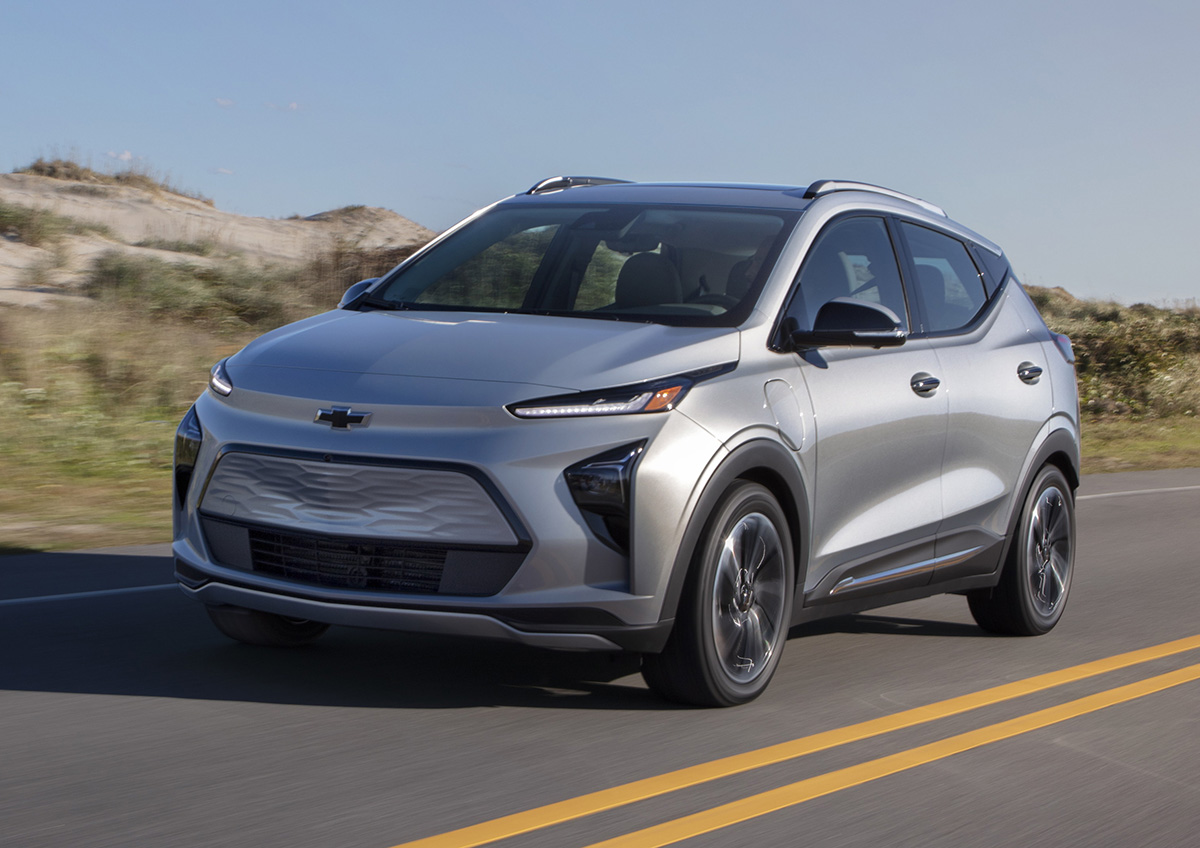
Clean car correspondent John Voelcker took a dimmer view: “The GM EV numbers for 2023 are worse than I imagined. It delivered 75,883 electric cars this past year, of which just 18% use its new Ultium platform. The other 82% were the Bolt EV and EUV—which it has taken out of production. Hyundai/Kia and the Chinese certainly aren’t waiting. This is a black mark on management.”
It doesn’t appear that the new Blazer EV will be taking up the slack any time soon—In December, GM halted sales in order to fix software problems. A litany of other issues led to scathing reviews from Edmunds (which documented 23 problems with a 2 month-old car) and InsideEVs (whose press vehicle broke down). There’s more, but why pile on?
GM isn’t the only legacy automaker to have a low-voltage 2023. Ford recalled some Mustang Mach-Es in October (a real recall that required bringing cars into the dealership, not a nominal Tesla recall that required pushing the OK button on the car’s touchscreen), and joined GM in announcing a rollback of its electrification schedule to get even with Uncle Joe for siding with the UAW strikers. It sold slightly fewer EVs than GM in 2023. (Tesla, which doesn’t break out sales by region, produced over 1,800,000 globally.)
European brands are also struggling. In 2022, Volkswagen said it would sell more EVs than Tesla in 2024. That shows no signs of happening. On the contrary, the company said in November that its core VW brand is “ no longer competitive.”
Not all legacy brands are destined to remain legatic— Hyundai and Volvo are focusing on selling EVs, not trying to wish them away. But in general, the traditional automakers are falling behind Tesla and China at an alarming rate (the Chinese may be coming for Tesla too).
Tesla stans may see Big Auto’s failure as cause for celebration. It is not. For one company (particularly one with controversial policies and a mercurial leader) to dominate the electric car market is bad news for consumers. And for China to dominate the next era of the global auto industry is bad news for non-Chinese working people—and arguably, for democracy.
Sources: GM, InsideEVs, CNN
chargedevs.com |



