| | | re <<Hezbollah hit by a wave of exploding pagers and blames Israel. At least 9 dead, thousands injured>>
... mirky and mirkier
scmp.com
Israel’s Mossad planted explosives in 5,000 pagers imported by Lebanon’s Hezbollah: sources
Exploding pagers used in apparent Israeli attacks in Lebanon were made in Hungary, Taiwanese firm says

Reuters
Published: 4:46pm, 18 Sep 2024Updated: 7:08pm, 18 Sep 2024
Israel’s Mossad spy agency planted explosives inside 5,000 pagers imported by Lebanese group Hezbollah months before Tuesday’s detonations that killed 12 people, a senior Lebanese security source and another source told Reuters.
Lebanese health Minister Firass Abiad said on Wednesday that two children were among the 12 killed.
The operation, with a trail running from Taiwan to Budapest, was an unprecedented Hezbollah security breach that saw thousands of pagers explode across Lebanon, wounding nearly 3,000 people, including many of the group’s fighters and Iran’s envoy to Beirut. Explosions were also reported in Damascus, Syria.
The Lebanese security source said the pagers were from Taiwan-based Gold Apollo, but the company said in a statement it did not manufacture the devices. It said they were made by a company called BAC – based in the Hungarian capital – which has a licence to use its brand.
Iran-backed Hezbollah has vowed to retaliate against Israel, whose military declined to comment on the blasts.
The pager blasts came at a time of mounting concern about tensions between Israel and Hezbollah, which have been engaged in cross-border warfare since the Gaza conflict erupted last October.
While the war in Gaza has been Israel’s main focus since the October 7 attack by Hamas-led gunmen, the precarious situation along Israel’s northern border with Lebanon has fuelled fears of a regional conflict that could drag in the United States and Iran.
Hezbollah said in a statement on Wednesday that “the resistance will continue today, like any other day, its operations to support Gaza, its people and its resistance which is a separate path from the harsh punishment that the criminal enemy (Israel) should await in response to Tuesday’s massacre”.
Hezbollah leader Hassan Nasrallah will make a previously unscheduled speech at 5pm on Thursday, the group said.
The plot appears to have been many months in the making, several sources told Reuters. It followed a series of assassinations of Hezbollah and Hamas commanders and leaders blamed on Israel since the start of the Gaza war.
The senior Lebanese security source said the group had ordered 5,000 pagers from Gold Apollo, which several sources say were brought into the country earlier this year.
Taiwan company denies making pagers that detonated in Lebanon, Hezbollah blames Israel
Gold Apollo founder and president, Hsu Ching-kuang, told journalists earlier Wednesday that his company has had an authorisation agreement with BAC for the past three years.
“This company has cooperated with us and represents many of our products,” Hsu told reporters at the company’s offices in the northern Taiwanese city of New Taipei. “They also wanted to make pagers and asked me if they could use our company’s brand name.”
He added the products involved in the explosion were designed by BAC.
The stated address for BAC Consulting in Budapest was a peach building on a mostly residential street in an outer suburb. The company name was posted on the glass door on an A4 sheet.
A person at the building who asked not to be named said BAC Consulting was registered at the address but did not have a physical presence there. Several other companies were also registered at that address though none answered telephone calls and physical inquiries from Reuters.
The CEO of BAC Consulting, Cristiana Barsony-Arcidiacono says on her LinkedIn profile that she has worked as an adviser for various organisations including Unesco. She did not respond to emails from Reuters. The company website makes no reference to manufacturing.
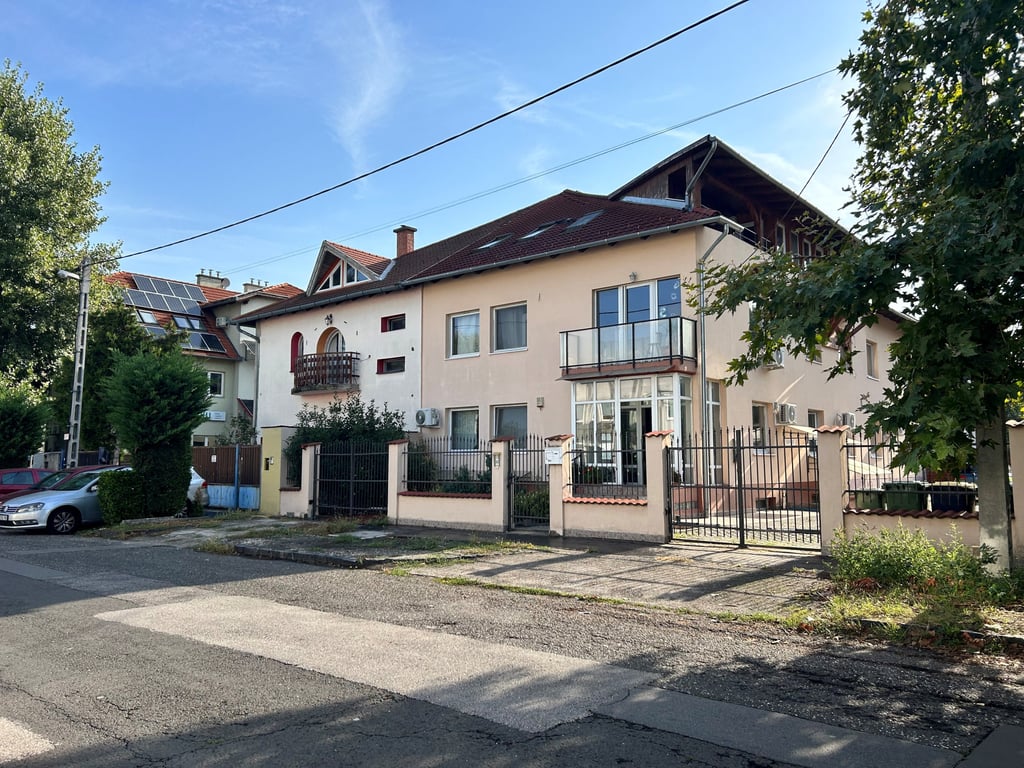
The stated address for BAC Consulting in Budapest, Hungary. Photo: Reuters
The senior Lebanese security source identified a photograph of the model of the pager, an AP-924, which like other pagers wirelessly receive and display text messages but cannot make telephone calls.
Hezbollah fighters have been using pagers as a low-tech means of communication in an attempt to evade Israeli location-tracking, two sources familiar with the group’s operations told Reuters this year.
But the senior Lebanese source said the devices had been modified by Israel’s spy service “at the production level”.
“The Mossad injected a board inside of the device that has explosive material that receives a code. It’s very hard to detect it through any means. Even with any device or scanner,” the source said.
The source said 3,000 of the pagers exploded when a coded message was sent to them, simultaneously activating the explosives.
Another security source told Reuters that up to three grams of explosives were hidden in the new pagers and had gone “undetected” by Hezbollah for months.

Scenes outside American University of Beirut Medical Centre in Beirut, Lebanon. Photo: Reuters
Israel’s spy agency Mossad has a reputation for carrying off sophisticated operations, blamed for cyberattacks and suspected of being behind the assassination of a top Iranian scientist with a remote-controlled machine gun.
Israeli officials did not immediately respond to Reuters requests for comment.
Hezbollah was reeling from the attack, which left fighters and others bloodied, hospitalised or dead. One Hezbollah official said the detonation was the group’s “biggest security breach” since the Gaza conflict began.
“This would easily be the biggest counter-intelligence failure that Hezbollah has had in decades,” said Jonathan Panikoff, the US government’s former deputy national intelligence officer on the Middle East.
In February, Hezbollah drew up a war plan that aimed to address gaps in the group’s intelligence infrastructure. Around 170 fighters had already been killed in targeted Israeli strikes on Lebanon, including one senior commander and a top Hamas official in Beirut.
In a televised speech on February 13, the group’s Secretary General Hassan Nasrallah sternly warned supporters that their phones were more dangerous than Israeli spies, saying they should break, bury or lock them in an iron box.
Instead, the group opted to distribute pagers to Hezbollah members across the group’s various branches – from fighters to medics working in its relief services.
The explosions maimed many Hezbollah members, according to footage from hospitals reviewed by Reuters. Wounded men had injuries of varying degrees to the face, missing fingers and gaping wounds at the hip where the pagers were likely worn.
A missile barrage by Hezbollah the day after October 7 opened the latest phase of conflict and since then there have been daily exchanges of rockets, artillery fire and missiles, with Israeli jets striking deep into Lebanese territory.
Israeli Defence Minister Yoav Gallant told US Defence Secretary Lloyd Austin on Monday that the window was closing for a diplomatic solution to the stand-off with Hezbollah.
Concerns over a wider conflict in the Middle East have prompted international airlines to suspend flights to the region or to avoid air space.
Still, experts said they did not see the pager blasts as a sign that an Israeli ground offensive was imminent.
Instead, it was a sign of Israeli intelligence’s apparently deep penetration of Hezbollah.
“It demonstrates Israel’s ability to infiltrate its adversaries in a remarkably dramatic way,” said Paul Pillar, a 28-year veteran of the US intelligence community, mainly at the CIA.
|
|



