something
scmp.com
Chinese scientists find ways to turn carbon dioxide into powerful antioxidant lycopene
Published: 10:00am, 23 Sep 2024
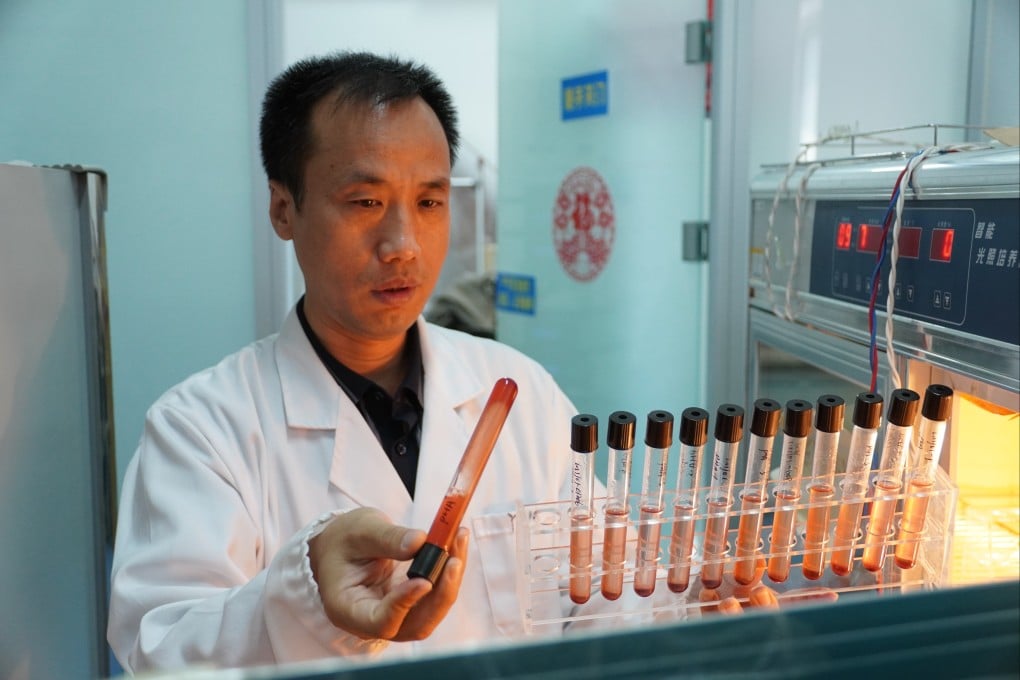
Researchers develop technology to mirror biological processes to produce compound that can help protect against heart disease and cancer
A group of Chinese scientists has devised a technology to capture carbon dioxide that they hope can be used to convert the gas into lycopene, a powerful antioxidant.
The compound naturally gives foods such as tomatoes, watermelons and peppers their pink or red colour. It is thought to be good for bone health and may help protect against heart disease, certain types of cancer and high blood sugar.
Lycopene is widely used in the pharmaceutical, cosmetics and food industries but the existing production methods have various drawbacks.
For example, extracting it from natural plants is time consuming, uses many raw materials and the resulting product has impurities. Meanwhile chemical synthesis is a laborious and demanding process.
The team at Qingdao Agricultural University in Shandong province developed a synthetic biology technology that aims to get round these problems.
Professor Yang Jianming, the team leader, decided to circumvent these headaches by using a biological method known as carbon fixation technology – the process by which organisms convert carbon dioxide into organic compounds, such as in plant photosynthesis.
The technology uses microorganisms as bioreactors to produce chemicals, materials or medicines, and is capable of reducing greenhouse gas emissions.
Speaking to local media earlier this month, Yang – a professor at the university’s College of Life and Sciences – said their breakthrough had the advantage of being a simple, low-cost and environmentally friendly way of producing lycopene.
Since returning from the United States in 2017, Yang has been working on the synthesis of lycopene using a bacterium called Rhodopseudomonas palustris, which is widely found in nature and has been isolated from sources including coastal marine sediments and pond water.
According to Yang, this microorganism is processed through advanced technologies such as mass screening and gene editing, after which it is able to capture carbon from carbon dioxide and synthesise economically valuable bioproducts.
For its potential applications in the management of various human diseases, such as obesity, diabetes, cardiovascular disease, cancers, and respiratory disorders, lycopene has attracted the attention of nutritionists, clinicians and scientists, a team of researchers from the Beijing University of Chinese Medicine said in a 2020 paper.
Lycopene currently costs up to 5 million yuan (US$708,800) per tonne.
The institute recently sold the patent for the technology to a local investment company for 1 million yuan, setting a record for the highest single patent deal in the field in Shandong province, according to the official China Science Daily.
The investment company and the university plan to collaborate on future projects, including green biomanufacturing technology, to help achieve global carbon reduction goals.
Removing carbon from the atmosphere is seen as an important strategy to combat climate change. Some start-ups in Hong Kong, for example, are growing trillions of tiny algae in the hope that this could be a cost-effective form of carbon capture and storage. |



