| | | Cessna eCaravan becomes largest electric aircraft to fly
By
Rytis Beresnevicius
May 29, 2020, 18:16 (UTC +3)
Civil Aviation
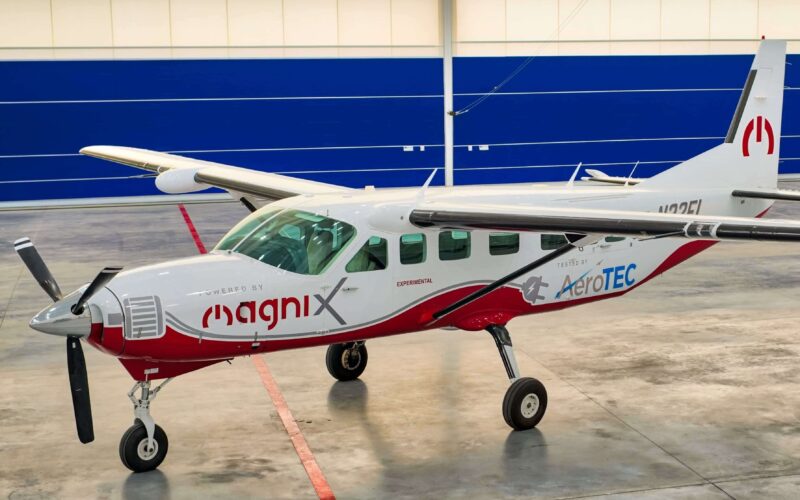
magniX
magniX announced that it has completed its first flight with a modified Cessna Caravan, which was powered by magniX’s electric engine, the magni500.
Undoubtedly, aviation has been at the forefront of emissions discussions over the last couple of years. From such movements as #flygskam, or flight shaming, to governments publicly requiring airlines to meet certain emissions standards. For example, the French government granted a $7.7 billion (€7 billion) state-guaranteed loan to Air France only if it met environmental commitments.
But the progress of electrifying aircraft has been slow. The cost, weight and relative inefficiency of batteries to their jet engine counterparts have slowed down the progress over the years. The brightest prospect, the Airbus E-Fan X based on a British Aerospace BAe146 with one of its four engines being electric, was canceled in April 2020. The E-Fan X never carried out a flight, before it was put on the chopping block by Airbus and Rolls Royce. While the main reason for the cancelation was the coronavirus pandemic and the subsequent challenges that aviation companies, including manufacturers, have faced, the technological gap is definitely there.
Technology gap
On May 28, 2020, an electric Cessna eCaravan lifted off the ground powered by magniX’s propulsion system. The maiden flight was the fruit of hard labor to convert the aircraft from “its gas-guzzling, emission creating, old self, to an all-electric, low operating cost, clean aircraft,” according to the Australian company.
However, the CEO of the company Roei Ganzarski noted that battery technology currently is only good for “ultra-short flights of 100 miles [160 kilometers – ed. note],” and that battery technology can only go up. The dirty and smelly brother of the eCaravan, meanwhile, can travel up to 1230 miles (1982 kilometers), states Cessna’s brochure about the 9-seat Caravan.
Even so, the eCaravan did not carry passengers on its maiden flight. Goznarski told the Seattle Times that the company “could not fit a person in that aircraft,” as there “was not even an attempt to put the batteries in a convenient place.” The aircraft in its current state is just a test bed, indicated the chief executive of the company.
magniX, nevertheless, has been making strides in electrifying commercial aviation. In December 2019, the company partnered with Harbour Air – a small commuter airline in British Columbia, Canada. The two companies converted a DHC-2 Beaver into an electric aircraft and carried out a 15-minute flight.
The eCaravan doubled the distance traveled, as it concluded a 30-minute flight. The current configuration would allow the aircraft to carry between four and five passengers up to a distance of 100 miles (160 kilometers).
aerotime.aero
Surf Air Mobility secures first 20 Cessna aircraft for electrification
aerotime.aero |
|



