Health
Local News
Nation & World Politics
Northwest
Puget Sound
WA elected officials, hospitals blast Medicaid vote as ‘terrible,’ ‘cruel’
May 23, 2025 at 6:00 am Updated May 23, 2025 at 6:00 am
Gov. Bob Ferguson holds a press conference at the Harborview Medical Center Research and Training Building on Thursday to discuss Congress’ proposed cuts to Medicaid. “We’re going to do everything in our power to stop (cuts) from happening,” Ferguson said. (Karen Ducey / The Seattle Times)
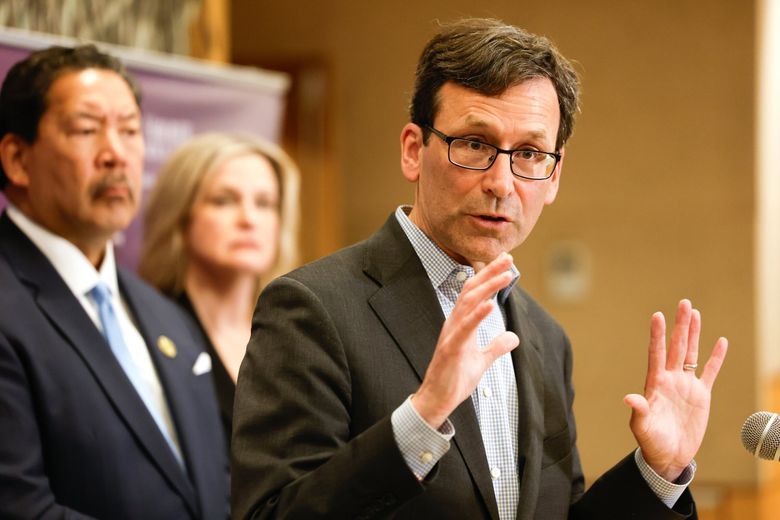
Gov. Bob Ferguson holds a press conference at the Harborview Medical Center Research and Training Building on Thursday to discuss Congress’ proposed cuts to Medicaid. “We’re going to do everything in our power to stop... (Karen Ducey / The Seattle Times)
By
Elise Takahama
Seattle Times staff reporter
Several state elected officials and hospital leaders blasted the U.S. House vote Thursday that approved billions of dollars in Medicaid cuts nationwide, and could end coverage for about 200,000 Washingtonians who rely on Apple Health.
The reconciliation bill that passed the House 215-214 Thursday includes about $4.5 trillion dollars in tax breaks, which House Republicans achieved through major reductions in funding to the largest government insurance program in the country, as well as to food assistance and clean energy programs. As the package heads to the U.S. Senate, many Seattle and Washington leaders are vowing to fight.
In a news conference at Harborview Medical Center on Thursday, Washington Gov. Bob Ferguson called the situation a “four-alarm fire,” referring to the vote as “an action that can only be described as cruel.”
“What happened in Congress a few hours ago makes a challenging situation dire,” Ferguson said of the ongoing financial challenges hospitals across the state have faced the last several years. “I’m not just throwing that word around. I want to be crystal clear: It’s dire.”
In Washington, about 1 in 4 residents receive Apple Health, the state’s Medicaid program — or nearly 2 million people. About 800,000 are children.
More than 105,000 Washingtonians depend on Apple Health for long-term care, and the program covers 3 in 5 nursing home residents, according to Ferguson’s office. Medicaid funds also cover over 45% of births in the state, and more than 70% in rural Washington, his office said.
“We’re going to do everything in our power to stop (cuts) from happening,” Ferguson said.
The tax bill notably imposes a work requirement and stricter reporting of employment for low-income adults to receive Medicaid. Those changes are estimated to save the federal government $280 billion over six years, and would come from fewer people having Medicaid.
Two members of Washington’s congressional delegation, Republican Reps. Dan Newhouse and Michael Baumgartner, who represent Central and Eastern Washington counties, voted for the bill. All eight Democrats voted no.
In a Thursday statement, Newhouse said he supported “real, commonsense reforms to strengthen the integrity of Medicaid.”
“By implementing work requirements for able-bodied adults without dependents, and preventing those here illegally from accessing the program, we are protecting Medicaid for those who truly need it most,” he wrote.
According to initial estimates from Ferguson’s office, the changes, if approved, would mean the state could lose about $2 billion in federal Medicaid money over the next four years. Nationwide, Medicaid cuts total about $700 billion.
U.S. Rep. Suzan DelBene, D-Medina, in a Thursday statement called the bill a “betrayal” of Republicans’ pledge to lower costs for everyday families and “nothing more than one big broken promise.”
Not only would the proposed changes push hundreds of thousands of people off Apple Health by the end of 2026, hospital leaders said, they would also mean less Medicaid money to health care organizations throughout the state.
At Harborview — the region’s only Level 1 adult and pediatric trauma center — more than 34% of patients receive Apple Health coverage, hospital CEO Sommer Kleweno Walley said during the news conference. About 5% of patients are uninsured, she said.
Smaller, more rural hospitals would likely be hit hardest, said Cassie Sauer, president and CEO of the Washington State Hospital Association. These are health care facilities already financially strapped after years of pandemic pressure, and that often serve a higher percentage of lower-income patients with Apple Health coverage, she said.
“It’s terrible,” Sauer said of the House decision in a Thursday interview. “Characterizing (Medicaid coverage) as ‘waste, fraud and abuse’ is false. And it’s absolutely going to result in a loss in coverage and health care providers getting paid less.”
Among the region’s community health clinics, the proportion of Apple Health patients is often much higher. Sea Mar Community Health Centers, which runs more than 90 medical, dental and behavioral health clinics in the state, received 65% of its revenue from Medicaid in 2024, according to a March report from U.S. Sen. Maria Cantwell’s office.
At HealthPoint, which has about 20 locations in King County, Medicaid reimbursement made up about 77% of revenue last year, according to the report.
“This is Robin Hood in reverse: Robbing from the poor to give to the rich,” Cantwell said in a statement following the House vote.
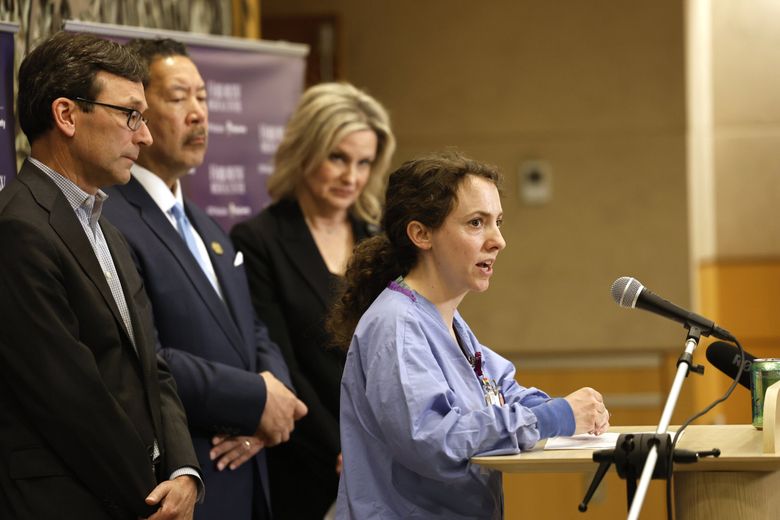
Nurse Sam Conley speaks while Gov. Bob Ferguson, left, Seattle Mayor Bruce Harrell, and Sommer Kleweno Walley, right, Harborview CEO, listen at a press conference at the Harborview Medical Center Research... (Karen Ducey / The Seattle Times)
Many hospitals throughout the state have struggled with low Medicaid reimbursement rates for years, and a recent stop in a separate, state-approved Medicaid funding program has made things more difficult, Sauer said.
Most Read Local Stories Valley Medical Center in Renton this month announced plans to close five of its clinics and two inpatient units, largely due to the halt in federal reimbursement through the state’s safety net assessment program, which was approved in 2023 and aims to close the gap in Medicaid funding.
More clinic closures and cuts in service throughout the state — followed by potential shutterings of whole hospitals — will be on their way if these Medicaid changes are approved, said Harborview’s Kleweno Walley.
She stopped short of saying a hospital like Harborview would be in danger of closing its doors, but added that its leaders would be forced to have “incredibly difficult conversations about what parts of Harborview can stay open and what parts we have to rethink.”
“We’re at a very pivotal, crucial point, where hundreds of millions of dollars are impacted,” Kleweno Walley said. “There are hospitals that are closer to closing than others. It is more real than we would like.”
Elise Takahama: 206-464-2241 or etakahama@seattletimes.com.
seattletimes.com |



