RFK Jr. fires ‘Washingtonian of the year’ from CDC vaccine panel
June 16, 2025 at 10:00 am Updated June 16, 2025 at 10:00 am
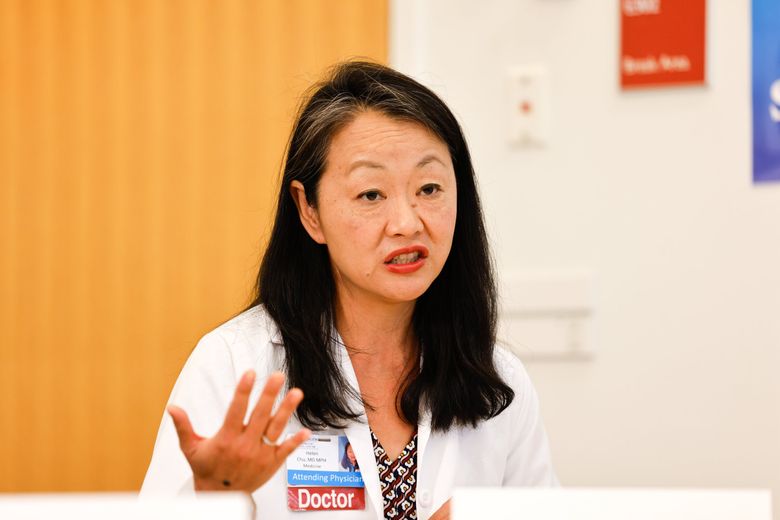
Dr. Helen Chu of Seattle was named last July to a four-year term with the CDC’s Advisory Committee for Immunization Practices. This month she was abruptly dismissed, along with 16 other committee members. (Karen Ducey / The Seattle Times, 2024)
By
Elise Takahama
Seattle Times staff reporter
Many vaccine scientists and researchers are still in disbelief over how quickly the future of their field has shifted in the last week.
It took two years for Seattle infectious disease doctor Helen Chu to go through the rigorous process of applying to one of the country’s top vaccine advisory panels. It’s a group that typically operates in the background, but their work has broad impacts — committee experts review clinical data and provide recommendations to the Centers for Disease Control and Prevention that spell out best practices for individuals and families in the U.S., and guide insurance companies on which vaccinations to cover.
Last July, after Chu was at last vetted and approved, she began what she thought would be a four-year term with the CDC’s Advisory Committee for Immunization Practices. She was looking forward to taking on a new level of public service in shaping national vaccine policy.
But less than a year later and via a brief and vague email, Chu — along with all 16 other members of the committee — was abruptly dismissed. TheJune 9 email didn’t specify why, she said.
RelatedU.S. Health Secretary Robert F. Kennedy Jr. addressed the news on X, citing a need for a “clean sweep” due to “historical corruption at ACIP.”
“The Committee will no longer function as a rubber stamp for industry profit-taking agendas,” Kennedy added in a news release. He said he aimed to “reestablish public confidence in vaccine science.”
Kennedy also used X later in the week to announce eight replacements. They include a physician who previously served on the committee, a scientist who has spread misinformation about COVID-19 vaccines and an epidemiologist who denounced COVID lockdowns.
“I don’t know what’s happening now,” Chu said in a Thursday interview. She laughed. “I mean, it’s not funny. It’s just so hard to think about this.”
If the country can’t rely on an independent, unbiased CDC panel that ensures safe vaccines are accessible to those who most need them, “it will be replaced by a patchwork of different policies by different states and each state will have to make its own decisions,” she said during a news conference hosted by U.S. Sen. Patty Murray.
“I really worry about the health and safety of people in our country, and the future of our public health infrastructure,” Chu said.
Other vaccine experts, along with national organizations like the American Medical Association, have reacted with similar incredulity, while voicing their alarm over the reliability of CDC guidance going forward.
Dr. Steve Pergam, medical director of infection prevention at Fred Hutchinson Cancer Center, said he couldn’t think of someone more well-suited to serve on the committee than Chu.
“She knows immunology really well,” said Pergam, a former member of the U.S. Food and Drug Administration’s vaccine approval committee. “That’s the kind of person they try to pick.”
Chu has worked in immunization and infectious disease for over a decade, but gained more public attention over the last five years with her early contributions to testing efforts during the COVID-19 pandemic.
Sign up for Morning Brief
Delivered weekday mornings, this email provides a quick overview of top stories and need-to-know news, including the latest on the novel coronavirus.
Her lab, which developed the Seattle Flu Study, was the first in the U.S. to detect community COVID transmission in late February 2020, as the country’s first virus cases and deaths were being reported. Because of how well-positioned the lab already was in tracking local respiratory infections, her team played a significant role in guiding Washington state and the country in building up reliable testing systems.
In 2021, a state leadership board named Chu “Washingtonian of the Year.”
In addition, Chu specializes in research around maternal vaccines, especially against influenza and respiratory syncytial virus, or RSV. She also sees patients at UW Medicine.
She was at a loss for words when asked about Kennedy’s claims around now former ACIP members.
“The fact that he thinks we’re conflicted, that we’re sort of shills of pharmaceutical (companies)” is confusing and not true, Chu said. “I just don’t know what to do with that. I don’t want to even think about or comment on that.”
The roles are unpaid and apolitical, she said, and among the highest forms of public service in her field. A requirement of serving on the committee is to cut any prior clinical research ties with pharmaceutical companies that might be developing vaccines, she added.
Most Read Local Stories“These are science-based recommendations,” Chu said of the panel’s work. “We look at the data and we make decisions based on the data. It’s very simple.”
How vaccines are approved
The country’s ACIP group usually has three in-person meetings a year, open to the public, Chu said. Members also met in work groups virtually, sometimes up to four times a month during busy periods, she added.
The committee’s smaller work groups focus on different diseases or issues, from COVID to childhood immunization schedules. Chu used to chair the RSV work group, which has had a particularly hectic couple years as the FDA approved a new vaccine against the seasonal respiratory virus, she said.
The panel only reviews vaccines the FDA has approved, and is in charge of making decisions around who to approve the vaccines for. The committee reviews data from clinical trials, put together by the CDC, then makes a recommendation to the CDC director, Chu said. Once the CDC director signs off on a vaccine, the recommendation is published in the Federal Register and put on the agency’s immunization schedule.
That’s important because the vaccine schedule sets a rate insurance companies are obligated to pay for immunizations under the Affordable Care Act, Chu said. It allows many patients, including Medicaid members, to get a number of vaccines covered, like COVID boosters.
“There are multiple layers of review with experts all the way up that chain,” said Pergam, of Fred Hutch. “We are the envy of most countries in how we address these policies and how we’ve done this. These are people that have spent their lives working on vaccines.”
Now, it’s unclear how the new ACIP panel will make decisions, or if the CDC will follow the committee’s recommendations.
“This is not business as usual anymore,” Chu said. “I don’t know how vaccine decisions will be made in the future.”
She said she plans to continue pushing for clarity around the new process.
That’s partially why Chu joined Murray’s news conference Thursday, to elevate her concern about vaccine approval and access moving forward.
“Kids are going to be hospitalized and even killed,” Murray said at the news conference. “All because one conspiracy theorist thinks he knows better than qualified medical experts and centuries of research.”
Murray pledged to “raise the alarm” about the consequences of losing vaccine access, especially at a time when measles outbreaks are emerging throughout the country, including some cases in Washington.
“It’s not a good feeling to know I’m not doing this anymore,” Chu said. “But what I hope we can do, at least in the state of Washington, is make sure that the decisions here continue to be guided by evidence.”
Elise Takahama: 206-464-2241 or etakahama@seattletimes.com.
seattletimes.com |



