Copper ... cannot print copper
bloomberg.com
The US Has More Copper Than China But No Way to Refine All of It
The industry will need to overcome high energy and labor costs, environmental regulations and a glut of cheap Chinese competition to make US copper smelting great again.
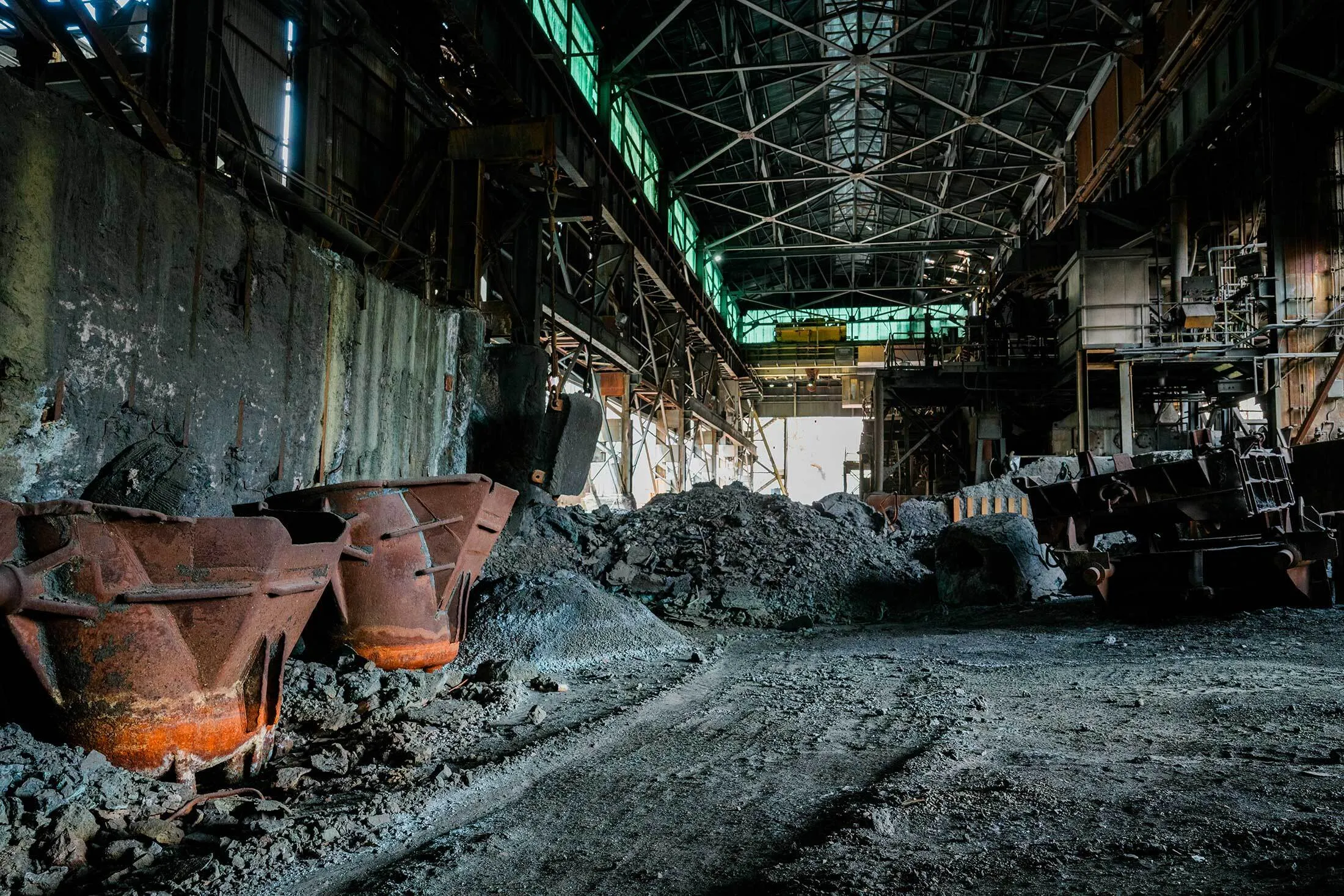
Vessels and residual ore at the idled Asarco smelter in Hayden, Arizona.
Photographer: Caitlin O’Hara for Bloomberg Businessweek
By Jacob Lorinc, James Attwood, and Yvonne Yue Li
June 18, 2025 at 5:00 PM GMT+8
Corrected
June 20, 2025 at 11:27 PM GMT+8
Freeport-McMoRan Inc.’s only US copper smelter—a hulking metal-processing facility at the edge of an old Arizona mining town—spits neon flames from its furnace like an industrial volcano. Here, hundreds of employees work around the clock to transform vats of concentrated molten metal into neat, purified slabs, which are then shipped to a refinery in El Paso, Texas, the next step on their cross-country journey to become coils for electric wiring.
On a sweltering day in May, plant operators are decked out in heat suits and fire-resistant visors, transferring heaps of metallic powder into industrial-scale ovens with machines that look like soup ladles for giants. It’s a rare example of entirely made-in-America copper, an almost extinct part of the supply chain that President Donald Trump is hell-bent on bringing back.

Heavy machinery outside the mothballed Hayden facility, about 95 miles southeast of Phoenix.Photographer: Caitlin O’Hara for Bloomberg Businessweek
Talk of the metals industry usually conjures images of sprawling mining operations or the finished goods churned out at the end, from cookware to electronics to plumbing. To get from one to the other, smelters and refineries are an essential part of the process, using heat, acid and chemicals to convert raw materials into their purest forms. The process has become almost prohibitively expensive in the US because of regulation, energy costs, labor and a glut of cheap Chinese competition.
A tangle of pipelines and steel beams, the Freeport smelter on the outskirts of Miami, Arizona, was one of several industrial processing facilities built near the turn of the 20th century to accommodate a flurry of mining in the American Southwest. Today it stands almost alone, one of the very last copper smelters operating in the country. Keeping it churning out giant sheets of metal for more than 100 years hasn’t been easy. Freeport’s US operations cost about three times more than the company’s operations outside the country. Instead of processing copper in the US, many miners now turn abroad—where there’s more than enough capacity—to transform the raw materials they pull from the ground.
China Dominates Refining Capacity
Where copper is produced

Source: US Geological Survey
Note: 2024 estimates
“We’ve had to get really innovative, really competitive to keep going,” says Michael Cross, an engineer at the Arizona smelter, sweating in front of a red-hot furnace.
The Freeport facility has remained afloat by processing ore from the company’s nearby mines and boosting production of sulfuric acid, a critical ingredient for mining operations, which it can then sell. But the economic pressure from China’s army of smelters has been constant over the years and caused the US industry to downsize in the late 2000s and mid-2010s while demand for US copper dwindled. Now, demand is back—but the US capacity isn’t.

Michael Cross at Freeport’s Miami smelter.Photographer: Caitlin O’Hara for Bloomberg Businessweek
Plants such as this one reveal the challenges facing Trump as he pushes to restore a domestic critical minerals supply chain. To encourage the resurgence of a home-brewed industry, he’s directed the secretary of commerce to investigate the effects of copper imports on the country and floated his idea for a 25% import levy. Copper goes into seemingly everything, including electric vehicles, construction and defense applications, and China’s position at the center of the supply chain “poses a direct threat to United States national security and economic stability,” the White House said in a February executive order.
Stockpiles Soar Ahead of Potential TariffsUS copper inventory, in tons

Source: Comex, compiled by Bloomberg
The US has plenty of copper in the ground. The latest data compiled by the US Geological Survey put reserves at around 47 million metric tons—the No.?7 spot globally and ahead of China. There are copper projects across the US that could, in theory, add about 1.5 million tons to the country’s annual production, says GEM Mining Consulting—enough to fulfill almost all domestic demand. The Resolution Copper project, a giant deposit in Arizona owned by Rio Tinto Group and BHP Group, for instance, has a recent green light from the Supreme Court, which declined to hear a tribal appeal to halt the project, and from the federal government, which put its permitting timeline on a fast track.
Still, it takes an average of 29 years from the discovery of a US copper deposit to the start of production—the longest development time in the world after only Zambia. And even if Trump can deliver on his pledge to speed up permitting, the US would still lack the key smelting and refining operations to process all that ore domestically.
“Unless the US significantly invests in downstream infrastructure, it will remain dependent on foreign refining, undermining the goal of restoring copper industry leadership,” says Patricio Ignacio Faúndez, a mining consultant at GEM in Singapore.
The US copper industry has been shrinking for decades. It peaked around 1997, producing 1.9 million tons of the metal from the roughly 35 mines and 11 smelters that were then operating. Now there are 25 mines and only two smelters that process mined ore—Miami and Rio Tinto’s Kennecott in Utah—plus a third dedicated to anodes and scrap. China produces about 13 times more refined copper than the US. The Asian country operates more processing facilities than anywhere else in the world, part of a nationwide project that began in the ’90s to meet demand for copper in construction, electronics and manufacturing.
Construction Drives Copper Demand Higher
Global use of copper by gross weight, 2023

Source: International Wrought Copper Council
In fact, China now has so much smelting capacity that so-called treatment and refining charges—the industry’s way of pricing the raw material—have gone negative. That means smelters are effectively paying more for their concentrate than the value of the metal it contains.
The last smelter for mined copper built in the US was Kennecott, which began operations in 1995. The current cost to construct a domestic smelter would total somewhere around $3 billion, says Simon Jowitt, director of the Nevada Bureau of Mines & Geology.
“It’s a really hard business,” says Kathleen Quirk, Freeport’s chief executive officer. “You’re constantly having issues because of the conditions inside a smelter, and the economics of it are not attractive.” One of the world’s top copper producers, Freeport owns or co-owns three smelters globally, including a new one in Indonesia, which came about only after the government there ordered mining companies to build domestic processing plants as part of a government-led push to onshore its minerals supply chain. Indonesia “saw all their materials going out of the country, and they wanted to capture downstream value,” Quirk says. But “unless you’re compelled to build one—unless the government says you have to do it—you’re just going to be economically incentivized to export.”
Copper Deficit Seen Ahead
Global refined copper, in metric tons

Source: Citi
Related: Freeport CEO Says Tariffs Threaten to Hinder US Copper Mining
In the desert town of Hayden, about 95 miles southeast of Phoenix, an idled smelter owned by Asarco LLC, a unit of Grupo México, collects dust while the company contemplates its future. The plant was mothballed in 2019 following a labor dispute that devolved into a strike. Even after the issue was resolved, the plant remained shut, as competing Chinese facilities came online, tightening margins for existing plants.
Today the furnace room is littered with empty soda cans and abandoned heat suits, little changed from when workers walked off the job six years ago. Slag and rust accumulate on heavy equipment. The company says it might reopen the plant—certainly the White House seems supportive of the overall industry for the first time in a while—but it depends on whether it can get help from the Environmental Protection Agency.
“We just don’t have all the subsidies or the lack of environmental controls that countries like China do,” says James Stewart, director of environmental, government and community affairs at Asarco.

Boarded-up shops on Hayden’s main drag.Photographer: Caitlin O’Hara for Bloomberg Businessweek
Copper processing isn’t pretty work. Smelters belch sulfurous exhaust from smokestacks that can expose nearby residents to arsenic and lead. Ralph Lopez, 71, recalls “smog days” decades ago that engulfed the town in black and yellow exhaust. “Recess would be canceled, and we’d have to stay inside,” Lopez says, cooling off in Hayden’s public library on a scorching May afternoon. “Otherwise we’d be choking.” In 2015 the EPA announced a settlement with Asarco after discovering toxic pollution spewing from the facility.
Still, it sure would be nice to have those jobs back, says Lopez, who worked for decades in the smelter’s warehouses, stacking slabs of copper for distribution across the country, before retiring. Cracked sidewalks and closed storefronts now line the small desert community, where no other major employer has emerged. But in the 1970s and ’80s, Lopez recalls, there was a department store, a movie theater, nice cars and soda fountains.
“We were a boomtown,” he says. “But now—look around—we’re a bust town.” |



