| | | Strong solar storm slamming Earth TODAY as magnetic chaos threatens power grids across the USBy CHRIS MELORE, US ASSISTANT SCIENCE EDITOR
Published: 12:24 EST, 6 November 2025 | Updated: 14:29 EST, 6 November 2025
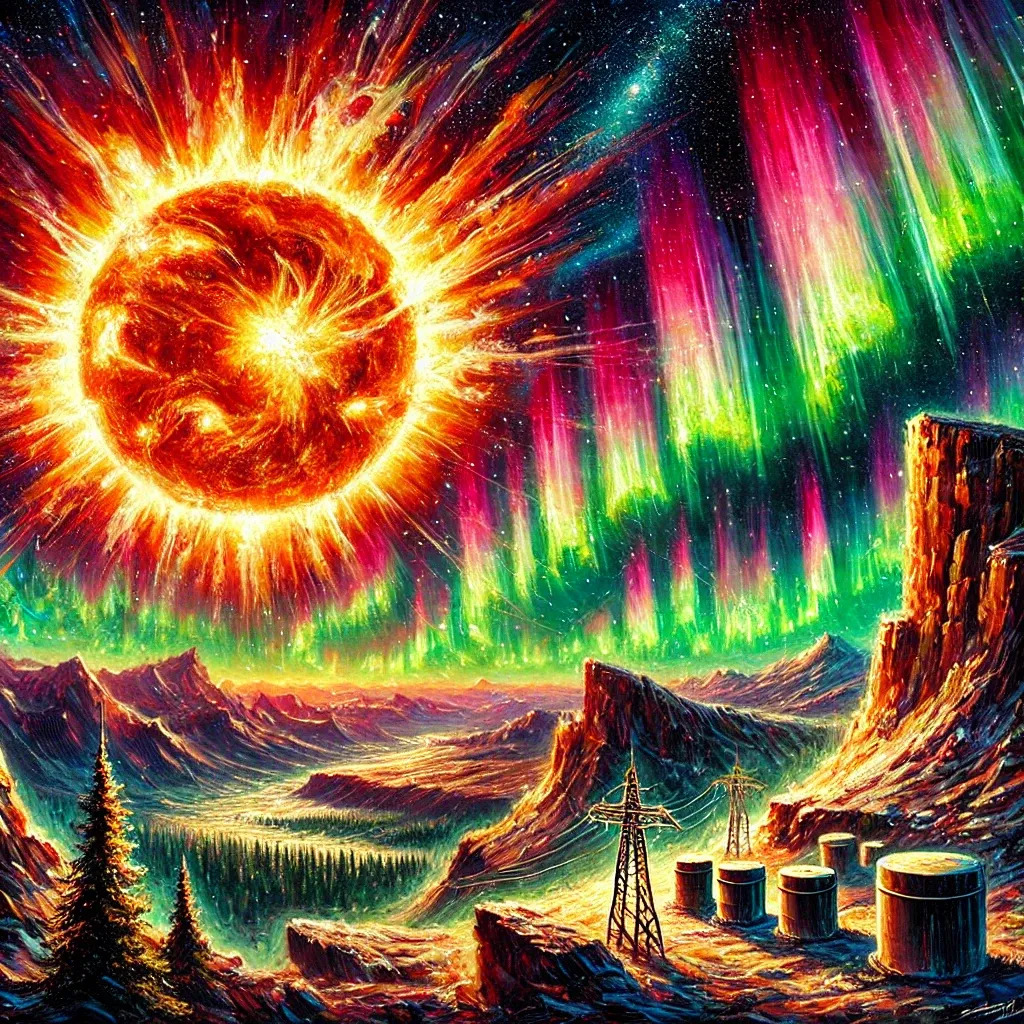
A powerful solar storm is currently striking Earth, disturbing the planet's magnetic field and putting power grids, satellites and GPS systems across the US at risk
The major G3 geomagnetic storm started late Wednesday night and is expected to linger throughout Thursday over the northern US, according to forecasters from the National Oceanic and Atmospheric Administration (NOAA).
While the storm's effects peaked between 1.27am and 2am ET this morning, NOAA noted that the solar event is still at G2 strength heading into Thursday afternoon.
This storm is the result of solar eruptions, including flares and coronal mass ejections (CMEs), where plasma is ejected from the sun and travels toward Earth, typically arriving a day or two later.
Since November 3, four CMEs have been detected, with the latest plasma burst occurring on November 5, and its effects are expected to continue through Friday.
A G3-level storm, considered 'strong,' can trigger voltage fluctuations, power grid damage, satellite glitches, GPS disruptions, and even radio blackouts.
While the largest impacts are expected near the poles, the storm's reach could extend as far south as Pennsylvania, Iowa, and Oregon.
States including New York, Vermont, New Hampshire, Maine, Michigan, Wisconsin, Minnesota, Montana, Idaho, Washington and the Dakotas were all in range to see auroras at the storm's peak this morning.

The effects of a strong geomagnetic storm stretching into the northern US could last for several hours on Thursday

Satellites often experience widespread disruptions during strong solar storms like the Thursday G3 event (Stock Image)
Geomagnetic storms occur when massive eruptions of solar plasma temporarily disrupt Earth’s magnetic field, similar to a gust of wind shaking a flagpole.
These events are rated on a scale from G1 (minor) to G5 (extreme), and G3-level activity often lingers for hours.
NOAA warned disturbances could continue into Thursday evening in some regions, with weaker after-effects lasting up to 12 hours, depending on interactions between the solar wind and the atmosphere.
Since NOAA’s initial warning, two new alerts have been issued, showing storm strength fluctuating from G3 to G1 before rising again to a G2 storm Thursday morning.
Currently, the strongest impacts are expected in Canada, Alaska and northern Europe.
However, northern US residents may still see the Northern Lights tonight in dark, high-elevation areas.
To improve your chances of seeing an aurora, go to a dark location away from city lights, face north, and use a space weather app for real-time updates.
'Aurora may be seen as low as New York to Wisconsin to Washington state,' NOAA's latest forecast revealed

The solar storm striking Earth is believed to have originated from a coronal mass ejection sent out by the sun on November 5 (Stock Image)
Earth faces mass extinction as magnetic poles race toward catastrophe, expert warns

Power companies also regularly take note of these forecasts and usually take steps to prevent problems, such as adjusting their grid settings.
If you rely on sensitive electronics or live in a high-latitude area, it's recommended that you have a flashlight or backup power ready, just in case a future solar storm is stronger than experts forecast.
Scientists have warned that communication problems related to solar activity could get worse in the future after discovering a 'weak spot' in Earth's magnetic field has continued to grow in recent years.
The region, known as the South Atlantic Anomaly (SAA), spans more than 4.3 million square miles over parts of Africa and South America and has been moving westward.
This weak spot allows harmful radiation to come closer to our planet's surface.
The 'dent' also allows harmful radiation particles from the sun to seep through the magnetic field, which NASA scientists said 'can knock out onboard computers and interfere with the data collection of satellites that pass through it.'
 |
|



