| | | Fortescue Infinity Train gets 14.5 MWh battery that never needs charging [update]

Jo Borrás | Dec 15 2025 - 9:55 am PT
93 Comments
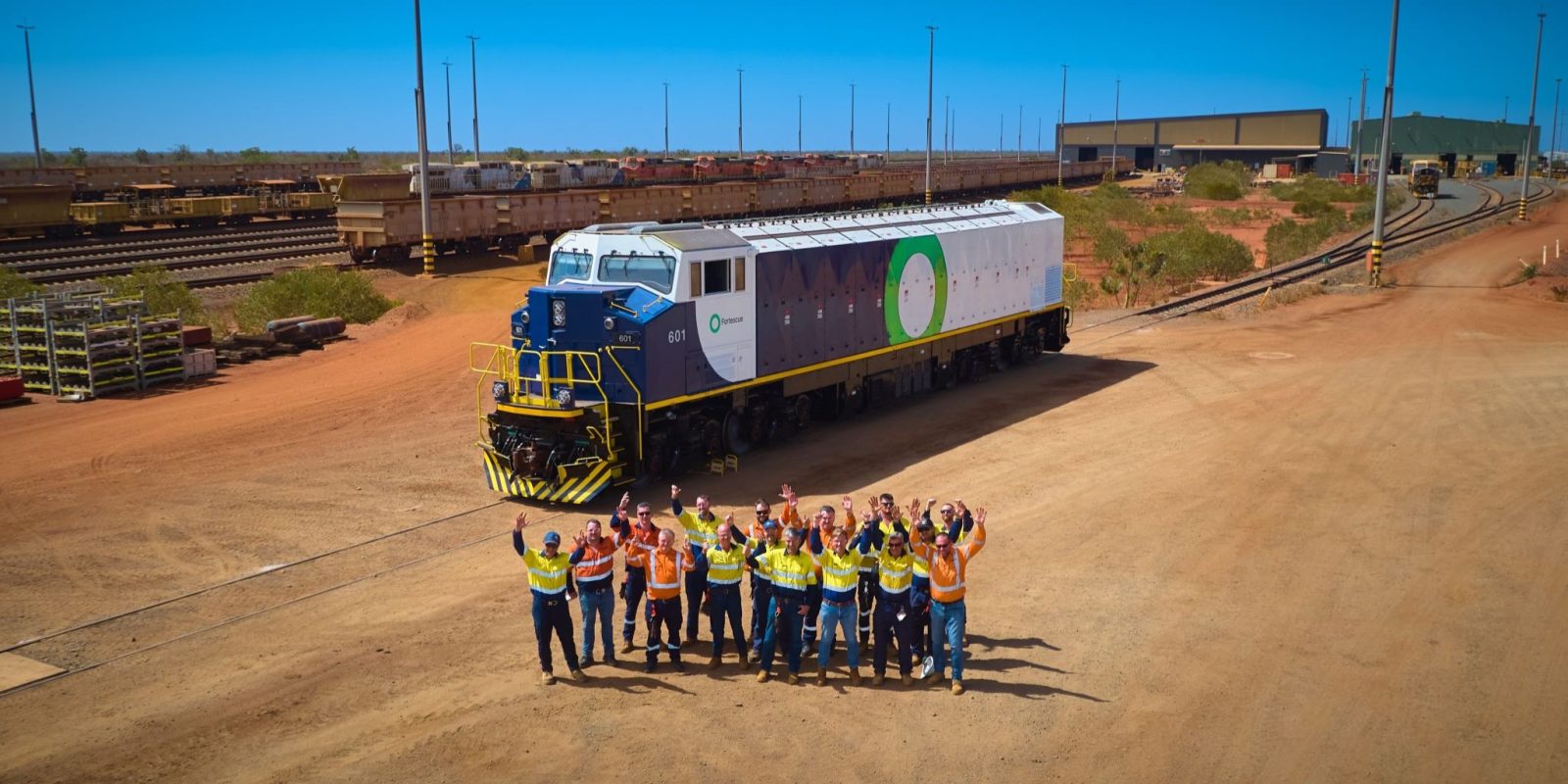
Fortescue has taken the wraps off a prototype of its proposed “Infinity Train” electric locomotive, making the 1,100 km (about 685 miles) trip from Perth to the Pilbara and marking a major milestone in the decarbonization of the company’s heavy haul operations.
UPDATE 15 DEC 2025: now there are two!
This week, two of Fortescue battery-electric locomotives began operating at the company’s Pilbara mines in Australia, where the so-called Infinity Trains (co-developed with Caterpillar’s Progress Rail division) began regular duty.
“It’s not every day you welcome not just one, but two of the world’s largest battery-electric locomotives into your operations,” said Fortescue Metals CEO, Dino Otranto, on LinkedIn. “ can’t wait to see these in motion soon!”
The two new trains are now fully operational assets, packing almost unimaginably massive 14.5 MWh battery packs that were charged once with grid power upon deployment, and which will (in theory) remain at a usable state of charge indefinitely thanks to a cleverly applied combination of gravity, regenerative braking, and human intelligence.
You can read the original article about the Infinity Train prototype completing its first 1,100 km (~685 miles) trip across the Pilbara, below, then let us know what you think of Fortescue’s latest fuel-saving efforts in the comments section at the bottom of the page.
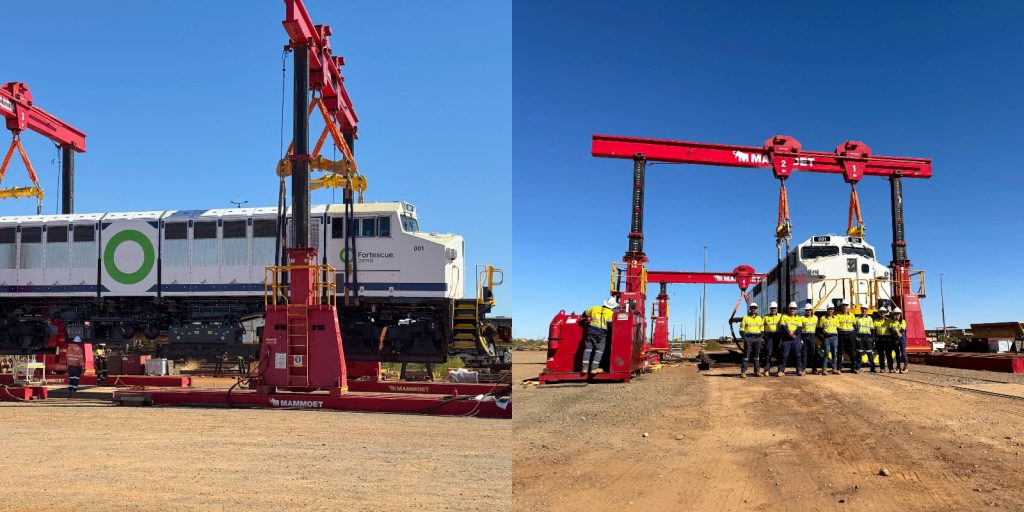
Infinity Train prototype; by Fortescue Rail.
Co-developed with the locomotive experts at Downer Group, Fortescue revealed its concept for a battery electric “Infinity Train” back in March of 2022. At the time, the company promised a “world’s first” iron ore train capable of fully charging its batteries through regenerative braking. The two companies claimed the clever technology would create a self-sustaining, zero-emission rail system powered entirely by the force of gravity during the train’s loaded downhill travels.
This week, the concept went from the drawing board to the real world, completing an 1,100 km trip across Australia and proving itself to be up to the task of handling the grueling demands of Fortescue’s massive mining operations.
“We’re thrilled to see our battery electric locomotive prototype arrive in the Pilbara,” said Ellie Coates, CEO of Fortescue Zero. She added that the achievement, using zero fossil fuels, “represent(s) a major step in Fortescue’s journey to Real Zero.”
The Fortescue Infinity Train uses the energy produced by slowing the loaded train on downhill sections of the company’s 385 mile private, heavy-haul rail network to recharge its battery systems. That energy is enough to bring the unloaded train back to the mine, eliminating the need for external charging infrastructure or additional renewable energy sources, making the train almost entirely self-sufficient.
Fortescue says the deployment of the Infinity Train concept at its mines will eliminate more than 82 million liters of diesel fuel consumption (about 21 million gallons, which ChatGPT tells me amounts to about 235,200 tons of CO2 emissions).
That change alone would eliminate about 11% of Scope 1 emissions annually for Fortescue all on its own, putting it well on its way to its stated goal of achieving “Real Zero” emissions-free operations.
Electrek’s Take

Infinity Train on the rails; via Fortescue.
Using gravity to charge up heavily-laden mining vehicles on downhill runs is an idea that’s been put into practice for years, with great success wherever the topography allows ( since 2017, at least). Combining that clever use of gravity, traction braking, and battery storage for use on a rail system like this just seems smart, and it makes me think we’re just scratching the surface of all the clever ways electrification and battery storage will eventually get put to use.
Top comment by Ahmet Togo Giz
Liked by 5 people
Even if it is not 0 due to frictional losses being more than their estimates it will definitely be far more economical than regular diesel traction.
View all comments
I wonder what would happen if you threw some battery electric rail cars into the mix, as well!? You guys are smart, head down to the comments and let me know (and, while you’re there, help me check ChatGPT’s math on those carbon emissions).
SOURCE | IMAGES: Fortescue, via LinkedIn.
electrek.co |
|



