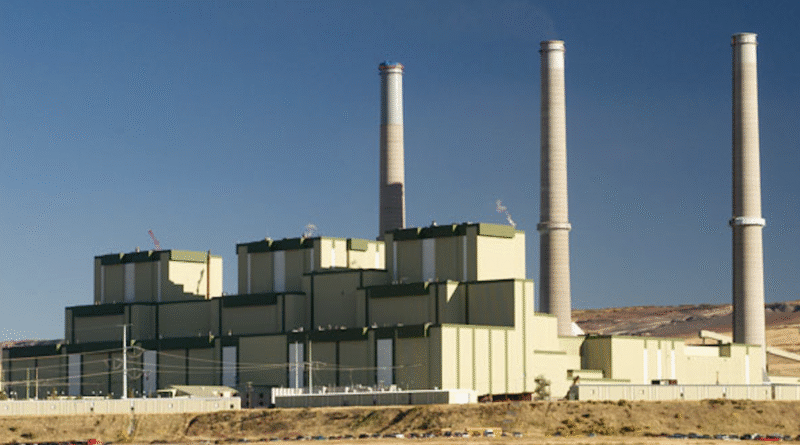
Two major utilities are protesting a federal order requiring them to operate the Craig Unit 1 coal power plant in Colorado, originally scheduled to retire on December 31 of 2025 (cropped, courtesy of Platte).
Fighting Back: Utilities Challenge Coal Emergency Order
51 minutes ago
Tina Casey
1 Comment
Support CleanTechnica's work through a Substack subscription or on Stripe.
Or support our Kickstarter campaign!

US President Donald Trump declared an energy emergency upon taking office, so where’s the fire? Instead of ramping up federal support for wind and solar — the two most economical energy resources at hand — here we have the US Department of Energy issuing emergency orders to prop up ancient, expensive coal power plants. No wonder utilities are beginning to fight back.
Tri-State Is Done With Your Coal Power Plants
For those of you new to the topic, coal once accounted for about half of power generation in the US. That share began to shrink at the dawn of the 21st century, when a torrent of low-cost natural gas prompted a wave of coal power plant retirements. More recently, wind and solar have become cost-competitive in most markets, with smart grid technology and storage filling in the intermittency gaps.
That explains why coal accounted for just 16% of power generation in the US as of 2023, with natural gas dominating at 43% and all renewables combined turning in a respectable 21%. That figure included a healthy 10% for wind, with solar next at 8%. Currently the US Energy Information Agency anticipates that renewables will account for 28% of power generation next year, with solar turning the tables to outpace wind.
Although the EIA finds that fossil fuels continue to play a larger role during storms and other periodic events, the writing is on the wall. Utilities have spent years planning for the retirement of aging coal power plants, and that includes two major utilities serving rural and urban parts of Colorado and the surrounding region, the Tri-State Generation and Transmission Association and the Platte River Power Authority. The two are co-owners of the Craig Unit 1 coal power plant in Moffat County, Colorado, in cooperation with other leading utilities, including PacifiCorp and Xcel Energy.
Unit 1 was scheduled for retirement on December 31 of 2025. Just one day earlier, on December 30, Tri-State and Platte received an emergency order to keep Unit 1 up and running for another 90 days, and now they are seeking relief in court. Or rather, relief for their members. The two utilities are rural electric cooperatives, meaning they are member-owned by local ratepayers on a not-for-profit basis. Now all those members are responsible for 100% of the cost of complying with the order (see more electric co-op background here).
Thanks, But No Thanks
In press releases dated January 29, the two utilities announced that they have requested a hearing of the Energy Department’s order. While expressing their appreciation for the agency’s effort to ensure grid reliability, both utilities indicate that the Energy Department never bothered to consult them, at least not to the point of considering alternate, less expensive plans.
In addition to requesting the hearing, the two utilities also requested that the Energy Department “work with them to identify a more efficient method of meeting DOE policy concerns, which will avoid unnecessary cost on their members and ratepayers.”
Tri-State and Platte are no small potatoes. Tri-State?is the power supplier to local electric co-ops in four states, covering more than 1 million ratepayers scattered over 200,000?square miles?of rural counties, where farmers and their communities are already feeling the heat from Trump’s tariff, immigration, and social services policies. The emergency order adds another, unnecessary burden.
In the press statement, Platte also notes that it launched a 100% noncarbon power generation plan back in 2018 under a Resource Diversification Policy approved by its Board of Directors, which presumably was also not consulted on the emergency order. Platte is the energy provider for utilities in the cities of Estes Park, Fort Collins, Longmont, and Loveland in Colorado.
What Energy Emergency?
The request for a hearing supports similar requests made by public interest groups last week. In a press statement on January 30, the Sierra Club noted the significance of the action by Tri-State and Platte.
“The fact that major utilities have also filed their own protests against the order shows that utilities, environmentalists and officials are all concerned that the 202(c) order will drive up electricity prices and provide no public benefit,” said Jess Eidbo, the organization’s Senior Campaign Advisor for Energy Markets and Transmission.
“We hope for more efforts to resist the Trump administration’s coal executive handouts,” Eidbo added, referring to the Trump administration’s denial of efforts to reduce haze in Colorado and the region.
We’ll See You In Court
Colorado State Attorney General Phil Weiser also piled on last week. He filed a petition to lift the order on January 28, accompanied by a press statement that bluntly dismissed the so-called energy emergency as fiction.
“ There is no emergency justifying the U.S. Department of Energy’s order to keep the coal-fired Craig Unit 1 in Moffat County available until March 30, and the order should be rescinded because it is an unlawful abuse of the federal government’s emergency authority,” Weiser explained.
By no emergency, Weiser means no emergency. In past practice, the Energy Department has only exercised its emergency powers in accord with specific procedures that kick in when grid operators or local agencies request an intervention, needing support for handling actual emergencies such as unexpected outages, natural disasters, and extreme weather.
“There is no evidence of an energy emergency that would require keeping Craig Unit 1 open,” Weiser emphasized. “The Energy Department’s illegal order will result in millions of dollars of unnecessary costs that could be passed on to rural households and businesses already struggling with high electricity bills.”
“The continued operation of Craig Unit 1 would also increase pollution in Colorado, harming the environment and public health. This is a federal intrusion into the state’s authority to design and manage energy policy within our borders. The DOE should rescind the order,” Weiser added again for good measure.
<Ub>tilities (Finally) Bite Back
The hearing requested by Tri-State and Platte is also significant because it followed shortly after a leading for-profit utility took action to protect its clean power plans. That would be Dominion, owner of the 2.6-gigawatt Coastal Virginia Offshore Wind project. The new wind farm was nearing completion until December 22, when the Interior Department abruptly slapped an emergency stop-work order on it. The same order also applied to four other Atlantic Coast wind farms under construction.
Dominion took its case to court and a federal judge stayed the emergency order on January 16. Judges have also stayed the orders on three of the other four wind farms. The remaining case will be heard on February 2. All else being equal, work will resume on that project as well.
Keep an eye out for further legal action as utilities try to clean up the damage and recover opportunities lost under the effort to prop up coal. Tri-State, Platte, and Dominion are just drops in a bucket of protest now, but they could presage a wider movement on the part of utilities to push back against the Trump administration.
Photo: Two major utilities are protesting a federal order requiring them to operate the Craig Unit 1 coal power plant in Colorado, originally scheduled to retire on December 31 of 2025 (cropped, courtesy of Platte).
cleantechnica.com |



