More Comments on Nokia and Microsoft Mobile Enterprise Collaboration
>> Microsoft Mobile Office Needed Nokia, Symbian
Larry Dignan, Sam Diaz, Andrew Nusca
ZDNet
August 12th, 2009
blogs.zdnet.com
If you’re in the U.S. you can hardly restrain the yawns about the Nokia-Microsoft pact to bring Office Mobile to Symbian phones. Zoom out globally and the Microsoft-Nokia partnership is an important beachhead for the software giant. Under an agreement, Nokia and Microsoft will begin collaborating to bring Microsoft Office Mobile and communications, collaboration and device management software to Nokia’s Symbian phones. From a U.S. perspective, the deal is meaningless—you’ll be hard pressed to find Nokia phones — especially smartphones. Internationally, however, Microsoft’s partnership with Nokia could be a big deal. If Microsoft wants global Mobile Office adoption the company has to run on more than just Windows Mobile. Gartner’s just released smartphone market share standings tell the tale:

>> Microsoft and Nokia bringing Office to Symbian Next Year
Microsoft and Nokia have agreed to bring Office Communicator Mobile, Office Mobile, SharePoint Server, System Center to Symbian.
Emil Protalinski
ARS Technica
August 12, 2009
The world's largest software maker and the world's largest smartphone manufacturer are going to join forces in an attempt to bring some desktop productivity applications to the mobile space. As expected, and despite their long-standing competition, Microsoft and Nokia have agreed to an alliance that will bring Microsoft Office and related software on the Symbian mobile operating system.
Up until today's announcement, native versions of mobile Office have been limited to Windows Mobile, making this is the first time that Microsoft is developing Office software for another company's platform for handheld devices. Microsoft Business Division President Stephen Elop and Nokia's Executive Vice President for Devices Kai Öistämö made the announcement via a teleconference call in which they emphasized that both companies are still looking into more ways to collaborate.
Nokia is already providing access to e-mail and other personal information using Microsoft Exchange ActiveSync. Today's agreement, however, means that next year, the following Microsoft solutions will start to appear on the Nokia E-series:
* Microsoft Office Communicator Mobile: Enterprise instant messaging and presence designed for conferencing and collaboration
* Microsoft Office Mobile: the ability to view, edit, create and share Office documents with mobile versions of Word, PowerPoint, Excel, and OneNote
* Microsoft SharePoint Server: Mobile access to intranet and extranet portals
* Microsoft System Center: Enterprise device management.
The two companies emphasized that these solutions will eventually be brought to other Symbian devices. Nokia intends to start by shipping Office Communicator Mobile on its smartphones first, but exact timing has not been disclosed. The two companies have agreed to market these products to pretty much everyone: businesses, carriers, and individuals.
Nokia holds about 45 percent of the mobile market, which will make this a very significant move for Microsoft in terms of pushing its Office products into the mobile space. Elop emphasized during the call that Microsoft is still deeply committed to Windows Mobile and Nokia is equally committed to Symbian. The latter is easy to believe, but the former is a bit harder: this partnership means Windows Mobile lost one of its biggest advantages: Office exclusivity. Nokia again denied that it would release a Windows Mobile device, meaning that Microsoft remains shut out by the world's top handset maker.
Nokia and Microsoft have been rivals for years in cellphone operating systems, and it appears they will continue to be, despite today's agreement. When asked if Nokia is making this move so as better to compete with Apple in North America, Öistämö replied that it's much bigger than that. He ended by saying, "if any company should be worried about this, it should be RIM."
When asked about whether Nokia devices had the muscle to run Office Mobile, Öistämö said he wasn't worried.
By the time this deal comes to fruition, it's possible that any mobile device with a web browser will be able to handle some Office functionality. With Office 2010, Microsoft is also planning to release Office Web Applications (browser versions of Word, PowerPoint, Excel, and OneNote) but that release is completely separate from today's deal for Office Mobile. The Office Web Applications will support Internet Explorer 7, Internet Explorer 8, Firefox 3.5 on Windows, Mac, and Linux, as well as Safari 4 on Mac. Testers will get access to the Office Web Apps in August and the final versions will arrive in the first half of 2010, when the whole Office 2010 suite is expected to arrive.
Microsoft has not specified whether mobile browsers will be able to run the Office Web Applications, but even if they could, native mobile software will undoubtedly be more powerful (just like the client version of Microsoft Office should be superior to the Office Web Applications).
It's quite possible that mobile browsers simply can't yet deliver what Office requires. For example, we already know that Silverlight will be used to improve the experience of at least two Office web apps, and a mobile version of Silverlight hasn't even arrived in beta form.
This isn't the first time the two companies have made agreements in regards to Microsoft technologies. In August 2007, Nokia agreed to offer Windows Live on a handful of its mobile phones. In March 2008, Microsoft and Nokia agreed to port Silverlight to mobile phones running the Symbian operating system, though nothing has come of this to date. This high level announcement, however, suggests that an actual product will emerge from this deal. ###
>> Microsoft and Nokia Form Enterprise Alliance
Steve Litchfield
All Anout Symbian
August 12th 2009
tinyurl.com
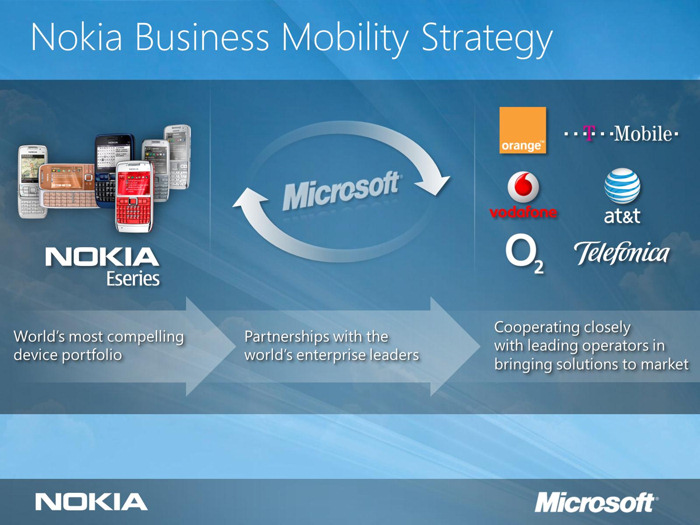
Microsoft and Nokia have entered into an alliance that is "set to deliver a groundbreaking, enterprise-grade solution for mobile productivity". They will begin collaborating immediately on the design, development and marketing of productivity solutions, bringing Microsoft Office Mobile and Microsoft business communications software to Nokia’s Symbian OS smartphones, starting with the business-focussed Eseries. The two companies will jointly market these solutions to businesses, carriers and individuals.
The high profile part of the announcement sees an agreement for Microsoft to bring 'Microsoft Office Mobile and Microsoft business communications' to Nokia phones. The Microsoft Office portion will include read and edit versions of Word, Excel, Powerpoint and OneNote. Microsoft's Stephen Olop noted that was a very significant announcement, 'it is the first time Microsoft will develop Office solution for another smartphone platform'. Currently the Office solution on Nokia phone is provided by Quickoffice, it is currently unclear how the new alliance will affect Nokia's licensing agreements with Quickoffice.
The alliance also includes collaboration on back-end software. For example, the ability to work collaboratively via Microsoft's Sharepoint solution was discussed. Nokia phones will also be integrated into Microsoft System Center, which helps companies manage their IT infrastructure. This includes the ability to deploy and remotely manage Nokia devices as part of an end to end enterprise solution. Both companies expect the collaboration to extend and broaden into other areas over time.
However, long term, the most significant part of the alliance may be the level of future co-operation and collaboration between the two companies. Both Nokia and Microsoft emphasised that this is a long term partnership and that they are most excited about the products that are yet to be created. The two companies intend to work together to create the next generation of communication and productivity tools. A key focus area will be unified communications. The alliance is 'way beyond documents and email... it is about creating new user experiences and new ground breaking soutions' according to Microsoft's Stephen Olop. Kai Öistämö said, 'what we have shared today is not the full extent of the alliance... this is about much more than just putting Microsoft software on Nokia phones. We are here to address the significant opportunity in the enterprise market and will be collaborating on the enterprise tools of tomorrow'.
The first fruits of the alliance will be a version of Office Mobile Communicator, which will ship of a Nokia Eseries device next year. Microsoft refers to Office Mobile Communicator as a unified communications application. It allows users to see the status of their contacts and choose the most appropriate communication channel be it instant messaging, voice, video or email. It uses various Microsoft technology including a corporate version of Live Messenger and accesses other Microsoft enterprise solutions (Exchange calendar) to obtain status information (e.g. in a meeting). Following on from this will be mobile versions of the Microsoft Office Suite: Word, Excel, Powerpoint and OneNote.
Initially the focus will be on Nokia's Eseries portfolio of products, but the solutions will be rolled out to other Symbian phones in Nokia's portfolio in due course. Kai Öistämö, when asked about availability on Maemo, indicated that the companies were looking to 'deliver the results on the Symbian, as it is the leading smartphone platform'. But he did note that 'we might find other business opportunities'. At this point both Microsoft and Nokia are likely to want to focus on the scale that Symbian can provide. ###
- Eric - |



