(R)'s want to kill the EPA, and return to the "good ol' days"!
The Cuyahoga River Fire of 1969
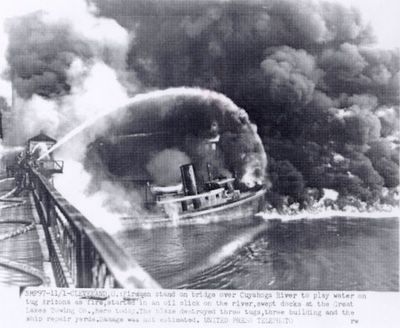 In a previous post, I noted that irony has occasionally moved the world. One favorite example: the high dudgeon inspired by Randy Newman's song "Burn On, Big River." Though the mythology of the Cuyahoga River Fire of 1969 may need some debunking -- for instance, Ohio authorities insist it was not a case of spontaneous combustion, and the picture here, run in Time magazine at the time, was of an EARLIER river fire -- the heart of the story (and the song) is true. In a previous post, I noted that irony has occasionally moved the world. One favorite example: the high dudgeon inspired by Randy Newman's song "Burn On, Big River." Though the mythology of the Cuyahoga River Fire of 1969 may need some debunking -- for instance, Ohio authorities insist it was not a case of spontaneous combustion, and the picture here, run in Time magazine at the time, was of an EARLIER river fire -- the heart of the story (and the song) is true.
On June 23, 1969, Cleveland's oily, contaminated Cuyahoga River caught fire. Flames climbed as high as five stories until fireboats brought it under control. The fire was attributed to wastes dumped into the river by the waterfront industries.
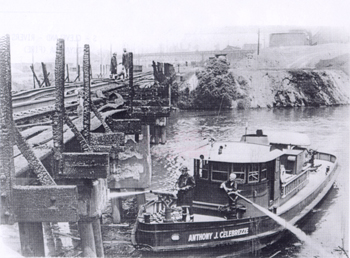 Cleveland at the time was not particularly impressed. The Chief of Police was not called; the regular crew, which was always dispersing oil slicks and watching for river fires, had it under control in under half an hour. The only picture (left), taken after the fire was pretty much out, ran in two local papers the next day, but the only story was brief and buried. Cleveland at the time was not particularly impressed. The Chief of Police was not called; the regular crew, which was always dispersing oil slicks and watching for river fires, had it under control in under half an hour. The only picture (left), taken after the fire was pretty much out, ran in two local papers the next day, but the only story was brief and buried.
"It was strictly a run of the mill fire"
William E. Barry, chief of Cleveland Fire Department
Jonathan H. Adler:
Burning rivers in industrialized areas were common through the late 19th and early 20th century. Rivers and harbors once burned in Michigan, New York, Maryland, and Pennsylvania, among other states. The Cuyahoga's first reported conflagration happened well over a century ago. ... Over time, the fire hazard became great enough to threaten local shipping.
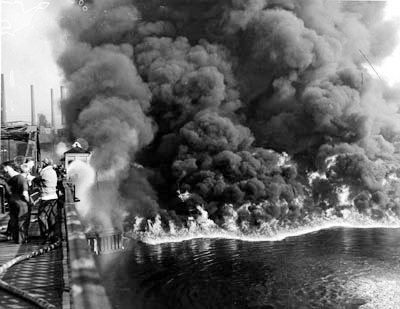
Oil and debris on the river caught fire at least a half-dozen times before 1950, often causing substantial damage to docks, ships, and other industrial properties along the crooked river's banks.
A month later, though, Time magazine ran a story with this snarky tone:
Some river! Chocolate-brown, oily, bubbling with subsurface gases, it oozes rather than flows. "Anyone who falls into the Cuyahoga does not drown," Cleveland's citizens joke grimly. "He decays."
Time Magazine, August 1969
Though other national media eventually picked it up, my first knowledge of the fire was from Randy Newman's song, and this was true for many others.
"Burn On, Big River" (excerpt)
from the Sail Away album by Randy Newman:
...There's an oil barge winding
Down the Cuyahoga River
Rolling into Cleveland to the lake
Cleveland city of light city of magic
Cleveland city of light you're calling me
Cleveland, even now I can remember
'Cause the Cuyahoga River
Goes smokin' through my dreams
Burn on, big river, burn on
Burn on, big river, burn on
Now the Lord can make you tumble
And the Lord can make you turn
And the Lord can make you overflow
But the Lord can't make you burn
Play this Burn On, Big River mp3 excerpt...
The publicity embarrassed local and government mightily; the increasingly mocked Cuyahoga river, under the "burn on" spotlight, was poster-child for federal clean water legislation which followed.
"The lower Cuyahoga has no visible life, not even low forms such as leeches and sludge worms that usually thrive on wastes."
The Federal Water Pollution Control Administration
"The Cuyahoga will live in infamy as the only river that was ever declared a fire hazard."
Congressman Louis Stokes
"I will never forget a photograph of flames, fire, shooting right out of the water in downtown Cleveland. It was the summer of 1969 and the Cuyahoga River was burning."
EPA Administrator Carol Browner
"What a terrible reflection on our city"
Cleveland Mayor Carl Stokes
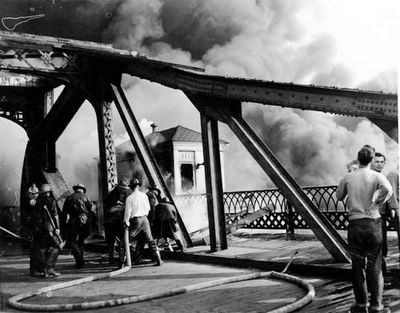 From Thinkquest.org): Before the [Clean Water] Act passed, rivers flowing through urban centers served as convenient sewers for industrial and human wastes. In 1969, Cleveland's Cuyahoga River, by then only nominally made out of water, caught fire. Floating oil slicks burned out of control, making national news, inspiring a song (Randy Newman's "Burn On"), and sparking, as it were, public support for clean water. From Thinkquest.org): Before the [Clean Water] Act passed, rivers flowing through urban centers served as convenient sewers for industrial and human wastes. In 1969, Cleveland's Cuyahoga River, by then only nominally made out of water, caught fire. Floating oil slicks burned out of control, making national news, inspiring a song (Randy Newman's "Burn On"), and sparking, as it were, public support for clean water.
The once dead Lake Erie into which the Cuyahoga drains now has a $600 million fishing industry ( more). The Ohio EPA considers the final forty miles of the Cuyahoga a "recovering system" and cleanup is supposedly continuing.
pratie.blogspot.com |



