SI
SI
discoversearch

We've detected that you're using an ad content blocking browser plug-in or feature. Ads provide a critical source of revenue to the continued operation of Silicon Investor.  We ask that you disable ad blocking while on Silicon Investor in the best interests of our community.  If you are not using an ad blocker but are still receiving this message, make sure your browser's tracking protection is set to the 'standard' level.
Politics : Evolution -- Ignore unavailable to you. Want to Upgrade?


To: Solon who wrote (36298)5/15/2013 12:46:03 AM
From: 2MAR$  Respond to of 69300
 
Why argue with greg, his latest mud covered dress smock he's trying to wear & appear "political activist" when he's just a dumbkoff. Lets also note there's not much left for right wing fundies to harp on (lets call them 'dead ringers' ) while market is making new all time highs & some job improvement.

You a gambling man , ahhh... TSLA could have made you $30k in the last 3days solon!

Good short today too.


To: Solon who wrote (36298)5/17/2013 4:29:18 AM
From: 2MAR$  Respond to of 69300
 
Basquiat, Pollock Lead Christie’s $495 Million Record Art Auction

By Katya Kazakina & Philip Boroff - May 15, 2013 9:17 PM PT


Christie's Images Ltd. 2013 via Bloomberg
"Dustheads" (1982) by Jean-Michel Basquiat. It is estimated at $25 million to $35 million.

Records were smashed for Jean-Michel Basquiat, Jackson Pollock, Roy Lichtenstein and auctions themselves as Christie’s (CHRS) sold $495 million of contemporary art last night in New York.


Attachment: Top Selling Artists

Enlarge image
'Number 19, 1948'

Christie's Images Ltd. via Bloomberg

"Number 19, 1948" (1948) by Jackson Pollock. The painting is estimated at $25 million to $35 mill

Enlarge image
Roy Lichtenstein's Woman with Flowered Hat

Christie's Images Ltd.

Woman with Flowered Hat, Magna on canvas, 1963, by Roy Lichtenstein.

Woman with Flowered Hat, Magna on canvas, 1963, by Roy Lichtenstein. Source: Christie's Image It was the biggest art auction in history, said Marc Porter, chairman of Christie’s Americas.

“You have a lot of foreign money, a lot of hedge-fund money,” said Miami collector Martin Margulies after he exited the packed salesroom. “Stocks could go down 50 percent. If this goes down, it will eventually go back up. These are historical pieces.”

THE GOOD LIFE : latest news on dining, travel, arts, real estate and more

The auction established 12 records -- including milestones for Joseph Cornell, Hans Hofmann, Piero Manzoni, Philip Guston, Richard Serra, Luc Tuymans and Julie Mehretu. Just four of the 70 lots failed to find buyers.

Anchored by two collections -- of the late crooner Andy Williams and philanthropists Celeste and Armand Bartos -- the sale attracted intense bidding. Actor Owen Wilson sat in the third row, flanked by dealer Tony Shafrazi and collector Peter Brant.

“It was amazing,” said dealer Asher Edelman. “Nobody knows what to do with their money, I guess.”

The Standard & Poor’s 500 Index yesterday rose for the ninth time in 10 sessions. The benchmark for U.S. equities is up 16 percent this year and has more than doubled since March 2009.

Earlier Record A dozen lots were guaranteed by either a third party or Christie’s. The tally narrowly surpassed the previous auction record of $491.5 million, which Christie’s set in November 2006 for Impressionist and modern works. The top lot then was an $88 million Gustav Klimt portrait of Adele Bloch-Bauer.

Adjusted for inflation, that sale exceeded $560 million in today’s dollars.

Last night, Basquiat’s “Dustheads” estimated to bring $25 million to $35 million, went for $48.8 million to an unnamed client on the phone for whom Christie’s international specialist Loic Gouzer was bidding. Gouzer worked with Leonardo DiCaprio on Christie’s May 13 auction to benefit conservation.

Minutes later, Pollock’s “Number 19,” a 1948 drip painting, sold for $58.4 million. It was the evening’s top lot, with a high presale estimate of $35 million. Brett Gorvy, Christie’s chairman and international head of postwar and contemporary art, bought it for a client.

The price surpassed the previous Pollock record, $40.4 million, set at Sotheby’s in November. Prices include the buyer’s premium; estimates do not.

‘New Era’ “We are in a new era of the art market,” auctioneer Jussi Pylkkanen told reporters after the sale. “Pictures are making prices we couldn’t have imagined only a few years ago.”

Lichtenstein’s 1963 riff on Picasso, “Woman With Flowered Hat,” went for $56.1 million in a battle between Gorvy and jeweler Laurence Graff. Graff won after almost giving up at $46.5 million.

“I always saw it in the textbooks,” Graff said, adding that it was one of his priciest purchases. “I’ve got a big birthday coming up and I bought it for my birthday.”

The previous Lichtenstein record, $44.9 million, was set in May 2012 at Sotheby’s. (BID)

Willem de Kooning’s 1953 “Woman (Blue Eyes)” fetched $19.2 million. It was bought by New York dealer Dominique Levy. She was an under-bidder for Guston’s 1958 abstract canvas, “To Fellini,” which sold for a record $25.9 million over the phone.

Angel Dust The record Basquiat canvas depicts two colorful, big-headed characters on a black background; one looks dazed, the other confused. The title refers to the street slang for the users of the drug PCP, or angel dust. The neo-expressionist painter died at 27 in 1988.

Although Christie’s didn’t identify the seller, dealers said the painting was consigned by collector Tiqui Atencio.

The Basquiat market has been on the rise. In 2012, his auction sales totaled $161.5 million, more than doubling from the previous year, according to Artnet. He ranked 8th last year, compared to 18th in 2011, overtaking Lichtenstein and de Kooning.

Last year, Basquiat records were set and toppled. In November, his untitled canvas depicting a fisherman with a halo sold for $26.4 million at Christie’s in New York. Less than five months earlier, a 1981 self-portrait sold for $20.2 million at Christie’s in London.

Muse highlights include Rich Jaroslovsky on technology.

To contact the reporters on this story: Katya Kazakina in New York at kkazakina@bloomberg.net; Philip Boroff in New York at pboroff@bloomberg.net

To contact the editor responsible for this story: Manuela Hoelterhoff at mhoelterhoff@bloomberg.net


To: Solon who wrote (36298)5/19/2013 11:46:31 PM
From: 2MAR$1 Recommendation  Read Replies (1) | Respond to of 69300
 
T.S. Eliot: Four Quartets

(quartet V , scripture is all around us in the human genius & language, the shear hubris of the fundamentalists to think its all in some primitive or neo primitive "holy books" & shove that down innocent throats )

Little Gidding


In
Midwinter spring is its own season
Sempiternal though sodden towards sundown,
Suspended in time, between pole and tropic.
When the short day is brightest, with frost and fire,
The brief sun flames the ice, on pond and ditches,
In windless cold that is the heart's heat,
Reflecting in a watery mirror
A glare that is blindness in the early afternoon.
And glow more intense than blaze of branch, or brazier,
Stirs the dumb spirit: no wind, but pentecostal fire
In the dark time of the year. Between melting and freezing
The soul's sap quivers. There is no earth smell
Or smell of living thing. This is the spring time
But not in time's covenant. Now the hedgerow
Is blanched for an hour with transitory blossom
Of snow, a bloom more sudden
Than that of summer, neither budding nor fading,
Not in the scheme of generation.
Where is the summer, the unimaginable
Zero summer?


If you came this way,
Taking the route you would be likely to take
From the place you would be likely to come from,
If you came this way in may time, you would find the hedges
White again, in May, with voluptuary sweetness.
It would be the same at the end of the journey,
If you came at night like a broken king,
If you came by day not knowing what you came for,
It would be the same, when you leave the rough road
And turn behind the pig-sty to the dull facade
And the tombstone. And what you thought you came for
Is only a shell, a husk of meaning
From which the purpose breaks only when it is fulfilled
If at all. Either you had no purpose
Or the purpose is beyond the end you figured
And is altered in fulfilment. There are other places
Which also are the world's end, some at the sea jaws,
Or over a dark lake, in a desert or a city—
But this is the nearest, in place and time,
Now and in England. If you came this way,
Taking any route, starting from anywhere,
At any time or at any season,
It would always be the same: you would have to put off
Sense and notion. You are not here to verify,
Instruct yourself, or inform curiosity
Or carry report. You are here to kneel
Where prayer has been valid. And prayer is more
Than an order of words, the conscious occupation
Of the praying mind, or the sound of the voice praying.
And what the dead had no speech for, when living,
They can tell you, being dead: the communication
Of the dead is tongued with fire beyond the language of the living.
Here, the intersection of the timeless moment
Is England and nowhere. Never and always.

II

Ash on and old man's sleeve
Is all the ash the burnt roses leave.
Dust in the air suspended
Marks the place where a story ended.
Dust inbreathed was a house—
The walls, the wainscot and the mouse,
The death of hope and despair,
This is the death of air.


There are flood and drouth
Over the eyes and in the mouth,
Dead water and dead sand
Contending for the upper hand.
The parched eviscerate soil
Gapes at the vanity of toil,
Laughs without mirth.
This is the death of earth.Water and fire succeed
The town, the pasture and the weed.
Water and fire deride
The sacrifice that we denied.
Water and fire shall rot
The marred foundations we forgot,
Of sanctuary and choir.
This is the death of water and fire.In the uncertain hour before the morning
Near the ending of interminable night
At the recurrent end of the unending
After the dark dove with the flickering tongue
Had passed below the horizon of his homing
While the dead leaves still rattled on like tin
Over the asphalt where no other sound was
Between three districts whence the smoke arose
I met one walking, loitering and hurried
As if blown towards me like the metal leaves
Before the urban dawn wind unresisting.
And as I fixed upon the down-turned face
That pointed scrutiny with which we challenge
The first-met stranger in the waning dusk
I caught the sudden look of some dead master
Whom I had known, forgotten, half recalled
Both one and many; in the brown baked features
The eyes of a familiar compound ghost
Both intimate and unidentifiable.
So I assumed a double part, and cried
And heard another's voice cry: 'What! are you here?'
Although we were not. I was still the same,
Knowing myself yet being someone other—
And he a face still forming; yet the words sufficed
To compel the recognition they preceded.
And so, compliant to the common wind,
Too strange to each other for misunderstanding,
In concord at this intersection time
Of meeting nowhere, no before and after,
We trod the pavement in a dead patrol.
I said: 'The wonder that I feel is easy,
Yet ease is cause of wonder. Therefore speak:
I may not comprehend, may not remember.'
And he: 'I am not eager to rehearse
My thoughts and theory which you have forgotten.
These things have served their purpose: let them be.
So with your own, and pray they be forgiven
By others, as I pray you to forgive
Both bad and good. Last season's fruit is eaten
And the fullfed beast shall kick the empty pail.
For last year's words belong to last year's language
And next year's words await another voice.
But, as the passage now presents no hindrance
To the spirit unappeased and peregrine
Between two worlds become much like each other,
So I find words I never thought to speak
In streets I never thought I should revisit
When I left my body on a distant shore.
Since our concern was speech, and speech impelled us
To purify the dialect of the tribe
And urge the mind to aftersight and foresight,
Let me disclose the gifts reserved for age
To set a crown upon your lifetime's effort.
First, the cold friction of expiring sense
Without enchantment, offering no promise
But bitter tastelessness of shadow fruit
As body and soul begin to fall asunder.
Second, the conscious impotence of rage
At human folly, and the laceration
Of laughter at what ceases to amuse.
And last, the rending pain of re-enactment
Of all that you have done, and been; the shame
Of motives late revealed, and the awareness
Of things ill done and done to others' harm
Which once you took for exercise of virtue.
Then fools' approval stings, and honour stains.
From wrong to wrong the exasperated spirit
Proceeds, unless restored by that refining fire
Where you must move in measure, like a dancer.'
The day was breaking. In the disfigured street
He left me, with a kind of valediction,
And faded on the blowing of the horn.

III

There are three conditions which often look alike
Yet differ completely, flourish in the same hedgerow:
Attachment to self and to things and to persons, detachment
From self and from things and from persons; and, growing between them, indifference
Which resembles the others as death resembles life,
Being between two lives—unflowering, between
The live and the dead nettle. This is the use of memory:
For liberation—not less of love but expanding
Of love beyond desire, and so liberation
From the future as well as the past. Thus, love of a country
Begins as attachment to our own field of action
And comes to find that action of little importance
Though never indifferent. History may be servitude,
History may be freedom. See, now they vanish,
The faces and places, with the self which, as it could, loved them,
To become renewed, transfigured, in another pattern.


Sin is Behovely, but
All shall be well, and
All manner of thing shall be well.
If I think, again, of this place,
And of people, not wholly commendable,
Of no immediate kin or kindness,
But of some peculiar genius,
All touched by a common genius,
United in the strife which divided them;
If I think of a king at nightfall,
Of three men, and more, on the scaffold
And a few who died forgotten
In other places, here and abroad,
And of one who died blind and quiet
Why should we celebrate
These dead men more than the dying?
It is not to ring the bell backward
Nor is it an incantation
To summon the spectre of a Rose.
We cannot revive old factions
We cannot restore old policies
Or follow an antique drum.
These men, and those who opposed them
And those whom they opposed
Accept the constitution of silence
And are folded in a single party.
Whatever we inherit from the fortunate
We have taken from the defeated
What they had to leave us—a symbol:
A symbol perfected in death.
And all shall be well and
All manner of thing shall be well
By the purification of the motive
In the ground of our beseeching.

IV

The dove descending breaks the air
With flame of incandescent terror
Of which the tongues declare
The one discharge from sin and error.
The only hope, or else despair
Lies in the choice of pyre of pyre—
To be redeemed from fire by fire.


Who then devised the torment? Love.
Love is the unfamiliar Name
Behind the hands that wove
The intolerable shirt of flame
Which human power cannot remove.
We only live, only suspire
Consumed by either fire or fire.

V

What we call the beginning is often the end
And to make and end is to make a beginning.
The end is where we start from. And every phrase
And sentence that is right (where every word is at home,
Taking its place to support the others,
The word neither diffident nor ostentatious,
An easy commerce of the old and the new,
The common word exact without vulgarity,
The formal word precise but not pedantic,
The complete consort dancing together)
Every phrase and every sentence is an end and a beginning,
Every poem an epitaph. And any action
Is a step to the block, to the fire, down the sea's throat
Or to an illegible stone: and that is where we start.
We die with the dying:
See, they depart, and we go with them.
We are born with the dead:
See, they return, and bring us with them.
The moment of the rose and the moment of the yew-tree
Are of equal duration. A people without history
Is not redeemed from time, for history is a pattern
Of timeless moments. So, while the light fails
On a winter's afternoon, in a secluded chapel
History is now and England.


With the drawing of this Love and the voice of this
CallingWe shall not cease from exploration
And the end of all our exploring
Will be to arrive where we started
And know the place for the first time.
Through the unknown, unremembered gate
When the last of earth left to discover
Is that which was the beginning;
At the source of the longest river
The voice of the hidden waterfall
And the children in the apple-tree
Not known, because not looked for
But heard, half-heard, in the stillness
Between two waves of the sea.
Quick now, here, now, always—
A condition of complete simplicity
(Costing not less than everything)
And all shall be well and
All manner of thing shall be well
When the tongues of flame are in-folded
Into the crowned knot of fire
And the fire and the rose are one.


To: Solon who wrote (36298)5/20/2013 2:41:44 PM
From: average joe  Read Replies (2) | Respond to of 69300
 
Proof of heaven popular, except with the church
By John Blake, CNN

“God, help me!”

Eben Alexander shouted and flailed as hospital orderlies tried to hold him in place. But no one could stop his violent seizures, and the 54-year-old neurosurgeon went limp as his horrified wife looked on.

That moment could have been the end. But Alexander says it was just the beginning. He found himself soaring toward a brilliant white light tinged with gold into “the strangest, most beautiful world I’d ever seen.”

Alexander calls that world heaven, and he describes his journey in “Proof of Heaven,” which has been on The New York Times bestseller list for 27 weeks. Alexander says he used to be an indifferent churchgoer who ignored stories about the afterlife. But now he knows there’s truth to those stories, and there’s no reason to fear death.

“Not one bit,” he said. “It’s a transition; it’s not the end of anything. We will be with our loved ones again.”

Heaven used to be a mystery, a place glimpsed only by mystics and prophets. But popular culture is filled with firsthand accounts from all sorts of people who claim that they, too, have proofs of heaven after undergoing near-death experiences.

Yet the popularity of these stories raises another question: Why doesn’t the church talk about heaven anymore?

Preachers used to rhapsodize about celestial streets of gold while congregations sang joyful hymns like “I’ll Fly Away” and “When the Roll is Called up Yonder.” But the most passionate accounts of heaven now come from people outside the church or on its margins.

Most seminaries don’t teach courses on heaven; few big-name pastors devote much energy to preaching or writing about the subject; many ordinary pastors avoid the topic altogether out of embarrassment, indifference or fear, scholars and pastors say.

“People say that the only time they hear about heaven is when they go to a funeral,” said Gary Scott Smith, author of “Heaven in the American Imagination” and a history professor at Grove City College in Pennsylvania.

Talk of heaven shouldn’t wait, though, because it answers a universal question: what happens when we die, says the Rev. John Price, author of “Revealing Heaven,” which offers a Christian perspective of near-death experiences.

“Ever since people started dying, people have wondered, where did they go? Where are they now? Is this what happens to me?” said Price, a retired pastor and hospital chaplain.

A little girl’s revelation

Price didn’t always think heaven was so important. He scoffed at reports of near-death experiences because he thought they reduced religion to ghost stories. Besides, he was too busy helping grieving families to speculate about the afterlife.

His attitude changed, though, after a young woman visited his Episcopal church one Sunday with her 3-year-old daughter.

Price had last seen the mother three years earlier. She had brought her then-7-week-old daughter to the church for baptism. Price hadn't heard from her since. But when she reappeared, she told Price an amazing story.

She had been feeding her daughter a week after the baptism when milk dribbled out of the infant's mouth and her eyes rolled back into her head. The woman rushed her daughter to the emergency room, where she was resuscitated and treated for a severe upper respiratory infection.

Three years later, the mother was driving past the same hospital with her daughter when the girl said, “Look, Mom, that’s where Jesus brought me back to you.”

“The mother nearly wrecked her car,” Price said. “She never told her baby about God, Jesus, her near-death experience, nothing. All that happened when the girl was 8 weeks old. How could she remember that?”

When Price started hearing similar experiences from other parishioners, he felt like a fraud. He realized that he didn’t believe in heaven, even though it was part of traditional Christian doctrine.

He started sharing near-death stories he heard with grieving families and dejected hospital workers who had lost patients. He told them dying people had glimpsed a wonderful world beyond this life.

The stories helped people, Price said, and those who've had similar experiences of heaven should “shout them from the rooftops.”

“I’ve gone around to many churches to talk about this, and the venue they give me is just stuffed,” he said. “People are really hungry for it.”

Why pastors are afraid of heaven

Many pastors, though, don’t want to touch the subject because it’s too dangerous, says Lisa Miller, author of “Heaven: Our Enduring Fascination with the Afterlife.”

Miller cites the experience of Rob Bell, one of the nation’s most popular evangelical pastors.
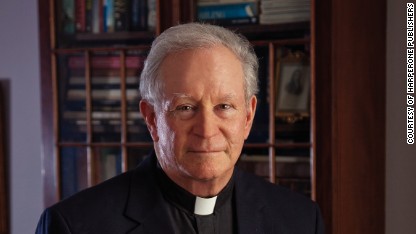


John Price ignored heaven until he met a woman with an amazing story.

Bell ignited a firestorm two years ago when he challenged the teaching that only Christians go to heaven in “Love Wins: A Book About Heaven, Hell, and the Fate of Every Person Who Ever Lived.”

The book angered many members of Bell’s church as well as many in the evangelical establishment. He subsequently resigned.

“Farewell, Rob Bell,” one prominent evangelical tweeted.

“It’s a tough topic for a pastor,” said Miller, a former religion columnist for the Washington Post. “If you get too literal, you can risk sounding too silly. If you don’t talk about it, you’re evading one of the most important questions about theology and why people come to church.”

If pastors do talk about stories of near-death experiences, they can also be seen as implying that conservative doctrine – only those who confess their faith in Jesus get to heaven, while others suffer eternal damnation – is wrong, scholars and pastors say.

Many of those who share near-death stories aren’t conservative Christians but claim that they, too, have been welcomed by God to heaven.

“Conservative Christians aren’t the only ones going to heaven," said Price, "and that makes them mad."

There was a time, though, when the church talked a lot more about the afterlife.

Puritan pastors in the 17th and 18th centuries often preached about heaven, depicting it as an austere, no fuss-place where people could commune with God.

African-American slaves sang spirituals about heaven like “Swing Low, Sweet Chariot.” They often depicted it as a place of ultimate payback: Slaves would escape their humiliation and, in some cases, rule over their former masters.

America’s fixation with heaven may have peaked around the Civil War. The third most popular book in 18th century America – behind the Bible and “Uncle Tom’s Cabin” – was "Gates Ajar," written in the wake of the war, Miller says.

The 1868 novel was “The Da Vinci Code” of its day, Miller says. It revolved around a grieving woman who lost her brother in the Civil War. A sympathetic aunt assures her that her brother is waiting in heaven, a bucolic paradise where people eat sumptuous meals, dogs sun themselves on porches and people laugh with their loved ones.

“This was a vision of heaven that was so appealing to hundreds of thousands of people who had lost people in the Civil War,” Miller said.

Americans needed heaven because life was so hard: People didn’t live long, infant mortality was high, and daily life was filled with hard labor.

“People were having 12 kids, and they would outlive 11 of them,” said Smith, author of "Heaven in the American Imagination." “Death was ever-present.”

The church eventually stopped talking about heaven, though, for a variety of reasons: the rise of science; the emergence of the Social Gospel, a theology that encouraged churches to create heaven on Earth by fighting for social justice; and the growing affluence of Americans. (After all, who needs heaven when you have a flat-screen TV, a smartphone and endless diversions?)

But then a voice outside the church rekindled Americans' interest in the afterlife. A curious 23-year-old medical student would help make heaven cool again.

The father of near-death experiences

Raymond Moody had been interested in the afterlife long before it was fashionable.

He was raised in a small Georgia town during World War II where death always seemed just around the corner. He constantly heard stories about soldiers who never returned from war. His father was a surgeon who told him stories of bringing back patients from the brink of death. In college, he was enthralled when he read one of the oldest accounts of a near-death experience, a soldier’s story told by Socrates in Plato’s “Republic.”

His fascination with the afterlife was sealed one day when he heard a speaker who would change his life.

The speaker was George Ritchie, a psychiatrist. Moody would say later of Ritchie, “He had that look of someone who had just finished a long session of meditation and didn’t have a care in the world.”

Moody sat in the back of a fraternity room as Ritchie told his story.

It was December 1943, and Ritchie was in basic training with the U.S. Army at Camp Barkeley, Texas. He contracted pneumonia and was placed in the hospital infirmary, where his temperature spiked to 107. The medical staff piled blankets on top of Ritchie’s shivering body, but he was eventually pronounced dead.

“I could hear the doctor give the order to prep me for the morgue, which was puzzling, because I had the sensation of still being alive,” Ritchie said.

He even remembers rising from a hospital gurney to talk to the hospital staff. But the doctors and nurses walked right through him when he approached them.

He then saw his lifeless body in a room and began weeping when he realized he was dead. Suddenly, the room brightened “until it seemed as though a million welding torches were going off around me.”

He says he was commanded to stand because he was being ushered into the presence of the Son of God. There, he saw every minute detail of his life flash by, including his C-section birth. He then heard a voice that asked, “What have you done with your life?"

After hearing Ritchie’s story, Moody decided what he was going to do with his life: investigate the afterlife.
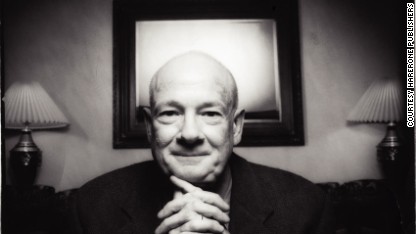


Raymond Moody revived interest in heaven by studying near-death experiences.

He started collecting stories of people who had been pronounced clinically dead but were later revived. He noticed that the stories all shared certain details: traveling through a tunnel, greeting family and friends who had died, and meeting a luminous being that gave them a detailed review of their life and asked them whether they had spent their life loving others.

Moody called his stories “near-death experiences,” and in 1977 he published a study of them in a book, “Life after Life.” His book has sold an estimated 13 million copies.

Today, he is a psychiatrist who calls himself “an astronaut of inner space.” He is considered the father of the near-death-experience phenomenon.

He says science, not religion, resurrected the afterlife. Advances in cardiopulmonary resuscitation meant that patients who would have died were revived, and many had stories to share.

“Now that we have these means for snatching people back from the edge, these stories are becoming more amazing,” said Moody, who has written a new book, “Paranormal: My Life in Pursuit of the Afterlife.”

“A lot of medical doctors know about this from their patients, but they’re just afraid to talk about it in public.”

Ritchie’s story was told through a Christian perspective. But Moody says stories about heaven transcend religion. He's collected them from Jews, Muslims, Buddhists and atheists.

“A lot of people talk about encountering a being of light,” he said. “Christians call it Christ. Jewish people say it’s an angel. I’ve gone to different continents, and you can hear the same thing in China, India and Japan about meeting a being of complete love and compassion.”

It’s not just what people see in the afterlife that makes these stories so powerful, he says. It’s how they live their lives once they survive a near-death experience.

Many people are never the same, Moody says. They abandon careers that were focused on money or power for more altruistic pursuits.

“Whatever they had been chasing, whether it's power, money or fame, their experience teaches them that what this (life) is all about is teaching us to love,” Moody said.

Under 'the gaze of a God'

Alexander, the author of “Proof of Heaven,” seems to fit Moody's description. He’s a neurosurgeon, but he spends much of time now speaking about his experience instead of practicing medicine.

He'd heard strange stories over the years of revived heart attack patients traveling to wonderful landscapes, talking to dead relatives and even meeting God. But he never believed those stories. He was a man of science, an Episcopalian who attended church only on Easter and Christmas.

That changed one November morning in 2008 when he was awakened in his Lynchburg, Virginia, home by a bolt of pain shooting down his spine. He was rushed to the hospital and diagnosed with bacterial meningitis, a disease so rare, he says, it afflicts only one in 10 million adults.

After his violent seizures, he lapsed into a coma — and there was little hope for his survival. But he awakened a week later with restored health and a story to tell.

He says what he experienced was “too beautiful for words.” The heaven he describes is not some disembodied hereafter. It’s a physical place filled with achingly beautiful music, waterfalls, lush fields, laughing children and running dogs.

In his book, he describes encountering a transcendent being he alternately calls “the Creator” or “Om.” He says he never saw the being's face or heard its voice; its thoughts were somehow spoken to him.

“It understood humans, and it possessed the qualities we possess, only in infinitely greater measure. It knew me deeply and overflowed with qualities that all my life I’ve always associated with human beings and human beings alone: warmth, compassion, pathos … even irony and humor.”

Holly Alexander says her husband couldn’t forget the experience.

“He was driven to write 12 hours a day for three years,” she said. “It began as a diary. Then he thought he would write a medical paper; then he realized that medical science could not explain it all.”

“Proof of Heaven” debuted at the top of The New York Times bestseller list and has sold 1.6 million copies, according to its publisher.

Alexander says he didn’t know how to deal with his otherworldly journey at first.

“I was my own worst skeptic,” he said. “I spent an immense amount of time trying to come up with ways my brain might have done this.”

Conventional medical science says consciousness is rooted in the brain, Alexander says. His medical records indicated that his neocortex — the part of the brain that controls thought, emotion and language — had ceased functioning while he was in a coma.

Alexander says his neocortex was “offline” and his brain “wasn’t working at all” during his coma. Yet he says he reasoned, experienced emotions, embarked on a journey — and saw heaven.

“Those implications are tremendous beyond description,” Alexander wrote. “My experience showed me that the death of the body and the brain are not the end of consciousness; that human experience continues beyond the grave. More important, it continues under the gaze of a God who loves and cares about each one of us.”

Skeptics say Alexander’s experience can be explained by science, not the supernatural.

They cite experiments where neurologists in Switzerland induced out-of-body experiences in a woman suffering from epilepsy through electrical stimulation of the right side of her brain.

Michael Shermer, founder and publisher of Skeptic magazine, says the U.S. Navy also conducted studies with pilots that reproduced near-death experiences. Pilots would often black out temporarily when their brains were deprived of oxygen during training, he says.

These pilots didn’t go to heaven, but they often reported seeing a bright light at the end of a tunnel, a floating sensation and euphoria when they returned to consciousness, Shermer says.

“Whatever experiences these people have is actually in their brain. It’s not out there in heaven,” Shermer said.

Some people who claim to see heaven after dying didn’t really die, says Shermer, author of “Why People Believe Weird Things.”

“They’re called near-death experiences for a reason: They’re near death but not dead,” Shermer said. “In that fuzzy state, it’s not dissimilar to being asleep and awakened where people have all sorts of transitory experiences that seem very real.”

The boy who saw Jesus

Skeptics may scoff at a story like Alexander’s, but their popularity has made a believer out of another group: the evangelical publishing industry.

While the church may be reluctant to talk about heaven, publishers have become true believers. The sales figures for books on heaven are divine: Don Piper’s “90 Minutes in Heaven” has sold 5 million copies. And “Heaven is for Real: A Little Boy’s Astounding Story of His Trip to Heaven and Back” is the latest publishing juggernaut.
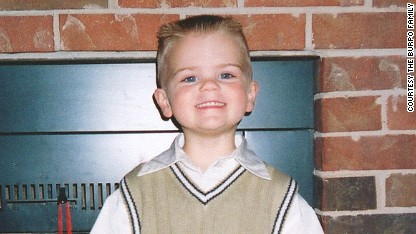


Colton Burpo says he saw heaven and describes the color of Jesus' eyes.

“Heaven is for Real” has been on The New York Times bestseller list for 126 consecutive weeks and sold 8 million copies, according to its publisher.

The story is told from the perspective of Colton Burpo, who was just 4 when he slipped into unconsciousness while undergoing emergency surgery for a burst appendix.

Colton says he floated above his body during the operation and soared to heaven, where he met Jesus. Todd Burpo, Colton’s father, says he was skeptical about his son’s story until his son described meeting a great-grandfather and a miscarried baby sister — something no one had ever told him about.

Todd Burpo is a pastor, but he says he avoided preaching about heaven because he didn’t know enough about the subject.

“It’s pretty awkward,” he said. “Here I am the pastor, but I’m not the teacher on the subject. My son is teaching me.”

Colton is now 13 and says he still remembers meeting Jesus in heaven.

“He had brown hair, a brown beard to match and a smile brighter than any smile I’ve ever seen,’’ he said. “His eyes were sea-blue, and they were just, wow.”

Colton says he’s surprised by the success of his book, which has been translated into 35 languages. There’s talk of a movie, too.

“It’s totally a God thing,” he said.

Alexander, author of “Proof of Heaven,” seems to have the same attitude: His new life is a gift. He’s already writing another book on his experience.

“Once I realized what my journey was telling me," he said, "I knew I had to tell the story.”

He now attends church but says his faith is not dogmatic.

“I realized very strongly that God loves all of God’s children,” he said. “Any religion that claims to be the true one and the rest of them are wrong is wrong.”

Central to his story is something he says he heard in heaven.

During his journey, he says he was accompanied by an angelic being who gave him a three-part message to share on his return.

When he heard the message, he says it went through him “like a wind” because he instantly knew it was true.

It’s the message he takes today to those who wonder who, or what, they will encounter after death.

The angel told him:

“You are loved and cherished, dearly, forever.”

“You have nothing to fear.”

“There is nothing you can do wrong."


John Blake - CNN Writer

religion.blogs.cnn.com


To: Solon who wrote (36298)5/27/2013 5:27:26 AM
From: 2MAR$  Read Replies (1) | Respond to of 69300
 
Letter to My Father ‘Oblivion,’ a Memoir by Héctor Abad....One the fast rising literary stars in South America, a very touching memoir of his liberal father an epidemiologist and the founder of Colombia’s National School of Public Health, who died at the hands of the miltary right wing conservatives trying to help the poor.
nytimes.com

Colombia’s greatest novelist, Gabriel García Márquez, once lamented that “there has always been civil war” in his country “and there always will be. It’s a way of life.” This war has been going on for at least 150 years — between Liberals and Conservatives (Colombia’s main political parties), secularists and Catholics, armed revolutionaries, drug lords and the army — preventing the country from moving beyond what García Márquez has called its unending “Middle Ages.” One way or another, the national drama has touched practically every Colombian family, Abad’s more than most. Thus, while “Oblivion” is suffused with politics, it is primarily, and most powerfully, a highly personal coming-of-age story that’s also a sharp sociopolitical portrait of its place and time. The place is Medellín, Colombia’s second-largest city, and the time is the quarter-­century from the early 1960s until 1987. But every word revolves around the author’s father, also named Héctor. In literature, we have been conditioned to expect the malignant father of Sylvia Plath’s poetry, say, or the predatory father of Edward St. Aubyn’s autobiographical novels. In Colombia the saying goes, “A man only has one mother, but his father could be any old son of a bitch.”

The elder Abad was an epidemiologist and the founder of Colombia’s National School of Public Health. Staunchly anti-Catholic, indifferent to money (he gave most of his modest salary to students and friends), excessively tolerant yet actively involved in his children’s lives, he was, in his son’s telling, a maddening, kindly, liberal crusader for social justice whose enlightened ideas were doomed to failure. His passion was preventive medicine — clean drinking water and vaccinations for Colombia’s poor. As a teacher, he would drag his students to Medellín’s slums, organizing the building of aqueducts and forcing them to examine at close hand the diseases of poverty, in the hope they would take up social medicine instead of treating the wealthy at private clinics. With a grandiosity that may have been necessary given the obstacles, he fancied himself a new kind of doctor: a “poliatrist,” or healer of the polis.

Abad succumbs at times to the temptation of hagiography, but it is balanced by his struggle with his father’s constant presence, more pervasive than ever in death. He describes his father as an “ideological hybrid” who was branded a “bourgeois” by the left because of his opposition to “the armed struggle” and his occasional alliance with Conservative politicians who could advance his health care policies. But his main enemies were on the right. In the United States he would have been one of many left-leaning Democrats, but in Colombia his initiatives in poor neighborhoods made him an enemy of the state.

The ideological and religious divisions in the Abad family mirrored those of the country as a whole. His mother was a ­“daily-Mass Catholic,” in local parlance, who had been raised by her uncle, the ultra-Orthodox archbishop of Medellín. One of her cousins became “the most reactionary priest in the whole of Colombia,” the protégé of a notorious monsignor who preached that killing Liberals was “a pardonable sin.” Two other cousins, by contrast, became Liberation Theologists, rebel priests and anti-capitalist activists in the slums.

His father’s side of the family was irreconcilably torn between Liberals and Conservatives. Threatened with death, the author’s grandfather had to abandon his farm and flee with his children to a safer part of the country. But he fared better than many, especially during the undeclared civil war known as La Violencia that erupted in 1948, after the assassination of a popular Liberal presidential candidate. La Violencia lasted at least 10 years and resulted in the deaths of at least 200,000 Colombians.

During the decades that followed, the purges continued intermittently. When the heat was on, the author’s father would scramble for work as a public health consultant abroad until danger passed. For the son, deprived of his benevolent protection, these absences were “a living death.” At his mother’s insistence, he attended an Opus Dei high school. That his father agreed was emblematic of the contradictions at the heart of their lives. “Go to Mass so your mother doesn’t worry,” his father would tell him, “but it’s all lies.” For Abad, the fact that this fundamental difference between his parents never weakened their marriage was an insoluble riddle. His father even seemed to believe that the rigors of an Opus Dei education would benefit his son, as long as he was around to whisper the truth of the Enlightenment in his ear.

In this equation, devout “dark Catholicism” belonged to the feminine world of his mother and five sisters and aunts, while science, music, poetry and reason made up the light-filled world of masculinity. Still, it was his mother’s financial acumen, turning a small office management company into a prosperous business, that allowed his father to preserve his ideological and intellectual independence.

This independence cost him his life. In 1982, at the age of 60, the elder Abad was forced to give up his professorship. Political violence was on the rise. On the radio, in newspaper editorials and in letters, he denounced the military-sponsored death squads that were exterminating political opponents with impunity in the name of fighting a far-left guerrilla group that controlled large portions of the rural countryside. As his former colleagues and students were being gunned down in the streets, Abad was often the lone voice of outrage. Inevitably, he was moved to the top of the hit list. It was one of those terrifying moments in history when assumptions of decency are reversed, baseline human morality turns into a mark of madness, and the few who dare to demand it become pariahs or worse. The murders themselves were distinguished by a kind of lustful barbarity. Victims weren’t just executed; their limbs were chopped off. In at least one case a student was tied to a post and blown up with a grenade.

Abad knew the risks, and his son, with a subdued touch of anger, hints at the possibility that his martyrdom was a form of suicide. “If they kill me for what I do, would it not be a beautiful death?” Abad says when a member of the family warns him about his denunciations. But these sound like the words of a brave and frightened man seeking the comfort of an idealized courage. It seems likely that the impulse to protest had become a personal necessity, and Abad felt he would be unable to live with himself if he fell silent.

For atrocities to have meaning, we must understand their personal cost. In his restrained account of his father’s final days and their aftermath, Abad gives us a glimpse of the mute panic and shattering of self-respect that comes from living under a daily reign of state terror.

Abad waited 20 years to write this account. Clearly the wait was necessary. At one point he mentions the “twin dangers of nostalgia and despairing bitterness” that threatened to drown his story. The passage of time seems to have given him just enough distance to overcome these dangers.

“To remember” in Spanish is “recordar,” from “cor,” the Latin for “heart.” If to remember, then, “means to pass once more through the heart,” Abad writes, “then I have always remembered him.” This hard-earned memoir is an act of courage in its own right.


Michael Greenberg is the author of the memoir “Hurry Down Sunshine” and the essay collection “Beg, Borrow, Steal.”

meme

