Your better really know how to do structured programming and archival systems and hierarchical system
I will have cliffs notes version of that soon... I see if I can find the weather map I was searching for
it is not yet the anointed hour it appears.......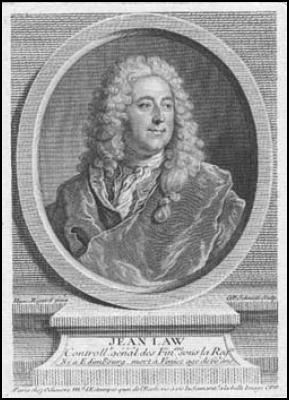
---------------------------------------------------------

---
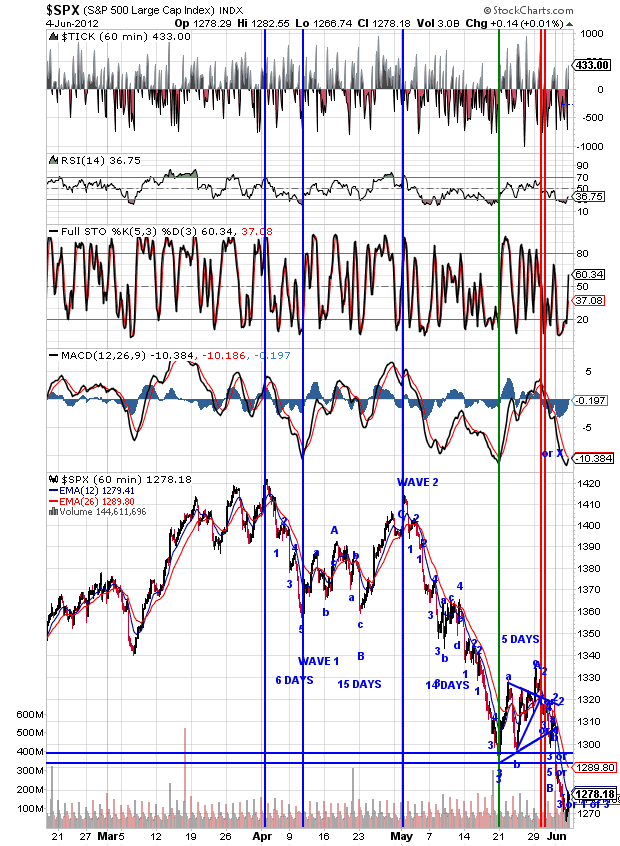
and just for a little levity a bit of Dilbert tossed in....
This is the Model that Jamie Diamond at JPM uses.........he had the London Whale and he really has besmirched the Grand Chairman Emeritus of Chase David Rockefeller a real Banker.... as was Walter Wriston, John Reed of Citi...James Stillman of The First National City Bank of New York founded in 1812.....
Benjamin Strong of Bankers Trust..... J Spencer Morgan... Junius Pierpont Morgan..... Jacob Schiff, Mayer Amschel Rothschild and his 5 songs...... especially Nathan of The House of Rothschild in London
Alexander Hamilton,
en.wikipedia.org
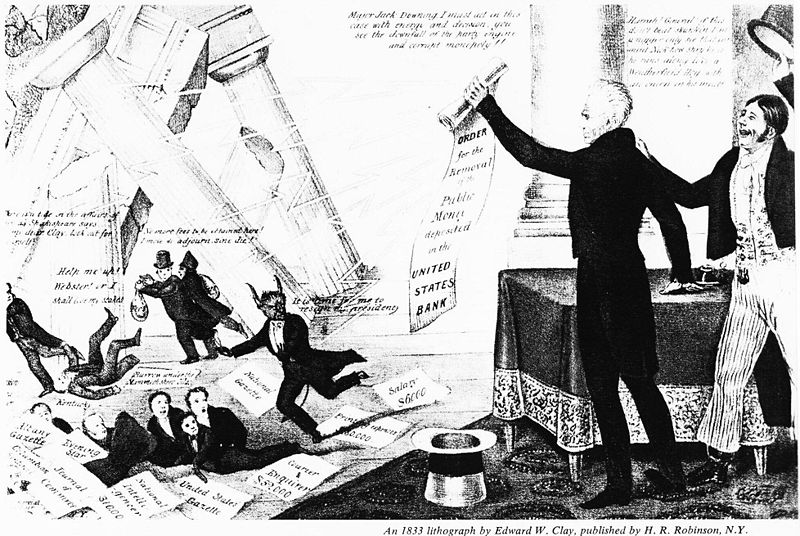
Old Hickory... who won the Battle of New Orleans in the War of 1812....
give me a military man or a Doctor....... Dr, Benjamin Franklin..... Dr. Benjamin...Carson is my
recommendation for the Vice Presidential slot in 2016...... what ever you do ... ntff said.

---------------------------------
more on the man on the 100K Buck.....
Salmon P. Chase
From Wikipedia, the free encyclopedia
Salmon P. Chase 6th Chief Justice of the United StatesNominated byPreceded bySucceeded by25th United States Secretary of the TreasuryPresidentPreceded bySucceeded by23rd Governor of OhioLieutenantPreceded bySucceeded by United States Senator
from OhioPreceded bySucceeded byPreceded bySucceeded byPersonal detailsBornDiedPolitical partySpouse(s) Alma materProfessionReligionSignature|
 | In office
December 15, 1864 [1] – May 7, 1873 | | Abraham Lincoln | | Roger B. Taney | | Morrison R. Waite | |
In office
March 7, 1861 – June 30, 1864 | | Abraham Lincoln | | John A. Dix | | William P. Fessenden | |
In office
January 14, 1856 – January 9, 1860 | Thomas H. Ford (1856–1858)
Martin Welker (1858–1860) | | William Medill | | William Dennison | |
In office
March 4, 1849 – March 3, 1855 | | William Allen | | George E. Pugh | In office
March 4 – March 7, 1861 | | George E. Pugh | | John Sherman | |
Salmon Portland Chase
January 13, 1808
Cornish, New Hampshire, U.S. | May 7, 1873 (aged 65)
New York City, New York, U.S. | | Free Soil, Liberty, Republican, Democrat | Katherine Garmiss Chase
Eliza Ann Smith Chase
Sarah Dunlop Ludlow Chase [2] | Cincinnati College
Dartmouth College | | Politician, Lawyer, Judge | | Episcopal |  |
Salmon Portland Chase (January 13, 1808 – May 7, 1873) was an American politician and jurist who served as U.S. Senator from Ohio and the 23rd Governor of Ohio; as U.S. Treasury Secretary under President Abraham Lincoln; and as the sixth Chief Justice of the United States.
Chase was one of the most prominent members of the new Republican Party before becoming Chief Justice. Chase articulated the "slave power conspiracy" thesis well before Lincoln, devoting his energies to the destruction of what he considered the Slave Power—the conspiracy of Southern slave owners to seize control of the federal government and block the progress of liberty. He coined the slogan of the Free Soil Party, "Free Soil, Free Labor, Free Men".
Contents [ hide]
1 Early life and education 2 Entrance into politics 3 The Free Soil movement 4 Secretary of the Treasury 5 Chief Justice of the United States 6 Death and legacy 7 See also 8 References 8.1 Secondary sources 8.2 Primary sources 9 Further reading 10 External links
Early life and education[ edit]Chase was born in Cornish, New Hampshire to Janet Ralston and Ithamar Chase, who died in 1817 when Salmon was nine years old. His mother was left with ten children and few resources, and so Salmon spent several years, from 1820 to 1824, in Ohio with his uncle Bishop Philander Chase, a leading figure in the Protestant Episcopal Church in the West. [3] U.S. Senator Dudley Chase of Vermont, was also his uncle. [4]
He studied in the common schools of Windsor, Vermont and Worthington, Ohio, and at Cincinnati College before entering the junior class at Dartmouth College. [5] He was a member of the Alpha Delta Phi Fraternity and Phi Beta Kappa, and graduated from Dartmouth in 1826. While at Dartmouth, he taught at the Royalton Academy in Royalton, Vermont. Chase then moved to the District of Columbia, where he studied law under U.S. Attorney General William Wirt and continued to teach. He was admitted to the bar in 1829. [6]
Entrance into politics[ edit]In 1830 Chase moved to Cincinnati, Ohio, where he quickly gained a position of prominence at the bar. He published an annotated edition of the laws of Ohio which was long considered a standard. The death of his first wife Katherine Jane Garmiss in 1835, shortly after their wedding in March 1834, triggered Chase's spiritual reawakening and devotion to causes such as abolition.
He worked initially with the American Sunday School Union and began defending fugitive slaves. At a time when public opinion in Cincinnati was dominated by Southern business connections, Chase, influenced by local events, including the attack on the press of James G. Birney during the Cincinnati Riots of 1836, associated himself with the anti- slavery movement. Chase was also a member of the literary Semi-Colon Club; its members included Harriet Beecher Stowe and Calvin Stowe. [7] Chase became the leader of the political reformers, as opposed to the Garrisonian abolitionistmovement.
For his defense of escaped slaves seized in Ohio under the Fugitive Slave Law of 1793, Chase was dubbed the Attorney General for Fugitive Slaves. His argument in the case of Jones v. Van Zandt on the constitutionality of fugitive slave laws before the U.S. Supreme Court attracted particular attention. In this and similar cases, the court ruled against him, and John Van Zandt's conviction was upheld. Chase contended that slavery was local, not national, and that it could exist only by virtue of positive state law. He argued that the federal government was not empowered by the Constitution to create slavery anywhere and that when a slave leaves the jurisdiction of a state where slavery is legal, he ceases to be a slave; he continues to be a man and leaves behind the law that made him a slave.
Elected as a Whig to the Cincinnati City Council in 1840, Chase left that party the next year. For seven years he was the leader of the Liberty Partyin Ohio. He helped balance its idealism with his pragmatic approach and political thought. He was skillful in drafting platforms and addresses, and he prepared the national Liberty platform of 1843 and the Liberty address of 1845. Building the Liberty Party was slow going. By 1848 Chase was leader in the effort to combine the Liberty Party with the Barnburners or Van Buren Democrats of New York to form the Free Soil Party.
The Free Soil movement[ edit]


Salmon P. Chase
Chase drafted the Free-Soil platform, and it was chiefly through his influence that Van Buren was their nominee for President in 1848. In 1849, Chase was elected to the U.S Senate from Ohio on the Free Soil ticket. Chase's goal, however, was not to establish a permanent new party organization, but to bring pressure to bear upon Northern Democrats to force them to oppose the extension of slavery.
During his service in the Senate (1849–1855), Chase was an anti-slavery champion. He spoke ably against the Compromise of 1850 and the Kansas-Nebraska Act of 1854. The passage of the Kansas-Nebraska legislation, and the subsequent violence in Kansas, convinced Chase of the futility of trying to influence the Democrats.
He was a leader in the movement to form a new party opposing the extension of slavery. He tried to unite the anti-slavery Democrats with the dwindling Whig Party, which led to establishment of the Republican Party. "The Appeal of the Independent Democrats in Congress to the People of the United States", written by Chase and Giddings, and published in the New York Times on January 24, 1854, may be regarded as the earliest draft of the Republican party creed.
In 1855 he was elected governor of Ohio. Chase was the first Republican governor of Ohio, serving from 1856 to 1860, where he supported women's rights, public education, and prison reform.
Chase sought the Republican nomination for president in 1860. With the exception of William H. Seward, Chase was the most prominent Republican in the country and had done more against slavery than any other Republican. But he opposed a " protective tariff", favored by most other Republicans, and his record of collaboration with Democrats annoyed many Republicans who were former Whigs.
At the 1860 Republican National Convention, he got 49 votes on the first ballot, but he had little support outside Ohio. Abraham Lincoln won the nomination, and Chase supported him.
Chase was elected as a Republican to the U.S. Senate in 1860. However, three days after taking his seat, he resigned to become Secretary of the Treasury under Lincoln. He was a member of the Peace Convention of 1861 held in Washington, D.C., in an effort to prevent the impending war.
Secretary of the Treasury[ edit]

First Reading of the Emancipation Proclamation of President Lincoln by Francis Bicknell Carpenter [8]
(People in the image are clickable.)
Chase served as Secretary of the Treasury in President Lincoln's cabinet from 1861 to 1864, during the Civil War. In that period of crisis, there were two great changes in American financial policy, the establishment of a national banking system and the issue of paper currency. The former was Chase's own particular measure. He suggested the idea, worked out the important principles and many of the details, and induced the Congress to approve them. It not only secured an immediate market for government bonds, but also provided a permanent uniform, stable national currency. Chase ensured that the Union could sell debt to pay for the war effort. He worked with Jay Cooke & Company to successfully manage the sale of $500 million in government war bonds (known as 5/20s) in 1862. [9]

Obverse of the first $1 bill issued in 1862 as a legal tender note featuring Chase
The first U.S. federal currency, the greenback demand note, was printed in 1861–1862, during Chase's tenure as Secretary of the Treasury. These greenbacks formed the basis for today's paper currency. It was Chase's responsibility to design the notes. In an effort to further his political career, his face appeared on a variety of U.S. paper currency, starting with the $1 bill so that the people would recognize him.
On October 10, 1862, Lincoln’s Secretary of the Navy, Gideon Welles wrote that “a scheme for permits, special favors, Treasury agents, and improper management” existed and was arranged by Treasury Secretary Chase for General John A. Dix. The motive of Chase appeared to be for political influence and not for financial gain. [10]
Perhaps Chase's chief defect was an insatiable desire for high office. [11] Throughout his term as Treasury Secretary, Chase exploited his position to build up political support for another run at the Presidency in 1864.
He also tried to pressure Lincoln by repeatedly threatening resignation, which he knew would cause Lincoln difficulties with the Radical Republicans.
To honor Chase for introducing the modern system of banknotes, he was depicted on the $10,000 bill printed from 1928 to 1946. Chase was instrumental in placing the phrase " In God We Trust" on United States coins. [12]
Chief Justice of the United States[ edit]

Salmon P. Chase in his elder years.
In June 1864, Lincoln surprised Chase by accepting his third offer of resignation. The Republican Party had at that point already nominated Lincoln as its presidential candidate and the Treasury was in solid shape, so Lincoln no longer needed to keep Chase in the cabinet to forestall a challenge for the presidential nomination. [13]
But to placate the Radical wing of the party, Lincoln mentioned Chase as a potential Supreme Court nominee. When Chief Justice Roger B. Taney died in October 1864, Lincoln named Chase to replace him. Lincoln issued the nomination on December 6, 1864. Chase was confirmed by the Senate that very day, and immediately received his commission, holding the office from 1864 until his own death in 1873. Chase was a complete change from the pro-slavery Taney; one of Chase's first acts as Chief Justice was to admit John Rock as the first African-American attorney to argue cases before the Supreme Court. [14]

The Chase Court, 1866
In his capacity as Chief Justice, Chase presided at the impeachment trial of President Andrew Johnson in 1868. Among his most important decisions while on the court were:
Texas v. White (74 U.S. 700), 1869, in which he asserted that the Constitution provided for a permanent union, composed of indestructible states, while allowing some possibility of divisibility "through revolution, or through consent of the States"; [15] [16] Veazie Banks v. Fenno (75 U.S 533), 1869, upholding banking legislation of the Civil War that imposed a 10% tax on state banknotes; and Hepburn v. Griswold (75 U.S. 603), 1870, which declared certain parts of the legal tender acts to be unconstitutional. When the legal tender decision was reversed after the appointment of new Justices, in 1871 and 1872 ( Legal Tender Cases, 79 U.S. 457), Chase prepared a very able dissenting opinion.Toward the end of his life he gradually drifted back toward his old Democratic allegiance, and made an unsuccessful effort to secure the Democratic nomination for the presidency in 1868. He "was passed over because of his stance in favor of voting rights for black men". [14] In 1871, The New Departure policy of Ohio Democrat Clement Vallandigham was endorsed by Chase. [17] He helped found the Liberal Republican Party in 1872, unsuccessfully seeking its presidential nomination. Chase was also a Freemason,[ citation needed] active in the lodges of Midwestern society. He collaborated with John Purdue, the founder of Lafayette Bank and Purdue University. Eventually, JP Morgan Chase & Co. would purchase Purdue National Corporation of Lafayette, Indiana in 1984.
As early as 1868 Chase concluded that:
Congress was right in not limiting, by its reconstruction acts, the right of suffrage to whites; but wrong in the exclusion from suffrage of certain classes of citizens and all unable to take its prescribed retrospective oath, and wrong also in the establishment of despotic military governments for the States and in authorizing military commissions for the trial of civilians in time of peace. There should have been as little military government as possible; no military commissions; no classes excluded from suffrage; and no oath except one of faithful obedience and support to the Constitution and laws, and of sincere attachment to the constitutional Government of the United States. [18]
Death and legacy[ edit]

Grave of Salmon Chase in Spring Grove Cemetery. Docent is dressed in period clothing.
Chase died in New York City in 1873. His remains were interred first in Oak Hill Cemetery in Washington, D.C., and later re-interred in Spring Grove Cemetery, Cincinnati, Ohio. [19] [20] [21] Chase had been an active member of St. Paul Episcopal Cathedral, Cincinnati. Chase's birthplace in New Hampshire was declared a National Historic Landmark in 1975.
The Chase National Bank, a predecessor of Chase Manhattan Bank which is now JPMorgan Chase, was named in his honor, though he had no financial affiliation with it.
In May 1865 Chase was elected a 3rd class companion of the Military Order of the Loyal Legion of the United States (MOLLUS). MOLLUS was an organization of Union officers who had served in the Civil War which allowed distinguished civilians who has supported the Union cause to join as 3rd class companions. Chase was one of the first to receive this honor and was assigned MOLLUS insignia number 46.
Chase's portrait is on the $10,000 bill—the largest denomination of U.S. currency to publicly circulate, and an unusually large denomination of U.S. currency—which was printed in 1928 and 1934 series and is no longer in circulation. [22] The bill was last printed in 1945. In 1969 "the Federal Reserve began taking the high-denomination bills out of circulation ... and as of May 30, 2009, there were only 336" remaining. [23]
Chase County, Kansas and Chase City, Virginia are named in his honor. Chasevilles in Florida, Massachusetts, North Carolina (which only lasted from 1868–1871), New York, Ohio, and Tennessee, were also named for him. Chase Hall, the main barracks and dormitory at the United States Coast Guard Academy, is named for Chase in honor of his service as Secretary of the Treasury, and the United States Coast Guard Cutter Chase (WHEC 718) is named for him, as are Chase Hall at the Harvard Business School and the Salmon P. Chase College of Law at Northern Kentucky University.
The current Chief Justice of the Connecticut Supreme Court Chase T. Rogers is genealogically connected to Salmon P. Chase.
Chase was portrayed by the actor Josh Stamberg in the 2012 movie Saving Lincoln.
See also[ edit]
References[ edit]
^ "Federal Judicial Center: Salmon Chase". 2009-12-12. Retrieved 2009-12-12. ^ Niven, John (1995). Salmon P. Chase. Oxford University Press. p. 96. ISBN 978-0-19-504653-3. ^ Rapoza, Lydia. "Salmon P. Chase, Attorney General of Fugitive Slaves 1808-1873". Members.tripod.com. Retrieved December 11, 2011. ^ Blue, Frederick J., Salmon P. Chase: A Life in Politics, 1987, page 8 ^ "SALMON P. CHASE". The Ohio Historical Society. Retrieved July 13, 2012. ^ "SALMON P. CHASE". Ohio Historical Society. Retrieved July 13, 2012. ^ Gates, Henry Louis, Jr; and Hollis Robbins. "The Annotated Uncle Tom's Cabin" WW. Norton, p. xxxii ^ Reference. Lincoln met with his cabinet on July 22, 1862 for the first reading of a draft of the Emancipation Proclamation. Sight measurement. Height: 108 inches (274.32 cm) Width: 180 inches (457.2 cm) ^ Geisst, Charles R. (1999). Wall Street. Oxford University Press. p. 54. ISBN 978-0-19-511512-3. ^ pp. 166, 175, 177, 227, 318, Welles, Gideon. Diary of Gideon Welles, Secretary of the Navy Under Lincoln and Johnson, Vol. I, 1861 – March 30, 1864. (Boston and New York: Houghton Mifflin Company, 1911. ^ Salmon Portland Chase Encyclopædia Britannica, 1911 Edition, Originally appearing in Volume V05, Page 956 ^ "History of 'In God We Trust'". US Department of the Treasury. Retrieved December 11, 2011. ^ McPherson, James. Battle Cry of Freedom. Oxford: 1988. p. 841n. Print.^ a b "The Impeachment of Andrew Johnson: Salmon Portland Chase". Impeach-andrewjohnson.com. Retrieved December 11, 2011. ^ Aleksandar Pavkovic, Peter Radan, Creating New States: Theory and Practice of Secession, p. 222, Ashgate Publishing, Ltd., 2007. ^ Texas v. White, 74 U.S. 700 (1868) at Cornell University Law School Supreme Court collection. ^ p. 446, Vallandigham, James L. A Life of Clement L. Vallandigham. Baltimore, MD: Turnbull Brothers, 1872. ^ J. W. Schuckers, The Life and Public Services of Salmon Portland Chase, (1874). p. 585; letter of May 30, 1993, to August Belmont ^ Salmon P. Chase memorial at Find a Grave. ^ Christensen, George A. (1983) Here Lies the Supreme Court: Gravesites of the Justices, Yearbook Supreme Court Historical Society at Internet Archive. ^ See also, Christensen, George A., Here Lies the Supreme Court: Revisited, Journal of Supreme Court History, Volume 33 Issue 1, Pages 17–41 (19 Feb 2008), University of Alabama. ^ Old currency values. ^ Palmer, Brian (July 24, 2009). "Somebody Call Officer Crumb!:How much cash can a corrupt politician cram into a cereal box?". Slate.com. Retrieved July 24, 2012.
Salmon P. Chase at the Biographical Directory of Federal Judges, a public domain publication of the Federal Judicial Center.Secondary sources[ edit]
Blue, Frederick J. Salmon P. Chase: A Life in Politics (1987)Flanders, Henry. The Lives and Times of the Chief Justices of the United States Supreme Court. Philadelphia: J. B. Lippincott & Co., 1874 at Google Books. Friedman, Leon. "Salmon P. Chase" in The Justices of the United States Supreme Court: Their Lives and Major Opinions. Volume 2. (1997) pp 552–67. Foner, Eric. Free Soil, Free Labor, Free Men: The Ideology of the Republican Party before the Civil War (1970)Goodwin, Doris Kearns. Team of Rivals: The Political Genius of Abraham Lincoln (2005) on Lincoln's cabinet. Hendrick, Burton J. Lincoln's War Cabinet (1946)Niven, John. Salmon P. Chase: A Biography (1995).Randall, James G. (1928–1990). "Chase, Salmon Portland". Dictionary of American Biography 4. New York: Charles Scribner's Sons. pp. 27–34. Richardson, Heather Cox. The Greatest Nation of the Earth: Republican Economic Policies during the Civil War (1997) Salmon P. Chase at the Biographical Directory of the United States Congress  This article incorporates text from a publication now in the public domain: Chisholm, Hugh, ed. (1911). " Chase, Salmon Portland". Encyclopædia Britannica (11th ed.). Cambridge University Press.J. W. Schuckers, The Life and Public Services of Salmon Portland Chase, (1874).William M. Evarts (1874). Eulogy on Chief-Justice Chase. Gore Vidal. Lincoln. Salmon Chase is one of the major figures in this extensively researched historical novel. This article incorporates text from a publication now in the public domain: Chisholm, Hugh, ed. (1911). " Chase, Salmon Portland". Encyclopædia Britannica (11th ed.). Cambridge University Press.J. W. Schuckers, The Life and Public Services of Salmon Portland Chase, (1874).William M. Evarts (1874). Eulogy on Chief-Justice Chase. Gore Vidal. Lincoln. Salmon Chase is one of the major figures in this extensively researched historical novel.
Primary sources[ edit] Niven, John, et al. eds. ed. The Salmon P. Chase Papers Volume: 2, 1823–57 (1993) vol 1–5 have coverage to 1873 Niven, John, et al. eds. ed. The Salmon P. Chase Papers Volume: 3, 1858–63 (1993) Donald, David ed. Inside Lincoln's Cabinet: The Civil War Diaries of Salmon P. Chase (1954)Further reading[ edit]Abraham, Henry J. (1992). Justices and Presidents: A Political History of Appointments to the Supreme Court (3rd ed.). New York: Oxford University Press. ISBN 0-19-506557-3.Cushman, Clare (2001). The Supreme Court Justices: Illustrated Biographies, 1789–1995 (2nd ed.). Supreme Court Historical Society, Congressional Quarterly Books. ISBN 978-1-56802-126-3.Frank, John P.; Leon Friedman and Fred L. Israel, editors (1995). The Justices of the United States Supreme Court: Their Lives and Major Opinions. Chelsea House Publishers. ISBN 978-0-7910-1377-9.Hall, Kermit L., ed. (1992). The Oxford Companion to the Supreme Court of the United States. New York: Oxford University Press. ISBN 978-0-19-505835-2.Martin, Fenton S.; Goehlert, Robert U. (1990). The U.S. Supreme Court: A Bibliography. Washington, D.C.: Congressional Quarterly Books. ISBN 0-87187-554-3.Urofsky, Melvin I. (1994). The Supreme Court Justices: A Biographical Dictionary. New York: Garland Publishing. p. 590. ISBN 978-0-8153-1176-8. Warden, Robert B. (1874). An account of the private life and public services of Salmon Portland Chase. Cincinnati: Wilstach, Baldwin and Co. Authorized biography.External links[ edit] The Life of Salmon P. Chase, Attorney General of Fugitive Slaves.The Salmon P. Chase papers, including correspondence and a myriad of biographical materials spanning the years 1820-1884, are available for research use at the Historical Society of Pennsylvania. Salmon P. Chase at Tulane University Law School. Biography at "Mr. Lincoln's White House" Mr. Lincoln and Freedom: Salmon P. Chase Eulogy on Chief-Justice Chase, delivered by William M. Evarts, 1874 Bibliography, Sixth Circuit U.S. Court of Appeals. Biography, Sixth Circuit U.S. Court of Appeals. Location of Papers, Sixth Circuit U.S. Court of Appeals Booknotes interview with John Niven on Salmon P. Chase: A Biography, May 28, 1995.[ show]Offices and distinctions[ show]
Articles and topics
|
Categories: 1808 births 1873 deaths 19th-century American Episcopalians American abolitionists Burials at Spring Grove Cemetery Chief Justices of the United States Cincinnati City Council members Dartmouth College alumni Free Soil Party United States Senators Governors of Ohio Impeachment of Andrew Johnson Liberty Party (United States, 1840) politicians Lincoln Administration cabinet members Ohio Free Soilers Ohio Liberal Republicans Ohio Republicans Ohio Whigs People from Loveland, Ohio People from Sullivan County, New Hampshire People from Worthington, Ohio People of Ohio in the American Civil War Republican Party state governors of the United States Republican Party United States Senators Union political leaders United States federal judges appointed by Abraham Lincoln United States presidential candidates, 1860 United States Secretaries of the Treasury United States Senators from Ohio Chase Court
--------------
 |



