SI
SI
discoversearch

We've detected that you're using an ad content blocking browser plug-in or feature. Ads provide a critical source of revenue to the continued operation of Silicon Investor.  We ask that you disable ad blocking while on Silicon Investor in the best interests of our community.  If you are not using an ad blocker but are still receiving this message, make sure your browser's tracking protection is set to the 'standard' level.
Technology Stocks : Apple Tankwatch -- Ignore unavailable to you. Want to Upgrade?


To: puborectalis who wrote (26800)8/4/2013 9:43:46 AM
From: sylvester801 Recommendation

Recommended By
zax

  Respond to of 32692
 
Enjoy the good news..Justice Department Seeks Oversight of Apple's iTunes Store
Punishment Would Include Music, Movies and TV Content Sold on iTunes
Updated August 2, 2013, 7:13 p.m. ET
online.wsj.com
By CHAD BRAY, IAN SHERR and JEFFREY A. TRACHTENBERG CONNECT Apple Inc.'s AAPL +1.28% e-book problem is spilling over into its other media businesses.

After winning last month an e-books antitrust suit against Apple, the Justice Department on Friday asked a federal judge to limit Apple's influence in the publishing market and give the government oversight of the iTunes Store and App Store.

More on Digits DOJ Remedies Pave Way for E-Book Retailers to Link Their Stores From Apple Devices

The government proposals, if accepted, could give music, television-show and content owners more leverage in negotiations with a company that has been an aggressive bargainer in opening up traditional media to digital distribution.

Apple is currently negotiating with owners of video programming about potential new devices and services for the living room. After negotiating with record labels, it recently announced a new music streaming service, iTunes Radio.

The government seeks to prohibit Apple from reaching agreements with media companies that increase the prices at which Apple's rivals sell e-books, music, TV shows or movies.

Apple objected strongly to the proposals, calling them a "draconian and punitive intrusion into Apple's business, wildly out of proportion to any adjudicated wrongdoing or potential harm," in a court filing Friday.

Last month, U.S. District Judge Denise Cote in Manhattan found that Apple had colluded with five major U.S. publishers to drive up the prices of e-books. The remedies proposed Friday underscore the risks Apple took when it gambled with a trial after the publishers settled similar civil allegations. The company has said it plans to appeal.

The trial earlier this summer revolved around the steps Apple took to gain a foothold in e-books when it created what it called iBookstore. Apple still makes the bulk of its revenue from products such as the iPad and iPhone, but the iTunes Store, which houses the iBookstore and App Store, is a strategically important area that accounts for about 10% of the company's revenue.

The Justice Department is seeking a five-year prohibition on new e-book distribution contracts that would restrain Apple from competing on price.

Rival e-book sellers also would be allowed for a two-year period to sell books to Apple users via e-books apps that are distributed through Apple's App Store, by providing a link to their websites within their apps. Apple normally charges a 30% fee for content purchased within an app, something e-book makers have avoided by simply not selling books within their apps.

The Justice Department also proposed a court-appointed monitor of Apple's compliance with its proposed final judgement, which would be in effect for ten years.

"Under the department's proposed order, Apple's illegal conduct will cease and Apple and its senior executives will be prevented from conspiring to thwart competition in the future," said Bill Baer, assistant attorney general in charge of the Department of Justice's Antitrust Division.

In its response, Apple accused the Justice Department of overreaching in a variety of ways—including by attempting to change how it makes deals with all e-books publishers, not just the ones who were defendants in the price-fixing case.

Apple also said the Justice Department proposal would effectively change the rules for its App Store, which Apple said wasn't a focus of a case that centered on its iBookstore.

It complained the agency wants to "regulate every one of Apple's content offerings," adding that there is no evidence to support "bridling any content businesses other than the iBookstore."

The company also called the recommendation of a court-appointed monitor to review its business as "wholly unjustified by law or fact."

Apple argued the proposals would give advantages to longtime e-book rival Amazon.com Inc. AMZN -0.45% Allowing Amazon consumers to purchase books from within apps on Apple devices without paying a commission would improperly "protect" the online retailer, promoting "a competitive imbalance and serve to entrench Amazon's dominant position."

The Cupertino, Calif., company said the court should limit itself to remedies of the sort already struck with publishers that were plaintiffs in the case. It recommended that at most, the court should limit Apple's ability to share information and enter into specialized pricing agreements with the publishers from the case. Apple also said it could undergo antitrust training for "a reasonable term."

Justice Department prosecutors argued that Apple used publishers' dissatisfaction with Amazon's aggressive e-book discounting to shoehorn itself into the digital-book market when it launched the iPad in 2010. Apple's proposal: Let publishers set prices themselves. That led to Amazon losing the ability to price most e-book best sellers at $9.99, causing prices to rise.

In her ruling last month, Judge Cote said the evidence was clear that Apple, despite its claims that it negotiated fiercely and separately with each publisher, was at the center of the conspiracy.

When it entered the e-book market in 2010, Apple agreed to shift to a so-called agency model in which publishers, rather than retailers, set the price of e-books. As part of its deals with the publishers, Apple received a 30% commission on each book sold and the publishers had to match the price of Amazon or other competitors if the competitor's price was lower.

Because Apple was found liable for violating U.S. antitrust laws, it also faces a separate trial on damages in a lawsuit against the company brought by 33 state attorneys general, who are seeking to recover money on behalf of consumers who paid higher prices for e-books. Apple also faces a private class-action suit alleging price-fixing.


To: puborectalis who wrote (26800)8/4/2013 2:32:32 PM
From: sylvester801 Recommendation

Recommended By
Gottfried

  Read Replies (1) | Respond to of 32692
 
Why Google is Such a Great Hardware Company
Mike Elgan (9:37 am PDT, Aug 4th)


Suddenly, Google is a major hardware company. And a surprisingly great one. But why?

I asked a Motorola executive involved in the Moto X project recently whether Google’s ownership of the company had any effect on their decision to get radical.

By radical, of course, I mean do things no handset maker had ever done, such as make phones operate hands-free and build them to order in the US for delivery in four days.

You’ll note that these and other radical attributes of the Moto X are options that would have been available to Motorola with or without Google. After all, the X8 technology that enables hands-free usage is Motorola’s, not Google’s, and originally developed for Motorola smartwatches.

So why is Motorola suddenly radical now that Google owns the company?

The executive was reluctant to be specific. But he told me that hardware companies have to be obsessed with cost-benefit analysis. Because the stakes are so high, because it takes so long to get a phone to market and because they don’t know how the market will change between the time of decision and the time of shipping, they often choose to not do things that might be awesome for users. Shipping too many of the wrong thing, as Microsoft has learned with the Surface RT, can be financially devastating to a hardware company, even if you believe it’s a great product.

In other words, there’s always pressure to make prudent, practical and cost-effective decisions.

But with Google’s ownership of Motorola, the executive told me, the whole conversation changed. In a nutshell, Google loved these radical ideas and quickly killed any movement toward getting bogged down in a lengthy cost-benefit conversation.

Just do it, Google told them, and don’t worry about whether the costs will be recouped by hardware sales.

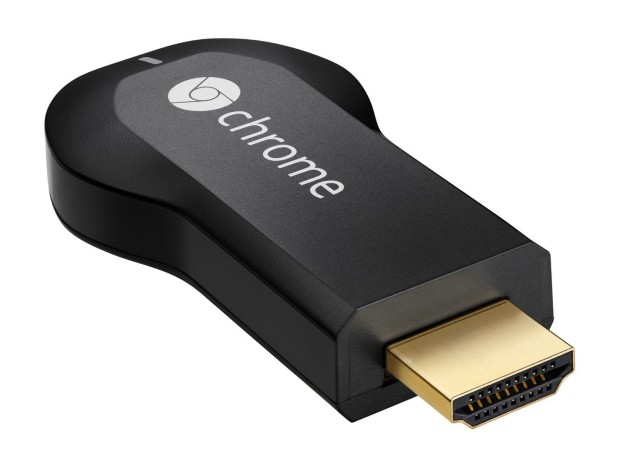
Google’s antipathy toward hardware has another curious effect — their products tend to have less of it. For example, the Chromecast looks more like a USB thumbdrive than a media box. They’re not trying to gussy up the perceived value of the hardware by making it seem like a big, valuable appliance.

Google’s Secret: They Don’t Care

Google is a great hardware company because they don’t care about hardware. They care about the experience users have with Google services.

It’s a subtle distinction, but one worth exploring. In order to maximize the usage and enjoyment of online services, you need fast-as-possible connection speeds, great screens and physical resilience and durability. In order to maximize the number of people having this great experience, you need low price.

When companies care about hardware, they do everything they can to de-commoditize the hardware and also make it profitable. But de-commoditization — making it different, even if those differences don’t make it better — isn’t an objective that will lead to the best user experience.

It appears that Google is de-emphasizing the trade-off between cost and benefit, and instead just focusing on the benefit, but that’s not really accurate.

In reality, the scale of Google’s services, and the revenue that those services generate, is massively larger than the scale of the hardware cost-benefit analysis.

By spending more on hardware that makes using Google services awesome, Google benefits financially by the increased use of those services. They sell more ads, mostly.

Just looking at Motorola’s X8 technology, built into the new Droids and the Moto X, you can see the Google calculation.

Google created one of the most incredibly useful and thrilling technologies ever — namely Google Now, which answers your questions (with answers, not just search results) and uses what it learns about you to alert you to opportunities and potential problems so you can benefit from personally relevant knowledge.

But using Google Now on a smartphone has ranged from difficult and inconvenient on some partner phones to pretty good on Nexus phones. Whatever additional costs or risks to be borne with enabling hands-free, high-speed, user-trainable Google Now usage are nothing compared to the benefits to both users and Google for wildly higher adoption and usage of Google Now.

Google’s ambivalence about hardware shines through in other ways. For example, along with the Moto X announcement, Motorola announced a new Chrome plug-in called Motorola Connect. The plug-in enables you to see who’s calling and texting your phone right there in your desktop browser — and even reply to text messages, too.

Hardware companies normally don’t do this kind of thing. They want you to use your phone for caller ID and text messaging, not your laptop.

But Google doesn’t care what hardware you use.

Yet another example is Google’s new Chromecast dongle. Come on, $35? There’s no way they’re making money on this. But Google doesn’t care about hardware, only services. So they can sell something super cheap in order to drive the usage of services.

Google Has Never Cared About Hardware

Google’s origins at Stanford university were intimately tied to ambivalence about hardware. In the early days of the search engine company, one of the brilliant ideas founders Sergey Brin and Larry Page had was that hardware failure was not only something that could be managed by better software, but that money could be saved by allowing even more of it.

Google used the cheapest servers they could find to power the Google search engine. Rather than spend a fortune on bullet-proof hardware, Google went in the other direction — they invested in a quantity of hardware, rather than quality, and made it work with better software that enabled systems to rapidly failover.

Google’s DNA from the beginning has been about maximizing usage of algorithmically-enhanced Internet- based services and minimizing the centrality of the hardware required to use these services.

That was true when Google didn’t make hardware. And it’s true now that Google is flooding the market with hardware.

Not caring about hardware is what makes Google such a great hardware company.

Read more at cultofandroid.com

