I've got to start calling them climate liars instead of deniers.
This was the year the world began to tune them out. Bummer's old boss, Killer Coal, is getting no love as an existential threat.
Big Coal’s 2014 nightmare
By Bob Burton on 19 December 2014
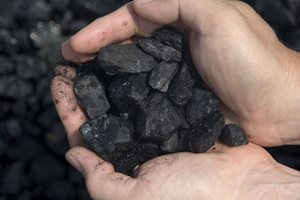
If 2013 was ‘annus horribilus’ for the global coal industry, 2014 has become its never-ending nightmare.
Around the world the coal industry has been confronted with unprecedented opposition – from frontline communities opposing new mines or polluting power stations to the burgeoning divestment movement. As community opposition has grown and the industry has been engulfed in scandals of its own making, political and financial support for the industry has waned. All the indications are that 2015 may well be the year in which Big Coal’s transition towards ‘Little Coal’ accelerates.
An industry that keeps on taking
As the coal industry has grown to produce billions of tonnes of coal a year – and hyped a boom of hundreds more mines, power stations, railways and ports to mine, move and burn billions of tonnes more – the industry has catalysed a burgeoning anti-coal movement.
Even so, the scale of the impacts of the industry is just becoming known. A conservative estimate based on the limited pool studies done to date is that at least 800,000 people die prematurely a year from coal-related air pollution.
One recent report estimated that that mooted tripling of coal-fired power plant capacity in India by 2030 could lead to the premature deaths of up to 229,500 people a year in the absence of strict air pollution controls.
Not surprisingly, proposals for new coal power stations and mines – from Burma to India, Thailand, Chile, South Africa, Turkey, the Philippines, Indonesia and dozens of other countries – are being strongly resisted by local communities.
In both Turkey and India an courts recently rejected environmental assessments on a proposed coal plants while in Pakistan residents of Karachi forced a crackdown on an unauthorised coal handling facility. In another case a Turkish court ruled the national olive groves protection law precluded the construction of a proposed power station. In Indonesia, the refusal of landowners to sell their land has blocked the construction of a 2000 megawatt coal plant at Batang.
Whether these and numerous other gains are relatively small localised wins or more globally significant, they all help shatter the illusion that the coal industry is invincible.
Environmental mismanagement by the coal industry has also fuelled public outrage.
In the US, a plant storing a toxic chemical for use in a coal treatment plant polluted the water supplies of 300,000 people living downstream. In Australia, a lack of minesite rehabilitation in a disused part of the Hazelwood coal mine allowed a fire to burn for 45 days. The resulting heavy air pollution is estimated to have caused the deaths of 11 people in the surrounding communities.
If environmental disaster weren’t bad enough, an ever-growing list of scandals has only served to add to the industry’s growing political isolation.
In Australia, a former New South Wales Minister is facing misconduct charges over a scandal over the allocation of a coal exploration licence while in China key national energy agency officials have been arrested over a raft of coal scandals. In India the Supreme Court over 200 coal allocations were cancelled after found them to have been awarded illegally. Part of the follow up on the ‘Coalgate’ scandal is a series of investigations and charges against politicians, public officials and company executives over the coal allocations.
In the US, Don Blankenship, the former CEO and Chairman of Massey Energy has been charged – amongst other things – with conspiracy to violate mandatory federal mine safety and health standards after a mine explosion killed 29 people.
Each scandal and disaster further crystallises in the minds of many that the industry not only unhealthily pollutes the air, land and water but our politics as well. All up the coal industry comes with costs an increasing number think are too heavy to bear.
Where once the coal industry could brazenly assert that there were no alternatives to coal-fired for cheap electricity, the dramatic fall in the costs of solar and wind power has now made fossil fuel power generators very vulnerable to competitors who have no fuel costs or pollution at the point of generation.
Renewables to the rescue
Coal power stations – which gobble over four-fifths of all coal mined – are fast becoming an industrial relict. Power generators in industrialised countries – long accustomed to steady growth of a few percentage points each year – are floundering in the face of slowing growth or – in the case of an increasing number of industrialised countries such as Germany and Australia – falling demand.
As renewables and end use energy efficiency have grown, existing coal plants have been shuttered for good everywhere from the US to Germany to the UK to Australia and beyond.
On the supply side of the equation, the phenomenal and sustained falls in the cost of renewables is fast making solar and wind the default options of choice for new centralised power generation. For many distributed or off-grid projects, solar has all but won the race.
The shift in thinking is starkly illustrated by the new Indian government pushing coal mining behemoth Coal India to spend US$1.2 billion building up to 1000 megawatts of solar capacity. Even the Indian coal-burning giant Tata Power has seen which way the investment dollars are flowing and has set up a solar subsidiary. “Solar is already competitive with imported coal,” Ajay Goel, the CEO of Tata Power Solar, recently stated.
Eighteen months ago the coal industry’s consultancy of choice, Wood Mackenzie, were boasting that Chinese coal consumption would double by 2030. This year, the evidence indicates that for the first time this century Chinese coal consumption actually fell.
When it was revealed in September that new power generation capacity in China comprised 80 per cent renewables, gas and nuclear compared to 90 per cent coal of recent times, former BHP Billiton executive Alberto Calderon noted “This is very good news for the environment and for climate change, not very good [news] for thermal coal.”
Burning money by the truckload
As 2014 draws to a close the coal industry has been rocked by a flurry of announcements which loudly signal how financially wounded the industry really is.
The European power behmouth E.ON – in a grudging acknowledgement that it profoundly misread the likely growth of renewables – has announced plans to offload its entire 51,000 megawatt coal, gas and nuclear fleet.
In the US, Ambre Energy has announced that it is offloading its US subsidiary which had been trying to build the proposed Port of Morrow coal export terminal in Oregon and the Millenium Bulk Terminals-Longview terminal in Washington state. In its corporate filing the company mournfully noted how the market capitalisation of five listed coal companies had plummeted in value in just three years from over US$17 billion to just under US$4 billion.
Coal mining companies which counted on the boom lasting decades more are wondering how much longer they can survive. Bumi Resources, the largest Indonesian coal exporter, is frantically trying to keep restive bondholders at bay while it tries to restructure its huge debt.
In mid-December Glenore began a three-week shut down of its 20 Australian coal mines, forcing 8000 employees to take holidays whether they wanted them or not. Anglo American has flagged that it is interested in selling off its thermal coal mines in South Africa and Australia while Consol Energy, formerly the largest underground coal miner in the US, is spinning off all its thermal coal assets.
As some coal companies and utilities dump projects, those remaining become ever more politically and financially isolated. The profound financial problems of the coal industry have made the case of the divestment movement even more compelling: coal is not only bad for public health and the environment, it’s a financial dud too.
In Norway the largest pension fund, KLP, has announced a partial divestment from coal companies and power utilities, Stanford University have divested from thermal coal companies, as have the Rockerfeller Brothers Fund and a coalition of other foundations. In Australia a raft of financial and other institutions have taken steps to divest from fossil fuel companies.
Bank lending for coal projects has moved into the spotlight too. The plans by the Indian coal company Adani for massive new coal mines in Australia have prompted a global campaign to ensure banks don’t fund a project which would require major new port infrastructure to ship coal through the Great Barrier Reef World Heritage Area. Under growing international pressure, nine global banks have distanced themselves from the project. In the absence of broad financial industry support, Adani has leant on the compliant state government for handouts.
As political opposition to coal has grown, normally cautious political leaders have been emboldened to publicly articulate views that would have been viewed as heresy a year ago.
In recent weeks the UK Energy Secretary, Ed Davey, recently predicted that “investing in new coal mines is going to get very risky” while the US Special Envoy for Climate Change Todd Stern flagged that an international climate change agreement “is going to have to be a solution that leaves a lot of fossil fuel assets in the ground.”
Each defeat or delay for coal projects, each new scandal or coal-caused disaster, each new report documenting coal’s toll on human health and every incremental fall in the cost of wind and solar brings the coal industry’s day of reckoning ever closer.
While the residual power of the coal industry and its allies is not to be underestimated, they end 2014 with much diminished standing. While tipping points in campaigns are often hard to discern, the dramatic changes this year suggest that Big Coal’s transition towards becoming ‘Little Coal’ is far more advanced than most would have dared to imagine just a year ago.
reneweconomy.com.au |



