Here you go chump .. since you are unable to research the subject I will provide you with the data. Open wide and swallow :
FACT CHECKING MASHABLE
August 26 by Christy Paavola - Research
  
In a recent article in Mashable, Christina Warren writes about Carly Fiorina’s time at HP. The piece is filled with so many inaccuracies it should have been published as fictional story instead of a piece of work masquerading as a legitimate column. Below is the real HP story.
HP’S STOCK PRICESMYTH: “During her time as CEO, HP lost more than half of its value…” (Christina Warren, Op-Ed, “If Carly Fiorina Ran The U.S. The Way She Ran HP, We’d Be Doomed,” Mashable, 8/25/15)
FACT: During Carly’s time at HP, HP stock closely correlated with the tech-heavy NASDAQ, proving the dip in the stock was a result of the general market downturn and the dot-com bust, not Carly. In fact, the NASDAQ finally crawled back to its dot-come highs of March 2000 in April 2015. Carly could not control the economy or prevent the dot-com bust so it is absurd to think she could control HP’s stock’s performance which was based heavily on these factors.
Furthermore, if you look at how HP stock compared to the S&P 500 Information Technology Index you will see HP’s stock was on par or outperformed the S&P Information Technology Index. In 2005, HP stock was higher than the S&P 500 Information Technology Index, proving Carly’s’ leadership not only helped HP weather the storm but allowed the company to prosper and perform better than similar companies.
April 23, 2015: “Nasdaq Composite Rises Above March 2000 Record Close” (Dan Strumpf, “Nasdaq Composite Rises Above March 2000 Record Close,” The Wall Street Journal, 4/23/15)
“The Nasdaq Composite Index Breached Its All-Time Closing High For The First Time In 15 Years On April 23, 2015.” “The Nasdaq Composite Index breached its all-time closing high for the first time in 15 years on Thursday, the latest push higher for the technology-heavy index that has pulled ahead of the broader market this year. The index rose as much as 14.17 points, or 0.3%, to 5049.34 in intraday trading, topping its all-time closing high of 5048.62 last reached at the height of the dot-com bubble on March 10, 2000. The Nasdaq remained below its all-time intraday high of 5132.52, also set on March 10, 2000.” (Dan Strumpf, “Nasdaq Composite Rises Above March 2000 Record Close,” The Wall Street Journal, 4/23/15)
“While The Dow Jones Industrial Average And The S&P 500 Have Notched Dozens Of New Records In Recent Years, The NASDAQ Has Taken Much Longer To Recover From The Dot-Com Bust.” (Dan Strumpf, “Nasdaq Composite Rises Above March 2000 Record Close,” The Wall Street Journal, 4/23/15)
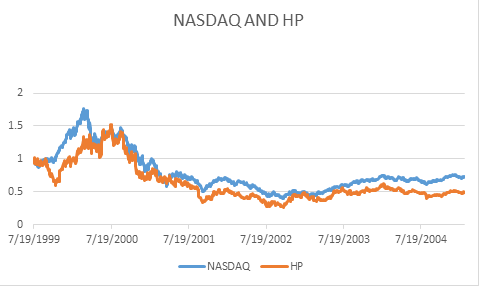
(Yahoo! Finance, finance.yahoo.com, Accessed 5/8/15)
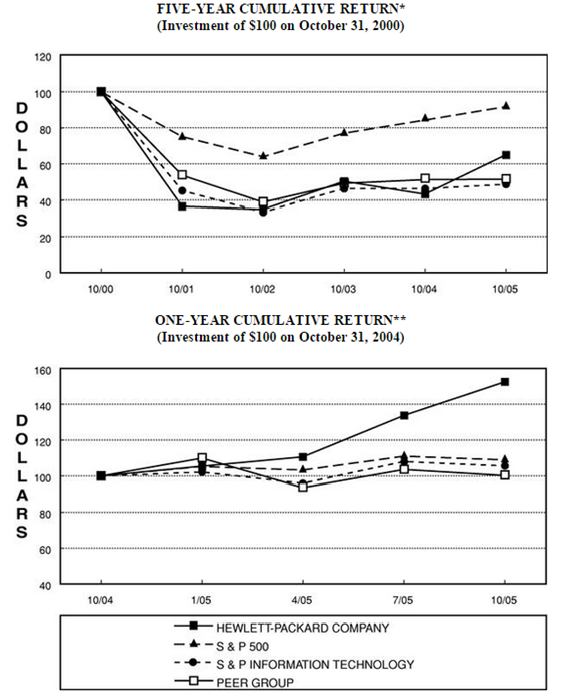
(Hewlett-Packard Company, SEC Form DEF-14A, Period March 15, 2006, Filed 1/23/06)
HP LAYOFFSMYTH: “[A]nd the company laid off 30,000 employees in the United States…” (Christina Warren, Op-Ed, “If Carly Fiorina Ran The U.S. The Way She Ran HP, We’d Be Doomed,” Mashable, 8/25/15)
FACT: Carly led HP during the dot-com bust and the 2001 recession. The U.S. economy lost 1.7 million jobs in 2001 alone. During that time she had to make tough choices to save the company. It is always unfortunate when people have to be let go, but Carly’s decisions are what saved HP and allowed it to emerge a stronger company so she could hire more people in the future.
In March 2000, “Things Came To A Crashing Halt” And The Dot-Com Bubble “Which Had Been Building Up For The Better Part Of Three Years, Slowly Began To Pop.” “In March of 2000, 15 years ago, one of those things came to a crashing halt. The dotcom bubble, which had been building up for the better part of three years, slowly began to pop. Stocks sunk. Companies folded. Fortunes were lost, and the American economy started to slip down a slow mudslide that would end up in full-on recession.” (Ben Geier, “What Did We Learn From the Dotcom Stock Bubble of 2000?” Time, 3/12/15)
In The Beginning Of 2001, “The New Economy Was Coming Unstuck.” “Throughout the winter of 2001, the New Economy was coming unstuck. Evidence of its waning appeal arrived every time Web surfers clicked onto the stock pages of Bloomberg, Yahoo Finance, and other online services.” (George Anders, Perfect Enough, 2003, p. 115)
The Recession Began In March 2001. “The world’s largest economy sank into a recession in March, ending 10 years of growth that was the longest expansion on record in the United States, a group of economists that dates U.S. business cycles said Monday. … It ruled that the long expansion ended in March and the nation’s tenth recession since the end of World War II began at the same time. The declaration means the longest expansion lasted exactly 10 years.” (“Economists Call It Recession,” CNNMoney, 11/26/01)
In 2001, The U.S. Lost 1.7 Million Jobs. (U.S. Bureau Of Labor Statistics, www.bls.gov, Accessed 3/13/15)In 2001, The Unemployment Rate Increased To 5.7% In December From 4.2% In January, A 36% Increase. (U.S. Bureau Of Labor Statistics, www.bls.gov, Accessed 3/13/15)The San Francisco Chronicle Declared 2001 “The Year Of The Layoff.” “It has been the Year of the Layoff. Collectively, nine of the top 20 Chronicle 500 companies have let go 40,000 workers -- more than the entire worldwide staff of Chevron Corp. or Sun Microsystems.” (Carolyn Said, “The Chronicle 500,” The San Francisco Chronicle, 5/7/01)

HP FOCUSED ONLY ON PCSMYTH: “Its mistaken bet on personal computers at the expense of big business…” (Christina Warren, Op-Ed, “If Carly Fiorina Ran The U.S. The Way She Ran HP, We’d Be Doomed,” Mashable, 8/25/15)
FACT: Warren has her facts wrong. The merger benefitted HP in many ways and was not solely about PCs. One of the main reasons for the merger was to provide integrated systems for HP’s enterprise customers, which HP went on to do. HP became a one-stop-shop for customers. Warren claims to be an expert on HP yet she looks at only a small segment of the merger.
Richard Hackborn And Thomas Perkins, HP And Compaq Board Members At The Time Of The Merger: The Merger Is “About Growing The Enterprise, Services And Printing And Imaging Businesses.” “Much has been made of the combined company’s ‘exposure’ to the PC sector. To begin with, the merger is not about PCs. It is about growing the enterprise, services and printing and imaging businesses. But we also see good opportunity in the PC market. Our goal is to preserve the best parts of each PC business and improve the economics.” (Richard Hackborn And Thomas Perkins, Op-Ed, “HP-Compaq Is The Right Choice,” San Jose Mercury News, 12/9/01)
Sam Ginn, HP Board Member In 2002: The Merger Is Not Just “Two PC Companies Coming Together.” “Well, I think the stock market sees this as two PC companies coming together as opposed to what the merger is really about. And I must admit to you the first time that we looked at it, I think myself and a number of members of the board felt the same way. But as you get deeper into this process, as you began to understand the strengths that these two companies coming together bring, you begin to get excited about the future. Those of us on the board who spent many, many hours at this, I think understand the true capabilities once these two companies come together. (“Hear From The Board: Sam Ginn, www.votethehpway.com, 2002)
Robert Knowling, HP Board Member In 2002: “Compaq Is Not Just A PC Business … Their Server Business Is One Of The Largest Components Of Their Portfolio.” “Well, you know, I think on the surface when you meet people, that’s the question that I’m sure every employee, certainly as a member of the board, that I get at every forum that I go in. I believe there is some misconception out there in terms of what Compaq is. It’s not just a PC business. When you look at their server business, it is one of the largest components of their portfolio.” (“Hear From The Board: Robert Knowling,” www.votethehpway.com, 2002)
Knowling: Compaq Will “Arm Us With More Bulk, More Capability, If You Will, More Steroids, In Terms Of How We’re Going To Compete In Various Markets.” “And so you have to get beyond just the image that that’s the group that sells those colorful looking PC units. It’s a much more comprehensive business and it will arm us with more bulk, more capability, if you will, more steroids, in terms of how we’re going to compete in various markets. So it’s the wide range of capabilities that the combination will, in fact, yield a great HP at the end of the day.” (“Hear From The Board: Robert Knowling,” www.votethehpway.com, 2002)
Phil Condit, HP Board Member In 2002: Enterprise Customers And Consumers Will Be Able To Go To “HP And Get Everything They Need” As A Result Of The Merger. “There are a number of things, I think, that are important in this merger. One of them is there is going to be consolidation in the PC area. And there are going to be a few big, powerful players. And the important thing is to be one of them. To bring a full capability so that, for the enterprise customer, you can say I can do printing for you. I can do computing for you. I can do servers for you. I can do systems and networks and solutions. Then you have all of those capabilities. Same thing for the consumer -- they can go to HP and get everything they need. The HP-Compaq Merger the image that you want.” (“Hear From The Board: Phil Condit,” www.votethehpway.com, 2002)
2010: Without The Compaq Deal, HP Would Have “Become A Printer Company Almost Entirely – A Shell Of What It Is Today.” “‘If HP hadn’t done the Compaq deal, I believe it would’ve become a printer company almost entirely — a shell of what it is today,’ said Charles House, co-author of ‘The HP Phenomenon,’ which is based on interviews with dozens of former and current HP executives.” (Mike Zapler, “Analysts: Carly Fiorina Long On Vision, Fell Short On Execution At HP,” Mercury News, 4/20/10)
THE HP AND COMPAQ MERGERMYTH: “Hewlett-Packard’s merger with Compaq is one that had a high ambition: to make HP the biggest and best information technology company in the world. It failed.” (Christina Warren, Op-Ed, “If Carly Fiorina Ran The U.S. The Way She Ran HP, We’d Be Doomed,” Mashable, 8/25/15)
FACT: Warren could not be further from the truth with this statement. The HP/Compaq merger was not a failure. The merger helped HP survive the stagnant economy after the dot-com bust and the 2001 recession and along with Carly’s leadership in other areas helped lay the foundation for HP’s future successes. Five short years after the merger was approved, HP became the first $100 billion technology company and the company has only grown from there. In HP’s recent third quarter earnings, one of the bright spots of the report was the growth of the server segment which was credited to the HP/Compaq merger.
“In 2001, As The Dot-Com Bubble Burst, [Fiorina] Masterminded One Of The Largest Tech Mergers In History -- HP’s $19 Billion Purchase Of Compaq Computer Corp.” (Robin Abcarian, “Profits May Not Equal Success,” Los Angeles Times, 5/20/10)
“Few Deals Stirred As Much Controversy As The Union Between Hewlett-Packard And Compaq” But “The Deal Has Turned Into A Success.” “Few deals stirred as much controversy as the union between Hewlett-Packard and Compaq. Michael Dell once called it ‘the dumbest deal of the decade.’ Yet almost six years on — a period that included a proxy battle with the son of one of the founders, a steady loss of shareholder value for the first year after the merger and the ouster of the first CEO, Carly Fiorina — the deal has turned into a success.” (The Wall Street Journal’s “Deal Journal,” Blog, “The H-P/Compaq Union, From Controversy To Success,” Posted By Stephen Grocer, 8/16/07)
“[Mark Hurd] Can Thank His Predecessor, Carly Fiorina, For HP’s Breadth And Depth. She Was The Architect Of The Tumultuous 2001 Acquisition Of Compaq.” (Adam Lashinsky, “Mark Hurd’s Moment,” FORTUNE, 3/3/09)
2015: “Hewlett-Packard Co.’s Fiscal Third Quarter Earnings Showed A Decline In Nearly All Of Its Businesses, With One Exception: Industry Standard Servers, A Segment Area That Grew In Part As A Result Of H-P’s Much-Maligned Merger With Compaq Computer In 2002.” (Therese Poletti, Op-Ed, “H-P’s Only True Growth Is A Carly Fiorina Legacy,” MarketWatch, 8/20/15)
“‘The Stock Took A Beating [As A Result Of The Merger], But [Fiorina] Was Absolutely Correct,’ Said Venture Capitalist Tom Perkins, A Supporter Despite Having Been A Member Of The HP Board That Fired Her.” (Robin Abcarian, “Profits May Not Equal Success,” Los Angeles Times, 5/20/10)
Perkins: “The Merger Was A Brilliant Move. Look Where HP Is Now: The Biggest Computer Company In The World.” (Robin Abcarian, “Profits May Not Equal Success,” Los Angeles Times, 5/20/10)
The Merger With Compaq Positioned HP To Become The First $100 Billion Information Technology Company.
HP’s Net Revenue In 2007 Was $104.29 Billion. (Hewlett Packard CO – HPQ, SEC Form 10-K, 2007, Filed 12/18/07)IBM, One Of HP’s Main Competitors, Did Not Achieve $100 Billion In Revenue Until 2008. IBM’s Revenue In 2008 Was $103.6 Billion. (IBM, 2008 Annual Report, 2008)As Of October 31, 2014, HP Had 302,000 Employees And $111.5 Billion In Net Revenue. (HP 2014 Annual Report, www.hp.com, 2014)
WALTER HEWLETT AND THE MERGERMYTH: “Along the way [Carly] made strong enemies, fighting Walter Hewlett (son of HP co-founder Bill Hewlett) in a bitter proxy war over the merger. Hewlett wasn’t convinced the merger was a good idea….”(Christina Warren, Op-Ed, “If Carly Fiorina Ran The U.S. The Way She Ran HP, We’d Be Doomed,” Mashable, 8/25/15)
FACT: Walter Hewlett voted along with the rest of the board to unanimously approve the deal. It was not until later that Hewlett flip flopped over personal concerns. Hewlett’s opposition to the merger was rooted in the fact it did not personally benefit him and his family’s foundation. He was focused on short-term gains since his wealth was tied up in HP stock. Carly had a long-term vision for the company to ensure it would be strong and successful for years to come. It is not a surprise then that Carly and Walter fought during the merger. Carly was looking out for the company as a whole, not just Walter Hewlett’s personal gain.
The Compaq/HP Merger Was Approved Unanimously By The Boards Of Both Companies. “Hewlett-Packard Company and Compaq Computer Corporation announced today a definitive merger agreement to create an $87 billion global technology leader. … Under the terms of the agreement, unanimously approved by both Boards of Directors, Compaq shareowners will receive 0.6325 of a newly issued HP share for each share of Compaq, giving the merger a current value of approximately $25 billion. HP shareowners will own approximately 64% and Compaq shareowners 36% of the merged company. The transaction, which is expected to be tax-free to shareowners of both companies for U.S. federal income tax purposes, will be accounted for as a purchase.” (HP, “Hewlett-Packard And Compaq Agree To Merge, Creating $87 Billion Global Technology Leader,” Press Release, 9/3/01)
“When The Deal Was First Proposed, Mr. Hewlett Wasn’t Publicly Opposed. In Fact, As A Member Of The Board Of Directors Of HP, He Had Voted In Favour Of The Deal.” (Robert Thompson, “A Formidable Foe: Walter Hewlett -- Eccentric Multi-Millionaire -- Has Been More Successful Than Expected In Trying To Block The HP-Compaq Deal,” National Post, 3/18/02)
Walter Hewlett Was Not A Typical Corporate Board Member. “Mr. Hewlett, the 57-year-old son of HP co-founder William Hewlett and a company director, is unlike any opponent Ms. Fiorina has encountered. He runs marathons, plays classical music, loves to program computers and drives a cherry red electric car with a bumper sticker that reads ‘abandon inertia.’” (Robert Thompson, “A Formidable Foe: Walter Hewlett -- Eccentric Multi-Millionaire -- Has Been More Successful Than Expected In Trying To Block The HP-Compaq Deal,” National Post, 3/18/02)
In A Letter To Hewlett, The HP Board “Questioned [Hewlett’s] Priorities Because Of His Absence At Some Key Board Meetings.” “According to a Monday filing with the Securities and Exchange Commission, a letter signed by all eight directors--Hewlett excluded--disputed Hewlett’s reasons for voting as a director in favor of the deal while planning to vote his shares against the merger as a shareholder. The directors also questioned his priorities because of his absence at some key board meetings, during which merger details were discussed.” (Dawn Kawamoto, “HP Directors Slam Walter Hewlett,” ZDNet, 1/8/02)
The HP Board Of Directors Asked Walter Hewlett If He Was Aware That They Had “Spent Considerable Time Analyzing The Strategic Alternatives Available To HP To Preserve And Create Shareholder Value.” “As you are aware, the company and the board have spent considerable time analyzing the strategic alternatives available to HP to preserve and create shareowner value. Our board process was deliberate, thorough and complete, with management and advisor input and debate among all of the directors. We collectively concluded that the merger represented by far the single best strategic alternative for the company.’’ (Hewlett Packard Co – HPQ, SEC Form 425, Filed 1/7/02)
Walter Hewlett Was A Member Of The HP Board Of Directors In 2002. (HP, www.votethehpway.com, Accessed 4/1/15)The HP Board Of Directors: “Quite Frankly Walter, You Have Never Offered An Alternative Strategy That We All Haven’t Debated And Rejected.” (Hewlett Packard Co – HPQ, SEC Form 425, Filed 1/7/02)
Signatories Of The Letter To Walter Hewlett: “Philip M. Condit, HP Director Patricia C. Dunn, HP Director Carleton S. Fiorina, HP Chairman of the Board and Chief Executive Officer Sam Ginn, HP Director Richard A. Hackborn, HP Director George A. Keyworth II, HP Director Robert E. Knowling Jr., HP Director Robert P. Wayman, HP Director, Executive Vice President and Chief Financial Officer” (Hewlett Packard Co – HPQ, SEC Form 425, Filed 1/7/02)
Hewlett Sought Short-Term Stock Hikes For His Personal Benefit Instead Of Long-Term Gains For The Company
Walter Hewlett Joined The William And Flora Hewlett Foundation As The Third Trustee In 1996 When He Was Just Twenty-Two Years Old And Was Looking Forward To “Hav[ing] A Role To Play” In The Foundation That Would “Have Some Major Assets.” “When the William and Flora Hewlett Foundation was created in December 1966, twenty-two-year-old Walter Hewlett joined his parents as the entity’s third trustee. His main duty at the beginning was to provide an extra signature when needed. ‘But it was clear to me,’ Walter Hewlett later said, ‘that eventually the foundation would have some major assets, and that I would have a role to play.” (George Anders, Perfect Enough, 2003, p. 100)
The Shares Of The Hewlett And Packard Families Along With The Foundations Totaled 18 Percent. “The trustees of the David and Lucile Packard Foundation, the company’s largest shareholder, announced that they would vote the philanthropic organization’s holdings -- 10.4 percent of all outstanding shares -- against the merger. Combined with the shares controlled by several Hewlett and Packard heirs and other family philanthropic groups, that brings the total of ‘no’ votes to about 18 percent.” (Ariana Eunjung Cha, “Hewletts, Packards Vs. HP,” The Washington Post, 12/9/01)
The William R. Hewlett Revocable Trust And The William And Flora Hewlett Foundation “Collectively Own[ed] Approximately 108.5 Million Shares (5.6%) Of The Hewlett-Packard Common Stock.” “My interests in the Hewlett-Packard stockholder vote on the proposed merger are primarily a fiduciary of The William R. Hewlett Revocable Trust (the ‘Trust’) and as Chairman of the William and Flora Hewlett Foundation (the ‘Hewlett Foundation’), which collectively own approximately 108.5 million shares (5.6%) of Hewlett-Packard common stock worth approximately $2.5 billion as of January 10, 2002.” (Friedman Fleischer And Lowe, Op-Ed, “HP/Compaq Merger Analysis By Friedman Fleischer And Lowe,” CRN, 2/21/02)
“The Hewlett Foundation And The Trust Were Established To Support Charitable Endeavors, And, As Significant Hewlett-Packard Stockholders, Are Strictly Focused On The Value Of The Hewlett-Packard Common Stock.” (Friedman Fleischer And Lowe, Op-Ed, “HP/Compaq Merger Analysis By Friedman Fleischer And Lowe,” CRN, 2/21/02)
Walter B. Hewlett Opposed The Merger Citing “The Lack Of Stockholder Benefits.” “Walter B. Hewlett, Hewlett’s son and a member of the HP board, said the company can create more value for shareholders without adding Houston-based Compaq. Hewlett said the deal would give HP too much exposure to the struggling personal computer industry and dilute its profitable printer business. ‘Given the lack of stockholder benefits, I believe the extensive integration risks associated with this transaction are not worth taking,’ Hewlett said in a statement on behalf of him, his sisters Eleanor Hewlett Gimon and Mary Hewlett Jaffe, and the family’s charitable foundation.” (Brian Bergstein, “Family, Foundation Of HP Co-Founder Oppose Compaq Deal,” Associated Press, 11/6/01)
WALTER HEWLETT’S LAWSUITMYTH: “As recounted by Fortune, Fiorina played hardball to convince Deutsche Bank to change its mind, apparently threatening to pull HP’s business from the uncooperative bank….”(Christina Warren, Op-Ed, “If Carly Fiorina Ran The U.S. The Way She Ran HP, We’d Be Doomed,” Mashable, 8/25/15)
FACT: Once again Warren distorts the truth. The issue of Carly threatening Deutsche Bank ended up in court as part of a lawsuit against HP by Walter Hewlett. While Hewlett was quick to throw a lawsuit at Carly and HP he did not bring any evidence of wrong doing to court. The judge presiding over the case praised HP’s actions regarding the merger and found no evidence of coercion.
Additionally, the FORTUNE article Warren cites was an op-ed by long-time Bill Clinton friend Jeffrey Sonnenfeld. Check out our piece on who Jeffrey Sonnenfeld really is.
Walter Hewlett’s Lawsuit Against HP Was Dismissed Allowing The Merger To Go Forward. “A Delaware judge ruled Tuesday that Hewlett-Packard’s shareholder vote was legal, paving the way for the company to complete its merger with Compaq Computer. Delaware Chancery Court Judge William Chandler III ruled in favor of HP on all claims and dismissed Hewlett’s suit, which had sought to overturn the results of HP’s March 19 shareholder vote.” (“Judge Dismisses HP Merger Lawsuit,” CNET, 6/1/02)
Judge Chandler Said Hewlett Failed To Produce The Necessary Proof To Back Up His Allegations. “Hewlett claimed that HP bullied a big investor into supporting the Compaq deal and lied to investors about the progress of the merger plans. Chancery Court Judge William B. Chandler III said Hewlett failed to prove his allegations in a three-day trial last week in Wilmington, Del.” (Brian Bergstein, “Hewlett Gives Up After Judge Oks HP-Compaq Deal,” Associated Press, 5/1/02)
Judge Chandler: “The ‘plaintiffs have failed to prove that HP disseminated materially false information about its integration efforts or about the financial data provided to its shareholders.” (“Judge Dismisses HP Merger Lawsuit,” CNET, 6/1/02)“The Judge Also Said That The ‘Plaintiffs Have Failed To Prove That HP Management Improperly Enticed Or Coerced Deutsche Bank Into Voting In Favor Of The Merger.’” (“Judge Dismisses HP Merger Lawsuit,” CNET, 6/1/02)“‘The Evidence Demonstrates That HP’s Statements Concerning The Merger Were True, Complete And Made In Good Faith,’ [Judge] Chandler Wrote.” (Brian Bergstein, “Hewlett Gives Up After Judge Oks HP-Compaq Deal,” Associated Press, 5/1/02)
“The Decision Is A Huge Setback For Former Director Walter Hewlett, Who Has Led The Charge Against The $19 Billion Compaq Acquisition During A Six-Month Proxy Fight And Recent Court Battle.” (“Judge Dismisses HP Merger Lawsuit,” CNET, 6/1/02)
Hewlett Claimed The Integration Process Was Faulty And HP Bought Deutsche Bank’s Vote. “In his lawsuit, Walter Hewlett had alleged the vote was tainted. Hewlett had two main charges: The company failed to disclose that its integration planning was going more poorly than it had hoped and that it essentially bought the vote of Deutsche Bank, a large shareholder.” (“Judge Dismisses HP Merger Lawsuit,” CNET, 6/1/02)
“But Many Trial Watchers Said Hewlett Lacked The Smoking Gun That Would Prove His Allegations.” (“Judge Dismisses HP Merger Lawsuit,” CNET, 6/1/02)
HP PRINTERSMYTH: “By embracing PCs, HP also lost ground in a business it had dominated before the merger: printers.” (Christina Warren, Op-Ed, “If Carly Fiorina Ran The U.S. The Way She Ran HP, We’d Be Doomed,” Mashable, 8/25/15)
FACT: Warren is wrong. If you look at the revenue and market share numbers for printers you will easily see the printer business did not suffer. Warren could have easily looked up HP’s revenue numbers and market share information but apparently chose not to. Instead she chose to mislead her readers with a false, outrageous claim.

HP Remained Number One In Printer Market Share During Carly’s Tenure. (International Data Corporation, “Consumer Optimism Drives U.S. Printer Market In 1999, IDC Says,” Press Release, 1/17/00; Gartner, Inc., “Gartner Says United States Printer And MFP Shipments Declined 4 Percent In Second Quarter Of 2006,” Press Release, 9/5/06)
HP Dominated Printer Market Share During Fiorina’s Tenure. Market Share Started At 42.4% In 1999, Reached A High In 2002 At 59%, And Ended In 2005 At 47.4%. (Peter Burrows, “HP’s Carly Fiorina: The Boss,” Bloomberg Businessweek, 8/2/99; Ian Fried, “IDC: HP Printer Business On A Roll,” CNET, 2/25/03; Gartner, Inc., “Gartner Says United States Printer And MFP Shipments Declined 4 Percent In Second Quarter Of 2006,” Press Release, 9/5/06)MERGER EXPECTATIONSMYTH: “In short, HP, merged with Compaq, failed to meet any of its own expectations.” (Christina Warren, Op-Ed, “If Carly Fiorina Ran The U.S. The Way She Ran HP, We’d Be Doomed,” Mashable, 8/25/15)
FACT: Warren’s claim is once again completely off base. With the recent release of HP’s third quarter earnings we saw how the Compaq/Merger is still providing results for HP in the form of increased profits in the Enterprise Group. The merger was designed to strengthen numerous sectors, including servers at HP, and make HP a one-stop shop for customers, specifically enterprise customers. This is exactly what happened.
Sam Ginn, HP Board Member In 2002: The Merger Will Help “HP Get The Scope And Scale Where, In Areas Of Servers And Other High-End Enterprise Systems That It Doesn’t Have.”“Well, it makes HP stronger in many, many ways. It helps HP get the scope and scale where, in areas of servers and other high-end enterprise systems that it doesn’t have. It certainly consolidates the PC market. Allows HP to have a very, very significant position. So it does a lot of things for HP and beyond that, I think that Compaq will offer us some key talents as we look to the future. To the extent that I’ve met Compaq executives, I think they’re going to make a real contribution with HP.” (“Hear From The Board: Sam Ginn, www.votethehpway.com, 2002)
Richard Hackborn And Tom Perkins, HP And Compaq Board Members In 2001: “Our Enterprise Customers Increasingly Want To Purchase Integrated Solutions, Not Individual Products And Technologies.” “Facing increased competition themselves, our enterprise customers increasingly want to purchase integrated solutions, not individual products and technologies. They seek to benefit from the economics and flexibility of standards-based platforms and architectures. They want stronger partnerships with a smaller number of global, end-to-end solutions providers.” (Richard Hackborn And Thomas Perkins, Op-Ed, “HP-Compaq Is The Right Choice,” San Jose Mercury News, 12/9/01)
The Compaq Merger Gave HP A “Commanding Presence In The PC And Server Markets And Allowed It To Become A One-Stop Shop For Many Companies’ Computing Needs.” “As it turned out, the acquisition has paid off handsomely. Several analysts say it has given the company a commanding presence in the PC and server markets and allowed it to become a one-stop shop for many companies’ computing needs. HP has since overtaken Dell as the top PC seller and become the world’s biggest technology company by revenue, which reached $115 billion in 2009.” (Mike Zapler, “Analysts: Carly Fiorina Long On Vision, Fell Short On Execution At HP,” Mercury News, 4/20/10)
2015: “Hewlett-Packard Co.’s Fiscal Third Quarter Earnings Showed A Decline In Nearly All Of Its Businesses, With One Exception: Industry Standard Servers, A Segment Area That Grew In Part As A Result Of H-P’s Much-Maligned Merger With Compaq Computer In 2002.” (Therese Poletti, Op-Ed, “H-P’s Only True Growth Is A Carly Fiorina Legacy,” MarketWatch, 8/20/15)
“In [The] Report, The X86 Server Business That Was Boosted By The Compaq Purchase Was The Sole Growth In H-P’s Earnings Report.” (Therese Poletti, Op-Ed, “H-P’s Only True Growth Is A Carly Fiorina Legacy,” MarketWatch, 8/20/15)
“H-P’s Enterprise Group Revenue Was Up 2% Year Over Year, Fueled Mostly By The Commodity Server Business, Also Called The X86 Server Business, Which Grew 8%.” (Therese Poletti, Op-Ed, “H-P’s Only True Growth Is A Carly Fiorina Legacy,” MarketWatch, 8/20/15)
“The PC And Printer Weakness Is Also Why H-P Is Trying To Position The Enterprise Company As The Better Stock For Investors, And Fiorina’s Server Legacy Could Be A Big Part Of Its Enterprise Effort.” (Therese Poletti, Op-Ed, “H-P’s Only True Growth Is A Carly Fiorina Legacy,” MarketWatch, 8/20/15)
CARLY’S HP RECORDMYTH: “If Fiorina insists on running on the back of her business record, it’s only fair that we admit that ten years later, it was a mess.” (Christina Warren, Op-Ed, “If Carly Fiorina Ran The U.S. The Way She Ran HP, We’d Be Doomed,” Mashable, 8/25/15)
FACT: Carly is proud of her HP record and will gladly run on it. Carly led HP through tough economic times and set the stage for future growth and success. While she was there she doubled revenues to more than $80 billion, tripled innovation, quadrupled cash flow and more than quadrupled the growth rate. Carly is right to run on her record.
While At HP, Carly Doubled The Size Of The Company To More Than $80 Billion.
Revenue For The Four Quarters Prior To Carly’s Arrival At HP Was $40.17 Billion. Revenue For The Last Four Quarters She Was At HP Was $81.85 Billion. (Hewlett Packard CO – HPQ, SEC Form 10-K, 1999, Filed 1/27/00; Hewlett Packard CO - HPQ, SEC Form 10-K, 2004, Filed 1/14/05; Hewlett Packard CO-HPQ, SEC Form 10-Q, Period January 31, 2005, Filed 3/11/05)When Carly Left HP, Revenue Growth Was Growing Five Times As Fast As When She Started.
The Growth Rate Went From 1.2 Percent Adjusted For Inflation To 6.5 Percent.Prior To Carly, Revenue Growth In The Four Quarters Before She Was Hired Was An Anemic 1.2 Percent Adjusted For Inflation. (Hewlett Packard CO-HPQ, SEC Form 10-Q, Period: January 31, 1999, Filed 2/26/99; Hewlett Packard CO-HPQ; SEC Form 10-Q, Period: April 30, 1999, Filed 6/11/99; Hewlett Packard CO-HPQ, SEC Form 10-K,, 1/15/99; Hewlett Packard CO-HPQ, SEC Form-10K, Filed 1/27/98)
Quarters Q2 1999 – Q3 1998 were compared to quarters Q2 1998 – Q3 1997.When Carly Left HP, Revenue Growth For The Last Four Quarters She Was At HP Compared To The Previous Four Quarters Was 6.5%. (Hewlett Packard Company CO-HPQ, SEC Form 10-K, Filed 1/20/04; Hewlett Packard Company CO-HPQ, SEC Form 10-K, Filed 1/14/05; Hewlett Packard Company CO-HPQ, SEC Form 10-K, Filed 12/21/05)
Quarters Q1 2005 – Q2 2004 were compared to Q1 2004- Q2 2003. Carly More Than Quadrupled The Growth Rate.
Revenue Growth Went From 1.2 Percent Adjusted For Inflation To 6.5 Percent Adjusted For Inflation. (Hewlett Packard CO-HPQ, SEC Form 10-Q, Period: January 31, 1999, Filed 2/26/99; Hewlett Packard CO-HPQ; SEC Form 10-Q, Period: April 30, 1999, Filed 6/11/99; Hewlett Packard CO-HPQ, SEC Form 10-K, Filed 1/15/99; Hewlett Packard CO-HPQ, SEC Form-10K, Filed 1/27/98; Hewlett Packard Company CO-HPQ, SEC Form 10-K, Filed 1/20/04; Hewlett Packard Company CO-HPQ, SEC Form 10-K, Filed 1/14/05; Hewlett Packard Company CO-HPQ, SEC Form 10-K, Filed 12/21/05)Carly Tripled Innovation.
When Fiorina Began At HP, HP Had 10,000 Patents In Their Portfolio. In 2005, HP Had 30,000 Patents In Their Portfolio. (“HP’s Stock Roared As Fiorina Launched A New Brand And TV Campaign,” 3000 Newswire, December 1999; HP, 2005 Annual Report, Filed 12/16/15)During Carly’s Tenure, The Number Of Patents In HP’s Portfolio Increased By 20,000 Patents, An Average Of 13 Patents Per Working Day.20,000 patents/(260 working days in a year * 6 years) = 12.82 patents per dayThe Number Of Patents Per Working Day Tripled From Five In 1999 To 15 In 2004. (“HP’s Stock Roared As Fiorina Launched A New Brand And TV Campaign,” 3000 Newswire, December 1999; Hewlett Packard Company CO-HPQ, SEC Form 10-K, Filed 1/14/05)1999: “Fiorina said the invention message is a key part of HP’s heritage, citing the company’s 10,000-patent portfolio, growing with five new patents on average every working day….”(“HP’s Stock Roared As Fiorina Launched A New Brand And TV Campaign,” 3000 Newswire, December 1999HP gained 4,000 new patents between 2003 and 2004. 4,000 patents/260 working days in a year = 15.38 patents per day. (Hewlett Packard Company CO-HPQ, SEC Form 10-K, Filed 1/14/05)Carly Quadrupled Cash Flow.
On July 31, 1999 HP’s Cash Flow Was 201.00 Million And On January 31, 2005 Cash Flow Was $983.00 Million. (Hewlett-Packard Free Cash Flow (Quarterly), YCharts, Accessed 5/28/11)HP Became The 11th Largest Company In The United States During Carly’s Tenure.
In 2004, HP Was 11th On The Fortune 500 List, Up From 13th In 1999. (“Fortune 500 1999” fortune.com, Accessed 5/19/15;”Fortune 500 2004,” fortune.com, Accessed 4/6/15)For More Information On Carly’s Record At HP Please Take A Look At Our HP Infographic.
For More Research Please Go Here.
Categories:
PREVIOUS NEXT |



