That was a good link!
"The pace and tempo of evolution is a detail. Creationists exploit both limitations of our understanding of tiny details, and scientists debating over these details, as if they refute or call into question the massive evidence for the big picture – that all life on earth is the result of common descent." Reasons 1-6: Transitional Fossils
The first six reasons are essentially the same point, that there is a lack of transitional forms in the fossil record. This, of course, is a complete lie. Snyder, however, maintains this lie with two common misconceptions among creationists that relate to how we define “transitional fossil.”
Creationists, of course, do not provide and then use one consistent definition of the term. They rely upon shifting definitions to sow their confusion. Evolutionary biologists consider a transitional fossil any fossil that gives us information about the evolutionary connection between two groups. These two groups can be descendants and ancestors, or two descendants with a common ancestor. The two groups can also be at any taxonomical level – two orders, two families, or two species. This is a broad definition, which allows for creationist mischief.
When scientists discuss the fossil record they will often discuss specific aspects of the record, and their points can easily be taken out of context, especially if you allow yourself a fluid definition of “transitional.” First let me explain, in broad brushstrokes, what the fossil record actually shows, and then we can see how they exploit the details to confuse.
We now have an enormous fossil record containing numerous transitional forms – species that are clearly in between extant species or that clearly fall between extant groups. To give some common examples:
There are now many transitional whales, such as Pakicetus, that are part way between terrestrial mammals and full whales, with stubby legs and nostrils still toward the front of their skull.
Archaeopteryx was the first fossil species part way between theropod dinosaurs and birds, but now we have discovered numerous examples of feathered dinosaurs, and part birds.
Tiktaalik is part way between fish and amphibians.
We have excellent documentation of the evolution of reptiles to mammals, including therapsids and cynodonts. This includes many steps in the transition from a reptilian to mammalian jaw and inner ear.
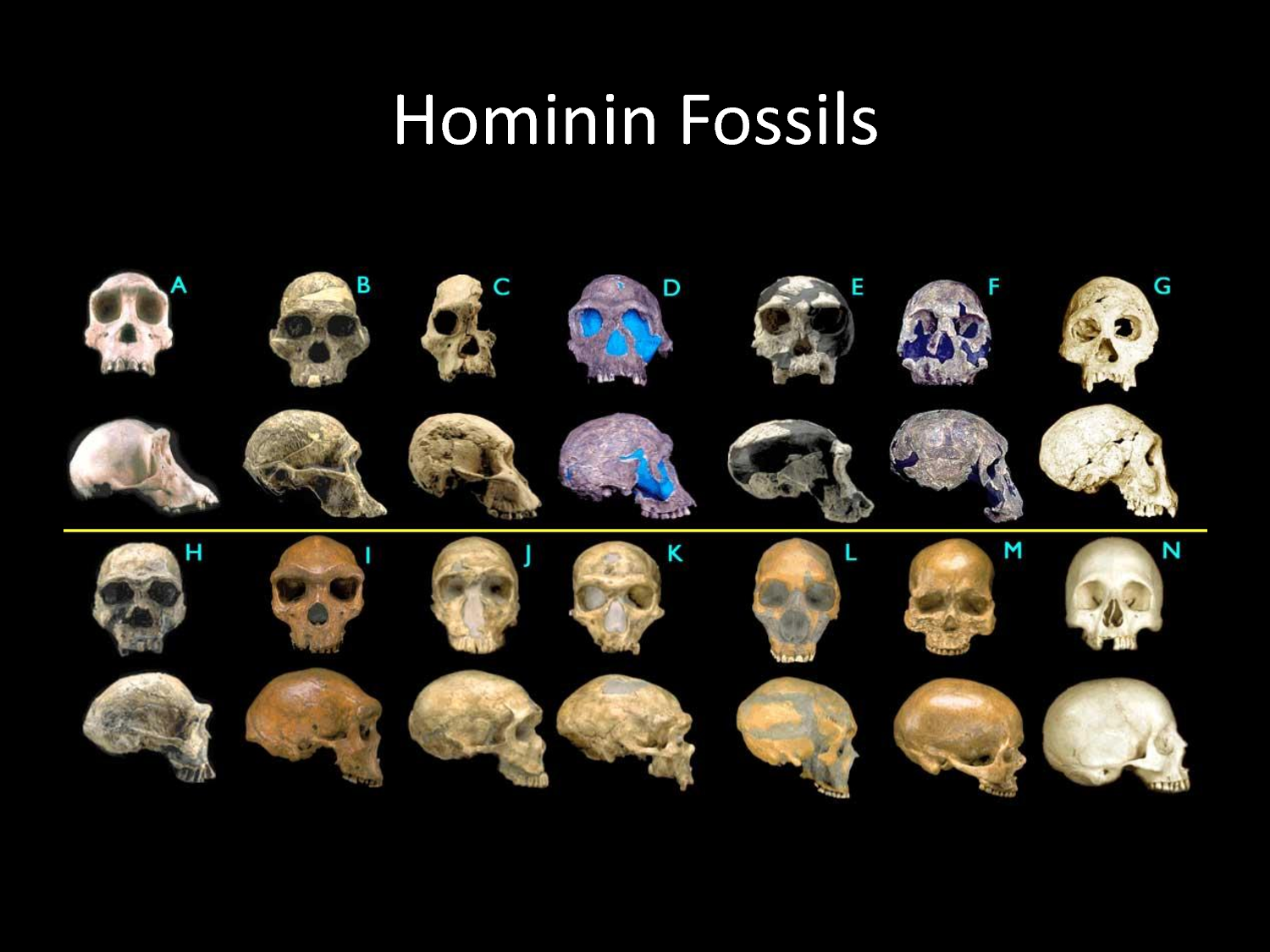
And of course there is excellent documentation of the hominin group – species that are between modern apes and modern humans. This includes the recently discovered Homo naledi, 15 nearly complete specimens of a creature that is about as close to half-way between apes and humans as you can get.
Here are a list of some other transitional forms.
While this is impressive, the fossil record is admittedly patchy. We are getting narrow glimpses into the past – into a 550 million year history of the evolution of hundreds of millions of multicellular species. Scientists try to understand the patterns in evolutionary history as well as the small details of what exactly evolved from what and when, from this patchy record. Scientists frankly discuss the limitations of this record and will often argue with each other about how to interpret it.
This is where creationists step in – to exploit this discussion and pretend as if a disagreement over the details calls into question the bigger picture, that there is massive evidence that evolution happened. Three of those details are most commonly exploited: the difference between species-level transition and group-level transition, the extent and meaning of stasis in the fossil record, and the difference between a transitional form and an actual ancestor.
Generally we have better documentation of group-level change than species-level change. This is a matter of the resolution of the fossil record. We can see changes that happened over millions of years much easier than changes that occurred over thousands of years. Although when we get closer in time to the present, the resolution of the fossil record improves and we get more species-level data. For example, we are fleshing out the evolution of early humans down to the species level.
Stasis in the fossil record simply means that species tend to arrive in the record, remain relatively stable for their existence, and then disappear. They are not constantly slowly changing. This led Gould and Eldredge to propose the theory of punctuated equilibrium, which is now generally accepted. This means that selective pressure tends to keep a species in an optimal relationship with their environment. However, this stability is punctuated by often rapid change when that environment changes or something disturbs the stability. “Sudden” in the fossil record, of course, can mean 50 thousand years – enough time for a speciation event.
In order to understand the third point about actual ancestors you need to understand that evolution does not progress in a straight line toward some end. Rather, adaptive radiation results in species evolving in multiple direction, in a branching bushy pattern. For example, theropod dinosaurs hit upon feathers as an adaptation, and there were many species of feathered theropods. They were not evolving into birds, just adapting to their niche. One branch of theropods started using those feathers in a way that led to flight, a rather significant adaptation. They branched out in many directions, only one twig of which ultimately led to modern birds.
So – when paleontologists find a fossil of a half-bird, half theropod (like Archaeopteryx), that is a transitional fossil because it represents the morphological space between birds and theropods, and is a definite evolutionary connection. However, we have no way of knowing if the specific individual discovered was an actual ancestor to modern birds, or was from a closely related branch. This again gets to the resolution of the fossil record. Also, without DNA it is impossible to confirm actual ancestry. Fossils alone will never do it. This doesn’t mean that the form is not transitional, however.
Now, let’s get to Snyder’s claims and see how he exploits the complexity of the science to sow confusion. He writes:
“#1 If the theory of evolution was true, we should have discovered millions upon millions of transitional fossils that show the development of one species into another species. Instead, we have zero.”
Forgetting the lack of the subjunctive, the core problem with this statement is that it refers to “species” without putting that into context. We do have some evidence of species to species evolution, but not much. Most of the fossils we have demonstrate genus or higher level transitions. He is simply wrong that we should (given the state of the fossil record) have “millions” of fossils that are transitional at the species level. He never explains this either because he is confused on this fact, or he simply wants to create confusion.
Point #2 is simply that Darwin admitted there were no transitional fossils during his time – this is irrelevant since we have discovered numerous transitional forms in the last 150 years.
#3 Even some of the most famous evolutionists in the world acknowledge the complete absence of transitional fossils in the fossil record. For example, Dr. Colin Patterson, former senior paleontologist of the British Museum of Natural History and author of “Evolution” once wrote the following…
“I fully agree with your comments about the lack of direct illustration of evolutionary transitions in my book. If I knew of any, fossil or living, I would certainly have included them …. I will lay it on the line – there is not one such fossil for which one could make a watertight argument.”
OK – this requires some explanation. Fortunately, Lionel Theunissen has already done so. First, the comments in question were made in 1979 (a fact Snyder does not disclose). Relying upon a 36 year old quote about the current state of the scientific evidence is always dubious.
From reading the full quote, and knowing that Patterson accepts evolution, it seems obvious that he was referring to the third point I discuss above – the difference between a transitional fossil representing the morphological (and I would add temporal and geographic) space between two groups and proving that a specific specimen is an actual ancestor. Theunissen suspected this also, and so he wrote a letter to Patterson asking him if this is the correct interpretation. Patterson replied:
“I think the continuation of the passage shows clearly that your interpretation (at the end of your letter) is correct, and the creationists’ is false.”
(Follow the link for the full letter.) It cannot be more clear than that. Patterson directly says that the creationist interpretation of his quote is false, and that he was only referring to the difference between being transitional and being an actual ancestor. Despite this iron-clad revelation, creationists continue to use this out-of-context quote, and even dispute Patterson’s own explanation of what he meant.
Of course, all of this is also a misdirection – it is not a discussion of the actual evidence of transitional fossils. It is a discussion about a quote from one scientist from 36 years ago and about what, exactly, they meant. I suspect part of the reason (other than misdirection) that creationists like this tactic is that they are used to citing a book as authority. So when they argue against evolution they follow their form, and make arguments from authority, specifically how to interpret a particular passage of the speech or writings of a scientist. Very telling.
In fact this form of misdirection is so common that TalkOrigins has a page dedicated to exposing creationist “quotemining.” On that page you will find Snyders next two examples.
Stephen Jay Gould, Professor of Geology and Paleontology at Harvard University, once wrote the following about the lack of transitional forms…
“The absence of fossil evidence for intermediary stages between major transitions in organic design, indeed our inability, even in our imagination, to construct functional intermediates in many cases, has been a persistent and nagging problem for gradualistic accounts of evolution.”
As talk origins explains:
“This is a rather unspectacularly predictable mined quote, as everyone who has had a few hours exposure to Gould’s writings on evolution can instantly see that he’s arguing against gradualism and probably in favor of punctuated equilibrium, a theory that he co-originated with Eldredge in 1972. Contrary to possible first impressions of the uninformed, Gould is presenting a problem FOR gradualist evolution, and countering WITH solutions to this apparent “problem” later in the paragraph.”
Gould and other scientists argue about gradualism vs punctuated equilibrium. Essentially this is a debate over whether or not the admitted gaps in the fossil record are an artifact of the spotty record or do they reflect the actual pace of evolution – long periods of stasis with rapid change in small populations?
Gould is not arguing against evolution, but against gradualism. This is a common denialist tactic – to confuse debate over the details as if it calls into question the bigger claims.
Snyder finishes this section with the following claim:
#6 If “evolution” was happening right now, there would be millions of creatures out there with partially developed features and organs. But instead there are none.
This is the crocoduck gambit. In fact evolution does not predict the existence of “partially formed features and organs.” Rather, each form is complete for what it is.
To use a technological analogy, Snyder would have you believe that in the 1700s farmers were dragging half-constructed modern tractors behind their horses, or that the absence of such half-built tractors in the 1700s means that modern farming sprung up whole without any antecedents. Rather, pre-industrial farmers were using fully formed (but far simpler) plows.
Likewise, the predecessors to any modern biological structure were not partly formed, but were a fully formed something else. Creationists never seem to get this simple evolutionary concept. The entire pseudoscience of “irreducible complexity” is built upon this misunderstanding.
Conclusion
Snyder is an aggressive creationist whose writing is dripping in equal measures with condescension and abject ignorance, with a heavy helping of intellectual sloppiness and/or dishonesty (it can be sometimes difficult to tell the difference, but it doesn’t really matter).
He is raising no new points – no points that have not already been demolished long ago. This is because creationists have no new points. They also have no evidence or science on their side.
Evolutionary science, meanwhile, continues to progress nicely. The gaps in the fossil record are slowly being filled in. Recent finds show transitions in turtle evolution, for example. What evolutionary theory predicts is that we would find fossils that fit into a coherent evolutionary history of life on earth, with nestled hierarchies of related creatures. That is exactly what we find.
The pace and tempo of evolution is a detail. Creationists exploit both limitations of our understanding of tiny details, and scientists debating over these details, as if they refute or call into question the massive evidence for the big picture – that all life on earth is the result of common descent.
Part II: Sudden AppearanceThis is a continuation of my blog post from yesterday, deconstructing 44 alleged reasons to doubt evolutionary theory. In Part I I addressed the claim that there are no transitional fossils, which is a bold creationist lie they maintain despite the copious evidence and the fact that their misinterpretations have been publicly corrected.
The next series of “reasons” #7-12, attempt to support the claim that species appear suddenly, as if they are created. Snyder begins:
If the theory of evolution was true, we should not see a sudden explosion of fully formed complex life in the fossil record. Instead, that is precisely what we find.
Once again we see the creationist tactic of giving partial selected information, rather than putting the entire picture into perspective. They are not looking for proper perspective – they are looking for deception.
I assume by this statement he is referring to the Cambrian “explosion.” This explosion represents the first appearance of multicellular creatures in the fossil record, at least those that led to extant life. There are also the Ediacaran fauna which immediately predate the Cambrian. It is not clear if these creatures were an evolutionary dead-end or if they had descendants in the Cambrian. The Cambrian period lasted from about 540 to 490 million years ago, 53 million years. In the early Cambrian we “suddenly” (in geological terms) see many multicellular creatures. Of course “sudden” in this context means millions of years.
The Cambrian explosion represents a genuine period of rapid evolutionary change. This makes perfect evolutionary sense – prior to the Cambrian the world was occupied entirely by single-celled and colony creatures, but no multi-cellular creatures. When cells starting to specialize and form complex organisms, this new strategy had tremendous potential and evolution took off in many directions. Further, because basic body plans had not yet been worked out evolutionary change was not constrained, and so was free to experiment in many directions.
Another reason for the suddenness of the Cambrian explosion is likely an artifact of the fossil record. Soft part don’t fossilize well – they only leave behind trace fossils. But hard part do fossilize. When hard parts, like shells and bones, first evolved this would suddenly “turn on” the fossil record.
Finally, Snyder uses the term “complex” without ever putting it into perspective. Cambrian fauna was complex, but not relative to modern life. We don’t see horses in the Cambrian, we see relatively small creatures with a relatively simple body plan. Some creatures are clearly the ancestors to later groups, while others seem to have left no descendants behind. Again – it’s pretty much what you would expect to find (broadly speaking, not in detail) with the first appearance of multicellular life.
Snyder then follows with more quotes taken out of context, including one from Richard Dawkins:
“It is as though they [fossils] were just planted there, without any evolutionary history. Needless to say this appearance of sudden planting has delighted creationists. Both schools of thought (Punctuationists and Gradualists) despise so-called scientific creationists equally, and both agree that the major gaps are real, that they are true imperfections in the fossil record. The only alternative explanation of the sudden appearance of so many complex animal types in the Cambrian era is divine creation and both reject this alternative.”
As I discussed in part I, evolutionary biologists are still debating about gaps in the fossil record and whether or not they are entirely due to the imperfection of the fossil record or represent the general pace of evolution (punctuated equilibrium). That is the context of this quote from Dawkins. He is saying that the gaps are due to the imperfections in the fossil record.
And again Snyder never makes a coherent argument. He never discusses what the fossil record actual looks like, or addresses the scientific explanations for the data. If we look at the overall fossil record what we see are continuous changes over time in an exquisitely evolutionary pattern – meaning that the relationship between fossil species maps out in time and geological range in a pattern that supports evolution. Species survive for a while then disappear. New species appear that always have plausible ancestors.
All of the debate is about the fine level of detail, not the broad picture. When you get down to a single species over a short period of time geologically speaking, 1-2 million years, we see that most species (not all) are relatively stable over their life on earth. Dawkins would say this is a limitation of the fossil record, Gould would say this is punctuated equilibrium, but both agree (with almost all other scientists in the world) that the big picture is obviously one of evolution.
We can also discuss what we don’t see in the fossil record. We don’t see species out of sequence – no horses in the Cambrian, no dinosaurs surviving past the Cretaceous period. In fact, the periods and epochs of the Earth are defined by what fossils we find there, because it is very predictable. If evolution were not true, fossils would not be so neatly organized by period and location, with clear lines of ancestors and descendants (again, broadly speaking).
We also don’t see the sudden appearance of creatures that have no possible ancestors. Once basic body plans were worked out in the Cambrian, we continue to see those same body plans in later evolution. We don’t suddenly see six-limbed terrestrial vertebrates.
In fact, in those lines in which we have good fossil evidence, we seen in small detail the evolutionarily contiguous nature of anatomy. We see specific body parts evolving into other body parts. We don’t see new parts arising and disappearing willy-nilly.
And still we are just talking about one line of evidence for evolution – the fossil record. The evidence from genetics is even stronger. There is also evidence from developmental biology, and also from modern observation, which brings us to the next point. The flip side of the claim that species appear “suddenly” is that “macroevolution” has never been observed.
Nobody has ever observed macroevolution take place in the laboratory or in nature. In other words, nobody has ever observed one kind of creature turn into another kind of creature. The entire theory of evolution is based on blind faith.
This may have something to do with the fact that speciation takes thousands of years. No one has observed the formation of a planetary system from a cloud of dust either, the raising of mountains through tectonic activity, or the carving of a canyon by a river. Some natural processes take thousands or millions of years to occur, so we cannot observe them happening in real time. But we can infer they happened through other lines of evidence.
I would also add that evolutionary change has been directly observed.
Part III: Misc.
Snyder next makes some individual points, all incoherent but let’s take a look.
#13 Anyone that believes that the theory of evolution has “scientific origins” is fooling themselves. It is actually a deeply pagan religious philosophy that can be traced back for thousands of years.
This is a non-sequitur, specifically the genetic fallacy – judging something by its origins. It actually doesn’t matter what the origins of the idea of evolution were. Proto-evolutionary thinking does go back to the ancient Greeks, who pretty much came up with every idea. Evolution as a scientific theory predates Darwin. Darwin’s main contribution was to propose variation and natural selection as the mechanism for evolutionary change. He also is credited with making a persuasive argument for evolutionary theory, and essentially convincing the scientific community.
So what? Chemistry has its roots in alchemy. Astronomy has its roots in astrology. Modern medicine developed from Galenic medicine (the four humors), which is pure pseudoscience. None of this says anything about the scientific status of evolutionary theory today.
#14 Anything that we dig up that is supposedly more than 250,000 years old should have absolutely no radiocarbon in it whatsoever. But instead, we find it in everything that we dig up – even dinosaur bones. This is clear evidence that the “millions of years” theory is simply a bunch of nonsense…
From the NCSE:
Very simply. Radiocarbon dating doesn’t work well on objects much older than twenty thousand years, because such objects have so little C-14 left that their beta radiation is swamped out by the background radiation of cosmic rays and potassium-40 (K-40) decay. Younger objects can easily be dated, because they still emit plenty of beta radiation, enough to be measured after the background radiation has been subtracted out of the total beta radiation. However, in either case, the background beta radiation has to be compensated for, and, in the older objects, the amount of C-14 they have left is less than the margin of error in measuring background radiation.
There are many many lines of evidence supporting an ancient Earth and the age of life on Earth. Radiocarbon dating is one method that is often a target of creationists, because it is a limited method. It is only reliable in certain conditions and only out to about 20,000 years. We don’t use radiocarbon dating to date fossils or anything older than 20,000 years. This is another great example of how creationists tend to provide only some information without ever giving the entire picture – because the big picture does not support their pseudoscience.
#15 The odds of even a single sell [sic] “assembling itself” by chance are so low that they aren’t even worth talking about.
This is a straw man. Evolutionary theory does not require that a single cell assembled itself by chance. A single celled creature living today is the result of several billion years of evolution – that’s billion. So I agree – this is not worth even talking about.
#16 How did life learn to reproduce itself? This is a question that evolutionists do not have an answer for.
This is a vague question. What type of reproduction? Mitosis? The strategy here, however, is to say that because current evolutionary theory does not have a specific explanation for every evolutionary development, that calls the theory into question. No one ever claimed that we have an explanation for everything, down to the arbitrarily tiniest detail. Inferring how a slow and complex process worked millions of years ago is very difficult. It’s amazing we can infer as much as we do.
This is yet another logical fallacy – confusing unexplained with unexplainable. Scientists are making progress understanding the evolution of sexual reproduction. We don’t have a full explanation. This does not mean evolution is impossible, as creationists would like to suggest.
#17 In 2007, fishermen caught a very rare creature known as a Coelacanth. Evolutionists originally told us that this “living fossil” had gone extinct 70 million years ago. It turns out that they were only off by 70 million years.
The Coelacanth was first known from fossils, with the most recent being from about 65 million year ago. It was not until 1938 that a living specimen was found. This is because they are a deep sea fish and are rarely encountered.
The implication here is that because the Coelacanth survived into modern times that… Well, there really isn’t a coherent point here. It is just trying to imply something vague to sow confusion. If we try to extract a coherent point it could be that Coelacanths survived for millions of years, therefore they did not evolve.
Snyder, however, is implying a common confusion, likely because he is confused on the facts himself. The Coelacanth is not a specific species of fish. It is an order of fish. An “order” is a level of taxonomic classification that is fairly high up the chain. Primates are an order. So the modern Coelacanth has roughly as much of a relationship to the fossil Coelacanths as lemurs do to humans. To clarify – the modern living Coelacanth is not the same species as the fossil Coelacanths. They are just in the same order, the way that monkeys and gorillas are in the same order.
Conclusion
I’m not even half way there. As you can see, it takes much more space to correct a misconception than to create it. This is what leads to the “Gish gallop” – a term named for Duane Gish, who would debate scientists about evolution and overwhelm them with a rapid series of misconceptions that the scientist could not hope to counter in the time allowed.
Snyder has created a Gish gallop of creationist nonsense in his list of 44 reasons. Answers to his claims are already out there, and I linked to some good resources in the first two parts of my posts. I do think it is useful, however, to have a thorough response in one location, social media being what it is.
This is the third post dealing with a recent aggregation of old creationist arguments that has been making the rounds on social media, 44 Reasons Why Evolution Is Just A Fairy Tale For Adults. The author, Michael Snyder, has shown a typical level of horrific scholarship and reasoning. Post 1 is here, and post 2 is here.
In the last article I discussed the claim that the Coelacanth is a “living fossil” (a term I despise because it is ripe for confusion). Essentially Snyder and other creationists treat the Coelacanth as if it is a specific species, when in fact it is an order of fish. An order surviving for hundreds of millions of years is not at all unusual.
In the next of Snyder’s reasons he commits the same mistake:
#18 According to evolutionists, the Ancient Greenling Damselfly last showed up in the fossil record about 300 million years ago. But it still exists today. So why hasn’t it evolved at all over the time frame?
This claim is entirely wrong, demonstrating sloppy research. Actually I suspect that Snyder did no research (and here I am just referring to looking up reliable references). He seems to have just swallowed a creationist meme whole from the Institute for Creation Research, specifically an article by their “science writer” Brian Thomas.
Thomas claims that there are fossils of the Ancient Greenling Damselfly, unchanged from the modern species, that are 300 million years old. This is simply not true, and Thomas provides no primary references to back up his claim.
I spent some time digging up primary references to find out what is really going on. The Ancient Greenling Damselfly is the sole surviving species of a rare family of Damselfly, the Hemiphlebiidae. Damselflies in turn are closely related to dragonflies, the most obvious difference being that when dragonflies are at rest their double wings are spread out, creating the iconic shape of a dragonfly, while damselflies fold up their wings flat against their body.
Briefly, the order Odonata includes the suborder Anisoptera (dragonflies) and Zygoptera (damselflies), which in turn contains many families, one of which is the Hemiphlebiidae, which includes the Ancient Greenling Damselfly. There are at least two fossil species of Hemiphlebiidae, Parahemiphlebia and Cretarchistigma , from the Lower Cretaceous of England and Brazil.
These species date to as old as 140 million years ago, not 300 million years. Further, while they are in the same family as the extant Ancient Greenling Damselfly, they are in different genera. But Thomas writes:
“But this particular insect is part of another tale, for the same species has been found fossilized from Brazil to Siberia.”
This is wrong – it is not the same species. It is a different species, different genus, but same family.
The bigger point here is that creationists often use apparent stability of living groups over long periods of time to argue against evolution. However, large successful groups (like the Odonata) can be relatively stable over tens or even hundreds of millions of years. However, we will still see adaptive radiation and evolution at lower taxonomic levels, like families, genera, and species.
#19 Darwinists believe that the human brain developed without the assistance of any designer. This is so laughable it is amazing that there are any people out there that still believe this stuff. The truth is that the human brain is amazingly complex. The following is how a PBS documentary described the complexity of the human brain: “It contains over 100 billion cells, each with over 50,000 neuron connections to other brain cells.”
This is the argument from personally incredulity, otherwise known as the, “Aw, shucks, that sure is complicated,” fallacy. The human brain is certainly complex (I can say this with some authority, being a neurologist). Actually the best current estimate is that there are about 86 billion neurons in the adult human brain, but this is a minor point.
The claim here is that complexity on this order of magnitude could not arise without a designer, but that is a vacuous claim without scientific support. Self organizing systems following relatively simple rules can generate fantastic amounts of complexity. The vertebrate brain, for example, has a great deal of repetition in its anatomy, with millions of cortical columns composed of 100 or so neurons. The brain also undergoes what is called somatotopic organization during development – sensory input and feedback from the body follows simple rules to produce a mapping of the brain onto the world and the body.
The brain, in other words, looks like something that evolved from the bottom up, not something that was designed from the top down. Either process can produce complexity. In fact, bottom up organization is associated, if anything, with greater potential complexity.
Time for another quote from a scientist taken entirely out of context:
#20 The following is how one evolutionist pessimistically assessed the lack of evidence for the evolution of humanity…
“Even with DNA sequence data, we have no direct access to the processes of evolution, so objective reconstruction of the vanished past can be achieved only by creative imagination.”
Again Snyder does not provide any primary reference, just a secondary creationist source. This does contain the primary reference, however: A Genetic Perspective on the Origin and History of Humans, by N. Takahata. In this fairly narrow technical paper Takahata is attempting to use molecular genetics to infer the branching order of gorillas, chimpanzees, and humans and to estimate their historical population sizes. The point he is making in that quote is simply that we cannot directly observe what was happening in these populations in the past, but we can infer what happened by testing hypotheses (generated through his poetically referenced imagination) with objective molecular data. Wow, how devastating.
Also, imagine the quote-mining they must be doing to select that one quote from that one obscure and narrow technical paper.
#21 Perhaps the most famous fossil in the history of the theory of evolution, “Piltdown Man”, turned out to be a giant hoax.
Piltdown is famous for being a hoax. There are other famous fossils, such as Lucy and the Berlin specimen. Fossil fame, however, is irrelevant. The creationists are never going to let go of Piltdown man, because they can use it to make the implication (often without stating it outright) that fossils in general are fake. This, of course, is an absurd claim and is not true.
The scientific community was indeed punked by Piltdown in 1912. Paleoanthropology was a very young science, with few specimens, and they were presented with a carefully crafted hoax that confirmed all their current biases. As more and more human fossils were discovered, however, Piltdown man became progressively sidelined and ignored, because it did not fit with the rest of the evidence. Eventually this conflict prompted a reexamination of the original specimen, and they were found in 1953 to be a modern hoax. Science was a bit slow this time, but in the end it self-corrected.
There are plenty of online resources cataloguing the growing list of human fossils. Homo naledi was just added to that list. Once again Snyder just puts out an isolated factoid without putting it into any context.
The next two points are essentially the same:
#22 If the neutron were not about 1.001 times the mass of the proton, all protons would have decayed into neutrons or all neutrons would have decayed into protons, and therefore life would not be possible. How can we account for this?
#23 If gravity was stronger or weaker by the slimmest of margins, then life sustaining stars like the sun could not exist. This would also make life impossible. How can we account for this?
This is the anthropic principle. There are many physical constants that, if they were even slightly different, the universe could not exist as it does. This, of course, has absolutely nothing to do with evolution. Whatever the reason for the current physical laws of the universe, they allow for evolution, and the evidence strongly suggests it did happen. I write more about the anthropic principle, and why it is not an argument for god, here.
Every few points, apparently, he has to throw in a quote out of context. This one, however, is worse than usual:
#24 Why did evolutionist Dr. Lyall Watson make the following statement?…
“The fossils that decorate our family tree are so scarce that there are still more scientists than specimens. The remarkable fact is that all of the physical evidence we have for human evolution can still be placed, with room to spare, inside a single coffin!”
Watson is not an evolutionary scientist. He had no science degree. He was an author of dubious supernatural books who was writing in a popular magazine (Science Digest) and not in the peer-reviewed literature. He is most famous for his “hundredth monkey” theory, which is complete nonsense. Further, the claim is just wrong. Again – here is a partial list. It is way more than Watson said.
I am starting to get repetitive, but that is because Snyder is repetitive – what Snyder is doing is quoting a secondary hostile creationist source, which in turn quoted a pseudoscientist, in order to make a claim about the state of human fossils. He did not research how many fossils of human ancestors we have or link to actual scientific or reliable sources.
#25 Apes and humans are very different genetically. As DarwinConspiracy.com explains, “the human Y chromosome has twice as many genes as the chimpanzee Y chromosome and the chromosome structures are not at all similar.”
Wrong (again, notice his source), we are genetically very similar. I wrote about the science of comparing human and chimp DNA here. Read that article for a full treatment. Bottom line – if you make the correct kind of comparison, one that is meaningful for degree of evolutionary separation, then humans and chimps share 96% of their DNA. This fits well with the fossil evidence about time of divergence, of about 8 million years ago.
Using the Y chromosome as evidence for divergence is highly misleading. It is true that human and chimp Y chromosomes are divergent, but it is misleading to imply from this that we are not genetically similar overall. Chromosomes are capable of massive reorganization, and even in a single generation they can fuse or split. The Y chromosome is also special, because of its role in determining sex. It is particularly subject to gene loss and alterations. Read the technical reference if you want the details.
#26 How can we explain the creation of new information that is required for one animal to turn into another animal? No evolutionary process has ever been shown to be able to create new biological information.
This is the information argument that intelligent design creationists are so fond of. It is nothing but a lie. There are known mechanisms to create new information. Gene duplication is the most obvious – one gene can be duplicated during reproduction, now you have two copies of the same gene. While one gene continues its original function, the second gene is free to evolve in novel directions. You just doubled the genetic information of that gene. In fact, there is tremendous evidence of analysis of the gene structures of many species that gene duplication is a primary mechanism of increasing genetic information. This has been known since 1930, so Snyder is only 85 years behind the times.
There are other mechanisms as well, such as horizontal gene transfer. The DNA from a virus can get stuck in the DNA of a host organism, and then become part of the genome. These insertions actually make up a significant portion of our DNA ( about 8%), and sometimes they can be used for raw material for the evolution of new genes.
I would also add that mutations create new biological information.
#27 Evolutionists would have us believe that there are nice, neat fossil layers with older fossils being found in the deepest layers and newer fossils being found in the newest layers. This simply is not true at all…
The fossil layers are not found in the ground in the nice neat clean order that evolutionists illustrate them to be in their textbooks. There is not one place on the surface of the earth where you may dig straight down and pass through the fossil layers in the order shown in the textbooks. The neat order of one layer upon another does not exist in nature. The fossil bearing layers are actually found out of order, upside down (backwards according to evolutionary theory), missing (from where evolutionists would expect them to be) or interlaced (“younger” and “older” layers found in repeating sequences). “Out of place” fossils are the rule and not the exception throughout the fossil record.
This is once again partial information crafted to deceive. The Earth is geologically active. Land is being moved around all the time, heaving up, eroding away, crashing into each other, etc. However, there are different geological strata, with different geological characteristics and different fossils. These different strata and their fossils do consistently occur in ordered layers. However, they get moved around a lot.
The result is like a puzzle – but we can put the pieces of that puzzle together to construct an entire geological column. Because a complete column does not occur all in one place is irrelevant. For example, we may find the following sequences in different locations: A-B-C-D; J-K-L-M-N; D-E-F-G-H; G-H-I-J-K-L, etc. We can use the overlaps in the sequences to place them in order. Also, don’t forget, we can directly date many layers so we can use their ages to sequence them also.
Further, the overwhelming fact is that fossil species do exist in the various strata in a consistent order. We never ever see dinosaur fossils in strata younger than the K-Pg boundary 65 million years ago, for example. The only exceptions are when there are obvious geological processes that caused mixing of layers. We simply construct the geological column from areas where mixing has not occurred.
If you want to see nice neat geological layers then visit the Grand Canyon.
#28 Evolutionists believe that the ancestors of birds developed hollow bones over thousands of generations so that they would eventually be light enough to fly. This makes absolutely no sense and is beyond ridiculous.
That is not even an argument, it is a statement of personal incredulity. The probable implication he is trying to make is that birds could not fly until they had evolved hollow bones over thousands of generations, but this is simply not true. Here it is clear that Snyder simply does not know what he is talking about, and made no effort to educate himself on bird bones as an adaptation of flight.
First, bird bones are not necessary lighter than mammalian bones. Some bird bones are light, some are heavier, and overall there is not much of a difference. Bird bones, however, have become highly specialized for flight. They are stiffer, stronger where they need to be, and have been simplified to eliminate bones where possible. They also demonstrate varying degrees of “pneumatization” – air sacs like in the lungs, which do make them hollow in places. This adaptation provide more oxygen to the blood quicker, which is an advantage for flight.
What we see with bird evolution is the slow adaptation of the theropod skeleton to the bird skeleton, with multiple optimizations for flight.
It seems that the core misunderstanding of Snyder is the false premise that birds could not fly at all until their skeletons were optimized for flight, but there is no reason at all to suppose this. Archaeopteryx could fly, and yet lacked many modern bird adaptations for flight. Function is not all or nothing. Often species will do something poorly, because it is still useful, and then will evolve adaptations to optimize the function.
#29 If dinosaurs really are tens of millions of years old, why have scientists found dinosaur bones with soft tissue still in them?
The finding of soft tissue inside the fossilized bones of T-rex has been highly controversial, for obvious reasons. While there is interesting evidence to support the claim, I don’t think we are there yet. Even if we acknowledge the presence of soft tissue in dinosaur bones tens of millions of years old, that does not mean their age is incorrect. There are already findings that can help explain this extreme preservation, such as the presence of iron which can act as a preservative.
Conclusion
As we work our way through these 44 creationist arguments, the patterns become more and more clear. In each case Snyder (who is just copying standard creationist arguments) is not referencing scientific sources or giving a reasonable overview of the actual evidence. In each case he is giving a highly selected tiny slice of the picture, crafted to create a deceptive implication. Sometimes his claims are outright incorrect.
There is a simple reason why creationist arguments are so transparently terrible – they have no good arguments. |



