re <<see the story of Len Blavatnik and Viktor Vekselberg two nice Jewish guys and benefactors, both from Ukraine one a US citizen.>>
i know the type. also know the type accepting the cash.
there are such types.
i note that seems russia has a lot of technology and folks of technology.
all the russians (some from the ukraine but ethnic russian) i have met in hong kong and work with in canada are nice on the scale diligence, astuteness, talent, etc etc and family values, and i count ~11 out of 11.
for a nation that is geo / geopolitically large, the economy seems unusually small.
difficult to reconcile w/ natural size meme, unless some status changes rather dramatically.
watch & brief.
theguardian.com
Oxford University criticised for accepting oligarch's £75m donationInstitution should ‘stop selling its reputation to Putin’s associates’ and rethink cash from Len Blavatnik, critics say
Luke Harding
•
Tuesday 3 November 2015 14.55 GMT
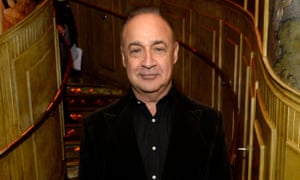
Len Blavatnik is a US citizen, born in the USSR, who has a residence in Kensington, west London. Photograph: David M. Benett/(Credit too long, see caption)Oxford University has been urged to review its decision to accept £75m from Len Blavatnik, Britain’s richest man, to build the Blavatnik school of government.
In a letter to the Guardian, the signatories accuse the university of failing to investigate whether Blavatnik and other “oligarchs” played any role in what they describe as a state-sponsored campaign of harassment against BP in Russia. Oxford “should stop selling its reputation and prestige to Putin’s associates,” it says.
In 2008 and 2009 dozens of British and western managers were “forced out of Russia”, the letter adds, in a bitter dispute between BP and a group of powerful Russian billionaires. The billionaires, including Blavatnik, were joint partners with BP in TNK-BP, Russia’s third-biggest oil company.
The university says it did not look into the dispute, which the AAR consortium won. In 2013 the oligarchs sold their stake to the Russian state oil giant Rosneft in what the letter describes as “a highly controversial deal”.
It adds: “Oxford University apparently failed to investigate these facts, AAR’s track record from the beginning, and its close ties with the Kremlin … We insist that the university should stop selling its reputation and prestige to Putin’s associates. It should and carry out a new and independent due diligence investigation with clearly defined ethical norms.”
A spokesman for Blavatnik, Andrew Garfield, said: “I don’t think we are going to comment. The allegations are primarily directed at Oxford.”
A spokesman for the university said: “Oxford University has a thorough and robust scrutiny process in place with regard to philanthropic giving. The Committee to Review Donations conducts appropriate due diligence based on publicly available information. The University is confident in this process and in its outcomes.
“The University is a world leader for research and education at a time of growing global competition. Generous philanthropic donations help make this possible, supporting outstanding teaching and research discoveries of worldwide benefit.”
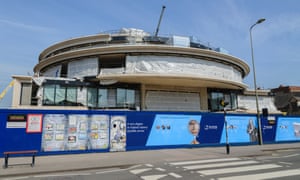
Oxford University’s new school of government building, funded by Len Blavatnik, has been described as an ‘architectural calamity’. Photograph: AlamyThe letter says that until a proper investigation is done politicians and other public figures who have endorsed the Blavatnik school should withdraw support. It also urges the university to carry out urgent “transparency and procedural reforms” with regard to foreign donations.
The signatories include Pavel Litvinov, one of eight people who in 1968 protested on Red Square against Moscow’s invasion of Czechoslovakia. He was exiled for five years to Siberia. Another is Vladimir Bukovsky, jailed by the KGB. Bukovsky, who lives in Cambridge, exposed the Kremlin’s use of psychiatric treatment against dissidents.
Others include former Oxford academics and graduates, members of Russia’s democratic opposition and human rights activists. One is Vladimir Milov, a colleague and friend of Boris Nemtsov, the opposition leader shot dead in February outside the Kremlin. The letter was organised by Ilya Zaslavskiy, a TNK-BP employee and Oxford graduate who ran Moscow’s Oxford alumni association.
In 2008 Putin’s FSB spy agency arrested Zaslavskiy and his brother Alexander in Moscow and accused them of being “western agents”. Russian state TV claimed the FSB had exposed a major spy ring. The case against them was “fabricated”, the letter says.
The donation by Blavatnik – who was born Leonid Blavatnik in the USSR but is now a US citizen and has a residence in Kensington, west London – was one of the largest in the university’s 900-year history. Oxford has educated 23 prime ministers, including David Cameron, who read philosophy, politics and economics at Brasenose College. In 2010 Cameron hailed Blavatnik’s “very generous gift of philanthropy”.
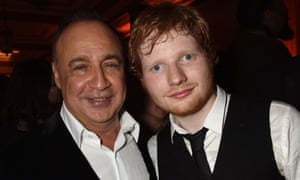
Blavatnik pictured with the singer Ed Sheeran at a party after the Brit Awards in February. Photograph: Richard Young/Rex ShutterstockThe school trains graduates from around the world in the “skills and responsibilities of government”, and offers masters and diploma courses in public policy. Members of its international advisory board include the former US president Bill Clinton, the Bank of England governor Mark Carney and Google boss Eric Schmidt. Blavatnik has visited twice. Its dean, Professor Ngaire Woods, did not respond to a request to comment.
The school, which opened in 2012, will shortly move to a purpose-built home in Jericho in north Oxford. Designed by Herzog & de Meuron, the building has provoked local opposition. One Oxford academic, who declined to be named, dubbed it an “architectural calamity”. He added that the university which contributed £25m towards the school had “squandered money on a frippery”.
Martin Dewhirst, an Oxford graduate and former lecturer in Russian, accused the university of not carrying out adequate due diligence when it considered the prospective donation in January 2008. Dewhirst submitted two freedom of information requests asking Oxford to reveal who carried out checks on Blavatnik’s business activities inside Russia.
The university would not provide names but said a donations acceptance review committee approved the donation “based on due diligence conducted by the Development Office”. The committee was made up of close allies of Oxford’s then vice chancellor, Dr John Hood.
They included Lord Butler, at the time master of University College, and Dr Jon Dellandrea, the pro-vice-chancellor in charge of the development office. A controversial Canadian, Dellandrea left his post in the autumn of 2008 after a row with Michael Moritz, a US tycoon who gave Oxford £25m.
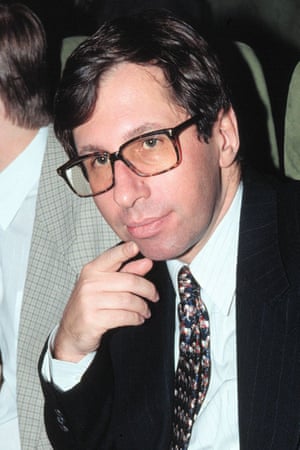
Pyotr Aven, a partner of Bravatnik in AAR, also has links to Oxford University. Photograph: Alexander Sizukhin/EPAIn response to the freedom of information requests, the university said it did not consult Bob Dudley or anyone from BP about the donation. It said no articles were translated from Russian concerning Blavatnik’s business activities. It was unable to say how many members of the due diligence team “had a good reading knowledge of Russian”. The university said that in February 2010 it updated its approval of the £75m donation.
Dewhirst described the university’s decision to take Blavatnik’s money “as a very distasteful joke”. He said: “It was completely clear by the end of 2008 that Mr Blavatnik was associated with what has to be called ‘bad governance’. It inevitably brings Oxford University into disrepute for neglecting its stated goals and values.”
Two of Blavatnik’s AAR partners – the oligarchs Mikhail Fridman and Pyotr Aven – also have links with the university. Between 2007 and 2011 their Alfa group gave an annual award with Oxford’s Said business school to foreign firms investing in Russia.
The TNK half of TNK-BP belonged to five influential billionaires. Blavatnik and his company Access Industries owned 12.5%; Viktor Vekselberg 12.5%; Fridman, Aven and German Khan 12.5%, 11%, and 1.5%. Their feud with BP burst into the open in spring 2008, when armed police raided TNK-BP’s Moscow HQ.
Months later Bob Dudley, TNK-BP’s boss, and BP’s current chief executive, was forced to quit Russia. His departure was embittered and followed what BP officials called “an orchestrated campaign of harassment” against him. Some 148 BP managers had to leave Moscow abruptly after the Russian authorities refused to renew their work visas.
The billionaires have previously denied having anything to do with these attacks. Alfa Bank in Moscow – owned by Fridman, Aven and Khan – did not respond to requests for comment. Neither did Andrey Shtorkh, spokesman for Vekselberg’s Renova Group.
US diplomats, however, suggested that AAR – and in particular German Khan – may have been behind the anti-BP campaign. In March 2008 one wrote in a diplomatic cable: “Khan has traditionally led the charge to get rid of the western managers who have brought to the company western business practices such as accountable corporate governance, transparency, and fiscal discipline”.
The cable, which was leaked in 2010, noted that the billionaires also “quarrel among themselves”. It said BP managers had a “better relationship” with Blavatnik and Vekselberg. Blavatnik, it said, had “a limited operational role in the company”. The cable correctly predicted the billionaires would gain operational control of TNK-BP, adding that Aven “appears to have considerable influence in the Kremlin”.
According to Zaslavskiy, Blavatnik could have voted with BP against his Russian partners but in the end did not. In 2013 Putin’s close ally Igor Sechin was behind a deal that saw Rosneft buy out the billionaires’ stake in TNK-BP for $28bn. Zaslavskiy alleges the price was excessive and an “awful” deal for ordinary Russian taxpayers. “How is this good governance?” he asked.
Lawyers for Mr Blavatnik contacted us after publication, in May 2016, stating that Mr Blavatnik is not an associate of Vladimir Putin, with whom he has had no personal contact since 2000. Mr Blavatnik’s lawyers also stated that he is a strong believer in encouraging democracy and freedom throughout the world and that he had no involvement whatsoever in any alleged state-sponsored campaign of harassment against BP in Russia.
Since you’re here …… we’ve got a small favour to ask. More people are reading the Guardian than ever, but far fewer are paying for it. Advertising revenues across the media are falling fast. And unlike some other news organisations, we haven’t put up a paywall – we want to keep our journalism open to all. So you can see why we need to ask for your help. The Guardian’s independent, investigative journalism takes a lot of time, money and hard work to produce. But we do it because we believe our perspective matters – because it might well be your perspective, too.
If everyone who reads our reporting, who likes it, helps to support it, our future would be much more secure. |



