SI
SI
discoversearch

We've detected that you're using an ad content blocking browser plug-in or feature. Ads provide a critical source of revenue to the continued operation of Silicon Investor.  We ask that you disable ad blocking while on Silicon Investor in the best interests of our community.  If you are not using an ad blocker but are still receiving this message, make sure your browser's tracking protection is set to the 'standard' level.
Strategies & Market Trends : 2026 TeoTwawKi ... 2032 Darkest Interregnum -- Ignore unavailable to you. Want to Upgrade?


To: elmatador who wrote (138835)2/1/2018 1:45:19 AM
From: TobagoJack1 Recommendation

Recommended By
gg cox

  Read Replies (2) | Respond to of 218620
 
So ... you copied trump or trump copied you?

Hilarious once more

Oh, w/r to copying

Or some such

mobile.nytimes.com

Amazon Wants to Disrupt Health Care in America. In China, Tech Giants Already Have.
Jan. 31, 2018


Gong Xiangyang, left, head of the radiology department at Zhejiang Provincial People’s Hospital, watching outside of a CT scanning room. The personal investment fund of the Alibaba founder Jack Ma has invested in a company working with the hospital to use artificial intelligence in lung screenings.Yue Wu for The New York TimesBEIJING — Amazon and two other American titans are trying to shake up health care by experimenting with their own employees’ coverage. By Chinese standards, they’re behind the curve.

Technology companies like Alibaba and Tencent have made health care a priority for years, and are using China as their laboratory. After testing online medical advice and drug tracking systems, they are now focused on a more advanced tool: artificial intelligence.

Their aggressive push underscores the differences between the health care systems in China and the United States.

Chinese hospitals are overburdened, with just 1.5 doctors for every 1,000 people — barely half the figure in the United States. Along with a rapidly aging population, China also has the largest number of obese children in the world, as well as more diabetes patients than anywhere else.

The companies’ technological push is encouraged by the government. Beijing has said it wants to be a leader in A.I. by 2030 and pledged to take on the United States in the field. While officials have emphasized the use of artificial intelligence in areas like defense and self-driving cars, they have also aggressively promoted its use in health care.

Alibaba and Tencent, which already dominate China’s e-commerce and mobile payments sectors, are at the forefront. Among their goals: building diagnostic tools that will make doctors more efficient.

Amazon and its partners, JPMorgan Chase and Berkshire Hathaway, see technology as a way to provide simplified, affordable medical services. Although the alliance is still in the early stages, it could create online services for medical advice or use its overall heft to negotiate for lower drug prices.

“It’s fair to say that across the board, the Chinese tech companies have all embraced being involved in and being active in the health care space, unlike the U.S., where some of them have and some have not,” said Laura Nelson Carney, an Asia-Pacific health care analyst at Bernstein Research.


The headquarters of the Chinese e-commerce company Alibaba. Alibaba, like other Chinese technology companies, has a long history of investing in the health sector, including an attempt to build a “future hospital.”Wang He/Getty Images“Few of them have made moves as big as in China,” Ms. Carney said, referring to Alibaba and Tencent’s American rivals.

Those big moves have had varying degrees of success.

In 2014, Alibaba announced a “future hospital” plan intended to make treatment more efficient by allowing patients to consult with doctors online and order drugs via the internet. But two years later, Chinese regulators stopped the sale of over-the-counter drugs on Tmall, Alibaba’s e-commerce website. They also suspended a drug-monitoring system that the company had created. And last year, the search engine company Baidu scrapped its internet health care service, which allowed patients to book doctors appointments through an app, in a bid to focus solely on A.I.

But some of the more recent initiatives have made inroads. Last year, Alibaba’s health unit introduced A.I. software that can help interpret CT scans and an A.I. medical lab to help doctors make diagnoses. About a month later, Tencent unveiled Miying, a medical imaging program that helps doctors detect early signs of cancer, in the southwestern region of Guangxi. It is now used in nearly 100 hospitals across China.

Tencent has also invested in WeDoctor Group, which has opened its own take on Alibaba’s “future hospital” in northwestern China. The service allows patients to video chat with doctors and fill their prescriptions online.

Advances in artificial intelligence have already been transformative for China’s overworked doctors.

Dr. Yu Weihong, an ophthalmologist at Peking Union Medical College Hospital, said she used to take up to two days to analyze a patient’s eyes by scrutinizing grainy images before discussing her findings with colleagues and writing up a report. Artificial intelligence software currently being tested by the hospital helps her do all that dramatically faster.

“Now, you don’t even need a minute,” she said.

The software has been developed by VoxelCloud, a start-up has raised about $28.5 million from companies including Tencent and the Silicon Valley venture capital firm Sequoia Capital. It specializes in automated medical image analysis, helping eye doctors like Dr. Yu screen patients for diabetic retinopathy, the leading cause of blindness among China’s working-age population.

There are just 20 eye doctors for every million people here, a third of the proportion in the United States. In April, Beijing announced an ambitious plan for the country’s 110 million diabetics to undergo eye tests.

“It’s impossible for one person to read that many images,” said Dr. Yu.

Ding Xiaowei, whose grandparents were doctors, founded VoxelCloud in 2016, three months after completing his doctorate in computer science at U.C.L.A. The company, which has offices in Los Angeles and the Chinese cities of Shanghai and Suzhou, is awaiting the green light from China’s version of the F.D.A. for five diagnostic tools for CT scans and retina disease.


Tencent buildings in Shanghai. Last year, the company introduced a diagnostic tool that is already in use in nearly 100 Chinese hospitals.Yuyang Liu for The New York TimesThe sheer size of China’s population — nearly 1.4 billion people who could provide a vast number of images to feed into their systems — provides a potential advantage for the development of artificial intelligence. Also helping: China has fewer concerns about privacy, allowing for easier collection of data that could result in smarter and more efficient A.I. systems. Regulation here isn’t as strict as in the United States, either.

In all, more than 130 companies are applying A.I. in ways that could increase the efficiency of China’s health care system, according to Yiou Intelligence, an industry consultancy based in Beijing. They range from behemoths like Alibaba and Tencent to domestic champions iFlyTek, which invented a robot that passed a Chinese medical licensing exam, and an array of smaller start-ups.

Money is flowing in. As of last August, venture capitalists such as Sequoia and Matrix Partners had invested at least $2.7 billion in such businesses, according to Yiou. Analysts at Bernstein estimated that spending in China’s health tech industry will reach $150 billion by 2020.

Behind this push is a realization that the country’s health care system is in crisis. With no functioning primary care system, patients flock to hospitals in major cities, sometimes camping out overnight just to get treatment for a fever. Doctors are overworked, and reports of stabbings and assaults by frustrated patients and their relatives are not uncommon.

Yunfeng, the personal investment fund of the Alibaba founder Jack Ma, has invested in one company, Yitu, that hopes to address the shortfall of resources. Yitu is working with Zhejiang Provincial People’s Hospital, the best medical facility in eastern Zhejiang province, to develop software that automates the identification of early stages of lung cancer.

While it initially focused on facial recognition, Yitu has branched out into more complex image-recognition challenges, like cancer scans. Lin Chenxi, who left Alibaba to establish the company in 2012, said he hoped to use the technology to ensure equal access to medical treatment across China.

“In China, medical resources are very scarce and unequally distributed so that the top resources are concentrated in provincial capitals,” he said. “With this system, if it can be used at hospitals in rural cities, then it will make the medical experience much better.”

Trying to identify cancer nodes — shifting black-and-white splotches that look something like a Rorschach test — is grueling work, and China’s doctors have far less time and resources than their counterparts in the United States and elsewhere. Gong Xiangyang, the head of the hospital’s radiology department, likened the process to a factory, where burnout and mistakes from overwork can happen.

“We have to deal with a vast amount of medical images everyday,” he said. “So we welcome technology if it can relieve the pressure while boosting efficiency and accuracy.”

Follow Sui-Lee Wee and Paul Mozur on Twitter: @suilee and @paulmozur.

Sui-Lee Wee reported from Beijing and Paul Mozur from Hangzhou. Carolyn Zhang contributed research from Shanghai and Hangzhou and Zhang Tiantian from Beijing.


To: elmatador who wrote (138835)2/1/2018 4:43:02 AM
From: TobagoJack  Respond to of 218620
 
Per natural scale, and as natural as Brazil exporting iron and soya

Consequence, at some juncture short Tesla to zero

Copying idea of MQ

bloomberg.com

The Breakneck Rise of China’s Colossus of Electric-Car BatteriesThe key to overtaking Tesla by 2020? Lots of government help for EVs.
February 1, 2018, 1:01 PM GMT+8


Illustration: Max Litvinov

The next global powerhouse in the auto industry comes from a small city in a tea-growing province of southeast China, where an unheralded maker of electric-vehicle batteries is planning a $1.3 billion factory with enough capacity to surpass the output of Tesla and dwarf the suppliers for battery-powered cars by GM, Nissan and Audi.

Contemporary Amperex Technology Ltd., or CATL, already sells the most batteries to the biggest electric-vehicle makers in the biggest EV market: China. Now it wants to use proceeds from a pending initial public offering backed by Goldman Sachs Group Inc. to get under the hoods of more European marques and secure customers in the U.S.

The company plans to raise 13.1 billion yuan ($2 billion) as soon as this year by selling a 10 percent stake, at a valuation of about $20 billion. The share sale would finance construction of a battery-cell plant second in size only to Tesla Inc.’s Gigafactory in Nevada—big enough to cement China as the leader in the technology replacing gas-guzzling engines.

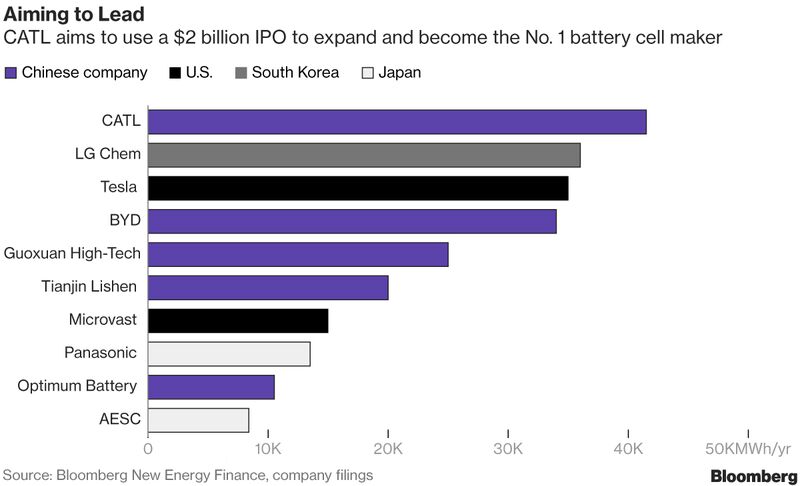
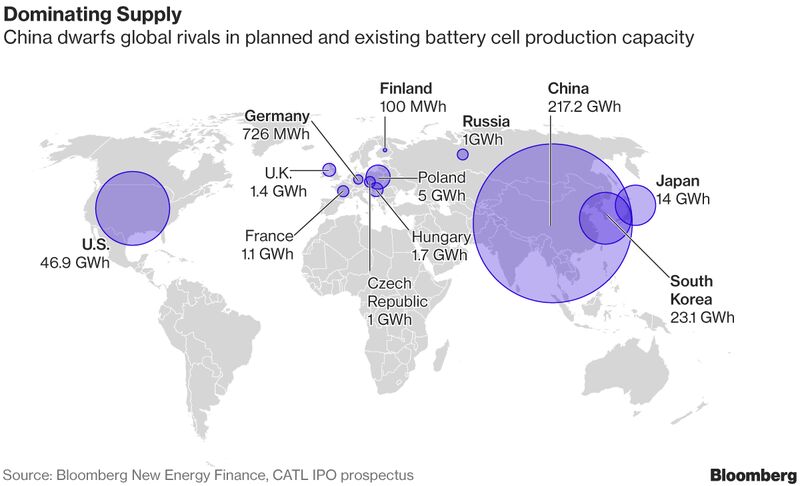
The new assembly lines would quintuple CATL’s production capability and make it the world’s largest electric-vehicle battery cell manufacturer, ahead of Tesla, Warren Buffett-backed BYD Co. in China and South Korea’s LG Chem Ltd., according to Bloomberg New Energy Finance. The factory could go fully online as soon as 2020, an opportune time as China targets a sevenfold increase in new-energy vehicle sales by 2025 and ponders a course for phasing out fossil-fuel vehicles altogether.

“China, unabashedly, wants to be the Detroit of electric vehicles,” said Anthony Milewski, a managing director at Pala Investments Ltd., a Zug, Switzerland-based fund investing in the EV supply chain. “There is no question in my mind that they are going to lead the world in capacity and, eventually, in the technology.”
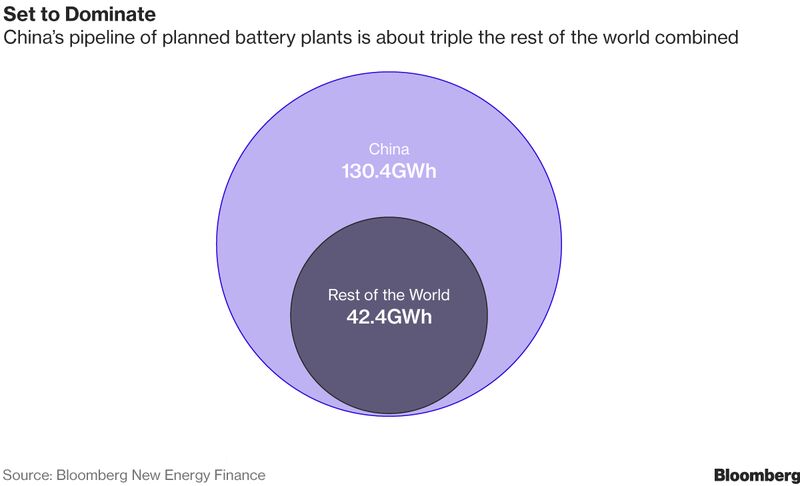


China’s government likes to have national champions of industry: think Alibaba Group Holding Ltd. in e-commerce and Tencent Holdings Ltd. in social media. So far no carmakers are part of that conversation, although CATL is working its way in there by capitalizing on China’s push for cleaner air and fewer oil imports. The rising battery giant is, in no small part, a manifestation of China’s aggressive government support for electric vehicles.

China surpassed the U.S. in 2015 to become the world’s biggest market for electric cars. Sales of new-energy vehicles—including battery-powered, plug-in hybrid and fuel-cell vehicles—reached 777,000 units last year and could surpass 1 million this year, the China Association of Automobile Manufacturers estimated.

In China, the source of 99 percent of CATL’s business, the company's lithium-ion batteries will be inside locally made EVs from Volkswagen AG, BMW AG, and Hyundai Motor Co. Japan’s Toyota Motor Corp., Honda Motor Co. and Nissan Motor Co. are considering CATL batteries for planned China-made vehicles. Domestic companies using the batteries include BAIC Motor Corp., the biggest EV seller in China, and Zhengzhou Yutong Group Co., the world’s biggest bus maker.


CATL is already in the midst of expanding overseas. Last year, it spent 30 million euros ($35 million then) to acquire 22 percent of Finland’s Valmet Automotive Oy, a contract manufacturer for Daimler AG’s Mercedes-Benz and supplier to Porsche AG and Volkswagen’s Lamborghini. CATL also added offices in Paris to existing facilities across Germany. The company has a partnership with BMW’s motorsport teams for races in Europe and Macau, splashing its blue logo across the carmaker’s M6 GT3.

Now CATL is making another leap. Job ads for positions in the Detroit area have appeared on LinkedIn, and the company said in an email it is meeting with several U.S. carmakers to discuss partnerships.

“Their intentions are very clear,” said Simon Moores, London-based managing director of battery sector consultant Benchmark Mineral Intelligence. “To not just be China’s biggest battery producer but the world's largest.”


Ningde, China.

Photographer: Qilai Shen/Bloomberg

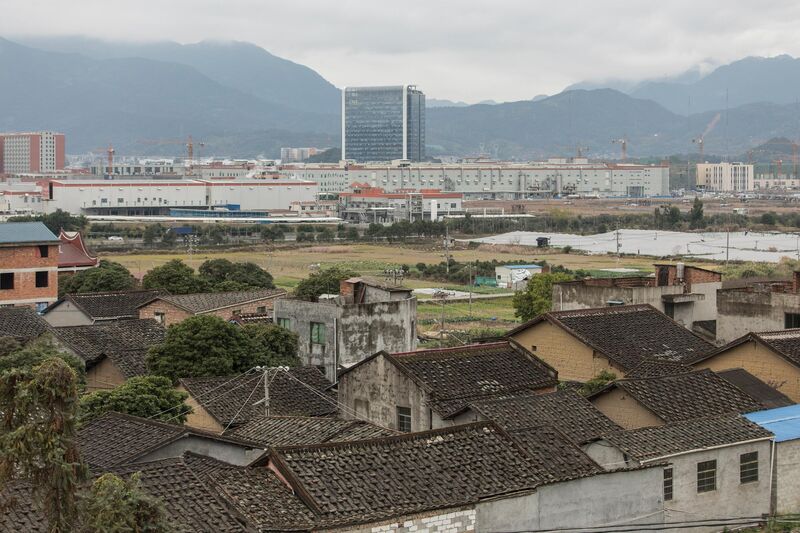
Ningde doesn’t look like a global foundry for the key technology inside the cars of the future. The isolated city is surrounded by mountains, with a long history of fishing and farming that has more recently made way for a few Starbucks and McDonald’s locations. President Xi Jinping apprenticed there as a Communist Party chief in the 1980s, when Ningde was the poorest city on China’s east coast.

Menahem Anderman, president of Total Battery Consulting Inc. in Petaluma, California, went to see CATL’s headquarters for himself in January and found a company in the process of becoming a world-class battery maker. “Technically they are a probably a tad behind the big three,” he said, citing Panasonic Corp., Samsung SDI Co. and LG Chem. “But considering how fast they have been moving, it’s reasonable to assume that in two to three years they’ll have a technically similar product.”


A view of the CATL headquarters and manufacturing complex.

Photographer: Qilai Shen

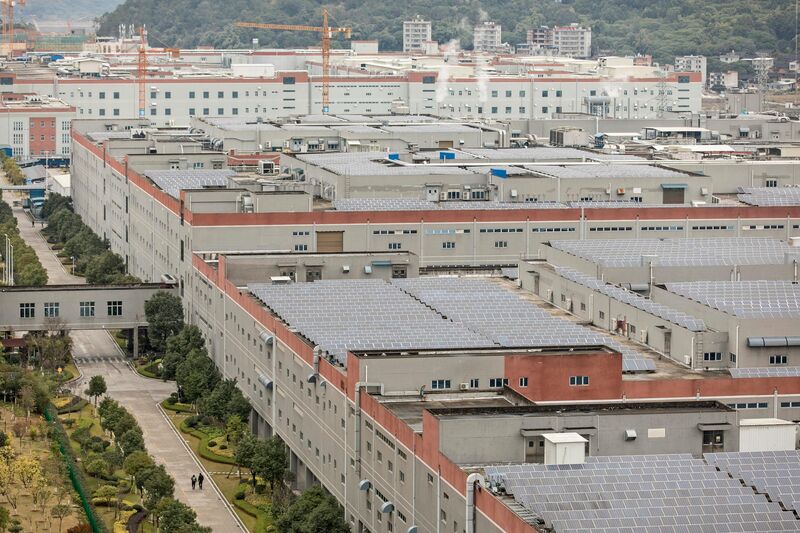
The new battery plant is set to rise on landfilled mudflats across a lake from CATL’s sprawling headquarters. The entire complex, all barely seven years old, is vast enough that it takes half an hour to walk from an office building on the northwest corner to a gate on the east side. Six electric shuttle buses, all powered by CATL batteries, trundle employees between dormitories, factories and research labs. For the 90-minute trip to the nearest airport in Fuzhou, employees can book free chauffeured rides in a Zinoro hybrid built by BMW's joint venture and powered by CATL batteries.

Zeng Yuqun, the 49-year-old engineer who founded CATL, is often seen walking fast across the campus. He was born in a mountain village an hour away and sometimes organizes employee excursions to his birthplace. For most of his career, he worked on lithium-ion batteries for consumer electronics, including the iPhone, at Amperex Technology Co., or ATL, a subsidiary of Japan’s TDK Corp. that he helped found.

Zeng’s decision to start CATL in 2011, while he was president of ATL, marked a gamble on the direction of Chinese government policy. That year there were just 1,014 alternative-energy vehicles sold in China, according to Bloomberg Intelligence. He was essentially betting that the lithium-ion battery business for cars would flourish, creating a replica of ATL focused on a vehicle market that barely existed. (The two companies split in 2015, with ATL transferring its 15 percent stake in the new company to other investors; Zeng resigned from TDK and ATL last year.)
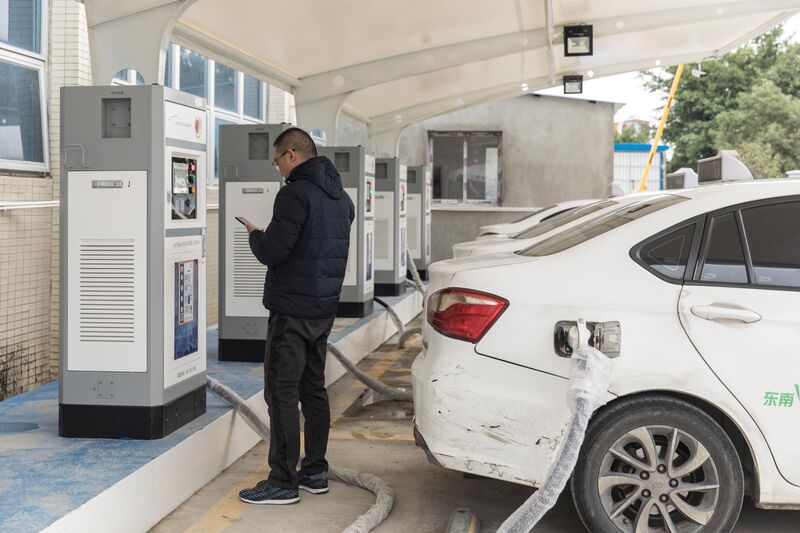


A charging station run by a local electric vehicle dealership in Ningde.

Photographer: Qilai Shen/Bloomberg

Zeng’s prediction proved right: Xi’s administration now provides generous incentives for consumers buying non-gasoline vehicles. In 2016 and 2017, those subsidies may have totaled 83 billion yuan, according to an estimate from Cui Dongshu, secretary-general of the China Passenger Car Association.

Carmakers seeking to qualify choose domestic battery suppliers because of concerns that models built with foreign brands will be ineligible, even though there isn’t a written rule banning non-Chinese suppliers. “The premise is that locally produced cars in China are obligated to use local batteries,” Jochem Heizmann, chief executive of Volkswagen Group China, said in January.

Zeng, who declined to comment for this article, can be blunt about the electric-vehicle business. During a forum in China last year, he made it clear that he doesn’t see himself in competition with other battery supplies. “We are competing with gasoline cars,” he said. “If we can’t win against gasoline cars, there’s no place for us in the market.”

If CATL made itself into an emerging battery giant on the strength of Chinese policy, Zeng already appears worried about securing a future without that help. In April, he sent an internal email meant to motivate his employees. The title of his letter posed a question: “When the typhoon comes, can pigs really fly?”

Zeng proceeded to use an allegory to caution workers against complacency. “Is the pig really flying? What happened to the pig after the typhoon is gone?” he wrote, according to the company’s WeChat account. The pig is the company, the strong winds are government subsidies, and the danger is that favorable policies won’t always be there to provide uplift.

CATL reaps further benefits from an aggressive government policy to acquire the minerals needed for battery makers. China is securing supplies of key materials such as lithium, nickel and rare earths, and its mining companies are estimated to be responsible for 62 percent of the global supply of cobalt, the Cleveland-based Institute for Energy Economics and Financial Analysis said in a January report.
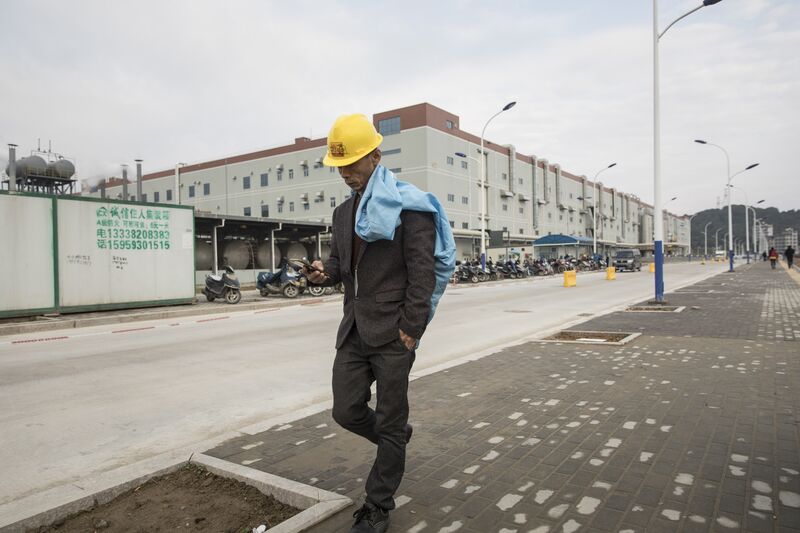


A worker walks past the CATL manufacturing complex.

Photographer: Qilai Shen/Bloomberg

The upcoming IPO should propel CATL to become the biggest lithium-ion battery cell maker in the world. The company previously forecast sales of as much as 100 billion yuan by 2020, a huge jump from 14.9 billion yuan in its last full-year earnings from 2016. The company’s ramp-up, in turn, will extend China’s grip on global battery production to about 70 percent of the market by 2021, up from 54 percent last year, according to BNEF.

That startling growth has some overseas origins. “Their technological background and procedures are quite good, partly because they have some history with a Japanese company,” said Mark Newman, a senior research analyst with Sanford C. Bernstein in Hong Kong.


There’s also German engineering in its DNA. In 2011, CATL was chosen by BMW and local partner Brilliance China Automotive Holdings Ltd. to supply their domestic premium EV brand, Zinoro.

Last year, the German carmaker hosted a coming-out party for its plug-in hybrid model, the 60H, amid coconut trees on the resort island of Hainan. Johann Wieland, president of the Chinese joint venture, and Zeng stood side-by-side to pose for photos with the silver model.
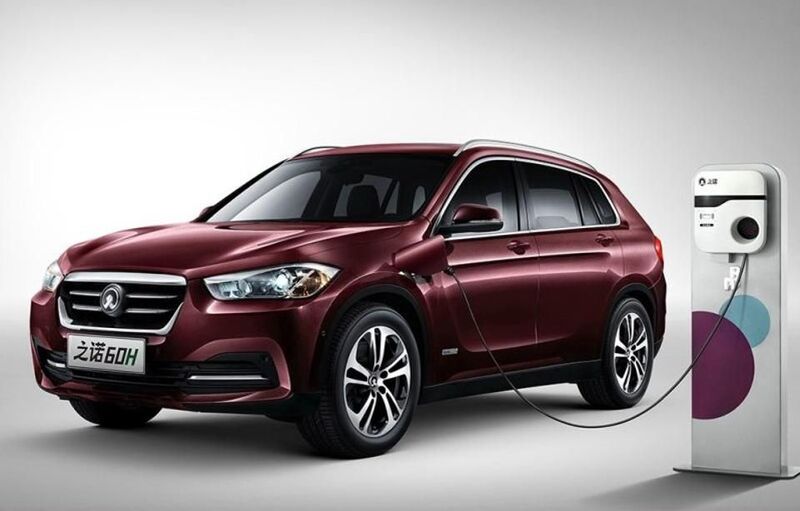


Zinoro 60H

Source: Zinoro

“We have learned a lot from BMW, and now we have become one of the top battery manufacturers globally,” Zeng said at the event. “The high standards and demands from BMW have helped us to grow fast.”

Helping power the growth is a strong research-and-development effort, said Zhou Lei, a Tokyo-based partner covering the auto industry for Deloitte Tohmatsu Consulting. CATL has ties to institutes in Germany and State College, Pennsylvania, according to its website.

CATL spent 670 million yuan on research during the first half of last year, or about 11 percent of revenue, according to its prospectus. BYD, China's largest maker of NEVs, spent 2.76 billion yuan, or 6 percent of revenue, according to the company.

Research-and-development staff comprise a fifth of CATL’s 18,000-plus workforce, and the company plans to use 4.2 billion yuan from the IPO to develop next-generation batteries, it said.


The share sale, which suggests a valuation of about $20 billion, would potentially make CATL one of the biggest listed companies on China’s Nasdaq-style ChiNext board. That valuation would surpass carmakers Kia Motors Corp., Mazda Motor Corp. and some its Chinese customers. Rival BYD is valued at about $27 billion.

CATL may host a road show later this year. The underwriters include Goldman Sachs and CSC Financial Co.

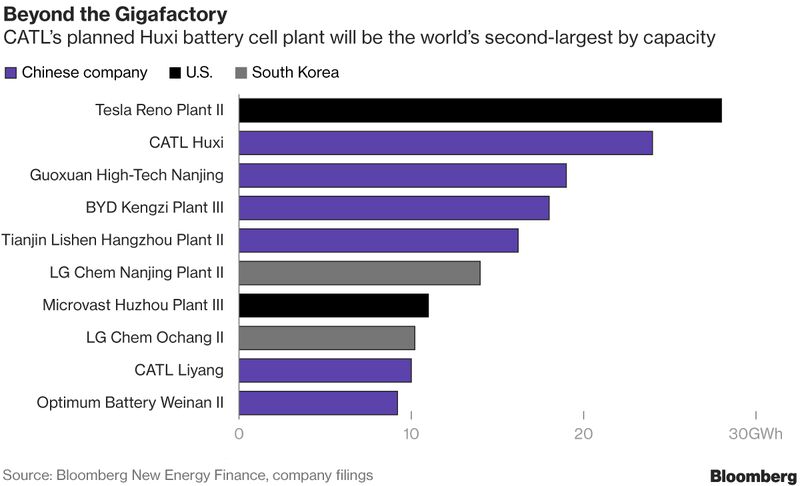
When completed, the new 24 gigawatt-hour factory will catapult CATL to the top of the manufacturing capacity rankings. Currently, it has 17.5 gigawatt hours a year in capacity either in operation or about to come online. A gigawatt hour is the equivalent of 1 million kilowatt hours of electricity—about enough to power 1 million homes for an hour.

The factory will boost that total to 41.5 gigawatt hours, surpassing LG Chem’s production, BNEF said in a November report. By comparison, Tesla’s Gigafactory will have a capacity for 35 gigawatt hours.

“Their ambitions are 100 percent global, and I believe they are going to be global competitors,” said Milewski, who’s also chairman of Toronto-based Cobalt 27 Capital Corp. “You have the Chinese government behind them, and you have some of the smartest people in the world working there.”

— With assistance by Elisabeth Behrmann and Hannah Dormido.


To: elmatador who wrote (138835)2/1/2018 5:00:28 AM
From: TobagoJack  Respond to of 218620
 
Free-lunch protocol:

Rule, if to panic, panic early, when it can do good, when it can be rational

reuters.com

Asian shares struggle, China dips on Lunar New Year profit-takingTOKYO (Reuters) - An index of Asian shares swung into negative territory on Thursday, erasing earlier gains, as a late retreat in Chinese stocks pulled the benchmark lower and as concerns about rising interest rates softened investor sentiment.

A man (3rd L) looks at an electronic stock quotation board as passers-by walk past, outside a brokerage in Tokyo, Japan January 20, 2016. REUTERS/Toru Hanai

MSCI’s broadest index of Asia-Pacific shares outside Japan was down 0.3 percent, still wobbly after Tuesday’s1.4 percent fall, and pulling away from earlier increases.

On Wednesday, the U.S. Federal Reserve flagged interest policy tightening later this year and upgraded its inflation outlook at its policy meeting, its first in 2018 and last to be chaired by Janet Yellen, who will be replaced by governor Jerome Powell on Feb 3. It kept interest rates on hold as expected.

In China, profit-taking ahead of the Lunar New Year holidays in mid-February, led to a correction, with Shenzhen shares hit the hardest, falling more than 3 percent to 6 1/2-month lows.

“Investors are sensitive to medium and small stocks which do not have strong fundamentals as negative news in the market curbed their risk appetite and offered them an excuse to sell some shares,” said Ben Kwong, Chief operating officer at KGI Asia in Hong Kong.

Earlier on Thursday, Caixin/Markit Manufacturing Purchasing Managers’ Index, a private business survey, came at 51.5, matching December’s reading, which was the highest in four months, showing growth in China’s manufacturing sector remained elevated in January.

Japan’s Nikkei, a major underperformer in the past couple of weeks, rose 1.7 percent from a four-week low hit the previous day.

U.S. S&P 500 mini futures gained 0.3 percent in Asian trade on Thursday, helped by 1.4 percent gains in Facebook in after-hours trading following the company’s solid earnings.

European shares are expected to track the gains, with spread-betters seeing a high opening of 0.3 percent in Britain’s FTSE, Germany’s Dax and France’s Cac.

Later in the day, three U.S. tech giants, Apple, Google parent Alphabet and Amazon.com will announce earnings.

Investors have been expecting strong profit growth in U.S. firms due to sound global growth, with U.S. President Donald Trump’s tax cuts seen giving an additional boost to Corporate America’s bottom line.

Economic data released overnight underscored the strength of the global economy. ADP payrolls data in the United States showed job increases of 234,000 in January, 49,000 more than economists’ forecast.

“The U.S. is cutting tax and spending $1.5 trillion in infrastructure when the economy is really strong. There would be little wonder if the economy overheats,” said Norihiro Fujito, senior investment strategist at Mitsubishi UFJ Morgan Stanley Securities.

For a growing number of investors, the biggest worry now is that the economy may accelerate too fast, lifting inflation and prompting central banks to tighten their monetary policy faster.

The yield on the 10-year U.S. Treasury note - the benchmark for world lending - briefly shot up to 2.754 percent, a level last seen in April 2014. It last stood at 2.725 percent.

Investors’ inflation expectations have also risen to 3 1/2-year high of 2.12 percent based on the so-called breakeven inflation (BEI) rate calculated by the gap between conventional bonds and inflation-protected bonds.

U.S. interest rate futures are now pricing in almost three rate hikes this year, compared to twice at the start of year, with some now talking about the possibility of four rate hikes.

“The dollar’s weakness and higher oil prices are boosting inflation expectations in the United States, which in turn is boosting U.S. bond yields,” said Shuji Shirota, head of macro economic strategy at HSBC Securities.

On Wall Street on Wednesday, the S&P 500 erased earlier gains to end almost flat, up 0.05 percent at 2,823.81. The Dow Jones Industrial Average was up 0.28 percent, however, most of the benchmark’s gains were driven by a 4.9 percent rise in index heavyweight Boeing following its strong earnings. Stripping out Boeing’s rally, the index would have been down 0.18 percent.

Although rising U.S. yields lent some support for the dollar, the U.S. currency lacked momentum as investors are focusing more on a fresher theme of exit from stimulus in other economies, such as the euro zone.

The euro traded at $1.2420, consolidating after having hit a 3-year high of $1.2538 hit on Jan. 25, as investors bet the European Central Bank will be laying the groundwork for ending its asset purchase and raising interest rates.

The dollar changed hands at 109.33 yen, bouncing off a four-month low of 108.28 hit on Friday.

The British pound fetched $1.4200, after a 5.1 percent gain in January, its biggest since May 2009, owing to broad dollar weakness and expectations of a Brexit deal more favorable to the UK.

The Chinese yuan is also strengthening, with the Thomson Reuters/HKEX Global CNY index, rising to 97.14 , its highest level since June 2016, having risen 4.7 percent from its May 2017 low of 92.76.

Oil prices rebounded after their slide earlier this week as strong demand for gasoline and distillate products and news that OPEC countries maintained heavy supply cuts in January offset the impact of rise in U.S. oil inventories.

U.S. crude futures gained 0.1 percent to $64.79 per barrel in early trade after gaining 7.7 percent in January, the best month for the contract since September.

Reporting by Hideyuki Sano; Editing by Sam Holmes

