Odd how it's so different when listening to a soldier that was actually there, has a brain and a conscience.
........
Beware! This could be Red Propaganda!!!!!!!!!!!
.......
original.antiwar.com
Unmitigated Failure: Operation Iraqi Freedom, 15 Years Later After waging an ill-advised war of choice in Iraq, the U.S. military remains ensnared in Greater Mesopotamia.
by Maj. Danny Sjursen Posted on March 20, 2018 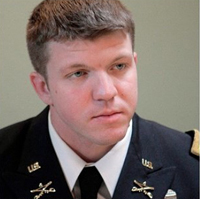 We were always caught in the middle. We still are. As a young man, a new lieutenant, and a true believer, I once led a US Army scout platoon just south of Baghdad. It was autumn 2006, and my platoon patrolled – mainly aimlessly – through the streets and surrounding fields of Salman Pak. To our north lay the vast Shia heartland of East Baghdad, to our south and east, the disgruntled and recently disempowered Sunnis of the rural hinterlands. Both sides executed teenagers caught on the wrong side of town, leaving the bodies for us to find. Each side sought to win American favor; both tried to kill us. We were always caught in the middle. We still are. As a young man, a new lieutenant, and a true believer, I once led a US Army scout platoon just south of Baghdad. It was autumn 2006, and my platoon patrolled – mainly aimlessly – through the streets and surrounding fields of Salman Pak. To our north lay the vast Shia heartland of East Baghdad, to our south and east, the disgruntled and recently disempowered Sunnis of the rural hinterlands. Both sides executed teenagers caught on the wrong side of town, leaving the bodies for us to find. Each side sought to win American favor; both tried to kill us.
It was a battle of attrition; a war for land, yes, but more importantly a war for the mind. Each day, the platoon had the distinct honor to drive our HMMWVs past the impressive ruins of an ancient Persian (Iranian) empire – the Sassanid. Some 1500 years earlier, Salman Pak was known as Ctesiphon and was the populous capital of a powerful civilization. The Iraqi Shia were proud of this past; the local Sunnis were not. Sunni insurgents still called the Shia "Sassanids," or "Persians," and they meant it as a pejorative. History was present and alive in Iraq. Still, few of my young soldiers knew – or cared – about any of this. They merely sought survival.
The Sunni fighters, once ascendant under Saddam Hussein’s regime, were backed by Saudi Arabia and other sympathetic Gulf states. In nighttime raids and daytime searches, we found Saudi "Wahhabi" Islamist propaganda on the floor of car bomb factories. Back then, the local Sunni insurgents called themselves TWJ (Tawhid al Jihad – Monotheism and Holy War). This group, a nonfactor at the time of the 9/11 attacks, would rebrand several times in the ensuing years: Al Qaeda in Iraq (AQI), the Islamic State of Iraq (ISI), and, finally, the Islamic State in Iraq and Syria (ISIS).
The Shia militiamen, JAM (Jaysh al Mahdi – The Mahdi Army), were backed by another regional player: Iran. They utilized their demographic plurality and fought the Sunnis for power in the new, US-imposed Iraqi "democracy;" occasionally, they found time to shatter our HMMWVs (and our bodies) with Iranian supplied explosive penetrators. The US Army battled each side, and feared them both.
Salman Pak, my own little war, was a microcosm of a failed policy. When the Bush-Cheney-Rumsfeld cabal of neoconservatives (along with a core of complicit "liberals" on Capitol Hill) collaborated to topple Saddam, the US became the proud owner of a fractured, ethno-sectarian basket case. The invasion and occupation of Iraq inserted the US military square in the middle of the ongoing regional proxy war between (Shia) Iran and (Sunni) Saudi Arabia.
Decades earlier, the US had actually backed Saddam’s Iraq in its war with Iran (1980-88), utilizing Iraqi troops as a buffer between the Islamic Republic and the oilfields of Kuwait and Saudi Arabia. In March 2003, in the ever-so-euphemistically titled Operation IRAQI FREEDOM (OIF), a war which was never a vital national security interest, the US government placed America’s cherished servicemen squarely in the middle of two nefarious regional competitors.
The story has been told so many times, that the tragedy doesn’t warrant a full recounting. Here’s the short version: poor intelligence and dubious evidence was used by gang of neocon ideologues to sell Americans on the need for regime change in Iraq (a country that had not been involved in the 9/11 attacks). Frightened, naïve, and ill-informed, the American people – and esteemed outlets like the New York Times – went along for the ride. We were told it’d be easy (a “cakewalk”) and self-financing. It was neither.
A civil war broke out. Tens of thousands of civilians and thousands of US troopers died. By the time I arrived, in October 2006, the place was aflame. Fear not, we were told: Bush and his new, brainy general – some Petraeus guy – would "surge" troops and win the day after all. Violence did – briefly – decline; the Iraqi government, however, failed to garner legitimacy. Still, we were told we’d won. The last American soldiers marched out in December 2011. A day later, the Shia prime minister tried to arrest the Sunni vice president. Sectarian relations soured again until a new version of an old group – ISIS – preyed on Sunni resentment and conquered a third of Iraq in 2014. The war hawks – Dems and Republicans – on Capitol Hill squawked, and soon enough US planes, then boots, were back in Iraq.
It has been 15 years since OIF, and there – in Iraq and Syria – US servicemen remain, wedged between Saudi-backed Sunni Islamists, and Iranian-backed Shia militiamen. Some 4500 American soldiers have already died, with upwards of 30,000 more wounded. And, like a bad sitcom, the US military still spends most of its time fighting spin-off wars (Syria, Iraq 2.0, ISIS, Yemen) of the original Iraq disaster. That ill-fated farce of an invasion either created the conditions, or exacerbated the existing tensions, which inform today’s regional wars.
If bin Laden himself had authored it, he could hardly have written a more dreadful quagmire for the US military. Osama, in fact, didn’t initially expect the Iraq invasion, though once it bogged the Americans down, he labeled that country "a point of attraction and the restorer of our energies." Chalk up a big V for Al Qaeda. I’m convinced that’s part of the reason there remain so many 9/11 "truthers:" because the "storm" seems so "perfect." If the goal of the neocons and military-industrial complex was – and I don’t personally subscribe to this – to engulf the US in self-perpetuating forever wars in the Mideast, they sure scripted it perfectly. This is the stuff which feeds conspiratorial thinking.
The "war on terror" – particularly its crown jewel, IRAQI FREEDOM – was, and is, ultimately counterproductive. It makes enemies faster than even the world’s greatest military can kill them. It feeds itself; it morphs; it grows; it, in the prescient words of bin Laden, "restores" Islamist energies.
America, the guileless behemoth, brimming with hubris, somehow cannot see it. The sheer irrationality of the whole endeavor borders – 15 years later – on the absurd. The only real winners in Iraq have been a chauvinist brand Iranian Shi’ism, and the trademark Wahhabi Sunni Islamism of Saudi Arabia. Neither is a true friend to US interests or values. Neither cares whether US soldiers live or die. Each has its own agenda and plays US policymakers and generals like so many fiddles. The rational move for America is to opt out; do less; and walk away before sinking farther into the next quagmire. Unfortunately, compressed so narrowly between adversarial forces, and obtuse as ever, American "statesman" can’t see the way out.
These wars won’t end well for the United States, just as matters didn’t end well for my platoon, wedged, as it was, between micro-factions of these same adversaries: Saudi Arabia and Iran.
The Sunni precursors of ISIS shot Sergeant Ty Dejane through the spine – he’s still in a wheel chair. The Shia militiamen aligned with Iran exploded a massive bomb which unleashed shrapnel that tore apart three other young men. Sergeant "Ducks" Duzinskas lost most of an arm. Sergeant Alex Fuller and Specialist Mike Balsley lay dead. They never knew what hit them, just as our platoon never knew who, or what, exactly, we were fighting.
My boys were sacrificed on the altar of American hubris. That’s the war I remember, and the one the US still fights – futilely – in the Fertile Crescent. Perhaps the citizenry should ponder that…before the next escalation in Iraq.
Major Danny Sjursen, an Antiwar.com regular, is a U.S. Army officer and former history instructor at West Point. He served tours with reconnaissance units in Iraq and Afghanistan. He has written a memoir and critical analysis of the Iraq War, Ghost Riders of Baghdad: Soldiers, Civilians, and the Myth of the Surge. He lives with his wife and four sons in Lawrence, Kansas. Follow him on Twitter at @SkepticalVet and check out his new podcast “Fortress on a Hill,” co-hosted with fellow vet Chris ‘Henri’ Henrikson.
[Note: The views expressed in this article are those of the author, expressed in an unofficial capacity, and do not reflect the official policy or position of the Department of the Army, Department of Defense, or the U.S. government.]
Copyright 2018 Danny Sjursen |



