SI
SI
discoversearch

We've detected that you're using an ad content blocking browser plug-in or feature. Ads provide a critical source of revenue to the continued operation of Silicon Investor.  We ask that you disable ad blocking while on Silicon Investor in the best interests of our community.  If you are not using an ad blocker but are still receiving this message, make sure your browser's tracking protection is set to the 'standard' level.
Pastimes : vitamins herbs supplements longevity and aging -- Ignore unavailable to you. Want to Upgrade?


To: Logain Ablar who wrote (13998)4/26/2018 5:02:54 PM
From: Pogeu Mahone  Respond to of 17069
 
How to stay safe from ticks and the diseases they carry

( new ticks have emigrated)

With warmer weather in spring comes the start of tick season. Ticks are most active in the months of April through October and peak in the summer, according to the Centers for Disease Control and Prevention.

The bloodsucking insects aren't just creepy — they can be dangerous, transmitting pathogens that cause a number of serious illnesses. Tick-borne diseases are on the rise and that means prevention should be on everyone's mind, experts say.

It's especially important to take steps to protect yourself and your loved ones — including pets — from tick bites this time of year.

Lyme diseaseOne of the biggest threats from ticks is Lyme disease. It's caused by the bacterium Borrelia burgdorferi and is transmitted to people through the bites of infected blacklegged ticks. These ticks, once limited to a few areas, have spread over the past 20 years to about half of all U.S. counties.

Each year, approximately 30,000 cases of Lyme disease are reported to the CDC by state health departments, though the actual number of cases is believed to be much higher.

Symptoms of Lyme disease include:

FeverHeadacheFatigueA rash that resembles a bullseye, called erythema migransDiagnosis is mainly based on symptoms and the possibility of having encountered infected ticks, although sometimes laboratory testing is also used and can be helpful in some cases.

Most cases of Lyme disease can be treated with antibiotics. However, if left untreated, the infection can lead to serious long-term complications and may even turn fatal. That's a big concern because sometimes there's no obvious rash or other symptoms early on.

Later signs and symptoms of Lyme disease that can appear days to months after a tick bite include:

Severe headaches and neck stiffnessAdditional rashes on other areas of the bodyArthritis with severe joint pain and swelling, particularly the knees and other large jointsFacial palsy, or the loss of muscle tone or droop on one or both sides of the faceIntermittent pain in tendons, muscles, joints, and bonesHeart palpitations or an irregular heart beatDizziness or shortness of breathInflammation of the brain and spinal cordNerve painShooting pains, numbness, or tingling in the hands or feetProblems with short-term memoryCatching Lyme disease early is key to preventing further complications. Health officials say people who receive appropriate treatment in early stages usually recover rapidly and completely.

If you are experiencing symptoms and think you may have been exposed to ticks, see your doctor right away.

Other threats from ticksWhile Lyme disease may be the most widely known, there are also other tick-borne diseases to watch out for.

Just this week, officials announced that a tick that's never been seen before in the U.S. has been spotted in New Jersey by the thousands. The East Asian tick, sometimes called a longhorned or bush tick, has been known to spread a deadly virus called SFTS, which stands for severe fever with thrombocytopenia syndrome. So far, no cases of the illness have been reported in the U.S.

Symptoms of SFTS include fever, fatigue, chill, headache, nausea, muscle pain, diarrhea, vomiting, abdominal pain, disease of the lymph nodes, and conjunctival congestion. In some cases, it can lead to death.


Other tick-borne illnesses include Powassan disease, a virus that has been called "worse than Lyme" but is fortunately rare. Only about 100 cases have been reported to the CDC over the past decade.

Borrelia miyamotoi disease (BMD) can cause fever, severe headaches and body aches. Extreme cases can be fatal.

Two other uncommon but serious tick-borne illnesses include Rocky Mountain spotted fever, which claimed the life of a 2-year-old girl in Indiana last summer, and the very rare Bourbon virus, which killed a Missouri woman a month later.

People with these diseases may experience symptoms including fever, vomiting, diarrhea, and rash, while others who've been exposed may not have any symptoms at all. That's why it's important to do tick checks after being outdoors and to see a doctor if you think you may have been exposed.

How to stay safe from ticksWhile some people may think they're safe from ticks if they live in the city, this is not true. To become infected with a tick-borne disease, you do not need to live in the country.

"There are many green belts and streams that come down into cities and those habitats support deer and ticks really well," Dr. John Aucott, director of the Johns Hopkins Lyme Disease Clinical Research Center, told CBS News. "The ticks are really everywhere unless you live in an incredible urban center where it's all asphalt and concrete."

The CDC recommends the following steps to protect yourself and your family from ticks:

Avoid wooded and brushy areas with high grass and leaf litter and walk in the center of trails.Use repellents that contain 20 to 30 percent DEET on exposed skin and clothing for protection that lasts up to several hours.Use products that contain permethrin to treat clothing and gear, such as boots, pants, socks and tents.Bathe or shower as soon as possible after coming indoors (preferably within two hours) to wash off and more easily find ticks that are crawling on you.Conduct a full-body tick check using a hand-held or full-length mirror to view all parts of your body upon return from tick-infested areas.Examine clothing, gear, and pets for ticks.


Keep your pet safe from these summer health hazards


To: Logain Ablar who wrote (13998)8/9/2018 9:34:14 AM
From: Pogeu Mahone  Read Replies (2) | Respond to of 17069
 
TICK ATTACK —US invaded by savage tick that sucks animals dry, spawns without mating

Eight states reporting the little suckers. No evidence they're carrying disease—yet.

BETH MOLE - 8/8/2018, 4:00 PM
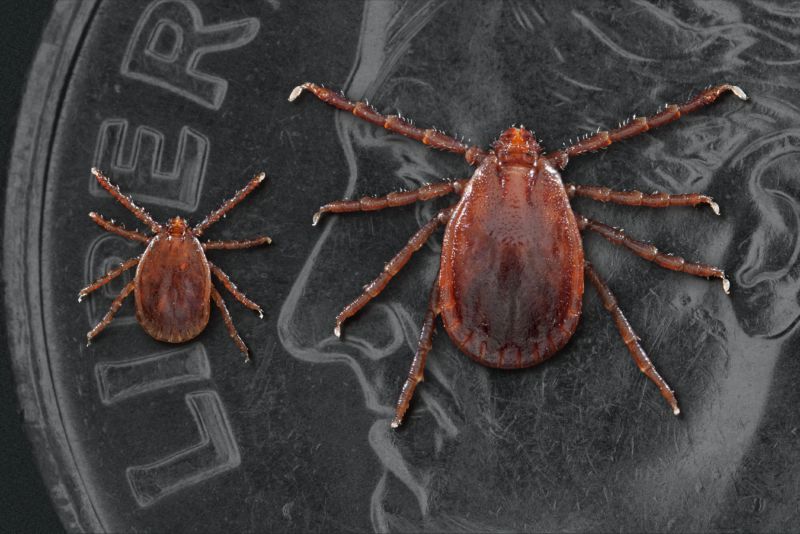

Enlarge / Two Haemaphysalis longicornis on a US dime.
CDC / James Gathany
165

A vicious species of tick originating from Eastern Asia has invaded the US and is rapidly sweeping the Eastern Seaboard, state and federal officials warn.

The tick, the Asian longhorned tick (or Haemaphysalis longicornis), has the potential to transmit an assortment of nasty diseases to humans, including an emerging virus that kills up to 30 percent of victims. So far, the tick hasn’t been found carrying any diseases in the US. It currently poses the largest threat to livestock, pets, and wild animals; the ticks can attack en masse and drain young animals of blood so quickly that they die—an execution method called exsanguination.

Key to the tick’s explosive spread and bloody blitzes is that its invasive populations tend to reproduce asexually—that is, without mating. Females drop up to 2,000 eggs over the course of two or three weeks, quickly giving rise to a ravenous army of clones. In one US population studied so far, experts encountered a massive swarm of the ticks in a single paddock, totaling well into the thousands. They speculated that the population might have a ratio of about one male to 400 females.

Yesterday, August 7, Maryland became the eighth state to report the presence of the tick. It followed a similar announcement last Friday, August 3, from Pennsylvania. Other affected states include New York, Arkansas, North Carolina, Virginia, and West Virginia.

Plagued paddockIt all started last August in New Jersey, the first state to identify the bloodsuckers. In a case report recently published in the Journal of Medical Entomology, infectious disease and tick experts reported the sad state of a 12-year-old Icelandic sheep housed alone in a paddock amid manicured lawns and large houses in the state’s wealthy Hunterdon County. No other animals were located on the property, and the sheep had never traveled outside of the country. Yet the beast was besieged, covered by hundreds of feasting ticks of all life-stages.

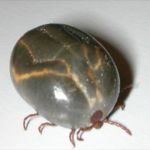
Haemaphysalis longicornis tick, commonly known as the longhorned tick.
CDC/ James Gathany

Engorged Haemaphysalis longicornis female tick.
Commonsource

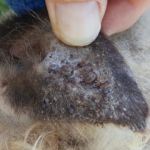
Engorged ticks on animal ear.
Penn State Extension

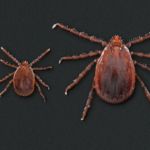
A nymph (left) and an adult female (right).
CDC / James Gathany
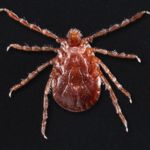


Just stepping foot in the paddock, the owner and health investigators were inundated with thirsty ticks that instantly began clawing up their pant legs. DNA analysis ultimately determined that the ticks were H. longicornis. Investigators found only one male out of 1,058 ticks collected.

To fight back the swarms, the owner doused the sheep in a wash of the insecticide permethrin. By November, it was cleared of ticks, and population levels in the vegetation around the paddock seemed to be dying down, although that was likely due to several nights of below-freezing temperatures.

In April, New Jersey’s Department of Agriculture confirmed that the population had successfully overwintered in the state, suggesting that it has now become established there.

Spreading scourgeSo far, it’s unclear how, when, or where H. longicornis first arrived in the country. According to a regional consortium of vector-borne disease experts, archived tick samples suggest the species arrived several years prior to 2017. In the past, researchers have occasionally intercepted the ticks in US quarantine stations, including finding a tick on a quarantined horse at a station in New Jersey in 1969.

H. longicornis is native to parts of East Asia, namely China, Japan, the former USSR, and Korea, living in meadows and grassy areas near forests. They’re also an established invasive pest of cattle in New Zealand, parts of Australia, and several Pacific islands. They’ve been known to feed on livestock like sheep, goats, cattle, and horses as well humans, dogs, cats, birds, and a range of wild animals, including bears, foxes, raccoons, rabbits, deer, and opossum.

In Asia, the longhorned tick is known to carry a variety of pathogens, including Rickettsia japonica, the bacteria behind Oriental spotted fever, and Theileria orientalis, a parasite that causes cattle theileriosis. It has also been found harboring relatives to pathogens present in the US, including bacteria that cause anaplasmosis and ehrlichiosis, the parasite that causes babesiosis, and the Powassan virus. ?

Additionally, H. longicornis may harbor a newly emerging virus that causes SFTS, which is short for severe fever with thrombocytopenia syndrome. SFTS was first identified in China in 2009 and is marked by fever, vomiting, hemorrhaging, and organ failure. Reported fatality rates fall between 6 percent and 30 percent. Several studies have pointed to the longhorned tick as being a reservoir and source for the virus.

Journal of Medical Entomology, 2018. DOI: 10.1093/jme/tjy006 ( About DOIs).