COMEY CAUGHT LYING TO CONGRESS AGAIN. ONLY 3,000 OF PEDOPHILE WEINER EMAILS EXAMINED, BEFORE CLEARING CRIMINAL, CROOKED HILLARY A SECOND TIME FOR TRAFFICKING CLASSIFIED INFO.
-------------------------------------------------
Despite Comey Assurances, Vast Bulk of Weiner Laptop Emails Were Never Examined
Paul Sperry Aug 23
When then-FBI Director James Comey announced he was closing the Hillary Clinton email investigation for a second time just days before the 2016 election, he certified to Congress that his agency had “reviewed all of the communications” discovered on a personal laptop used by Clinton’s closest aide, Huma Abedin, and her husband, Anthony Weiner.

James Comey, above. Top photo: His certification to Congress just before Election Day clearing Hillary Clinton a second time. That certification is challenged by new reporting.
At the time, many wondered how investigators managed over the course of one week to read the “hundreds of thousands” of emails residing on the machine, which had been a focus of a sex-crimes investigation of Weiner, a former Congressman.
Comey later told Congress that “thanks to the wizardry of our technology,” the FBI was able to eliminate the vast majority of messages as “duplicates” of emails they’d previously seen. Tireless agents, he claimed, then worked “night after night after night” to scrutinize the remaining material.
But virtually none of his account was true, a growing body of evidence reveals.
In fact, a technical glitch prevented FBI technicians from accurately comparing the new emails with the old emails. Only 3,077 of the 694,000 emails were directly reviewed for classified or incriminating information. Three FBI officials completed that work in a single 12-hour spurt the day before Comey again cleared Clinton of criminal charges.
“Most of the emails were never examined, even though they made up potentially 10 times the evidence” of what was reviewed in the original year-long case that Comey closed in July 2016, said a law enforcement official with direct knowledge of the investigation.
Yet even the "extremely narrow" search that was finally conducted, after more than a month of delay, uncovered more classified material sent and/or received by Clinton through her unauthorized basement server, the official said. Contradicting Comey’s testimony, this included highly sensitive information dealing with Israel and the U.S.-designated terrorist group Hamas. The former secretary of state, however, was never confronted with the sensitive new information and it was never analyzed for damage to national security.
Even though the unique classified material was improperly stored and transmitted on an unsecured device, the FBI did not refer the matter to U.S. intelligence agencies to determine if national security had been compromised, as required under a federally mandated “damage assessment” directive.
The newly discovered classified material “was never previously sent out to the relevant original classification authorities for security review,” the official, who spoke to RealClearInvestigations on the condition of anonymity, said.
Other key parts of the investigation remained open when the embattled director announced to Congress he was buttoning the case back up for good just ahead of Election Day.
One career FBI special agent involved in the case complained to New York colleagues that officials in Washington tried to “bury" the new trove of evidence, which he believed contained the full archive of Clinton's emails — including long-sought missing messages from her first months at the State Department.
Timeline: How the FBI Ignored Hundreds of Thousands of Clinton Emails RealClearInvestigations pieced together the FBI's handling of the massive new email discovery from the “Weiner laptop.” This months-long investigation included a review of federal court records and affidavits, cellphone text messages, and emails sent by key FBI personnel, along with internal bureau memos, reviews and meeting notes documented in government reports. Information also was gleaned through interviews with FBI agents and supervisors, prosecutors and other law enforcement officials, as well as congressional investigators and public-interest lawyers.
If the FBI “soft-pedaled” the original investigation of Clinton’s emails, as some critics have said, it out-and-out suppressed the follow-up probe related to the laptop, sources for this article said.
“There was no real investigation and no real search,” said Michael Biasello, a 27-year veteran of the FBI. "It was all just show — eyewash — to make it look like there was an investigation before the election.”

Peter Strzok: numerous investigative irregularities.
AP Photo/Evan Vucci
Although the FBI’s New York office first pointed headquarters to the large new volume of evidence on Sept. 28, 2016, supervising agent Peter Strzok, who was fired on Aug. 10 for sending anti-Trump texts and other misconduct, did not try to obtain a warrant to search the huge cache of emails until Oct. 30, 2016. Violating department policy, he edited the warrant affidavit on his home email account, bypassing the FBI system for recording such government business. He also began drafting a second exoneration statement before conducting the search.
The search warrant was so limited in scope that it excluded more than half the emails New York agents considered relevant to the case. The cache of Clinton-Abedin communications dated back to 2007. But the warrant to search the laptop excluded any messages exchanged before or after Clinton’s 2009-2013 tenure as secretary of state, key early periods when Clinton initially set up her unauthorized private server and later periods when she deleted thousands of emails sought by investigators.
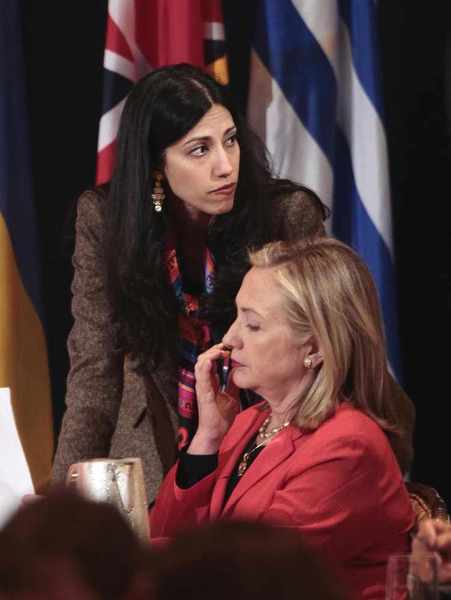
Huma Abedin with Secretary of State Hillary Clinton in 2011.
AP Photo/Pablo Martinez Monsivais, File
Far from investigating and clearing Abedin and Weiner, the FBI did not interview them, according to other FBI sources who say Comey closed the case prematurely. The machine was not authorized for classified material, and Weiner did not have classified security clearance to receive such information, which he did on at least two occasions through his Yahoo! email account – which he also used to email snapshots of his penis.
Many Clinton supporters believe Comey’s 11th hour reopening of a case that had shadowed her campaign was a form of sabotage that cost her the election. But the evidence shows Comey and his inner circle acted only after worried agents and prosecutors in New York forced their hand. At the prodding of Attorney General Lynch, they then worked to reduce and rush through, rather than carefully examine, potentially damaging new evidence.
Comey later admitted in his memoir “A Higher Loyalty,” that political calculations shaped his decisions during this period. But, he wrote, they were calibrated to help Clinton: “Assuming, as nearly everyone did, that Hillary Clinton would be elected president of the United States in less than two weeks, what would happen to the FBI, the Justice Department or her own presidency if it later was revealed, after the fact, that she still was the subject of an FBI investigation?”
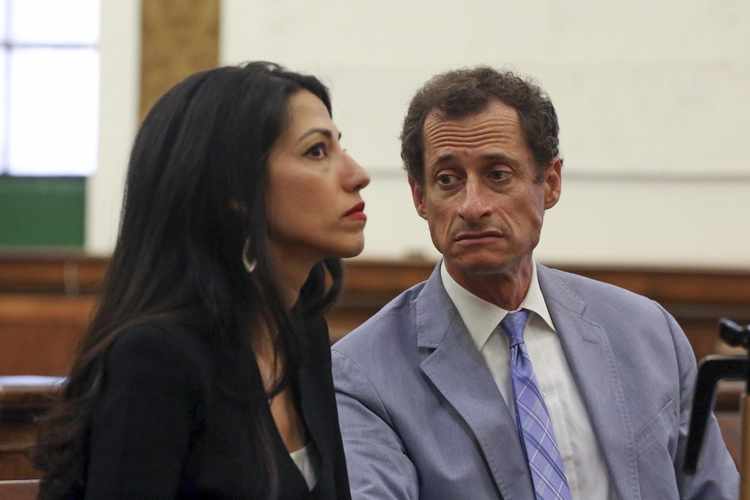
Never interviewed: Abedin and Weiner at a divorce proceeding in 2017.
Jefferson Siegel/Daily News via AP
What does it matter now? Republicans are clamoring for a special counsel to reopen the Clinton email case, though a five-year statute of limitations may be an issue concerning crimes relating to her potential mishandling of classified information.
However, conducting a broader and more thorough search of the Weiner laptop may still have prosecutorial justification. Other questions linger, including whether subpoenaed evidence was destroyed or false statements were made to congressional and FBI investigators from 2014 to 2016, a time frame that is within the statute of limitations. The laptop was not searched for evidence pertaining to such crimes. Investigators instead focused their search, limited as it was, on classified information.
Also, the FBI is still actively investigating the Clinton Foundation for alleged foreign-tied corruption. That probe, handled chiefly out of New York, may benefit from evidence on the laptop.
The FBI did not respond to requests for comment.
The Background In March 2015, it was revealed that Hillary Clinton had used a private email server located in the basement of her Chappaqua, N.Y., home to conduct State Department business during her 2009-2013 tenure as the nation’s top diplomat. The emails on the unsecured server included thousands of classified messages, including top-secret information. Federal law makes it a felony for government employees to possess or handle classified material in an unprotected manner.
By July, intelligence community authorities had referred the matter to the FBI.
That investigation centered on the 30,490 emails Clinton handed over after deeming them work-related. She said she had deleted another 33,000 because she decided they were “personal.” Also missing were emails from the first two months of her tenure at State – from Jan. 21, 2009, through March 18, 2009 -- because investigators were unable to locate the BlackBerry device she used during this period, when she set up and began using the basement server, bypassing the government's system of archiving such public records as required by federal statute.
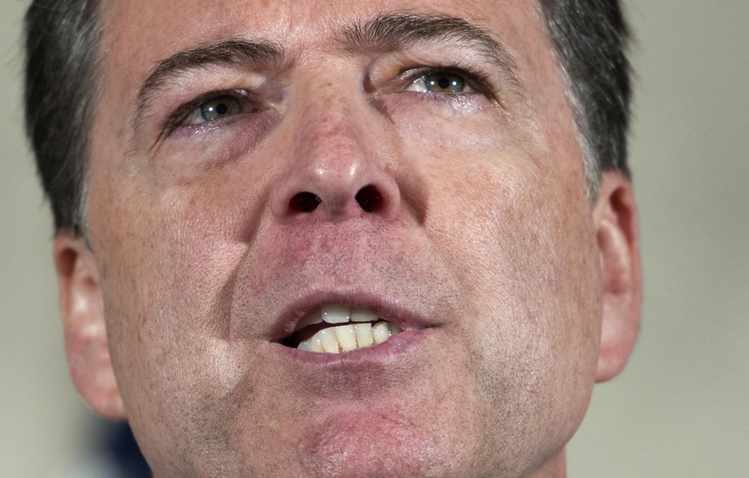
Comey faces media on July 5, 2016.
AP Photo/Cliff Owen
One year later, in a dramatic July 2016 press conference less than three weeks before Clinton would accept her party’s nomination for president, Comey unilaterally cleared Clinton of criminal wrongdoing. While Clinton and her aides “were extremely careless in their handling of very sensitive, highly classified information,” he said, "no charges are appropriate in this case.”
Comey would later say he broke with normal procedures whereby the FBI collects evidence and the Department of Justice decides whether to bring charges, because he believed Attorney General Loretta Lynch had engaged in actions that raised doubts about her credibility, including secretly meeting with Clinton’s husband, the former president, just days before the FBI interviewed her.
Fast-forward to September 2016.
FBI investigators in New York were analyzing a Dell laptop, shared by Abedin and Weiner, as part of a separate sex-crimes investigation involving Weiner’s contact with an underage girl. A former Democratic congressman from New York, Weiner is serving a 21-month prison sentence after pleading guilty to sending obscene material to a 15-year-old.
On Sept. 26, 2016, the lead New York agent assigned to the case found a large volume of emails – “over 300,000” – on the laptop related to Abedin and Clinton, including a large volume of messages from Clinton’s old BlackBerry account.
The headers indicated that the emails on the laptop included ones sent and/or received by Abedin at her clintonemail.com account, her personal Yahoo! email account as well as a host of Clinton-associated domains including state.gov, clintonfoundation.org, presidentclinton.com and hillaryclinton.com.

FBI's Bill Sweeney, at podium.
AP Photo/Bebeto Matthews
The agents had reason to believe that classified information resided on the laptop, since investigators had already established that emails containing classified information were transmitted through multiple email accounts used by Abedin, including her clintonemail.com and Yahoo! accounts. Moreover, the preliminary count of Clinton-related emails found on the laptop in late September 2016 -- three months after Comey closed his case — dwarfed the total of some 60,000 originally reported by Clinton.
The agent described the discovery as an “oh-shit moment.”
“Am I seeing what I think I’m seeing?” he asked another case agent.
They agreed that the information needed “to get reported up the chain” immediately.

Andrew McCabe: Recollections murky.
AP Photo/Alex Brandon
The next day, Sept. 27, the official in charge of the FBI’s New York office, Bill Sweeney, was alerted to the trove and confirmed “it was clearly her stuff.” Sweeney reported the find to Comey deputy Andrew McCabe and other headquarters officials on Sept. 28, and told Justice Department Inspector General Michael Horowitz that “everybody realized the significance of this.”
(McCabe told Horowitz he didn’t remember Sweeney briefing him about the Weiner laptop, but personal notes he took during the teleconference indicate he was briefed. Sweeney also updated McCabe in a direct call later that afternoon in which he noted there were potentially 347,000 relevant emails, and that the count was climbing. McCabe was fired earlier this year and referred to the U.S. Attorney’s office in Washington, D.C., for possible criminal investigation into allegations he made false statements to federal agents working for Horowitz.)
McCabe, in turn, briefed Strzok - who had led the Clinton email probe - that afternoon, text messages show.
Comey was not on the conference call, but phone records show he and McCabe met privately that afternoon and spoke during a flurry of phone calls late that evening. McCabe said he could not recall what they discussed, while Comey told investigators that he did not hear about the emails until early October — and then quickly forgot about them. (“I kind of just put it out of my mind,” he said, because he claimed it did not “index” with him that Abedin was closely connected to Clinton. “I don’t know that I knew that [Weiner] was married to Huma Abedin at the time.")
FBI officials in New York assumed that the bureau’s brass would jump on the discovery, particularly since it included the missing emails from the start of Clinton's time at State. In fact, the emails dated from the beginning of 2007 and covered the entire period of Clinton’s tenure as secretary and thereafter. The team leading the Clinton investigation, codenamed "Midyear Exam," had never been able to find Clinton’s emails from her first two months as secretary.
By Oct. 4, the Weiner case agent had finished processing the laptop, and reported that he found at least 675,000 emails potentially relevant to the Midyear case (in fact, the final count was 694,000). “Based on the number of emails, we could have every email that Huma and Hillary ever sent each other,” the agent remarked to colleagues. It appeared this was the mother lode of missing Clinton emails. But Strzok remained uninterested. “This isn’t a ticking terrorist bomb,” he was quoted as saying in the recently issued inspector general’s report. Besides, he had bigger concerns, such as, “You know, is the government of Russia trying to get somebody elected here in the United States?”
Strzok and headquarters sat on the mountain of evidence for another 26 days. The career New York agent said all he was hearing from Washington was “crickets,” so he pushed the issue to his immediate superiors, fearing he would be “scapegoated” for failing to search the pile of digital evidence. They, in turn, went over Strzok’s head, passing their concerns on to career officials at the National Security Division of the Justice Department, who in turn set off alarm bells at the seventh floor executive suites of the Hoover Building.
The New York agent has not been publicly identified, even in the recent IG report, which only describes him as male. But federal court filings in the Weiner case reviewed by RCI list two FBI agents present in court proceedings, only one of whom is male - John Robertson. RCI has confirmed that Robertson at the time was an FBI special agent assigned to the C-20 squad investigating “crimes against children” at the bureau’s New York field office at 26 Federal Plaza, which did not return messages.
The agent told the inspector general that he wasn’t political and didn’t understand all the sensitive issues headquarters may have been weighing, but he feared Washington’s inaction might be seen as a cover-up that could wreak havoc on the bureau.
“I don’t care who wins this election,” he said, "but this is going to make us look really, really horrible.”

Lisa Page: "Whatever."
AP Photo/Jacquelyn Martin
Once George Toscas, the highest-ranking Justice Department official directly involved in the Clinton email investigation, found out about the delay, he prodded headquarters to initiate a search and to inform Congress about the discovery.
By Oct. 21, Strzok had gotten the word. “Toscas now aware NY has hrc-huma emails,” he texted McCabe’s counsel, Lisa Page, who responded, “whatever."
Four days later, Page told Strzok - with whom she was having an affair - about the murmurs she was hearing from brass about having to tell Congress about the new emails. “F them,” Strzok responded, apparently referring to oversight committee leaders on the Hill.
The next day, Oct. 26, the New York agent finally was able to brief Strzok’s team directly about what he had found on the laptop. On Oct. 27, Comey gave the green light to seek a search warrant.

Michael Horowitz: Pressure from New York was key to reopening email case.
AP Photo/Manuel Balce Ceneta
“This decision resulted not from the discovery of dramatic new information about the Weiner laptop, but rather as a result of inquiries from the Weiner case agent and prosecutors from the U.S. Attorney’s Office [in New York]," Horowitz said in his recently released report on the Clinton investigation.
Former prosecutors say that politics is the only explanation for why FBI brass dragged their feet for a month after the New York office alerted them about the Clinton emails.
“There's no rational explanation why, after they found over 300,000 Clinton emails on the Wiener laptop in late September, the FBI did nothing for a month,” former deputy Independent Counsel Solomon “Sol” L. Wisenberg said in a recent interview with Fox News host Laura Ingraham. “It’s pretty clear there’s a real possibility they did nothing because they thought it would hurt Mrs. Clinton during the election.”
Horowitz concurred. The IG cited suspicions that the inaction "was a politically motivated attempt to bury information that could negatively impact the chances of Hillary Clinton in the election.”
He noted that on Nov. 3, after Comey notified Congress of the search, Strzok created a suspiciously inaccurate “Weiner timeline” and circulated it among the FBI leadership.
The odd document, written after the fact, made it seem as if New York hadn’t fully processed the laptop until Oct. 19 and had neglected to fill headquarters in on details about what had been found until Oct. 21. In fact, New York finished processing on Oct. 4 and first began reporting back details to top FBI executives as early as Sept. 28.
Fearing Leaks Fears of media leaks also played a role in the ultimate decision to reopen the case and notify Congress.
FBI leadership worried that New York would go public with the fact it was sitting on the Weiner emails, because the field office was leaking information on other sensitive matters at the time, including Clinton-related conflicts dogging McCabe, which the Wall Street Journal had exposed that October. At the same time, Trump surrogate and former New York Mayor Rudy Giuliani, who was still in touch with FBI sources in the city, was chirping about an “October surprise” on Fox News.
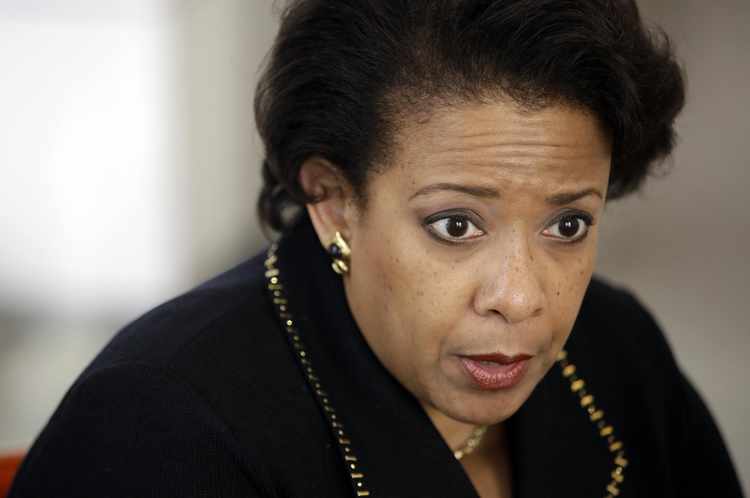
Loretta Lynch: Stop those leaks.
AP Photo/Patrick Semansky
During the October time frame, McCabe called Sweeney in New York and chewed him out about leaks coming out of his office. On Oct. 26, then-Attorney General Loretta Lynch was so worried about the leaks, she called McCabe and Sweeney and angrily warned them to fix them. Sweeney confirmed in an interview with the inspector general that they got “ripped by the AG on leaks.” McCabe said he never heard the attorney general "use more forceful language.”
Lynch -- who had admonished Comey to call the Clinton case a “matter” and not an investigation, aligning FBI rhetoric with the Clinton campaign, and who inappropriately agreed to meet with Bill Clinton aboard her government plane five days before the FBI interviewed Hillary Clinton — sought to keep the Weiner laptop search quiet and was opposed to going to Congress with the discovery so close to the election.
"We were quite confident that somebody is going to leak this fact, that we have all these emails. That, if we don’t put out a letter [to Congress], somebody is going to leak it,” then-FBI General Counsel James Baker said. “The discussion was somebody in New York will leak this.”
Baker advised Comey that he also was under obligation to update Congress about any new developments in the case. Just a few months earlier, the director had testified before Hill oversight committees about his decision to close the case. Baker said the front office rationalized that since Clinton was ahead in the polls, the notification would not have a big impact on the race. The Democratic nominee would likely win no matter what the FBI did.
But this time, Comey made no public show of his announcement. On Oct. 28, 2016, Comey quietly sent a terse and private letter to the chairs and the ranking members of the oversight committees on the Hill, informing them, vaguely, that the FBI was taking additional steps in the Clinton email investigation.
Those steps, of course, started with finally searching the laptop for relevant emails.
‘Giant Nothing-Burger’ Prosecutors and investigators alike, however, approached the search as an exercise in futility, even prejudging the results as a “giant nothing-burger.”
That was an assessment that would emerge later from David Laufman, then a lead prosecutor in the Justice Department’s national security division assigned to the Clinton email probe. He had “a very low expectation” that any evidence found on the laptop would alter the outcome of the Midyear investigation. And he doubted a search would turn up “anything novel or consequential,” according to the IG report.

Mary McCord: Discounted laptop trove, and she wasn't the only one.
AP Photo/Susan Walsh, File
Hired by former Attorney General Eric Holder, Laufman complained it was “exceptionally inappropriate” to restart the investigation so close to the election. (Records show Laufman, who sat in on Clinton’s July 2016 interview at FBI headquarters, gave money to both of Barack Obama’s presidential campaigns.)
His boss, Mary McCord, discounted the laptop trove as emails they’d already seen. "Hopefully all duplicates,” she wrote in notes she took from an October 2016 phone call she had with McCabe, who shared her hope.
McCord opposed publicly opening the case again “because it could be a big nothing.”
In an Oct. 27 email to the lead Midyear analyst, Strzok suggested the search would not be serious, that they would just need to go through the motions, while joking about “de-duping,” or excluding emails as ones they’d already seen.
The reactivated Midyear investigators were not eager to dive into the new emails, either. They also prejudged the batch as evidence they had already analyzed -- while at the same time expressing pro-Hillary and anti-Trump sentiments in internal communications.
For example, the Midyear agent who had called Clinton the “future pres[ident]” after interviewing her in July, pooh-poohed the idea they would find emails substantively different than what the team had previously reviewed. Even though he expected they'd find some missing emails, even new classified material, he discounted their significance.
“My best guess — probably uniques, maybe classified uniques, with none being any different tha[n] what we’ve already seen,” the agent wrote in an Oct. 28 instant message to another FBI employee on the bureau’s computer system. (Back in May 2016, as Clinton was locking up the Democratic primary, the agent had revealed in another IM that there was “political urgency” to wrap up her email investigation.)
The unnamed agent, who is identified in the IG report only as “Agent 1," is now married to another Midyear investigator, who on Election Day IM’d her then-boyfriend to say Clinton “better win,” while threatening to quit if she didn’t. Known as “Agent 5,” she also stated, “fuck trump,” while calling his voters “retarded.”
At the same time, the lead FBI attorney on the Midyear case, Sally Moyer (whose lawyers confirmed is the anonymous “FBI Attorney 1” cited in the IG report), was in no hurry to process the laptop. Before examining them, she expressed the belief that the massive volume of emails “may just be duplicative of what we already have,” doubting there was a “smoking gun” in the pile.
A Hurried, Constrained Search Moyer, a registered Democrat, was responsible for obtaining legal authority to review the laptop’s contents. She severely limited the scope of the evidence that investigators could search on the laptop by setting unusually tight parameters.
Working closely with her was Strzok, who forwarded a draft of the warrant to his personal email account in violation of FBI policy, where he helped edit the language in the affidavit. By processing the document at home, no record of his changes to the document were captured in the FBI system.
(Strzok had also edited the language in the drafts of Comey’s public statement about his original decision on the Clinton email investigation. He changed the description of Clinton’s handling of classified information from “grossly negligent” — which is proscribed in the federal statute — to “extremely careless,” eliminating a key phrase that could have had legal ramifications for Clinton.)
The next day, the search warrant application drafted by Strzok and Moyer was filed in New York. It was inexplicably self-constraining. The FBI asked the federal magistrate judge, Kevin N. Fox, to see only a small portion of the evidence the New York agent told headquarters it would find on the laptop.
“The FBI only reviewed emails to or from Clinton during the period in which she was Secretary of State, and not emails from Abedin or other parties or emails outside that period,” Horowitz pointed out in a section of his report discussing concerns that the search warrant request was “too narrow."
That put the emails the New York case agent found between 2007 and 2009, when Clinton’s private server was set up, as well as those observed after her tenure in 2013, outside investigators’ reach. The post-tenure emails were potentially important, Horowitz noted, because they may have offered clues concerning the intent behind the later destruction of emails.
Also excluded were Abedin’s Yahoo emails, even though investigators had previously found classified information on her Yahoo account and would arguably have probable cause to look at those emails, as well.

Clinton with Blackberry.
AP Photo/Kevin Lamarque, Pool, File
Also removed from the search were the BlackBerry data -- even though the FBI had previously described them as the “golden emails,” because they covered the dark period early in Clinton’s term.
“Noticeably absent from the search warrant application prepared by the Midyear team is both any mention that the NYO agent had seen Clinton’s emails on the laptop and any mention of the potential presence of BlackBerry emails from early in Clinton’s tenure,” Horowitz noted.
Even though the BlackBerry messages were “critical to [the] assessment of the potential significance of the emails on the Weiner laptop, the information was not included in the search warrant application,” he stressed, adding that the application appeared to misrepresent the information provided by the New York field agent. It also grossly underestimated the extent of the material. The affidavit warrant mentioned “thousands of emails,” while the New York agent had told them that the laptop contained “hundreds of thousands” of relevant emails.
That meant that the Midyear team never got to look, even if it wanted to, at the majority of the communications secreted on the laptop, further raising suspicions that headquarters wasn’t really interested in finding any evidence of wrongdoing – at least on the part of Clinton and her team.
“I had very strict instructions that all I was allowed to do within the case was look for Hillary Clinton emails, because that was the scope of our work,” an FBI analyst said, even though Horowitz said investigators had probable cause to look at Abedin’s emails as well.
In addition to limiting the scope of their probe, the agents were also under pressure from both Justice Department prosecutors and FBI headquarters to complete the review of the remaining emails in a hurry.
One line prosecutor, identified in the IG report only as “Prosecutor 1,” argued that they should finish up “as quickly” as possible. Baker said there was a general concern about the new process “being too prolonged and dragged [out]."
Lynch urged Comey to process the Weiner laptop “as fast as you can,” according to notes from a high-level department meeting on Oct. 31, 2016, which were obtained by the IG.
On Nov. 3, Strzok indicated in a text that Justice demanded he update the department twice a day on the FBI's progress in clearing the stack. “DOJ is hyperventilating,” he told Page.
De-Duplicating 'Wizardry’ Before the search warrant was issued, the Midyear team argued that the project was too vast to complete before the election. According to Comey’s recently published memoir, they insisted it would take "many weeks" and require the enlistment of "hundreds of FBI employees." And, they contended, not just anybody could read them: “It had to be done by people who knew the context,” and there was only a handful of investigators and analysts who could do the job.
“The team told me there was no chance the survey of the emails could be completed before the Nov. 8 election,” Comey recalled, which was right around the corner.
But after Comey decided he’d have to move forward with the search regardless, Strzok and his investigators suddenly claimed they could finish the work in the short time remaining prior to national polls opening.
At the same time, they cut off communications with the New York field office. “We should essentially have no reason for contact with NYO going forward on this,” Strzok texted Page on Nov. 2.
Strzok followed up with another text that same day, which seemed to echo earlier texts about what they viewed as their patriotic duty to stop Trump and support Clinton.
“Your country needs you now,” he said in an apparent attempt to buck up Page, who was “very angry" they were having to reopen the Clinton case. “We are going to have to be very wise about all of this.”
“We’re going to make sure the right thing is done,” he added. “It’s gonna be ok.”
Responded Page: “I have complete confidence in the [Midyear] team.”
“Our team,” Strzok texted back. “I’m telling you to take comfort in that.” Later, he reminded Page that any conversations she had with McCabe “would be covered under atty [attorney-client] privilege."
Suddenly, however, the impossible project suddenly became manageable thanks to what Comey described as a “huge breakthrough.” As the new cache of emails arrived, the bureau claimed it had solved one of the most labor-intensive aspects of the previous Midyear investigation – having to sort through the tens of thousands of Clinton emails on various servers and electronic devices manually.
Advanced new “de-duplicating" technology would allow them to speed through the mountain of new emails automatically flagging copies of previously reviewed material.
Strzok, who led the effort, echoed Comey’s words, later telling the IG’s investigators that technicians were able “to do amazing things” to “rapidly de-duplicate” the emails on the laptop, which significantly lowered the number of emails that he and other investigators had to individually review manually.
But according to the IG, FBI’s technology division only “attempted” to de-duplicate the emails, but ultimately was unsuccessful. The IG cited a report prepared Nov. 15, 2016, by three officials from the FBI’s Boston field office. Titled “Anthony Weiner Laptop Review for Communications Pertinent to Midyear Exam,” it found that “ecause metadata was largely absent, the emails could not be completely, automatically de-duplicated or evaluated against prior emails recovered during the investigation.”
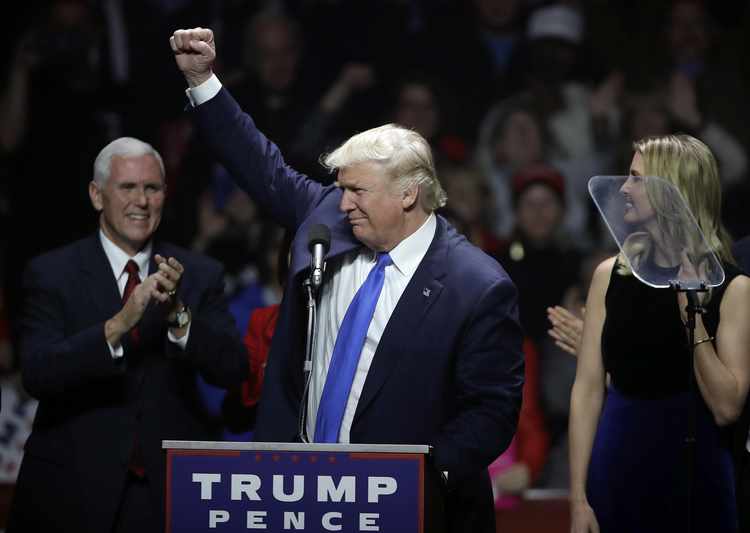
Trump at rally Nov. 7, 2016, in Manchester, N.H. : “You can’t review 650,000 emails in eight days.”
AP Photo/Charles Krupa
The absence of this metadata -- basically electronic fingerprints that reveal identifying characteristics such as To, CC, Date, From, Subject, attachments and other fields – informed the IG’s finding that “the FBI could not determine how many of the potentially work-related emails were duplicative of emails previously obtained in the Midyear investigation.”
Contrary to Comey’s claim, the FBI could not sufficiently determine how many emails containing classified information were duplicative of previously reviewed classified emails. As a result, hundreds of thousands of emails were not actually processed for evidence, law enforcement sources say.
“All those communications weren’t ruled out because they were copies, they were just ruled out,” the federal investigator with direct knowledge of the case said. The official, who wished to remain anonymous, explained that hundreds of thousands of emails were simply overlooked. Instead of processing them all, investigators took just a sample of the batch and looked at those documents.
After Comey announced his investigators wrapped up the review in days – then-candidate Donald Trump expressed skepticism. “You can’t review 650,000 emails in eight days,” he said during a rally on Nov. 7.
He was more correct than he knew.
Exoneration Before Investigation
At the urging of Lynch, Comey began drafting a new exoneration statement several days before investigators finished reviewing the sample of emails they took from the Weiner laptop. High-level meeting notes reveal they even discussed sending Congress “more-clarifying" statements during the week to "correct misimpressions out there.”

A scene from the documentary "Weiner."
IFC Films via AP
As the search was under way, one of the Midyear agents – Agent 1 -- confided to another agent in a Nov. 1 instant message on the FBI’s computer network that “no one is going to pros[ecute Clinton] even if we find unique classified [material]."
On Nov. 4 – two days before they had completed the search – Strzok talked about “drafting” a statement. “We might have this stmt out and be substantially done,” Page texted back about an hour later.
The pair seemed confident at that point that Clinton’s campaign had weathered the new controversy and would still pull off a victory.
“[O]n Inauguration Day,” Page texted Strzok, “in addition to our kegger, we should also have a screening of the Weiner documentary!” The film, “Weiner,” documented the former Democratic lawmaker's ill-fated run for New York mayor in 2013.
Filtering Even after the vast reservoir of emails had been winnowed down by questionable methods, the remaining ones still had to be reviewed by hand to determine if they were relevant to the investigation and therefore legally searchable as evidence.
Moyer, the lead FBI attorney on the Midyear team who had initially discounted the trove of new emails as “duplicates" and failed to act upon their discovery, was also head of the “filtering” team. After various searches of the laptop, she and the Midyear team came up with 6,827 emails they classified as being tied directly to Clinton. Moyer then culled away from that batch emails she deemed to be personal in nature and outside the scope of legal agreements, cutting the stack in half. That left 3,077 which she deemed “work related.”
On Nov. 5, Moyer, Strzok and a third investigator divided up the remaining pool of 3,077 emails — roughly 1,000 emails each — and rifled through them for classified information and incriminating evidence in less than 12 hours, even though the identification of classified material is a complicated and prolonged process that requires soliciting input from the original classification authorities within the intelligence community.
“We’re doing it ALL,” Strzok told Page late that evening.
The trio ordered pizza and worked into the next morning combing through the emails.
“Finishing up,” Strzok texted Page around 1 a.m. that Sunday.
By about 2 a.m. Sunday, he declared they were done with their search, noting that while they had found new State Department messages, they had found “no new classified” emails. And allegedly nothing from the missing period at the start of Clinton’s term that might suggest a criminal motive.
Later that evening of Nov. 6, after he announced to Congress that Clinton was in the clear again, an exuberant Comey gathered his inner circle in his office to watch football.
As news of the case's swift re-closure hit the airwaves, Page and Strzok giddily exchanged text messages and celebrated. “Out on CNN now … And fox … I WANT TO WATCH THIS WITH YOU!” Strzok said to Page. “Going to pour myself a glass of wine … .”
Page noted that “Trump is talking about [Clinton]” on Fox News, and how “she’s protected by a rigged system.”
New Classified Information Like a self-fulfilling prophecy, earlier prognostications that the results of the laptop search would not be a game-changer turned out to be accurate. Yet investigators nonetheless found 13 classified email chains on the unauthorized laptop just in the small sample of 3,077 emails that were individually inspected, and four of those were classified as Secret at the time.
Contrary to the FBI’s public claims, at least five classified emails recovered were not duplicates but new to investigators.
RCI has learned that these highly sensitive messages include a Nov. 25, 2011, email regarding talks with Egyptian leaders and Hamas, and a July 9, 2011, “call sheet” Abedin sent Clinton in advance of a phone conversation she had that month with Israeli Prime Minister Benjamin Netanyahu. The document runs four pages.
Another previously unseen classified email, dated Nov. 25, 2010, concerns confidential high-level State Department talks with United Arab Emirates leaders. The note, including a classified “readout” of a phone call with the UAE prime minister, was written by Abedin and sent to Clinton, and then forwarded by Abedin the next day from her huma@clintonemail.com account to her then-husband’s account identified under the rubric “Anthony Campaign."

Tom Fitton: "sham" investigation.
Gage Skidmore/Peoria, AZ/Wikimedia
Judicial Watch, a Washington-based government watchdog group which has filed a lawsuit against the State Department seeking a full production of Clinton records, confirmed the existence of several more unique classified emails it has received among the rolling release of the 3,077 “work-related” emails.
“These classified documents are not duplicates," Judicial Watch President Tom Fitton told RCI. “They are not ones the FBI had already seen prior to their November review.”
He accused the FBI of conducting a “sham” investigation and called on Attorney General Jeff Sessions to order a new investigation of Clinton’s email.
The unique classified emails call into question Comey’s May 2017 testimony before the Senate Judiciary Committee, when he maintained that although investigators found classified email chains on the laptop, “We’d seen them all before.”
No Damage Assessment Comey, in subsequent interviews and public testimony, maintained that the FBI left no stone unturned.
This, too, skirted the truth.
Although Comey claimed that investigators had scoured the laptop for intrusions by foreign hackers who may have stolen the state secrets, Strzok and his team never forensically examined the laptop to see if classified information residing on it had been hacked or compromised by a foreign power before Nov. 6, law enforcement sources say. A complete forensic analysis was never performed by technicians at the FBI’s lab at Quantico.
Nor did they farm out the classified information found on the unsecured laptop to other intelligence agencies for review as part of a national security damage assessment -- even though Horowitz confirmed that Clinton’s illegal email activity, in a major security breach, gave “foreign actors” access to unknowable quantities of classified material.
Without addressing the laptop specifically, late last year the FBI’s own inspection division determined that classified information kept on Clinton’s email server “was compromised by unauthorized individuals, to include foreign governments or intelligence services, via cyber intrusion or other means.”
Judicial Watch is suing the Office of the Director of National Intelligence and the State Department to force them to conduct, as required by law, a full damage assessment, and prepare a report on how Clinton’s email practices as secretary harmed national security.
Comey and Strzok also decided to close the case for a second time without interviewing its three central figures: Abedin, Weiner and Clinton.
Abedin was eventually interviewed, two months later, on Jan. 6, 2017. Although summaries of her previous interviews have been made public, this one has not.
Investigators never interviewed Weiner, even though he had received at least two of the confirmed classified emails on his Yahoo account without the appropriate security clearance to receive them.
The IG concluded, “The FBI did not determine exactly how Abedin’s emails came to reside on Weiner’s laptop."
Premature Re-Closure In his May 2017 testimony, however, Comey maintained that both Abedin and Weiner had been investigated.

Sen. John Kennedy of Louisiana: Investigating investigators.
AP Photo/Jacquelyn Martin
Sen. John Kennedy (R-La.): Is there an investigation with respect to the two of them?
Comey: There was, it is — we completed it.
Pressed to answer why neither of them was charged with crimes, including mishandling classified information, Comey explained:
“With respect to Ms. Abedin, we didn’t have any indication that she had a sense that what she was doing was in violation of the law. Couldn’t prove any sort of criminal intent.”
At the time, the Senate Judiciary Committee was unaware that the FBI had not interviewed Abedin to make such a determination before the election.
What about Weiner? Did he read the classified materials without proper authority? the committee asked.
“I don’t think so,” Comey answered, before adding, “I don’t think we’ve been able to interview him."
Pro-Clinton Bias The IG report found that Strzok demonstrated intense bias for Clinton and against Trump throughout the initial probe, followed by a stubborn reluctance to examine potentially critical new evidence against Clinton. These included hundreds of messages exchanged with Page, embodied by a Nov. 7 text referencing a pre-Election Day article headlined, “A victory by Mr. Trump remains possible,” about which Strzok stated, “OMG THIS IS F*CKING TERRIFYING.”
Strzok is a central figure because he was a top agent on the two investigations with the greatest bearing on the 2016 election – Clinton emails and the Trump campaign’s ties to Russia. These probes overlapped in October as the discovery of Abedin’s laptop renewed Bureau attention on Clinton’s emails at the same time it was preparing to seek a Foreign Intelligence Surveillance Act warrant to spy on Trump campaign adviser Carter Page.
Some Republicans have charged that the month-long delay between the New York office’s discovery of the laptop and the FBI’s investigation of it can be explained by Strzok’s partisan decision to prioritize the Trump investigation over the Clinton one.
Among the evidence they cite is an Oct. 14 email to Page in which Strzok discussed applying “hurry the F up pressure” on Justice Department attorneys to secure the FISA surveillance warrant on Page approved before Election Day. (This also happened to be the day the Obama administration promoted his wife, Melissa Hodgman, a big Hillary booster, to associate director of the SEC’s enforcement division.) On Oct. 21, his team filed an application for a wiretap to spy on Carter Page.
IG Horowitz would not rule out bias as a motivating factor in the aggressive investigation of Trump and passive probe of Clinton. “We did not have confidence that Strzok’s decision to prioritize the Russia investigation over following up on the Midyear-related investigative lead discovered on the Weiner laptop was free from bias,” he said.
Asked to elaborate in recent Senate testimony, Horowitz reaffirmed, “We did not find no bias in regards to the October events.”
Throughout that month, the facts overwhelmingly demonstrate that instead of digging into the cache of new Clinton evidence, Strzok aggressively investigated the Trump campaign’s alleged ties to Moscow, including wiretapping at least one Trump adviser based heavily on unverified allegations of espionage reported in a dossier commissioned by the Clinton campaign.
In a statement, Strzok’s attorney blamed the delays in processing the new emails on “bureaucratic snafus,” and insisted they had nothing to do with Strzok’s political views, which he said never “affected his work."
The lawyer, Aitan D. Goelman, a partner at Zuckerman Spaeder LLP in Washington, added that his client moved on the new information as soon as he could.
“When informed that Weiner’s laptop contained Clinton emails, Strzok immediately had the matter pursued by two of his most qualified and aggressive investigators,” Goelman said.
Still, contemporaneous messages by Strzok reveal he was not thrilled about re-investigating Clinton. On Nov. 5, for example, he texted Page: “I hate this case.”
Recovering the Laptop A final mystery remains: Where is the Weiner laptop today?
The whistleblower agent in New York said that he was “instructed” by superiors to delete the image of the laptop hard drive he had copied onto his work station, and to “wipe” all of the Clinton-related emails clean from his computer.
But he said he believes the FBI “retained" possession of the actual machine, and that the evidence on the device was preserved.
The last reported whereabouts of the laptop was the Quantico lab. However, the unusually restrictive search warrant Strzok and his team drafted appeared to remand the laptop back into the custody of Abedin and Weiner upon the closing of the case.
“If the government determines that the subject laptop is no longer necessary to retrieve and preserve the data on the device,” the document states on its final page, “the government will return the subject laptop."
Wherever its location, somewhere out there is a treasure trove of evidence involving potentially serious federal crimes -- including espionage, foreign influence-peddling and obstruction of justice -- that has never been properly or fully examined by law enforcement authorities. |



