SI
SI
discoversearch

We've detected that you're using an ad content blocking browser plug-in or feature. Ads provide a critical source of revenue to the continued operation of Silicon Investor.  We ask that you disable ad blocking while on Silicon Investor in the best interests of our community.  If you are not using an ad blocker but are still receiving this message, make sure your browser's tracking protection is set to the 'standard' level.
Pastimes : vitamins herbs supplements longevity and aging -- Ignore unavailable to you. Want to Upgrade?


To: Logain Ablar who wrote (14074)8/31/2018 8:46:49 AM
From: Pogeu Mahone  Respond to of 17067
 
FDA warns of flesh-eating genital infection linked to diabetes medication

0


By: Jacob Burbrink, Social Media and Digital Content Manager
CONNECT

Posted: Aug 30, 2018 10:35 AM EDTUpdated: Aug 30, 2018 1:42 PM EDT


(WPTA21) -The Food and Drug Administration is warning people that some diabetes drugs may cause a flesh-eating bacterial infection of the genitals.

The FDA issued the warning Wednesday, saying cases of Fournier's gangrene have been reported in connection with sodium-glucose cotransporter-2 inhibitors. This is a class medicine approved for use with diet and exercise to lower blood sugar in adults with type 2 diabetes.

Fournier’s gangrene is an extremely rare but life-threatening bacterial infection of the tissue under the skin that surrounds muscles, nerves, fat, and blood vessels of the perineum. The FDA said the bacteria usually gets into the body through a cut or break in the skin.

While having diabetes is a risk factor for the infection, it is still rare. Publications report Fournier's gangrene occurs in 1.6 out of 100,000 males annually in the U.S., and most frequently occurs in males 50-79 years.

The FDA said in the five years from March 2013-May 2018, they identified 12 cases of Fournier's gangrene in patients taking one of the inhibitors. This is compared to only six cases identified in a review of other antidiabetic drug cases over a period of more than 30 years.

The cases included 7 men and 5 women. All of the patients were hospitalized and required surgery. The FDA said some patients required multiple disfiguring surgeries, some developed complications, and one patient died.

The FDA is concerned there may be additional cases that they are not aware of. Patients should seek medical help immediately if they experience any symptoms of tenderness, redness, or swelling of the genitals or the area from the genitals back to the rectum, and have a fever above 100.4 F or a general feeling of being unwell.

Healthcare professionals should assess patients for Fournier’s gangrene if they present with the symptoms described above. If suspected, start treatment immediately with broad-spectrum antibiotics and surgical debridement if necessary. Discontinue the SGLT2 inhibitor, closely monitor blood glucose levels, and provide appropriate alternative therapy for glycemic control.

FDA-Approved SGLT2 Inhibitors

Brand NameActive Ingredient(s)
Invokanacanagliflozin
Invokametcanagliflozin and metformin
Invokamet XRcanagliflozin and metformin extended-release
Farxigadapagliflozin
Xigduo XRdapagliflozin and metformin extended-release
Qterndapagliflozin and saxagliptin
Jardianceempagliflozin
Glyxambiempagliflozin and linagliptin
Synjardyempagliflozin and metformin
Synjardy XRempagliflozin and metformin extended-release
Steglatroertugliflozin
Seglurometertugliflozin and metformin
Steglujanertugliflozin and sitagliptin
The FDA is urging patients and healthcare professionals to report side effects involving SGLT2 inhibitors or other medicines to the FDA MedWatch program.


To: Logain Ablar who wrote (14074)9/16/2018 10:40:22 PM
From: Pogeu Mahone  Respond to of 17067
 
Nature just emptied all of these hog and chicken ,coal ,nuclear shit pits! Thank you main street politicians for protecting the public!
================================================================

Swollen NC rivers swamp dumps, raising water pollution fears


Michael Biesecker, Associated Press

Associated PressSeptember 16, 2018


A hog farm is inundated with floodwaters from Hurricane Florence near Trenton, N.C., Sunday, Sept. 16, 2018. (AP Photo/Steve Helber)

As rain from Florence continued to lash the Carolinas, the region's swollen rivers were beginning to swamp coal ash dumps and low-lying hog farms Sunday, raising pollution concerns.

Duke Energy said the collapse of a coal ash landfill at the L.V. Sutton Power Station near Wilmington, North Carolina, is an "on-going situation," with an unknown amount of potentially contaminated storm water flowing into a nearby lake. At a different power plant near Goldsboro, three old coal ash dumps capped with soil were inundated by the Neuse River.

An Associated Press photographer who flew over eastern North Carolina on Sunday saw several flooded hog farms along the Trent River. It wasn't immediately clear if any animals remained inside the long metal buildings ringed by dark water.

Such farms typically have large pits filled with hog urine and feces that can cause significant water contamination if breached or overtopped by floodwaters. State environmental regulators said Sunday they had not yet received any reports of spills.

An AP analysis of location data from hog waste disposal permits shows there are at least 45 active North Carolina farms located in 100-year and 500-year floodplains at risk of being inundated by nearby streams and rivers.

Federal forecasters predicted several rivers would crest at record or near-record levels by Monday, with high water potentially remaining for days. Officials with the N.C. Park Council, and industry trade group, said farmers had prepared for the storm by lowering water levels in their waste ponds and moving animals to higher ground.

At the Sutton plant, Duke spokeswoman Paige Sheehan said Sunday that a full assessment of how much ash escaped from the water-slogged landfill can't occur until the rain stops. She said there was no indication that contaminants from Sutton Lake had drained into the nearby Cape Fear River.

"We think the majority of the ash is settling out before it gets to the lake," Sheehan said. "We believe the chances are minimal that coal ash constituents will make it to the Cape Fear."

The company initially estimated Saturday that about 2,000 cubic yards (1,530 cubic meters) of ash were displaced at the landfill, enough to fill about 180 dump trucks. Sheehan said Sunday that estimate could be revised after further scrutiny.

The coal-fired Sutton plant was retired in 2013 and the company has been excavating millions of tons of ash from old waste pits and removing it to safer lined landfills constructed on the property. The gray ash left behind when coal is burned contains toxic heavy metals, including arsenic, lead and mercury.

State environmental regulators said they had been unable to inspect the site of the landfill collapse because of flooded roadways in and around Wilmington.

"There was a failure in the lined landfill" with material moving toward Sutton Lake, said Michael Regan, secretary of the N.C. Department of Environmental Quality. "And so it's imperative that we get our folks on the ground to do some water testing."

Duke's handling of coal ash waste has been under intense scrutiny since a drainage pipe collapsed under a waste pit at an old plant in Eden in 2014, triggering a massive spill that coated 70 miles (110 kilometers) of the Dan River in gray sludge.

In a subsequent settlement with federal regulators, Duke agreed to plead guilty to nine Clean Water Act violations and pay $102 million in fines and restitution for illegally discharging pollution from coal-ash dumps at five North Carolina power plants. The company is working to close all of its coal ash dumps by 2029.

Sheehan said Sunday that three inactive ash basins at the H.F. Lee Power Station near Goldsboro were under water. The old waste pits are capped with soil and vegetation to deter erosion.

During Hurricane Matthew in 2016, floodwaters eroded part of the cap, exposing a small amount of ash that may have flowed into the Neuse River. The Neuse is expected to crest at more than nine feet (3 meters) above flood stage Monday.

At the W. H. Weatherspoon Power Station near Lumberton, flooding from a nearby swamp was flowing into the plant's cooling pond. The Lumber River is expected to crest at more than 12 feet (3.3 meters) above flood stage late Sunday, putting floodwaters near the top of the earthen dike containing the plant's coal ash dump.

Environmentalists have warned for decades that Duke's coal ash ponds were vulnerable to severe storms and could pose a threat to drinking water supplies and public safety.

"Disposing of coal ash close to waterways is hazardous, and Duke Energy compounds the problem by leaving most of its ash in primitive unlined pits filled with water," said Frank Holleman, a senior attorney at the Southern Environmental Law Center.

"In this instance, it appears that Duke Energy has not done enough to ensure that its new Wilmington landfill safely stores coal ash. After this storm, we hope that Duke Energy will commit itself to removing its ash from all its unlined waterfront pits and, if it refuses, that the state of North Carolina will require it to remove the ash from these unlined pits."


___

Associated Press data journalist Angeliki Kastanis in Los Angeles and writer Gary D. Robertson in Raleigh contributed.


To: Logain Ablar who wrote (14074)10/16/2018 10:01:34 AM
From: Pogeu Mahone  Respond to of 17067
 
Harvard, Brigham and Women’s Hospital Seek Retraction of 31 Articles With Falsified Data
Published: Oct 15, 2018 By Alex Keown


Gordon Hall at the Quadrangle of Harvard Medical School. Credit: ThePhotosite / Shutterstock.com

Two prestigious institutes are calling for the retraction of 31 articles from various journals over concerns of falsified claims. Harvard Medical School and Brigham and Women's Hospital are leading the call to remove the papers from the lab of Dr. Piero Anversa, a pioneer in the field of cardiac research.

The move was made by Harvard following an internal investigation that led to Harvard and Brigham and Women’s Hospital agreeing to pay a $10 million settlement over allegations of research misconduct involving Anversa and members of his team. That settlement came years after an investigation into concerns over data included in an article in Circulation was “sufficiently compromised.” The $10 million fine was paid because the researchers who published the article, Anversa, along with Dr. Annarosa Leri and Dr. Jan Kajstura, used that falsified data to secure funding from the National Institutes of Health (NIH). Anversa’s lab at Harvard was shuttered in 2015 and none of the researchers currently work for either institution.

Now there is a call to retract additional papers published by Anversa’s team, STAT News reported late Sunday. Harvard and Brigham and Women’s Hospital reviewed data published by the former cardiac stem cell team and said that the investigation determined that 31 articles published from that group included “falsified and/ or fabricated data,” STAT reported. The journals that published the articles have been notified, according to the report. STAT noted that Anversa had previously corrected eight publications that failed to disclose any conflicts of interest.

Anversa’s work centered on the idea that the heart contains stem cells that could regenerate cardiac muscle, STAT said. The team claimed that it had identified cells known as c-kit cells that were responsible for that regeneration. Although various teams have tried, the results of Anversa’s work could not be reproduced, according to the report. Some researchers are attempting to follow Anversa’s work, but the general consensus now seems to be that the work was fabricated. Jeffrey Molkentin, a researcher at Cincinnati Children's Hospital Medical Center, said there are no stem cells in the heart. His lab was among the first to questions Anversa’s work, STAT noted.

The request for the retraction of those articles comes hard on the heels of the failures of former Memorial Sloan Kettering Cancer Center Chief Medical Officer José Baselga to disclose his vast financial ties to various pharma and biotech companies in articles he published. While Baselga was president of the American Association for Cancer Research, he failed to report payments he received from drug companies conducting cancer research in the articles he published in the AACR’s journal, Cancer Discovery. After concerns were raised regarding those disclosures, Baselga resigned from his role at Memorial Sloan Kettering.


Email this Facebook Twitter LinkedIn Google+ Pinterest Reddit
Back to news

Harvard, Brigham and Women’s Hospital Seek Retraction of 31 Articles With Falsified Data
Published: Oct 15, 2018 By Alex Keown


To: Logain Ablar who wrote (14074)2/25/2019 4:14:10 PM
From: Pogeu Mahone1 Recommendation

Recommended By
Shoot1st

  Read Replies (1) | Respond to of 17067
 
Weird Meat Allergy Caused by Ticks May Be Easier to Catch Than We Thought


Ed Cara
20 minutes ago
Filed to: TICKING ME OFF

1.0K
4Save
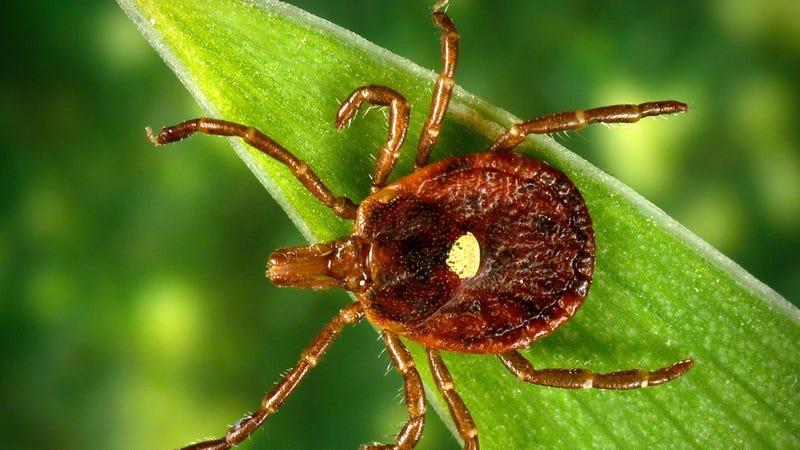

A female Lone Star tick, or Amblyomma americanum.Image: Amanda Loftis, William Nicholson, Will Reeves, Chris Paddock (CDC)
One of the strangest side-effects of a tick bite—a new allergy to red meat—could be even easier to get than previously thought. New research out this weekend suggests that bites from certain ticks can cause the allergy no matter what they’ve recently bitten. The finding could overturn a commonly held theory that ticks need to have recently gorged on the blood of other mammals before they can spread a meat allergy to humans.

The allergy is caused by an immune response to a sugar molecule called alpha-gal. Most mammals have alpha-gal in their muscles, but not humans and other primates. For some reason, the bite from certain ticks can sometimes spark a sustained hypersensitivity to things that contain alpha-gal, most notably red meat, which includes beef, pork, and even sometimes dairy.

This hypersensitivity acts almost exactly like a typical food allergy, with symptoms like hives, trouble breathing, or even a life-threatening anaphylactic shock. But it’s the only known food allergy to a sugar, rather than a protein, and its symptoms take hours to appear after exposure. Sometimes, the allergy only seems to kick in years after the initial bite.

We’ve known about alpha-gal syndrome, as it’s called, for a long time. In fact, it’s one of the major reasons why major organ transplants from non-human animals like pigs are a challenge to pull off. But it took decades after the first tickborne alpha-gal cases were documented in the late 1980s for scientists to officially trace them to tick bites. And there’s still so much we don’t understand about the condition.

One of those mysteries is why exactly ticks can cause the syndrome. The lead author of the new research, Scott Commins, an associate professor of medicine and pediatrics at the University of North Carolina School of Medicine, was one of the first doctors to report cases of red meat allergy a decade ago. One common theory he and others have had is that ticks “pick up” the alpha-gal from a previous blood meal, such as a dog, deer, or mice. Their saliva, now filled with alpha-gal, then sensitizes the person they bite.

To test this theory out, Commins and his team conducted a simple experiment. First, they took samples of human blood and filtered out their native immunoglobulin E (IgE), the antibodies that guard against certain types of foreign invaders and also cause an allergic reaction to an allergen. Then they dosed the blood with donated plasma (filled with IgE antibodies) from people with and without the syndrome. Lastly, they introduced saliva from four species of tick, the Lone Star, deer, Gulf Coast and American dog tick; the saliva samples were from ticks that had and hadn’t fed on blood containing alpha-gal.

So far, the tick most associated with red meat allergy in the U.S. has been the Lone Star tick. And not unexpectedly, saliva from this tick was able to cause an immune reaction (based on the level of a certain white blood cell called a basophil) 40 times greater than normal in blood sensitized to alpha-gal. But saliva from the deer tick, the primary vector of Lyme disease and other tickborne diseases in the U.S., also caused a reaction. Most worrying was that unfed tick saliva from both species also caused a reaction in sensitized blood.

The findings, which were presented this past weekend at the annual conference of the American Academy of Allergy, Asthma and Immunology (AAAAI), are preliminary (and not yet published in a peer-reviewed journal). But they provide evidence for another prominent theory that argues the tick itself, not its last meal, is causing the syndrome.

“These new data suggest the latter [theory] may be correct: something is in the saliva innately,” Commins told Gizmodo. “All humans make an existing response to alpha-gal and these data would be consistent with a model where tick bites simply redirect the existing immune response to shift to an allergic one.”

It’s almost certain, Commins said, that the odds of any single tick bite from a Lone Star or other tick causing the allergy are pretty low. But we don’t know how low that risk is right now (according to an earlier estimate by Commins, there might be 5,000 sufferers in the U.S. alone). And if ticks are the root cause, regardless of their diet, then the window of opportunity for an allergy-causing bite will obviously be higher.

Red meat allergy is just one of the nightmare health problems caused by ticks—problems that, in the U.S. at least, are likely to intensify as the climate warms. There were nearly 60,000 reported cases of Lyme disease in 2017, for instance, up from 22,000 in 2004. But the true annual number of Lyme cases, according to the CDC, is actually somewhere around 300,000.

Recent Video from Gizmodo VIEW MORE >

Volume 0%

00:00
01:32


World's Biggest Bee, Once Thought Extinct, Has Been Found Alive
Thursday 11:11AM

So while red meat allergy might be a rare tickborne complication, it’s one of many that are likely becoming more common. And currently, there is no treatment or cure for the syndrome (some sufferers can eventually eat meat again, but not all). That means there’s really only one way to prevent it from happening at all, according to Commins, though not every summer hiker is at risk.

“These findings really stress the importance of tick avoidance and precautions to prevent tick bites,” he said. “People in the west and northwest of the U.S. appear to have little, if any, risk. Beyond those areas, folks should be alert and diligent with tick bite precautions. So, we are most worried about the south and eastern areas of the U.S.”

