SI
SI
discoversearch

We've detected that you're using an ad content blocking browser plug-in or feature. Ads provide a critical source of revenue to the continued operation of Silicon Investor.  We ask that you disable ad blocking while on Silicon Investor in the best interests of our community.  If you are not using an ad blocker but are still receiving this message, make sure your browser's tracking protection is set to the 'standard' level.
Politics : Formerly About Advanced Micro Devices -- Ignore unavailable to you. Want to Upgrade?


To: longnshort who wrote (1093064)10/14/2018 6:05:21 PM
From: Heywood401 Recommendation

Recommended By
sylvester80

  Respond to of 1583815
 
By watering all you plants with Brawndo. It's what you crave.


To: longnshort who wrote (1093064)10/14/2018 7:46:13 PM
From: sylvester80  Respond to of 1583815
 
America LOSING under POS trump: The rich-poor gap is getting worse under Trump; America's income inequality problem is only getting worse
Rick Newman
Senior Columnist
Yahoo FinanceOctober 8, 2018
finance.yahoo.com
America's income inequality problem is only getting worse

Middle-class families are doing a little bit better under President Trump. Jobs are plentifulin many places and incomes are finally starting to rise by more than inflation.

But income inequality in the United States is getting worse, and Trump’s policies have something to do with it, according to new research from Moody’s Investors Service, the bond-rating agency. While middle-income earners got a modest tax cut from last year’s Tax Cuts and Jobs Act, higher earners got a much larger windfall. And that comes as other forces have been widening the gap between the rich and the rest.

The result could be even more political upheaval than we’ve seen during the Trump reign, beginning, perhaps, with the midterm elections next month. “Should inequality go unaddressed,” the Moody’s report asserts, “social tensions will continue to rise, leading to a more fractious political landscape that increases political risk, and with it a less predictable policy environment.”


View photos

Top earners have been seeing the biggest income gains. Source: Moody’s
More
Income inequality became a hot topic following the Great Recession, starting with the Occupy Wall Street protests that spread nationwide in 2011. Thomas Piketty’s 2013 book, “ Capital in the Twenty-First Century,” contained convincing quantitative evidence that the top 1% of earners — and above them, the 0.1% – have gained an ever-larger share of wealth in the western world during the last quarter-century.

Trump’s election in 2016 was itself an expression of frustration with stalled middle-class living standards, with Trump promising to “make America great again” for workers whose better days seemed behind them. About 40% of Trump voters were anti-elites or America-firsters, according to one detailed study, way more than enough to put him over the top.

But Trump’s policies seem more likely to widen the rich-poor gap than reduce it. Trump is trying to bring back manufacturing jobs, through tariffs on imports and other protectionist measures. But there’s no evidence yet that it’s happening, and economists are skeptical. Production may simply shift from tariffed countries, such as China, to un-tariffed ones, such as Vietnam. In the meanwhile, Trump’s tariffs threaten to raise prices on thousands of industrial and consumer products.

The tax cuts gave some relief to the middle class, and more is supposed to trickle down from the business sector as corporate tax cuts boost profits and leave more money for investing. But Moody’s doesn’t see that happening, because tax cuts were bigger for higher earners, who also benefit disproportionately from a reduction in the corporate tax rate from 35% to 21%.


View photos

As tax cuts boost stock prices, the wealthy benefit the most. Source: Moody’s
More
“The Tax Cuts and Jobs Act will contribute to the widening of the U.S.’s inequality by exacerbating income and wealth concentration,” Moody’s concludes. “Overall, the tax reform disproportionately benefits households with high incomes and very high levels of wealth.”

Income inequality is worse in the United States than in most other developed nations, for a variety of reasons. Americans pay far more for education and health care, for instance, leaving less disposable income for middle earners. That’s because the government bears a larger share of such services in Europe and other places. The cost of a 4-year college degree is about 120% of average household income in the United States, for example. In Germany, it’s just 6%, because the government subsidizes post-secondary education.

Another factor enlarging the rich-poor gap is technological change, which benefits those with the resources to stay educated and learn new things, while punishing those dependent upon a fixed skill set. While Trump wants to bring back more lower-skill assembly-line jobs, he doesn’t have a policy for drawing more workers into the technology economy, which many labor advocates say is the best way to help raise living standards.


View photos

The more you earn, the more you’ll benefit from the Trump tax cuts. Source: Moody’s
More
Republicans seem surprised by the unpopularity of their tax cuts, which were designed in part to win votes by putting more money in people’s pockets. A middle-income taxpayer will save about $780 per year from the tax cuts, on average, according to the Tax Policy Center. But the average 1-percenter will save nearly $33,000, which helps explain why roughly 46% of Americans disapprove of the tax cuts. Just 41% approve.

Moody’s cares about income inequality because it factors into the creditworthiness of U.S. government bonds, which Moody’s currently rates Aaa, its highest level. But the rating agency sees risks. “Rising inequality will exacerbate pressures on the U.S.’s fiscal strength,” the agency says. The reasons: As lower-income households fall further behind, they’ll need more government support, straining federal budgets. Research also shows that higher income inequality tends to be associated with lower economic growth, which limits prosperity and depresses government tax revenue.


View photos

Don’t worry, they’ll be fine. Source: Getty Images
More
The federal deficit was $898 billion through the first 11 months of fiscal 2018, which ended in September. The deficit could easily top $1 trillion for the year, once the final tally is in. Last year, before the Trump tax cuts, the deficit was $667 billion. Overall, the national debt is about $21.6 trillion, which is more than the entire annual output of the U.S. economy.

That’s okay, for now, but Moody’s sees interest payments on U.S. debt rising from 8% of the federal budget now to 15% in a decade, which means there will be less money for government benefits. If current trends continue, a crunch is coming, with Uncle Sam either forced to slash benefits such as Social Security and Medicare, or raise taxes on the wealthy. As fractious as the Trump years have been so far, they might seem pleasant compared with what’s coming.


To: longnshort who wrote (1093064)10/14/2018 8:21:59 PM
From: sylvester801 Recommendation

Recommended By
SeachRE

  Respond to of 1583815
 
AMERICA LOSING UNDER POS trump: No Food, No FEMA: Hurricane Michael’s Survivors Are FuriousMiles and miles of Florida are obliterated, and residents have been left to fend for themselves with little help from the government.
Ingrid Arnesen
10.13.18 3:34 PM ET
thedailybeast.com
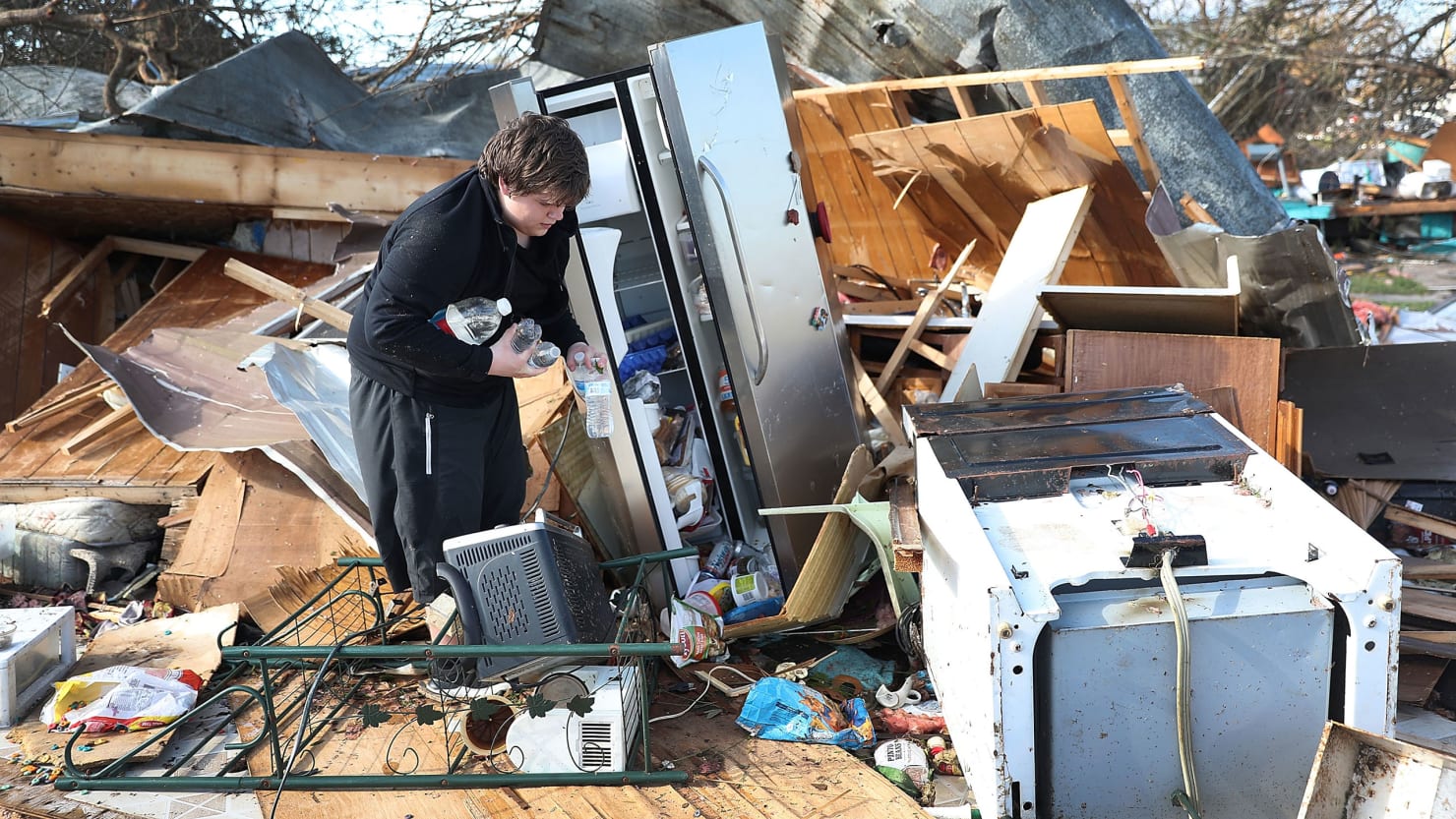
Joe Raedle/Getty

PANAMA CITY, Florida— Hurricane Michael’s sudden transformation into an unprecedented storm haunts everyone on the Florida Panhandle who lived through it. “It was raw power,” says Panama City resident Walter McAlster, “you felt you were in it, not outside and didn’t know if you would live through it. You knew that everything was going to change the landscape forever.”

And it did, in the space of three hours.

The destruction is everywhere, at every corner, as far as the eye can see. Mexico Beach, where the hurricane’s eyewall slammed into Florida with 140 mph winds, is flattened. Panama City, gem of the Emerald Coast, looks like a bomb has been dropped on it. It is now a desolate landscape of toppled power poles, transformers, electrical lines, severed trees, and metal roofings, twisted and tangled into a sea of debris. Nearly all homes, businesses, stores, banks, schools are severely damaged or destroyed, skeletal remains with blown out windows or crushed facades. To residents, it is unrecognizable.
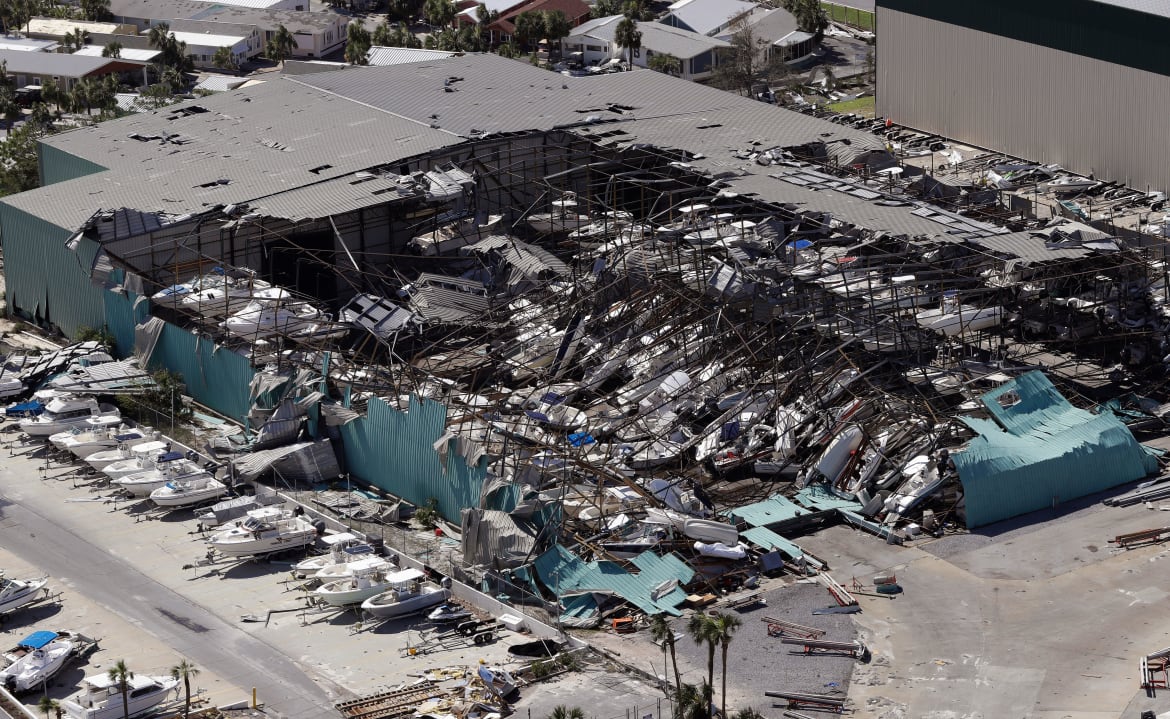

A roof over a boat storage building that collapsed following Hurricane Michael on Oct. 11, 2018, in Panama City Beach, Florida.
Chris O'Meara-Pool/Getty

There is so much rubble that the official death toll of 17 as of Sunday afternoon is expected to rise as search-and-rescue teams inspect thousands of buildings, looking for the missing. A team from the Miami Fire Department found a body in a Mexico Beach home on Friday. About 1,700 workers have checked 27,000 homes, Gov. Rick Scott said after meeting with emergency responders on Saturday evening.

The debris has rendered most roads and streets virtually impassible for evacuees and first responders. Electric poles bent at 90 degrees and power lines strewn like spaghetti cover most lanes. Nearly all transformers were destroyed. Vehicles dodge ruined trees, split like toothpicks or uprooted by the power of the storm.


View of the damaged caused by Hurricane Michael when it hit Mexico Beach, Florida, on Oct. 10, 2018.
HECTOR RETAMAL/AFP/Getty

Driving across the Apalachicola National Forest reserve that borders the coast was like touring a cemetery: endless rows of decapitated trees, leaning perfectly aligned like fallen prisoners who had been executed. Electrical poles 30 feet high have been split in half, their power lines strewn across the macadam. It went on like this for 60 miles.

STORM HUNTERS
The Daredevil Scientists Who Fly Into Hurricanes

Erin Biba


STORM GODS
Why Are Hurricanes So Hard to Predict?

Erin Biba


Since the storm, there’s been no electricity and no water in Panama City. Emergency disaster relief was yet to be seen in strength as of Saturday morning and residents were growing more frustrated and desperate.

RELATED IN U.S. NEWS


Hurricane of the Century Strikes Florida Panhandle

Hurricane Michael Death Toll Rises, Child Becomes 2nd Victim

Sunrise Shows Destruction at Hurricane Michael’s Ground Zero
Chantelle Goolspy sat in her car making phone calls to get help. Goolspy and many of her neighbors live in a public housing area in downtown Panama City that was badly devastated.

“We’re in need of food, water, anything, we’re not getting any help. The whole street needs help,” Goolspy told the Red Cross. “FEMA referred me to you. That person told me to call 211.”


Chantelle Goolspy and her son, Antoine.
Ingrid Arnesen/The Daily Beast

Down the street, Barbara Sanders stood outside her daughter’s unit, where she had come to stay during the hurricane.

“We’re not getting any help,” she said. “We need food. It’s just crazy.”

Sanders said that not a single relief agency had come by to check on them. Only the police had come and it was to tell everyone to leave. “They told us there’s nothing they can do and it’s gonna take a long time to rebuild,” Sanders said.

Just then a pick-up truck arrived with water. It was the first help this neighborhood had received and it turned out to be two brothers—Chris and Brendon Hill, from Louisiana—who had decided to come and help.
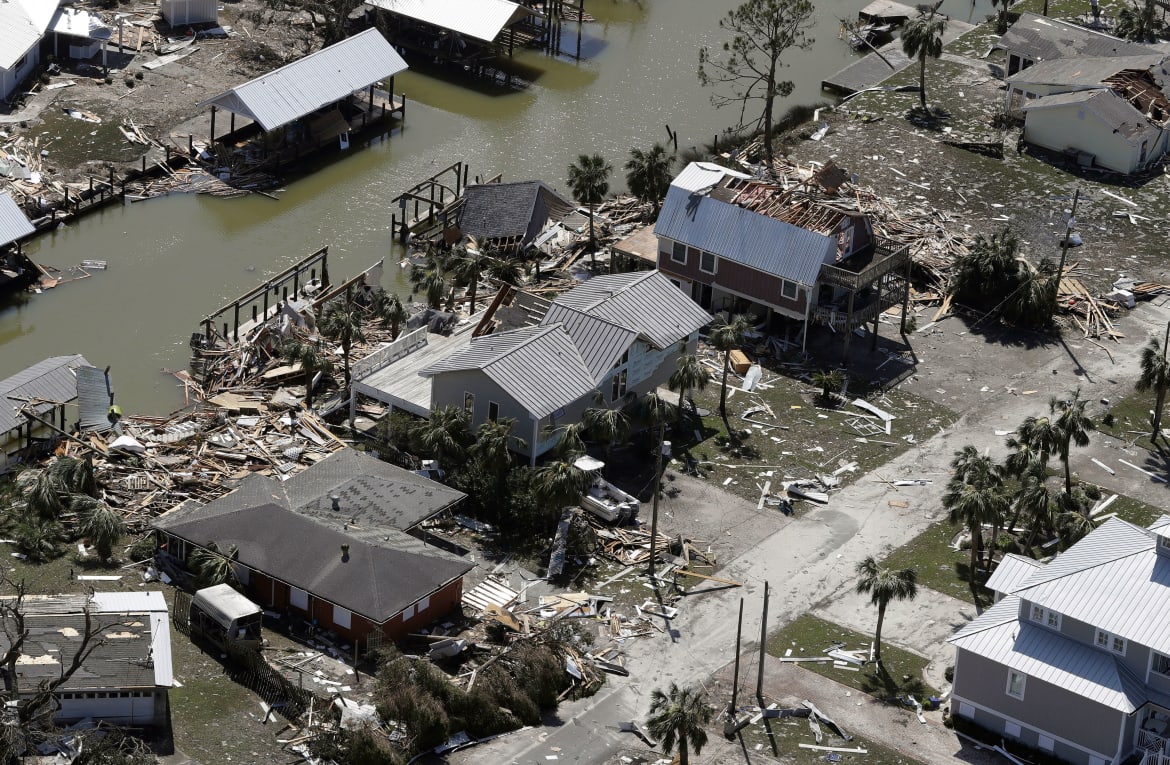

Homes destroyed by Hurricane Michael are shown in this aerial photo on Oct. 11, 2018, in Mexico Beach, Florida.
Chris O'Meara-Pool/Getty

In neighboring Panama City Beach, city manager Mario Gisbert wasn’t going to wait for federal emergency assistance. Volunteers from Florida and other states brought water, set up a food kitchen for police, and prepared 1,500 meals for locals. A local church is preparing to distribute meals at 15 stations in Panama City.

“The American people are helping us,” Gisbert said. “FEMA will eventually come into the game and get the accolades in six months.”

Sen. Marco Rubio of Florida told CNN on Sunday morning he had not seen any local or state requests of FEMA unfulfilled. A FEMA representative told a local TV station the agency’s employees in the Panhandle are assessing damage and residents should immediately apply for disaster relief if they aren’t eligible for insurance claims.

Federal, state, and local officials were hunkered down at the Emergency Operations Center (EOC) set up at Gulf Coast State College in Lynn Haven, trying to get urgently needed food and water to residents. The EOC turned down The Daily Beast’s request to speak with the EOC chief, Mark Bowen, and city officials. Spokesperson Catie Feenie said the focus was on “coordinating some patrols who are in life-saving mode” for the 60,000 residents who had not evacuated before the hurricane, like Goolspy and Sanders.

“We’re telling everybody to save [food and water] because it will be days before we’re ready to do that,” Feenie said.

At a press conference in Panama City on Saturday evening, Gov. Scott stressed the same point.

“Everybody just needs to help each other right now,” he said.

About 4,000 members of the Florida national guard have been activated and 2,000 law enforcement personnel have been sent to the Panhandle. Meanwhile, some 17,000 utility workers are busy restoring power to 245,000 Florida homes and businesses without electricity.


Boats in dock were reduced to rubble when Hurricane Michael passed through Panama City, Florida, on Oct. 10, 2018.
Joe Raedle/Getty

Officials said schools have been closed indefinitely, but word hadn’t gotten out. Goolspy’s 13-year son, Antoine, was hopeful he could return soon. “I don’t want to repeat my seventh grade because without education you can’t get ahead,” he said, adding he couldn’t wait to take a shower, too.

Word about not getting water or meals had not yet reached rural communities inundated by the hurricane’s rains and storm surge. In Gadsden County, outside Tallahassee, where the storm killed four people, county commissioner Anthony Viegbesie said he had not seen a single relief agency.

“This is a community that lives on agriculture. Without electricity, the wells don’t work,” he said. “We survive primitively.”


To: longnshort who wrote (1093064)10/14/2018 9:54:15 PM
From: Heywood401 Recommendation

Recommended By
sylvester80

  Respond to of 1583815
 
Looks like neither tRump nor Congress will be able to do anything about it, even if we wanted them to.

We have all just been served notice that oil is our downfall, and Saudi Arabia is our master.

Now we have to make up some kind of tRumpian/PeeWee Herman excuse to forget about the murder.

In a strongly worded op-ed published on Sunday, Turki Aldakhil, general manager of the Saudi-owned Al-Arabiya news channel, warned that if the US imposed sanctions on Riyadh "it will stab its own economy to death," cause oil prices to reach as high as $200 a barrel, lead Riyadh to permit a Russian military base in the city of Tabuk and drive the Middle East into the arms of Iran.

"There are simple procedures, that are part of over 30 others, that Riyadh will implement directly, without flinching an eye if sanctions are imposed," he said.

"If US sanctions are imposed on Saudi Arabia, we will be facing an economic disaster that would rock the entire world," he added.

He warned that any sanctions would lead to the kingdom's "failure to commit" to specific levels of oil production and "if the price of oil reaching $80 angered President tRump, no one should rule out the price jumping to $100, or $200, or even double that figure."


To: longnshort who wrote (1093064)10/14/2018 10:42:23 PM
From: Brumar891 Recommendation

Recommended By
sylvester80

  Read Replies (1) | Respond to of 1583815
 
Provoking needless conflicts with our allies while bowing down to our enemies. Bankrupting the nation's finances as he did with his inherited wealth.


To: longnshort who wrote (1093064)10/15/2018 2:56:16 AM
From: FJB4 Recommendations

Recommended By
D.Austin
locogringo
longnshort
majaman1978

  Respond to of 1583815
 
New Fed Bill Seeks to Jail Antifa for 15 years

If passed, Bill HR 6054 would punish anyone wearing a mask or disguise who “injures, oppresses, threatens, or intimidates” someone else exercising a right guaranteed under the Constitution.
The title of the bill — “Unmasking Antifa Act of 2018” — makes it clear that Antifa activists are its intended target, but the bill’s text never explicitly mentions them.


abundator.com

