SI
SI
discoversearch

We've detected that you're using an ad content blocking browser plug-in or feature. Ads provide a critical source of revenue to the continued operation of Silicon Investor.  We ask that you disable ad blocking while on Silicon Investor in the best interests of our community.  If you are not using an ad blocker but are still receiving this message, make sure your browser's tracking protection is set to the 'standard' level.
Strategies & Market Trends : 2026 TeoTwawKi ... 2032 Darkest Interregnum -- Ignore unavailable to you. Want to Upgrade?


To: Maurice Winn who wrote (148152)4/29/2019 5:03:27 PM
From: TobagoJack1 Recommendation

Recommended By
ggersh

  Read Replies (1) | Respond to of 219173
 
re <<The 737 Max 8 non problem is a mass panic which will soon abate.>>

... to early to say, because hardly ever there be only one cockroach

and roach killers

businessinsider.com

Airlines say the grounding of the 737 Max will cost them hundreds of millions of dollars, and they're ready to pursue Boeing for the money
Sinéad Baker
US and European airlines say the grounding of the 737 Max has already cost them hundreds of millions of dollars, and they're ready to take on Boeing to get compensation.

Southwest Airlines, which operates the world's largest fleet of 737 Max planes, has said it lost $200 million in the first quarter from cancellations caused by the grounding of the plane and the government shutdown.

American Airlines, which has canceled more than 15,000 flights into August, estimates that the grounding will cost it $350 million, the BBC reported. American has 24 Boeing 737 Max 8s in its fleet, compared with Southwest's 34.

American Airlines Boeing 737 Max planes.Joe Raedle/Getty Images Norwegian estimated that the "uncertainty" over the plane and when it would return to the sky would cost it up to 500 million Norwegian kroner, or $58 million. Norwegian was operating 18 737 Max planes before they were grounded, and it had ordered a total of 110.

Read more: These 12 airlines have the most Boeing 737 Max aircraft in their fleet

Germany's Tui Airways told the Financial Times that the grounding of the plane would cost it about 3 million euros, or $3.4 million, a week. The airline, which operates 15 737 Max planes, also said in March that it could also take a hit of 300 million euros if the planes were still grounded by September.

Ethiopian police officers at the crash site of Ethiopian Airlines' Flight 302 in March.REUTERS/Baz Ratner/File Photo The 737 Max has been grounded all over the world since a fatal Ethiopian Airlines crash in March — just five months after a fatal Lion Air crash also involving in the plane. Almost 350 people were killed in the crashes.

The plane will stay grounded until the US Federal Aviation Administration and its equivalent regulators around the world approve Boeing's updated software systems for the plane.

The crashes and subsequent grounding have already had a major financial impact on Boeing. The company has said that it already lost $1 billion over the 737 Max crisis and that it can't estimate how much worse the effects on its profits might get this year.

American civil aviation and Boeing investigators searched the Ethiopian Airlines crash site.REUTERS/Baz Ratner/File Photo Boeing also faces numerous lawsuits and questions into its certification processes as well as federal investigations and reports of poor factory processes.

Read more: Boeing's nightmare year just got worse, as profits plunge in the wake of 2 horrific 737 Max crashes that left the plane grounded worldwide

Boeing has promised to "earn and re-earn" the trust of the flying public and has vowed to make the plane "one of the safest airplanes ever to fly" when it is certified to fly again.

Airlines are looking for compensation from Boeing A person briefed on the compensation process told the Financial Times that Boeing probably wouldn't give airlines "a pile of cash" to make up for the effects of the plane's grounding.

The person said that in the past Boeing had offered compensation in forms like discounts on future orders or agreeing to defer orders.

Grounded Boeing 737 Max planes.REUTERS/Lindsey Wasson Gerald Khoo, a transport analyst at the investment bank Liberum, told the FT that different airlines would want different forms of compensation and said Boeing would want "to keep things as confidential as possible."

Read more: Boeing CEO vows that the fixed 737 Max will be 'one of the safest airplanes ever to fly' after the jet suffered 2 fatal crashes in 5 months

Bjorn Kjos, Norwegian's chief executive, said the airline had "some productive meetings" with Boeing. He said they discussed "how we can maneuver through the difficulties the Max situation is causing Norwegian."

Norwegian told Reuters in the days after the Ethiopian Airlines crash that it would seek compensation from Boeing, saying in an emailed statement: "We expect Boeing to take this bill."

Gary Kelly, Southwest's chief executive, said the airline would talk to Boeing "privately" about "business arrangements or our contract arrangements," according to the FT.

Doug Parker, the chief executive of American Airlines, told analysts on Friday that he hadn't yet talked to Boeing about compensation as he was focused on getting "the airplane back and recertified," the FT reported.


To: Maurice Winn who wrote (148152)4/29/2019 5:04:11 PM
From: TobagoJack  Respond to of 219173
 
hnm

cbsnews.com

At least 4 potential whistleblower calls made to FAA about Boeing 737 Max
April 29, 2019 / 4:15 AM
By Kris Van Cleave

The Federal Aviation Administration has received at least four calls from potential Boeing employee whistleblowers about issues with the company's new 737 Max jetliner, CBS News has confirmed.

The calls began coming in within hours of Ethiopian investigators releasing a preliminary report on the second of those crashes, that of Ethiopian Airlines Flight 302 last month.

A source familiar with them confirms the April 5 calls were from current and former Boeing employees alleging possible issues related to the angle of attack (AOA) sensor and the MCAS anti-stall system that relies on data from the sensor.

Both have been linked to the two deadly 737Max crashes that killed nearly 350 people and lead to the grounding of the aircraft worldwide.

One of the claims deals with damage to the wiring of an AOA sensor from a foreign object.

Boeing said it could not verify the report but in a statement tolds CBS News, "Safety and quality are absolutely at the core of Boeing's values. Speaking up is a cornerstone of that safety culture and we look into all issues that are raised."

A Boeing source was skeptical of that particular whistleblower allegation, saying that as far as he knows, there have been "no reported issues...at all" with foreign object debris damage to AOA sensors or their wiring.

But, as CBS News confirmed last week, Boeing has had issues with foreign object debris (FOD) being found in the company's 787 Dreamliner assembled at its South Carolina plant, including metal shavings discovered by the FAA in aircraft Boeing certified as debris-free as recently as 2017.

Twice this year, the U.S. Air Force stopped accepting delivery of the 767-based KC-46 aerial refueler because FOD was found inside the newly delivered aircraft. The KC-46 is built in Everett, Washington.

Another of the potential whistleblower calls dealt with concerns over the shutoff switches for MCAS.

The four calls were made to call came in through a special hotline setup by the FAA for employees or the public to report problems. They are being evaluated by FAA investigators as part of ongoing probes into the 737 Max and its certification.

If true, it's possible the allegations could lead to additional investigations.

The hotline submissions were first reported by CNN and confirmed to CBS News.

Earlier this month, the Senate Commerce Committee launched an investigation into the FAA certification process, citing whistleblower claims of improperly trained FAA inspectors working on the Max.

House Transportation and Infastructure Committee investigators have reportedly been speaking with potential whistleblowers. The committee has not responded to a CBS News request for comment.

It's unclear if any of these whistleblowers overlap.

Boeing's CEO was expected to attend the company's annual shareholder meeting Monday and participate in his first media availability since the crash of Ethiopian Airlines crash. He was expected to take reporters' questions.

First published on April 29, 2019 / 4:15 AM

© 2019 CBS Interactive Inc. All Rights Reserved.

Kris Van Cleave

Kris Van Cleave is the transportation correspondent for CBS News.


To: Maurice Winn who wrote (148152)4/29/2019 5:07:02 PM
From: TobagoJack  Respond to of 219173
 
hmmn

thenational.ae

Flydubai turns to Airbus as fate of Boeing 737 Max remains uncertain
Emirates and Flydubai chairman Sheikh Ahmed bin Saeed Al Maktoum speaks to reporters at the Arabian Travel Market in Dubai. Reuters Flydubai, the second largest customer of the now-grounded Boeing 737 Max jets, is in talks with Airbus for an order of the competing A320 Neo narrow-body model in the absence of a timeframe for the return of the troubled Maxs to the skies.

The low-cost carrier is seeking compensation from Boeing for its grounded 14 Boeing 737 Maxs and believes the US planemaker’s communication about fixes on the jet can be improved, Sheikh Ahmed bin Saeed Al Maktoum, the carrier’s chairman, said at the Arabian Travel Market in Dubai on Monday. Flydubai, which operates an all-Boeing 737 fleet, has ordered 250 of the re-engined narrowbody model.

“That gave me an option to talk to Airbus to see what exactly will happen because you have to understand until today we don’t have a definite date when this aircraft will be flying,” Sheikh Ahmed told reporters. “I cannot just not do anything about it.”

Flydubai joins carriers such as Norwegian Air in demanding compensation from Boeing, who is facing mounting costs and a crisis of confidence in its Max jets after the model was involved in two deadly crashes in Ethiopia and Indonesia within a span of five months. Flydubai grounded its fleet of 14 Maxs following directives from the UAE aviation regulator in March. The narrowbody aircraft is the workhorse of airlines, especially low-cost carriers.

Sheikh Ahmed declined to say when Flydubai would decide if it will pursue a replacement order nor would he disclose the amount of compensation that Flydubai would seek.

“I have to ask, it’s my right,” he said. “I didn’t ground those 14 aircraft because I wanted to do it. Even if I wanted to fly it I won’t be able to because nobody will allow it over their airspace.”

The grounding came at a cost for Flydubai, causing “a disturbance and a number of shrinking of routes”, he said.

The airline wants to leave the option open to modify its Max order to A320 Neos in order to forge ahead with its growth plans, he said. A decision will depend on when the aircraft will be fit to fly and the size of the compensation.

“We will act within the contract we have today,” he said.

“Flydubai has been and continues to be a valued customer, and we are sorry for the disruption this situation has caused them. We are focused on earning their trust and supporting all of our customers around the world in every way possible to ensure complete confidence in the 737 Max and a safe return to commercial flight,” a Boeing spokeswoman said in an emailed statement.

Several customers of the Max are reconsidering their orders amid escalating concerns of the jet’s safety. Saudi Arabia’s low-cost airline Flyadeal will decide “within weeks” if it will proceed with its existing order of 30 Max jets, its chief executive Con Korfiatis told The National on Sunday.

Communication with Boeing “could be better” as Flydubai wants know more about the Max’s system programming, pilot training, when the jet will resume service and measures introduced to fix the jet, Sheikh Ahmed said.

“There’s still areas that were not answered yet, I don’t want really the delay to continue,” he said.

Boeing is working on a software upgrade to fix the 737 Max jet and new training for pilots that must be approved by regulators before the aircraft is re-certified to resume flying.

The 737 range has been in operation since 1967 and is Boeing's most successful jet commercially. The 737 Max 8 is one of the smaller jets in Boeing's Max family of re-engined narrow-body jets.

Updated: April 29, 2019 09:43 PM


To: Maurice Winn who wrote (148152)4/29/2019 5:10:40 PM
From: TobagoJack  Respond to of 219173
 
hmmmnnnn

wsj.com

Boeing’s 737 MAX Is Too Big to FailProduction cuts at Boeing will likely hit GDP growth this quarter, showcasing its economic heft even as complaints mount
Jon SindreuUpdated April 29, 2019 1:53 p.m. ET

On Monday, Boeing Chief Executive Dennis Muilenburg faced tough questions from shareholders about the crisis involving the grounded 737 MAX plane. It is becoming clear that the company was opaque with regulators and airlines in explanations of the jet’s safety features, and there are concerns that heightened scrutiny around certification will push up costs.

Yet evidence of the plane’s importance to the U.S. economy may discourage authorities from punishing the company more than is strictly necessary.

On Thursday, official data showed a drop in March aircraft shipments. Some economists see this detail of an otherwise encouraging durable goods report as the first sign that the grounding of Boeing’s 737 MAX jet is having a small—but visible—macroeconomic impact.

Newsletter Sign-up

The plane has been parked since March when a second deadly crash was linked to its stall-prevention system. Deliveries of the 737 MAX were then stopped and production subsequently cut by about 20%. Boeing is working on getting a fix approved by regulators, but several airlines have said they won’t operate it until at least August.

The 737 MAX has accounted for almost half of Boeing’s orders over the past few years, providing a significant boost to U.S. exports. Aircraft sales to the rest of the world are worth more than $50 billion a year. And as Paulson Institute researcher Neil Thomas points out, Boeing’s commercial aircraft business has been a front-line ambassador of U.S. economic interests abroad, particularly in China.

Airlines, too, are dependent on the jet. Most can’t really switch from the 737 MAX to a competing jet—like Airbus’ A320—because they rely on many other Boeing products.

Macro ImpactChange in U.S. GDP growth forecasts as a result of the Boeing 737 MAX issueSource: Wells Fargo Securities*Undelivered jets are accumulated as inventories

.pct. pts.Inventory*ExportsEquipmentSecond quarterThird quarter-0.75-0.50-0.250.000.250.500.751.00

Friday’s first-quarter gross domestic product data wasn’t affected by the crisis, probably because the company only reduced output in April. In the second quarter, however, the damage to equipment spending and exports—not wholly offset by inventory buildup of undelivered planes—is likely to reduce U.S. economic growth by about a fifth of a percentage point, according to analysts both at Wells Fargo Securities and Goldman Sachs .

It’s a small impact, which is likely to be partially reversed in the third quarter if Boeing ramps up production again. Still, not every company can boast about showing up in GDP data.

Investors can expect more unnerving Boeing headlines. The company urgently needs to fix its relationship with airlines and regulators to secure its multiyear backlog of jet orders. On Monday, Mr. Muilenburg appeared to deviate from his recent conciliatory tone and outright rejected criticism of how Boeing designed the faulty flight-control system. There are also concerns that heightened scrutiny around certification will push up costs—for starters, it may affect programs such as the 777X and the project for a new midsize airplane.

Yet investors can take some comfort from the company’s unusual degree of market and political power. Airlines and government officials have every reason to find a fix too. The Boeing 737 Max is simply too big to fail.

Write to Jon Sindreu at jon.sindreu@wsj.com


To: Maurice Winn who wrote (148152)4/29/2019 5:45:11 PM
From: TobagoJack  Respond to of 219173
 
in the mean time, on another front, for whatever reasons, team canada chooses to puzzle over why of the obvious, about food, as the Aussies do about coal, and kiwis about tourists and dairy and whatever

scmp.com

Canadian soybeans, peas and pork face new delays at China’s ports

Are increasing diplomatic tensions behind tighter inspections and cancelled orders?Farmers switch to other crops in bid to beat barriers

A growing list of Canadian farm exports is facing obstacles at Chinese ports, raising concerns that a bitter diplomatic dispute between the two countries may be to blame.

Sellers of Canadian soybeans and peas say they are experiencing unusual obstacles and Ottawa also warned last week that China was holding up pork shipments over paperwork issues.

China has already blocked Canadian canola from Richardson International and Viterra, two of Canada’s biggest farm exporters, saying that shipments had pests. Other China-bound canola cargoes have been cancelled, forcing exporters to re-sell elsewhere at discount.

Canadian politicians have said the concerns are baseless, and noted that China detained two Canadians after Canada arrested an executive of Chinese telecom company Huawei Technologies Co Ltd in December at the United States’ request. China has used non-tariff barriers before during diplomatic tensions, most recently against Australian coal.


China has already blocked canola from two of Canada’s biggest farm exporters, while other China-bound canola cargoes have been cancelled. Photo: AP
Share:

Increasing tensions with China, a top buyer for most Canadian farm commodities, have forced farmers to plant other crops, such as wheat, that they hope will not face barriers.

China bought US$2.01 billion worth of Canada’s canola and $381 million worth of its pork last year.

SUBSCRIBE TO US CHINA TRADE WAR
Get updates direct to your inbox

SUBMIT

By registering for these newsletters you agree to our T&C and Privacy Policy

The spread of African swine fever through China’s pig herd has reduced China’s need for canola and soybeans to process into feed ingredients but, since January, port soybean inspections that routinely take a few days now require three weeks, causing Chinese buyers to avoid Canadian products, according to Dwight Gerling, president of Canadian exporter DG Global.

“They’re basically sending out the signal, ‘You buy from Canada, we’re going to make your life difficult,’” Gerling said.

Earlier this year, a Chinese buyer told Gerling that a government inspector had found ants in 34 containers (roughly 680 tonnes) of the Canadian soybeans he shipped there.

Such a finding would be rare, since the soybeans were stored in concrete silos in Canada and shipped in sealed containers in late autumn, said Gerling, who concluded the buyer was trying to avoid the new hassles of buying from Canada.

“It’s just them playing games. (Beijing) is just going to keep putting the screws to us,” he said.

China’s General Administration of Customs did not reply to a request for comment. Government officials have said their canola ban is a regular inspection and quarantine measure to protect China’s farm production and ecological safety.

In a statement, the Canadian agriculture department said it could not confirm that China had imposed stricter measures against farm goods other than canola. Ottawa said this month it hoped to send a delegation to China to discuss the issue.

Gerling’s company has halted soybean sales to China and found other buyers in Southeast Asia.

An official at a state-owned crusher in southern China confirmed that port inspections had tightened on Canadian soybean cargoes.

“We don’t have Canadian cargoes coming in as we can’t blatantly commit such wrongdoing when the atmosphere is so intense,” the official said on condition of anonymity.
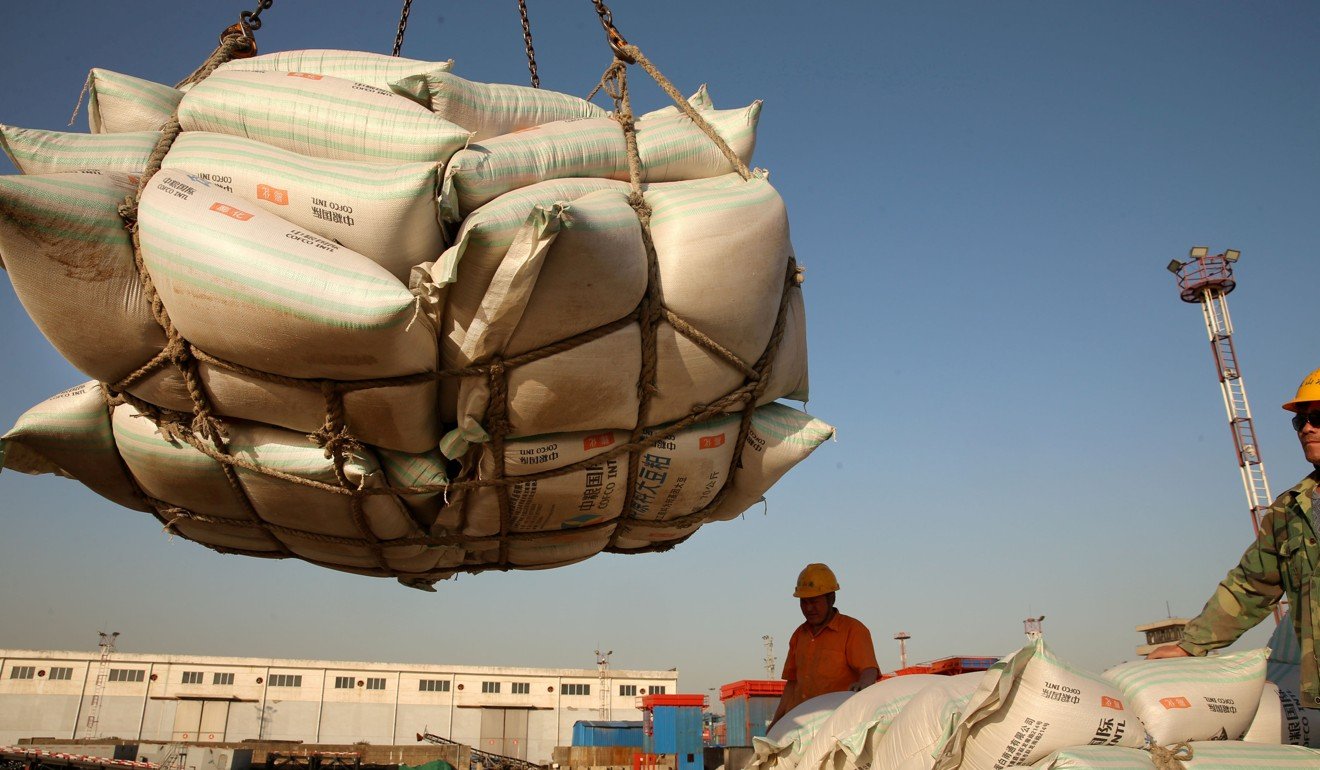

Soybeans from Canada are facing delays when they reach Chinese ports, according to traders. Photo: Reuters
Share:

Another official in northern China said his crushing plant scrapped plans to buy Canadian soybeans when the trade dispute flared.

Canada shipped $1.2 billion worth of soybeans to China in 2018, up sharply year over year, according to the Soy Canada industry group, as China and the United States fought a trade war. But sales have now slowed to a trickle.

Canola has taken the brunt of China’s measures.

Chinese buyers have cancelled at least 10 cargoes of Canadian canola in the past few weeks, according to a Singapore-based trader at a company that runs crushing facilities in China. Some cargoes, around 60,000 tonnes each, have been resold to buyers in Pakistan and Bangladesh at deep discounts, the trader said.

“It is devastating for exporters,” the trader said.


Canada gets tough with China on canola ban, demands contamination proof


Intercontinental Exchange (ICE) canola futures fell to a more than four-year low on Tuesday as supplies piled up. Growers intend to sow the smallest crop in three years.

On Monday last week, Ottawa said some Canadian pork exporters used an outdated form to certify shipments to China, causing delays. Such issues arise regularly in commodity trading, but rarely with damaging consequences, said Canadian Pork Council spokesman Gary Stordy.

Canadian pea exporters fear they could be next. China imported C$533 million worth of Canadian peas in 2018, according to industry group Pulse Canada, but the pace has slowed.

Chinese authorities have begun scrutinising import documents and product samples more closely, according to Taimy Cruz, director of logistics at Toronto-based BroadGrain Commodities.

China Inspection and Quarantine Authorities now tests samples of each pea shipment before authorising it for import. They also restrict in some cases the number of soybean shipments allowed under one licence, slowing the flow, she said.

Similarly, import authorities now require soybean shipments that change vessels in Singapore and Shanghai – a routine practice called trans-shipping – to reach their destination on a single ship, she said.

While BroadGrain has not seen its cargoes turned back, it has reduced sales to China to avoid risk, concentrating on the Indian subcontinent and South America, she said.

“We have to be extra careful,” Cruz said. “They are very strict now.”

