would say canada <<needs to go head to head>>
because team china is teeing up war of attrition, as good as officially
this expression of transparent intent is very good for team USA, so that the team does not preclude from calculation a total and absolute rare earth export ban acupuncturing nasdaq
this is exactly how the big Boyz wearing big pants should play, head to head and toe to toe, except now we have the situation where one side is already bare foot and rolled up pant legs, which you understandably mistook to be boxer shorts, and the other team is still lounging in loafers and docksiders
nearly time to tee-up muddy rare earth
Intel and Nvidia should be calling Washington soon, and am suggesting that the politicians best prep the way to move away from the pulpit, come off of the stage, and exit door left. Just a guess.
globaltimes.cn
China's trade friction with Canada intensifies
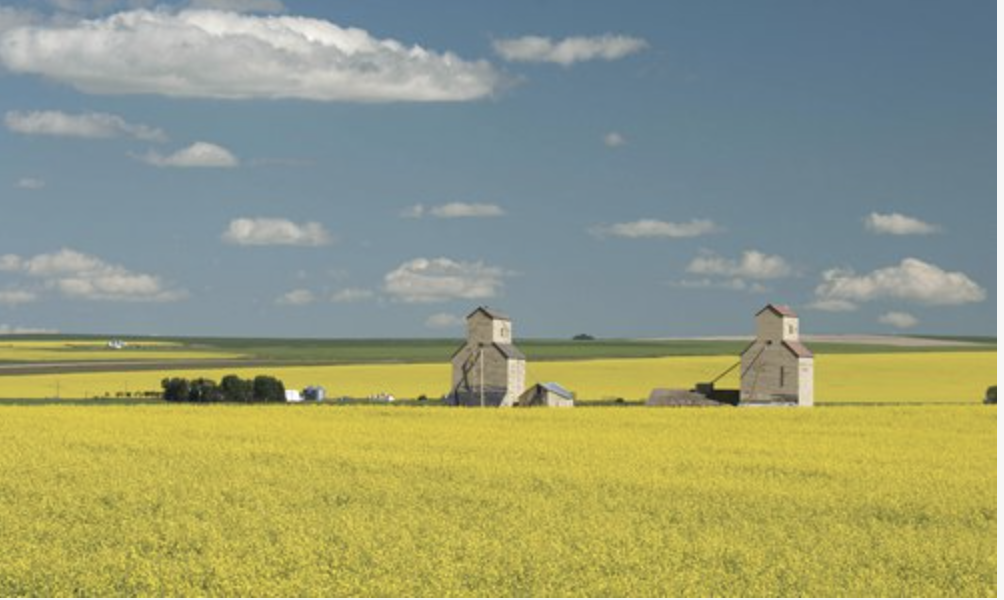
Fields of canola in Alberta, Canada File photo: IG
Canada probably needs to prepare for a lengthy war of attrition during its spat with China over agricultural exports as the legal wrangle concerning a top executive at Chinese telecommunications giant Huawei may drag on for years, experts said on Sunday.
Chinese industry experts said that as the friction has reportedly expanded in scope to include more goods, it could also grow in duration.
The Canadian government rolled out financial assistance last week to canola farmers affected by a spat with China over the quality of their exports, against the backdrop of a pending extradition hearing concerning Huawei CFO Meng Wanzhou.
Meng, the daughter of Huawei founder Ren Zhengfei, was arrested in December 2018 in Canada at the request of the US.
Reuters reported last week that after canola, which is Canada's largest agricultural export to China, other items including soybeans, peas and pork are hitting obstacles in entering the Chinese market over compliance issues.
Canadian canola farmers were hit hard when Chinese authorities suspended the licenses of two major Canadian canola seed exporters, citing non-compliance with China's health requirements and cargoes bound for China were forced to be resold to other markets at discount.
Canadian Agriculture Minister Marie-Claude Bibeau announced last week an expanded aid program that would offer all farmers as much as C$1 million ($745,000), up from the current C$400,000, for 2019 as interest-free loans.
The move has some similarity with actions taken by the Trump administration in the US, which offered subsidies to soybean farmers hit by a shift of Chinese orders.
The Canadian government said in a statement posted on its website that it was "prepared to respond to support producers of other commodities should further trade actions occur".
Lengthy, thorny
However, Chinese experts warned that the Canadian side may need to prepare for the long term in a war of attrition, as Meng's legal case could stretch on for years.
Meng filed a civil lawsuit in Canada in March. There was a precedent to her suit. An Indian financier and trader named Rakesh Saxena engaged in an extradition lawsuit in Canada for 13 years.
Jiao Shanwei, editor-in-chief of cngrain.com, a website specializing in grain news, said Sino-Canadian relations have deteriorated badly over Meng's arrest and a fruitful trade relationship nurtured over the years with China centered on canola may be gone forever.
"Even after the Meng case is resolved, things may not return to the past," Jiao said. "There is no way that other markets can absorb the vacuum left by China, and farmers will probably need to grow other crops for a change."
Shi Hengyu, chief edible oil analyst with Shandong Province-based Luzheng Futures Co, told the Global Times on Sunday that friction over Canadian canola will persist for the foreseeable future, and the key would be Meng's freedom.
"Traders are pretty divergent in their views of the future of Canadian canola imports and the majority of traders are pessimistic," Shi said.
"If China stops buying, Canada has to sell its canola elsewhere. This process can be really hard," Shi noted.
China bought C$2.7 billion worth of Canada's canola and C$514 million worth of its pork last year.
In the same period, Canadian soybean exports to China saw a sharp increase of 80 percent to $1.7 billion, as Chinese companies stopped buying soybeans from the US due to the tariff war.
Tian Guangqiang, assistant research fellow with the National Institute of International Strategy at the Chinese Academy of Social Sciences, said unless Canada rectifies its policy toward China to bring it back on a normal track, the impact of the trade dispute on Canada will be a long-term one.
The scope of the friction could expand, too, to include more items of Canada's other exports.
"Canadian agricultural exports to China are replaceable when it comes to China. Canada has more at stake," Tian told the Global Times.
China accounts for about 40 percent of Canada's canola seed, oil and meal exports, according to the Canola Council.
Newspaper headline: Trade friction with Canada intensifies |



