SI
SI
discoversearch

We've detected that you're using an ad content blocking browser plug-in or feature. Ads provide a critical source of revenue to the continued operation of Silicon Investor.  We ask that you disable ad blocking while on Silicon Investor in the best interests of our community.  If you are not using an ad blocker but are still receiving this message, make sure your browser's tracking protection is set to the 'standard' level.
Strategies & Market Trends : 2026 TeoTwawKi ... 2032 Darkest Interregnum -- Ignore unavailable to you. Want to Upgrade?


To: Maurice Winn who wrote (148305)5/3/2019 3:48:23 PM
From: twmoore  Read Replies (1) | Respond to of 218673
 
Can't determine whether this is a joke or not.
The Arctic Ocean is warming up, icebergs are growing scarcer and in some places
the seals are finding the water too hot according to a report to the Commerce
Department yesterday frontier the Consulate at Bergen, Norway.

Reports from fishermen, seal hunters and explorers all point to a radical change
in climate conditions and hitherto unheard of temperatures in the Arctic zone.

Exploration expeditions report that scarcely any ice has been met as far north
as 81 degrees 29 minutes.

Soundings to a depth of 3,100 meters showed the gulf stream still very warm.

Great masses of ice have been replaced by moraines of earth and stones, the
report continued, while at many points well known glaciers have entirely
disappeared.

Very few seals and no white fish are found in the eastern Arctic, while vast
shoals of herring and smelts which have never before ventured so far north, are
being encountered in the old seal fishing grounds.

Within a few years it is predicted that due to the ice melt the sea will rise
and make most coast cities uninhabitable.

I must apologize. I neglected to mention that this report was from November 2 ,
1922, as reported by the AP and published in The Washington Post 96 years ago.
This must have been caused by the Model T Ford's emissions or possibly from
horse and cattle farts.


To: Maurice Winn who wrote (148305)5/3/2019 5:15:21 PM
From: TobagoJack  Read Replies (1) | Respond to of 218673
 
re <<Huawei>>

now that events are beginning to turn south, deep-state opinion begins to shift the 'concern' to trump, readying his to be the fall guy

whereas trump himself noted America should compete by competing, as opposed to making up rules

bloomberg.com

Huawei Phone Buyers Don’t Share Trump’s Concerns

Americans should be asking why such impressive handsets are essentially excluded from the U.S. market.
Leonid Bershidsky4 May 2019, 02:52 GMT+8
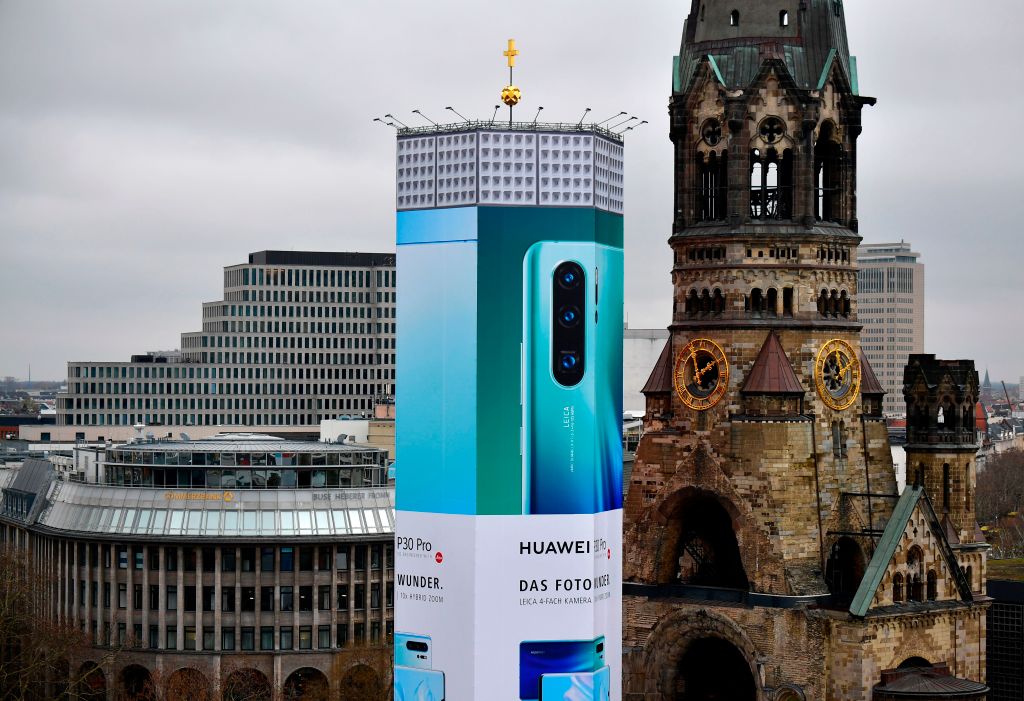


Towering over the competition.
Photographer: Tobias Schwarz/AFP/Getty Images
LISTEN TO ARTICLE
The belfry of Berlin’s landmark Kaiser Wilhelm Memorial Church, an imposing former imperial church that was preserved as a partial ruin after World War II, is now wrapped in a huge ad for Huawei, the Chinese electronics company. Unlike on previous occasions when something like this was tried, Berliners aren’t protesting.

The setup is symbolic of the ascent of Huawei Technologies Co. outside the U.S., a trajectory that has not been changed by an all-out offensive against the company by the Trump administration. Although that onslaught mainly targets Huawei’s network equipment business — the U.S. tells its allies that the company’s equipment represents a spying threat — it could be expected to tarnish a brand that is China’s sixth and the world’s 48th most valuable, according to Kantar’s BrandZ ranking for 2018. That, however, doesn’t appear to be the case. Global consumers are delivering a quiet vote of no-confidence in Donald Trump’s U.S. The country where Apple Inc.’s iPhone was born may soon find itself in the bizarre position of shunning the global industry leader — a type of spiteful self-harm hardly befitting the global tech superpower.

In the market for 5G network equipment, mobile operators often find it difficult to replace Huawei products because the Chinese company has spent years building an edge in the emerging technology. But the smartphone market is so competitive that only one company in it, Apple, has significant profit margins. There are plenty of alternatives to Huawei phones, many with similar specifications and at lower prices. And at least since December, when Huawei’s Chief Financial Officer Meng Wanzhou was detained in Canada at the request of the U.S., the U.S. government has been running an influence campaign against the company.

Yet Huawei’s sales in its biggest segment, the consumer one, have been booming. The company is now “within striking distance” of absolute leadership in smartphone sales, as the market analytics company IDC noted this week. In the first quarter of 2019, Huawei’s unit sales increased 50.3 percent year-on-year, while most other major vendors’ dropped.

Huawei Ascendant
Global quarterly smartphone unit shipments
Source: IDC

Unlike some of the unit sales leaders, such as Oppo and Vivo, Huawei did not draw a large majority of its sales from China. According to IDC data, half of the company’s unit sales in the latest quarter occurred in the home market. Europe, the Middle East and Africa provided a further 33 percent of the sales — only slightly less than for Samsung Electronics Co., the current, declining market leader.

Huawei achieved this in part by closely tracking Samsung’s offerings and pricing strategy in every region. According to Bloomberg Intelligence, its phones are, on average, just a tiny bit cheaper than the Korean competitor’s everywhere except China, where Huawei’s leadership is assured, and Canada and Japan, where the price differences are more stark.

Pricing to Compete
The average price of a smartphone sold in a particular region
Source: Bloomberg Intelligence

But, especially since last year, Huawei has grown explosively in the high-priced segment. It offerings, especially the 2018 Mate 20 Pro released in October, have been getting rave reviews and top rankings — often above Apple’s flagship models. One reason is the partnership with German premium camera manufacturer Leica. It has led to impressive results, especially in low-light photography, where reviewers deem top-range Huawei phones to be far ahead of the competition.

Huawei’s flagship phones are priced uncompromisingly in line with competitors, but in an era of incremental improvement, they deliver tangible advantages, especially when it comes to photography. With Samsung forced to delay its first foldable phone after reviewers discovered multiple problems, Huawei has a chance to strengthen its position by offering the first such device. The technological robustness is unsurprising: Last year, Huawei spent 14.1 percent of revenue on research and development, compared with Apple’s 5.3 percent and Samsung’s 7.5 percent.

In absolute terms, Huawei spends about as much on marketing as on R&D — its selling and administrative expenses reached 105.2 billion yuan ($15.6 billion) last year. Although that’s less than Apple’s $16.7 billion and Samsung’s $28 billion, it’s still an enormous budget, especially given that Huawei doesn’t need to market its products in the U.S. Despite numerous attempts, it has failed to establish a relationship with any of the U.S. mobile carriers, which sell 90 percent of all phones.

Much of Huawei’s marketing spending is focused on Europe, where it’s been opening flagship stores, plastering city centers with ads (I’ve seen huge ones everywhere I’ve traveled recently, from Denmark to Romania) and engaging in projects like the one with the Memorial Church. Berliners aren’t demonstrating against it as they did in 1999, when advertising first covered the belfry, because the church has explained it’s the only way it can collect most of the 4 million euros ($4.5 million) necessary for the belfry’s renovation. The church’s foundation discussed the Huawei contract after the U.S. campaign began but decided to go through with it, deeming the American accusations against the company “vague.”

Whether Huawei is employee-owned, as it claims, or state-controlled, as American researchers have recently claimed, whether it’s the Chinese government’s Trojan horse in consumers’ pockets or merely a smart, fierce competitor in a tough market, it’s well-positioned to overtake Samsung as the unit shipment leader in smartphones — despite having sold just $70 million worth of phones in the U.S. last year. As it makes this power grab, it’s doing its best to fix a problem that has confounded Samsung: How to extract more profit from innovation, as Apple does, instead of competing on price. Last year, its gross margin reached 38.6 percent, about the same as Apple’s 38.3 percent and more than the 37.8 percent Samsung is projected to record this financial year.

At this point, the only way for the U.S. to try to derail Huawei would be to slap on it the kind of sanctions that were briefly imposed on another Chinese vendor, ZTE Corp., last year: a ban on the use of any U.S. technology. But even then, Huawei would fight back. It has made a conscious effort to produce as many components as possible in-house, including crucial ones like processors. It recently announced that it had developed its own operating system in case it’s banned from using Alphabet Inc.’s Android.

With Huawei second in global smartphone unit sales, it should be hard for Americans to understand why a company whose products are so popular in the rest of the world is, for all intents and purposes, absent from the U.S. market. Surely many U.S. customers, given an opportunity to buy Huawei phones from carriers, would be as unimpressed by the government’s spy paranoia as their peers in Europe or Latin America. If Huawei ever reaches the top spot, the question will loom even larger.

This column does not necessarily reflect the opinion of the editorial board or Bloomberg LP and its owners.

To contact the author of this story:
Leonid Bershidsky at lbershidsky@bloomberg.net


To: Maurice Winn who wrote (148305)5/3/2019 5:59:37 PM
From: TobagoJack  Respond to of 218673
 
deep-state prepping for the inevitable, that they shall not get away with kidnap rendition protocol orchestrated on false charges secured by alt-evidence

it is odd, that team Japan could not keep and prosecute a Chinese fishing boat captain, and yet team Canada believed it would be easy to rendition Meng

Suspect media talk about bullied Canada, and avoids the topic of right and wrong ... typical deep-state rule-by-making-up-rules for-the-people-by-the-people-against-other-people routine

even stranger that personality from deep-state UK has anything to say on the topic for Canadians on behalf of Canadians. Has Canada ran out of deep-staters, or are they all just being shy of the sunshine?

cbc.ca

'Poor Canada': Will Meng Wanzhou extradition hearing threaten national interest?

Chinese displeasure over the possible extradition of Huawei executive Meng Wanzhou appears to be threatening the Canadian economy, not to mention the lives of four Canadians being held in China. But will political tensions between Beijing and Ottawa be enough to alter the proceedings?

If anyone can appreciate the kind of pressure facing the Canadian prosecutors handling Meng Wanzhou's extradition hearing, it's Nick Vamos.

As the former head of extradition with the British Crown Prosecution Service, Vamos has handled many high-profile, international white collar cases in the U.K..

He says political concerns — such as China's obvious displeasure with the Huawei executive's arrest — may swirl in the background. And he has heard comments from politicians like U.S. President Donald Trump — who suggested Meng could be used as a bargaining chip in a trade war — inadvertently hand defendants ammunition in their bids from freedom.

But Vamos — who now works as a London-based defence lawyer — says he's never seen anything as overt as Beijing's apparent attempts to bully Canada into releasing Meng: arresting and isolating two Canadians in China for allegedly spying, sentencing two more to death for drug trafficking and choking off imports of Prairie canola.

"That's a new phenomenon," said Vamos, a partner with Peters and Peters, a leading U.K. law firm with expertise in business crime.

"Or at least not a phenomenon that's been so publicly and obviously displayed in an extradition case."

'I find that profoundly depressing'Meng's legal team will likely provide a roadmap along with the beginnings of a strategy for extradition proceedings when the Huawei chief financial officer makes her next B.C. Supreme Court appearance on May 8.

The 47-year-old faces the possibility of decades in jail if sent to the U.S. to face criminal charges of conspiracy and fraud in relation to accusations she lied to New York banks as part of a scheme that allegedly saw Huawei violate sanctions against Iran.

Canada has come under intense pressure from China to release Meng. Her supporters have crowded the Vancouver courtroom where Meng's court proceedings take place. (David Ryder/Reuters)

Her lawyers have already raised concerns about what they called the "political character" of the case, along with hints they'll be claiming abuse of process in the way Canada Border Services agents and the RCMP detained and arrested her at the Vancouver airport last December.

Vamos said prosecutors essentially act as a lawyer for the requesting state — the United States in Meng's case. They wouldn't normally be aware of the kind of back channel pressure that accompanies some extradition cases.

"Poor Canada — without wishing to sound patronizing — is being caught in the middle of this, and China are shamelessly using political tactics to intervene in what is supposed to be an open, transparent judicial process," he said.

"And I find that profoundly depressing."

'The boyfriend of a very bad man'Vancouver-based lawyer Gary Botting has written several books on extradition and constitutional freedoms, including one focused on the law surrounding extradition to the United States.

He believes Meng has a strong case, in part because her treatment could be seen as "unjust or oppressive" given the nature of her job and the way in which she was apprehended.

"The vice-president of an international corporation doing business hither and yon has to know they're going to be safe from being arbitrarily arrested at an airport at the behest of a rival state," he said.

"It's just common sense that shouldn't be allowed to happen."

Botting said Meng has a number of possible grounds to challenge the extradition. Trump's comments will almost certainly be among them, as will the Charter of Rights and Freedoms guarantees she has already claimed were violated in a separate civil suit.

In 2001, the Supreme Court of Canada upheld a judge's decision not to extradite four men wanted in the U.S. for a $22-million telemarketing scam because of comments U.S. prosecutors made that would have led to a violation of their charter rights.

The Supreme Court of Canada upheld a decision not to extradite four men to the United States after a U.S. assistant attorney suggested one of them might be raped in prison if he didn't waive his extradition rights. (Shutterstock)

The ruling came after an assistant U.S. attorney told CBC's The Fifth Estate one of the accused would "be the boyfriend of a very bad man" if he waited out his extradition hearing and wound up in jail after a trial.

The men argued that they were being threatened with rape in prison, which would have violated the charter right to life, liberty and security of the person — not to mention the right not to be subjected to cruel and unusual punishment.

'Political in nature'Along those lines, Meng has already claimed in her civil case that the RCMP arranged for CBSA officers to detain her for three hours before she was officially arrested so she could be denied access to a lawyer and her electronic devices could be seized.

She said she was denied her charter rights to know the reason for her arrest, to retain and instruct legal counsel without delay and to be secure against unreasonable search and seizure.

U.S. President Donald Trump's comments about Meng could factor into her defence if she says she is being persecuted for political reasons. (Chip Somodevilla/Getty Images)

Vamos said Trump's comments won't necessarily play a huge role during the hearing stage.

He said prosecutors will likely ask the judge to look at the record of actions of the U.S. Department of Justice in regards to Meng as opposed to the president's off-the-cuff statements.

The courtroom extradition hearing itself is supposed to be apolitical.

But if a judge commits Meng for extradition, the final decision to surrender belongs to Canada's minister of justice.

And the Supreme Court of Canada, in a precedent-setting case involving a man accused in a mining fraud, has described the minister's role in that part of the extradition decision-making process as "political in nature … at the extreme legislative end of the continuum of administrative decision-making."

'There will come a moment'Foreign Affairs Minister Chrystia Freeland acknowledged this reality in an interview in February with CBC's Ottawa Morning.

"Saying you're a rule of law country doesn't mean political decisions don't get taken," Freeland said.

"There will come a moment — as in all extradition cases, where the minister of justice will need to — could need to, depending on how things develop — could need to take a political decision about whether to approve the extradition."

Canadian Foreign Affairs Minister Chrystia Freeland has said that there may come a moment in the Meng case when a political decision is necessary. (Chris Wattie/Reuters)

The Extradition Act says the minister "shall refuse to make a surrender" if it would be "unjust or oppressive having regard to all the relevant circumstances."

The minister must also consider whether or not the prosecution is taking place to punish a person by reason of "race, religion, nationality, ethnic origin, language, colour, political opinion, sex, sexual orientation, age, mental or physical disability or status."

But the law is silent on the types of pressures facing the Canadian government when it comes to Meng and China. Shortly after her arrest, the Chinese government arrested two Canadians, Michael Kovrig and Michael Spavor, who have since been accused of spying. According to Canadian officials, both men have been kept in isolation for months.

A third Canadian, Robert Schellenberg, was sentenced in January to death in China for allegedly trafficking drugs. He was originally given a 15-year sentence, which he appealed. And this week, a Chinese court handed the death sentence to a fourth Canadian, Fan Wei, for his role in an alleged methamphetamine trafficking ring.

The Chinese have denied any relation among the fates of Kovrig, Spavor, Schellenberg and Meng, but the Canadian government has raised concerns about the timing.

Meanwhile, China has choked off Canadian canola shipments, claiming to have found "dangerous pests" in imports of the grain, which account for about $2.7 billion of annual trade between China and Canada.

'Nobody would be weeping'Vamos sees an interesting parallel between Meng's case and an English case that saw the director of the U.K.'s Serious Fraud Office discontinue an investigation into allegations of bribery in connection with a multibillion-dollar arms sale to Saudi Arabia in 2006 under extreme pressure from the Saudi government.

At the time, Prime Minister Tony Blair defended the decision by saying Britain's "strategic interest" in terms of Middle East counterterrorism had to come first.

That proceeding differs from an extradition case in which Canada has little choice but to act in accordance with its international treaty obligations. But Vamos says the same kind of issues are at play.

"That puts them in this awful position where they have to carry on with the case knowing or suspecting that it might have these terrible consequences for Canadian citizens or the Canadian economy," Vamos said.

"So what do they do about that? Presumably they can talk to the Americans on various channels to say: 'Can you please not put us in this position?' But that gets very complicated because the Americans would look like they're giving in to Chinese pressure."

Vamos said he has discussed the Meng case with Canadian counterparts and has been following it with interest. If nothing else, it's keeping the world of extradition experts entertained.

He won't be drawn into betting on the outcome.

"I say this glibly, but I'm sure nobody would be weeping for too long if somehow she just managed to give her security detail the slip and left Canada on a false passport wearing a fake beard and moustache and appeared in China somewhere," he said.

"I'm not saying that's going to happen. But who knows?"


To: Maurice Winn who wrote (148305)5/3/2019 6:16:47 PM
From: TobagoJack  Respond to of 218673
 
the trade prepping to wire Huawei into the net, so that the trade can generate revenue w/ higher efficiency, and hopefully lower cost to the consumers

at some juncture, as a one-time computer structure engineer I shall delve into the red herring bucket of what is and is not core in a telecom system comprised of switches (a computer), base stations (another computer), and incidentals

am dubious that the trade shall settle for only-huawei-doodads even as the officialdom are wanting to dance around words in quotes

iphoneincanada.ca

CEO George Cope Confident BCE Will Be Able to Offer Huawei ‘Non-Core’ Access to Upcoming 5G Network
Christopher Baugh7 hours ago

The BCE’s chief executive believes that allowing Huawei limited access to the country’s upcoming 5G network is a viable option.

According to a new report from The Globe and Mail, BCE CEO George Cope believes that Chinese telecommunications firm Huawei will have access to “non-core” parts of Canada’s upcoming 5G wireless network.

“In the end, on Huawei, my instincts would be that it will be [banned in] the core, which is what most of the other countries are talking about,” Cope said in an interview. “We’ve always supported that view because that’s been our view since we started to use Huawei.”

The CEO believes that the company should be restricted to “non-core” parts of the network, an option that the UK recently chose in the push for its upcoming 5G network. This approach has gained traction despite the fact that the United States continues to pressure its allies to ban the Chinese firm due to concerns that it could be used for spying for the Chinese government.

Ottawa is currently conducting a security review of the viability of using Huawei’s 5G tech, and a decision on the matter is expected in a matter of a few months, before the October election.

The ruling will obviously be an important one for carriers like BCE and Telus, both of which have used Huawei telecom tech in their existing networks.

Canada’s 5G security review is drawing heightened interest amid a rising diplomatic feud sparked by the arrest – at the request of the US – of Huawei’s Chief Financial Officer Meng Wanzhou on December 1. China has since seized two Canadians, including a former diplomat, and sentenced a third to death.

If Canada does indeed ban the company, it would join countries including the United States, Australia, and New Zealand that have blocked or limited the use of Huawei equipment. Germany and other European governments have also been weighing whether to place restrictions over concerns that Chinese intelligence could use the networks to spy on other countries, fears the company has dismissed.


To: Maurice Winn who wrote (148305)5/13/2019 8:58:44 PM
From: TobagoJack  Respond to of 218673
 
very interesting gambit, certainly costly, and may be counterproductive to winning

we shall see

jury is out

reuters.com

Cellphones and laptops on latest USTR China tariff list, drugs excludedWASHINGTON (Reuters) - A list of products subject to possible U.S. tariffs on about $300 billion of Chinese imports will include cellphones and laptop computers but not pharmaceuticals and rare earth materials, the U.S. Trade Representative’s Office said on Monday.

It said a public hearing will be held on June 17 on its list of 3,805 product categories that could be subject to tariffs of up to 25%. Final rebuttal comments are due seven days after the end of the hearing, USTR said, marking a much shorter public comment period than previous rounds.

Initial tariffs on a $200 billion list of Chinese imports received about 71 days of public scrutiny during the summer of 2018, versus as little as 42 days for the latest $300 billion round of tariffs.

The comment period would likely be completed before U.S. President Donald Trump goes to a G20 leaders summit in Japan on June 28-29, where he said he will meet with Chinese President Xi Jinping. The timing would allow him to be in a position to order the tariffs to be activated around that date.

The proposed list would cover nearly every consumer product left untouched by previous tariffs on $250 billion worth of Chinese imports, including cellphones, laptops and tablet computers. Apple Inc, whose products had escaped prior rounds of tariffs, saw its shares plunge 5.8 percent on Monday, taking U.S. stocks broadly lower.

The nearly 140-page list covers a wide variety of consumer products such as clothing, shoes, pencil sharpeners, books, bedsheets, and lawn mowers. It also includes fresh produce, meat, watches, pesticides, motorcycles, cocoa, infant formula, fireworks, yarn, baby pacifiers, and musical instruments.

“The latest tariff escalation is far too great a gamble for the U.S. economy,” National Retail Federation President Matthew Shay said in a statement. “Slapping tariffs on everything U.S. companies import from China – goods that support U.S. manufacturing and provide consumers with affordable products – will jeopardize American jobs and increase costs for consumers.”

The list excluded Chinese-made pharmaceuticals, inputs for pharmaceuticals and select medical products, and rare earth minerals. Some of those are considered important for the electric vehicle, defense and drug industries.

Product exclusions granted by USTR from prior rounds of tariffs will not be affected, including a group of exclusions announced earlier on Monday for small electric motors, water filters and other components.

Reporting by David Lawder and Eric Beech, additional reporting by David Shepardson and Humeyra Pamuk; Editing by Sonya Hepinstall and Rosalba O'Brien

