OOPS! Danish Nationalists Suffer Their Worst Result Ever in Election; Social Democrats WIN!!!!
By Nick Rigillo
and Christian Wienberg
June 5, 2019, 11:09 AM MST Updated on June 5, 2019, 3:38 PM MST
bloomberg.com
41-year-old Frederiksen set to become next prime minister
Center-right government of Lokke Rasmussen has been ousted
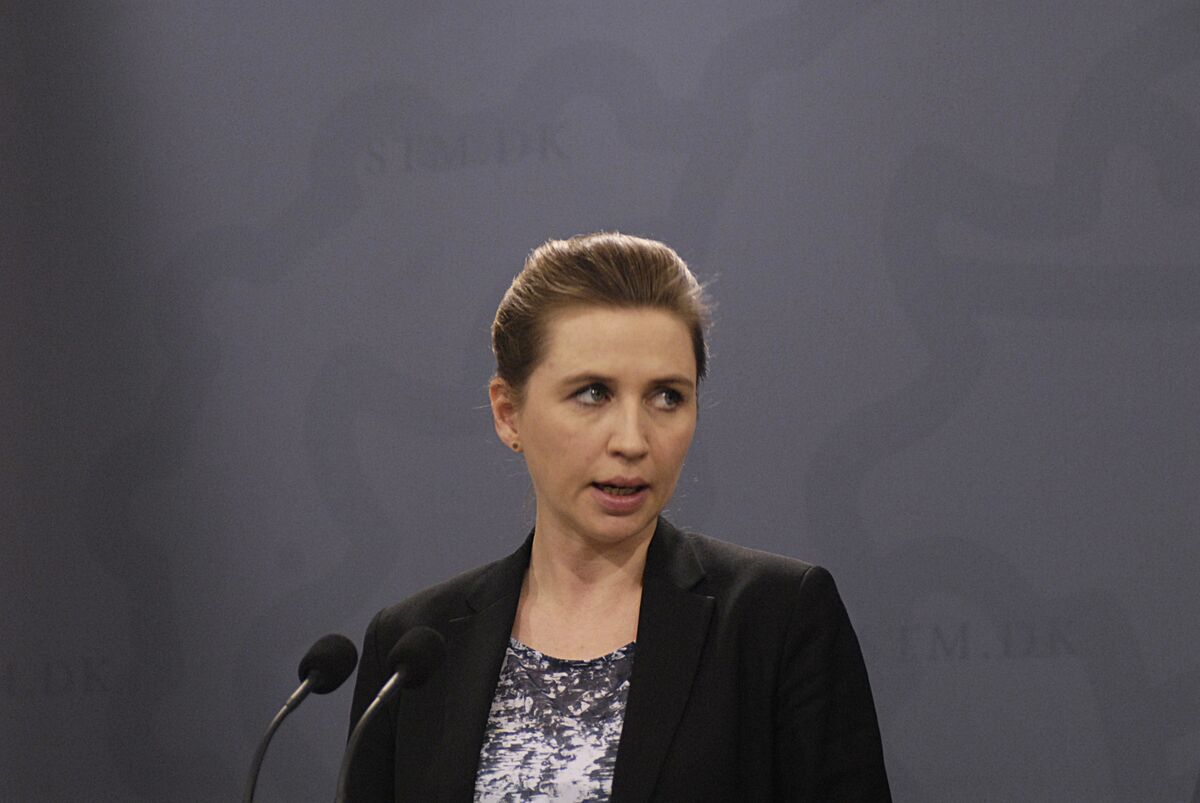
Mette Frederiksen Photographer: Francis Dean/Corbis via Getty Images
LISTEN TO ARTICLE
5:14
SHARE THIS ARTICLE
Share
Tweet
Post
Email
In this article
NDA
NORDEA BANK ABP
68.43
SEK
-0.40-0.58%
Denmark’s nationalists had their worst drubbing ever in Wednesday’s election, resulting in a changed political landscape that will bring with it a new left-leaning government led by a 41-year-old woman.
Mette Frederiksen, who heads the Social Democrats, won the election after her political bloc promised more welfare paid for by higher taxes that will in part target the financial industry. Though she faces protracted government talks, Frederiksen is set to be Denmark’s youngest prime minister ever and only the second woman to lead the country’s government.
“This was an election that was about welfare and after tonight we’ll again put welfare first,” Frederiksen said in a speech after the outcome was clear. “This was an historically big win.”
The result is the latest example of center-left parties regaining political dominance in the Nordic region, with both Sweden and Finland leading the way in earlier elections.
Frederiksen stands out in Social Democratic history for having agreed to somewhat tougher rules on foreign labor, though without stigmatizing Muslims in the same way the country’s nationalists have done. The move appears to have undermined the supremacy of the anti-immigration Danish People’s Party, whose disastrous result means that the center-right coalition of Prime Minister Lars Lokke Rasmussen lost the parliamentary support it needed to stay in office.
Rasmussen conceded defeat shortly before midnight and said he will hand in his resignation to Denmark’s queen on Thursday. Frederiksen “should have the chance to form a new government,” he said.
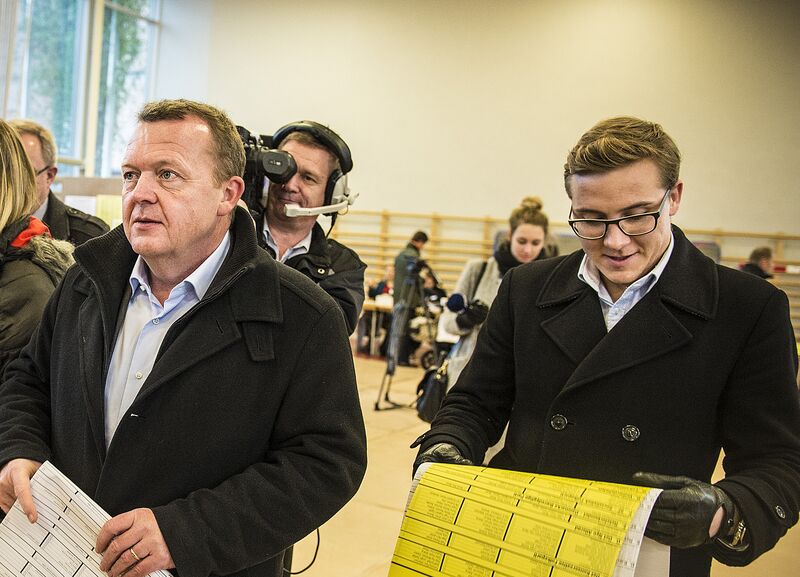
Lars Lokke Rasmussen
Bloomberg
Everything now points toward “a regime shift in Danish politics,” said Helge Pedersen, chief economist at Nordea Bank in Copenhagen.
Red Bloc WinsDenmark's center-left opposition parties have the most seats in parliament
Source: DR.dk
Projection based on 95% of votes counted, excludes votes from overseas territories
Click here to see the details of the election result
The result suggests that voters have had enough of the ultra-hard line of the Danish People’s Party. Even the prime minister signaled that he found some of Denmark’s immigration laws too draconian after recently revealing that the Harvard-educated American fiancee of his 29-year-old son was unable to stay in the country.
Nationalist SetbackThe Danish People’s Party, which was formed in 1995, was by far the biggest loser in Wednesday’s vote as its support was more than halved. It was backed by more than a fifth of the electorate in 2015, giving it the political clout to push through a hardline agenda targeting immigration. That was the same year Europeans wondered how their continent would absorb hundreds of thousands of asylum seekers as the war in Syria took its toll.
But now, Danes are less worried about a mass influx of asylum seekers. They’re also more concerned about issues that the Danish People’s Party has failed to embrace, such as the environment. Its founder, Pia Kjaersgaard, drew ridicule recently after blaming “climate loonies” for her party’s changed fate.
Kristian Thulesen Dahl, the current head of the Danish People’s Party, described the election result as a “thrashing.” He blamed the emergence of a number of new right-wing parties for the result, arguing they lured voters away.
One of those parties, Hard Line (Stram Kurs) led by convicted racist Rasmus Paludan, just missed the 2% threshold needed to get into the parliament. Another, the New Right, was set to make it into the legislature by a slim margin.
Though immigration was less of vote winner in the 2019 election than in previous years, it continues to be an important issue for Danes. That’s particularly true for blue-collar workers worried about competition from migrants.
“For me, it is becoming increasingly clear that the price of unregulated globalization, mass immigration and the free movement of labor is paid for by the lower classes,” Frederiksen said in a recent biography.
Difficult Talks Ahead
Frederiksen’s approach on immigration has led to frictions within the group of left-leaning parties that have traditionally backed the Social Democrats. That means she faces a tougher set of government talks than usually would follow a Danish election. She’s made clear she wants to rule an administration comprised only of the Social Democrats, with the parliamentary backing of her political allies on the left. But those parties have indicated they’ll be making their own demands, including a more humane approach toward immigrants.
“It will be difficult to form a coalition government, or a government at all,” said Bent Greve, a professor at Roskilde University, “because there are disagreements within what we call the Red Bloc parties” that make up the opposition, he said.
The 55-year-old Rasmussen has said he’s ready to break away from his coalition partners and the Danish People’s Party. That could include forming a government with the Social Democrats. But Frederiksen has so far dismissed such an alliance suggesting that she will stick with her traditional allies on the left.
Pedersen at Nordea said, “It’s still a very open game and I don’t think we’ll see a Danish government formed any time soon. It will probably take some time.”
Bankers and the ClimateFrederiksen has also campaigned on promises to fight corporate greed and to impose tougher rules on the financial sector. That follows voter anger over a number of scandals involving bankers, the most infamous of which is the $230 billion money-laundering affair that has engulfed Danske Bank. A separate saga in which a number of financiers stole as much as $2 billion from state coffers by abusing dividend tax-rebate rules also paved the way for tougher rules for bankers.
Danes also made clear they want a government that prioritizes policies to tackle climate change. In a recent poll, climate ranked at the top of voter concerns, healthcare was second while immigration was third.
“There will be more focus on welfare and on the climate, no doubt about that,” Pedersen said. |



