BOMBSHELL: China Is Cutting Tariffs—For Everyone Else Except the US; As Trump focuses on disruption, Beijing is evidently operating on a higher level.
On average, it is now 14 percent cheaper in China to buy something from Canada, Japan, Brazil, or Europe than it is to buy something from the United States. Beijing is making it worthwhile for its consumers to develop new commercial relationships. And once those new ties are formed, the Chinese may not bother to switch back.
JUN 18, 2019
Chad P. Bown
Senior fellow at the Peterson Institute for International Economics
theatlantic.com
 BRIAN SNYDER / REUTERS BRIAN SNYDER / REUTERS
ShareTweetEmail
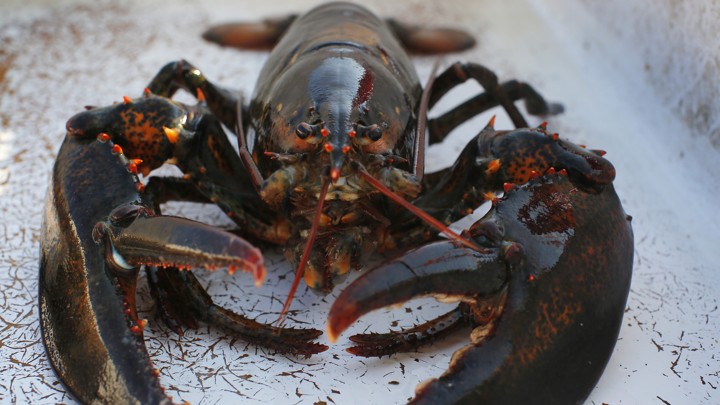
Lobster is Maine’s top export. Like many Americans with something to sell, Maine’s trappers benefited from positive turns in China’s economic development. The movement of tens of millions of people out of poverty and into the middle class increased demand for a source of protein—and a Chinese New Year delicacy—that Maine could happily provide.
Yet in the wake of President Donald Trump’s trade war, American lobster sales to China have decreased by 70 percent. China’s 25 percent retaliatory tariff on American lobster was only the start. Beijing has actively helped Chinese grocers and restaurants by also reducing the costs of their finding new, non-American suppliers. It has cut the Chinese tariff on lobster bought from Canada, Maine’s fierce rival in the lobster business. As a result, Canada has seen its lobster exports to China nearly double. Maine may never recover its previously dominant position in this export market.
This story is not singular. Trump started the trade war by levying new taxes on $250 billion worth of Chinese exports. China retaliated both by increasing the duties Americans face and by decreasing the tariffs that confront everyone else: It has cut tariffs on thousands of products from the rest of the world’s fisheries, farmers, and firms.
Trump’s Sinister Assault on Truth PETER WEHNER
Even as Tariff Man, as Trump likes to refer to himself, focuses only on disruption, Beijing is evidently operating on a higher level. China is outplaying the United States on two fronts.
First, while Trump is on the verge of slapping tariffs on almost everything the U.S. imports from China, Beijing is picking and choosing wisely. It went to town on American soybeans, in part because it knew that Brazil and Argentina could provide ample alternative supplies. But it has left untouched other American exports that are more difficult to replace. China could, for instance, force its state-owned airlines to immediately shift from buying Boeing to European-based Airbus, but those companies would run into trouble accessing the parts and services needed to keep their costly existing fleets running. Beijing has therefore mostly spared the aircraft sector from retaliation thus far.
Second, Trump has no real mitigation strategy to help the Americans facing the entirely foreseeable costs of his policies. Yes, he’s giving out tens of billions of dollars in agricultural subsidies—but that is, of course, a cost borne by Americans, not international rivals. His separate trade restrictions on nearly $50 billion in steel and aluminum imports have only worsened the effects of his fight with China; these restrictions have burdened American farmers by raising the cost of the equipment needed for harvesting or storing the crops they are now unable to sell abroad. And he’s compounding this short-term pain with possible long-term damage to previously healthy international relationships: Those steel and aluminum tariffs have mostly targeted trade from allies such as Europe, Canada, and Japan—not China. He also conducted a needlessly contentious renegotiation of the North American Free Trade Agreement, and has threatened tariffs on tens of billions of dollars’ worth of Japanese and European cars.
By contrast, China is helping its citizens by making new friends. One way to offset the rising prices to Chinese consumers otherwise stuck buying American is to lower their costs if they switch. On average, it is now 14 percent cheaper in China to buy something from Canada, Japan, Brazil, or Europe than it is to buy something from the United States. Beijing is making it worthwhile for its consumers to develop new commercial relationships. And once those new ties are formed, the Chinese may not bother to switch back.
When Trump first began imposing tariffs in early 2018, his key trade strategist, Peter Navarro, infamously said, “I don’t believe any country in the world is going to retaliate.” Navarro was wrong, of course, as foes (China, Russia) and friends (European Union, Canada, Mexico) alike all immediately retaliated against American exports.
More worrisome than Navarro’s rhetoric was how it revealed a fundamental misunderstanding of how trade works. In each of its provocations, Trump’s team sees trade through the narrow lens of a two-country world: America versus whomever the administration has chosen to antagonize that day.
America can easily lose even when there is no retaliation at all. Anytime another country lowers its tariff to someone else—but not the United States—the global economy leaves America one step further behind.
Trump chose this outcome once when he pulled out of the Trans-Pacific Partnership agreement in January 2017. The result is that ranchers in Australia, New Zealand, and Canada now have access to the lucrative Japanese beef market and Americans do not. Beijing’s positive overtures toward America’s former economic allies suggest Trump’s unilateral approach toward China is likely to replay itself.
Lobster may be the canary in Trump’s trade-war coal mine. Maine’s congressional delegation—made up of two Democrats, one independent, and one Republican—has shined a spotlight on the industry’s hard times by requesting that the Trump administration provide it with the same sort of federal assistance already doled out to farmers.
Trump keeps pushing the rest of the world away and into China’s corner. China is enticing the world to stay. |



