Watch & brief
On 5 Jul 2019, at 12:16 AM, J wrote:
Re <<Develop standards that meet both EU and US standards plus additional Chinese requirements.>>
I believe it does well for parties to take account of global markets as opposed to narrower slivers of any larger market, mathematically speaking.
In the cellular space, CDMA was a very bad mistake of team America, and TCDMA was a very bad mistake of team China. GSM was a good call by team Europe. And now, onward to 5G, then 6G.
What team America is trying now to do, to ring-fence team China whilst simultaneously add costs to teams Nokia and Ericsson, Europe and emerging markets, and for self, as strategies go, is interesting, especially if Korea and Japan have a go at each other, w/ Samsung as collateral well within sphere of splash destruction. Let us see what gets blown up and how and when.
Team China needs to do more of what had worked, for progressing reform, maintaining growth, and sustaining stability. Arguably difficult tasks, but can be done.
Team America needs to change mindset. Arguably harder to do.
I do not care for Krugman’s pondering usually, but here he has some issues more correct than not.
nytimes.com
Trump Is Losing His Trade Wars
By Paul Krugman
July 4, 2019
Donald Trump’s declaration that “ trade wars are good, and easy to win” will surely go down in the history books as a classic utterance — but not in a good way. Instead it will go alongside Dick Cheney’s prediction, on the eve of the Iraq war, that “we will, in fact, be welcomed as liberators.” That is, it will be used to illustrate the arrogance and ignorance that so often drives crucial policy decisions.
For the reality is that Trump isn’t winning his trade wars. True, his tariffs have hurt China and other foreign economies. But they’ve hurt America too; economists at the New York Fed estimate that the average household will end up paying more than $1,000 a yearin higher prices.
And there’s no hint that the tariffs are achieving Trump’s presumed goal, which is to pressure other countries into making significant policy changes.
What, after all, is a trade war? Neither economists nor historians use the term for situations in which a country imposes tariffs for domestic political reasons, as the United States routinely did until the 1930s. No, it’s only a “trade war” if the goal of the tariffs is coercion — imposing pain on other countries to force them to change their policies in our favor.
And while the pain is real, the coercion just isn’t happening.
All the tariffs Trump imposed on Canada and Mexico in an attempt to force a renegotiation of the North American Free Trade Agreement led to a new agreement so similar to the old one that you need a magnifying glass to see the differences. (And the new one may not even make it through Congress.)
And at the recent G20 summit, Trump agreed to a pause in the China trade war, holding off on new tariffs, in return, as far as we can tell, for some vaguely conciliatory language.
But why are Trump’s trade wars failing? Mexico is a small economy next to a giant, so you might think — Trump almost certainly did think — that it would be easy to browbeat. China is an economic superpower in its own right, but it sells far more to us than it buys in return, which you might imagine makes it vulnerable to U.S. pressure. So why can’t Trump impose his economic will?
There are, I’d argue, three reasons.
First, belief that we can easily win trade wars reflects the same kind of solipsism that has so disastrously warped our Iran policy. Too many Americans in positions of power seem unable to grasp the reality that we’re not the only country with a distinctive culture, history and identity, proud of our independence and extremely unwilling to make concessions that feel like giving in to foreign bullies. “ Millions for defense, but not one cent for tribute” isn’t a uniquely American sentiment.
In particular, the idea that China of all nations will agree to a deal that looks like a humiliating capitulation to America is just crazy.
Second, Trump’s “ tariff men” are living in the past, out of touch with the realities of the modern economy. They talk nostalgically about the policies of William McKinley. But back then the question, “Where was this thing made?” generally had a simple answer. These days, almost every manufactured good is the product of a global value chain that crosses multiple national borders.
This raises the stakes: U.S. business was hysterical at the prospect of disrupting Nafta, because so much of its production relies on Mexican inputs. It also scrambles the effects of tariffs: when you tax goods assembled in China but with many of the components from Korea or Japan, assembly doesn’t shift to America, it just moves to other Asian countries like Vietnam.
Finally, Trump’s trade war is unpopular — in fact, it polls remarkably poorly— and so is he.
This leaves him politically vulnerable to foreign retaliation. China may not buy as much from America as it sells, but its agricultural market is crucial to farm-state voters Trump desperately needs to hold on to. So Trump’s vision of an easy trade victory is turning into a political war of attrition that he, personally, is probably less able to sustain than China’s leadership, even though China’s economy is feeling the pain.
So how will this end? Trade wars almost never have clear victors, but they often leave long-lasting scars on the world economy. The light-truck tariffs America imposed in 1964 in an unsuccessful effort to force Europe to buy our frozen chickens are still in place, 55 years later.
Trump’s trade wars are vastly bigger than the trade wars of the past, but they’ll probably have the same result. No doubt Trump will try to spin some trivial foreign concessions as a great victory, but the actual result will just be to make everyone poorer. At the same time, Trump’s casual trashing of past trade agreements has badly damaged American credibility, and weakened the international rule of law.
Oh, and did I mention that McKinley’s tariffs were deeply unpopular, even at the time? In fact, in his final speech on the subject, McKinley offered what sounds like a direct response to — and rejection of — Trumpism, declaring that “commercial wars are unprofitable,” and calling for “good will and friendly trade relations.”
The Times is committed to publishing a diversity of lettersto the editor. We’d like to hear what you think about this or any of our articles. Here are some tips. And here’s our email: letters@nytimes.com.
Follow The New York Times Opinion section on Facebook, Twitter (@NYTopinion)and Instagram.
On 4 Jul 2019, at 4:10 PM, S wrote:
J,
You are absolutely right on this. For the last 10 years China has been pursuing a brilliant standards strategy. Develop standards that meet both EU and US standards plus additional Chinese requirements. Gets you in worldwide and keeps everyone else out of the China market.
We spent 3 years trying to educate GE management about this from 2009-2012. Dopey chairman didn’t get it – trying to develop his own IoT strategy while selling off most of the businesses that could benefit from it – Major appliances, lighting, etc. (They did make some progress on industrial side.) Will be a big deal very soon.
From:J
Sent:Friday, July 05, 2019 4:57 AM
To:C
Cc:G ...
Subject:Re: GOLD / 9999 / GUEED - not.priced-in
Meanwhile, team Huawei ups the ante and tees up the next battle, in case the lawyers that run Capitol Hill miss what the techno-folks who run Great Hall of the People are doing ... in any case one needs to have factories and production in order to know deeply the workings of IoT for industry, as opposed to doing doodads to spy in people’s bedroom w/ Alexa, or coming up w/ a burger-flipping automaton to free up someone to work at Walmart
The choice could be negative-interest-rate-&-expensive-no-trade vs normal-monetary-space-&-globalisation-2.0
Trump shall win 2020. Let’s how other nations vote.
ft.com
Huawei founder predicts internet of things is next US battle
Chinese company aims to corner global market through writing industry’s standards
Huawei founder Ren Zhengfei says the Trump administration would turn its attention to the internet of things once Huawei emerges as an industry leader © AFP

The founder of Huawei, Ren Zhengfei, has predicted the next battle with the US will be over the Chinese telecom company’s push into the internet of things (IoT) and smart factories.
Huawei has been rapidly developing chips and software for companies to connect their factory floors to the internet, using sensors to automate and monitor manufacturing lines.
China’s manufacturing prowess gives Huawei a huge potential market for this technology, and a chance to set standards that are eventually adopted across the world. The Chinese government estimates that the industrial IoT sector was worth Rmb300bn ($44bn) last year and is growing at about 25 per cent each year.
“They’ll fight IoT next,” said Mr Ren, predicting that the Trump administration would turn its attention to this sector once Huawei emerges as an industry leader. “Let them fight,” he said.
Huawei is aiming to corner the global IoT market through writing the industry’s standards, an increasingly common move for Chinese companies as the country seeks dominance in international standards-setting bodies.
“If everyone were to vote for an IoT standard, they would vote for our standard, because Qualcomm hasn’t done much work in the IoT sphere and we’ve done a huge amount of research,” said Mr Ren.
Huawei: Ren Zhengfei defiant in face of hostile US actions
Although there is no clear industry leader in the nascent market for industrial IoT hardware and platforms, analysts say Huawei offers the deepest range of products.
“From front-end chips to operating systems, networks, border gateways, platform, security and data analysis, Huawei has all-round ability,” said Milly Xiang, an analyst at market research firm Gartner. She added: “Huawei’s very actively contributing to IoT-related standards. But currently no one really has the scale to set de facto standards.”
Huawei hopes its expertise in 5G can translate into dominance of industrial IoT, because high-speed connectivity is a must for transferring bulky data from industrial devices for data analysis. The company holds the largest number of patents essential for global 5G standards.
Unlike 5G wireless internet standards, which have been decided by one major international body, 3GPP, there are several industry associations that are only beginning to set standards in industrial IoT.
RecommendedThe industrial IoT industry is likely to undergo consolidation in the next five years under “key players”, said Alex West, analyst at IHS Markit, although there will not be “one vendor to rule them all”.
“Huawei certainly has a broader offering of IoT technologies than many others, but there is no one company that can offer a complete industrial IoT solution,” said Mr West.
Of the various components of industrial IoT, Huawei has an advantage in networking products, said Ms Xiang.
Outside of China, Huawei’s OceanConnect IoT platform will be competing against cloud providers such as Amazon and Google, while its IoT communication chips are up against those of Qualcomm and Intel. The US is lobbying countries not to use Huawei equipment in their 5G networks and has banned US companies from selling it their technology. At the weekend, US president Donald Trump suggestedthat some companies may be allowed to export to Huawei as long as the trade did not endanger national security.
On 5 Jul 2019, at 4:39 AM, J wrote:
Scenario-lising made difficult by the so many hard-forks sure to be positioned by warmongering Neo-people who have difficulty seeing own reflection and so team China forcing the issue, asking clarification on the fundamental question to clear the fog on typical team America protocol, “do not say we did not warn you. War or peace?”
All eyes on Huawei ban as US and China try to break trade war deadlock
scmp.com
Even as the planet edge closer to never-never land described in zerohedge.com“Blain: When The Crunch Comes, Markets Will Freeze And Every Corporate Bond On The Planet Will Be "Locked"”
We are in a circumstance if not unique then at least novel, that cash is trash but almost everything else is toxic, except for equity class, which may be fatal.
Our move.
On 5 Jul 2019, at 4:22 AM, J wrote:
Mona Lisa and such same alternative asset higher valuation is called for if we assume all monies shall melt, and we must assume so.
Else one stretches for yield in a ZIRP/NIRP world and look for trouble
Suggest we start deep-thunk and begin to scenario-out explicitly the many possibilities for the awful end-game
I brought w/ me only two paper reads for the trip, to supplement the too-many electronic files on iPad and Kindle. Need to think before onset of October.
Both thin- but classic- reads


On 4 Jul 2019, at 9:33 PM, C wrote:
For those interested. I am reading a short history of Da Vinci in a history French mag. In 1515 or so Francois Ier, after conquering parts of N Italie and getting Da Vinci to come back to France after he lost his Medicis patrons, fell in love with the Mona Lisa and offered Da Vinci 4,000 Ecu gold coins. At that specific time the Ecu had about 3.5 grams of gold per coin. So it seems to work out to 600,000 dollars for the Mona Lisa.
In 1962 the Mona Lisa was valued at about $100m. More recently the equivalent was put at $800+m. Of course it is at the Louvre, and would not stop Sotheby's selling it for some other crazy price to another King or tycoon.
On Thu, Jul 4, 2019, 2:19 PM J wrote:
R and G, nice actoring and looks like a lot of effort.
Classic. Best post to net and make the two episodes widely available, to save souls.
Comrade G, am 25k feet going to 30k, and watching your poetic program about the eternal, true, and glorious
Nice work, per his call of duty ...
Had a meal before boarding, and now only waiting for drinks and ice cream, and over did the do, so in case of the plane doing a Boeing-max (a noun, pronoun, adjective, verb, and adverb), I would have mental bandwidth to think about other matters, as opposed to “I should have had the caviar”


On 4 Jul 2019, at 3:57 AM, J wrote:
10% minimum, pass the word, to save souls
bloomberg.com
Gold Bull Mobius Says Every Portfolio Needs at Least 10%
Ranjeetha PakiamJuly 4, 2019, 3:38 PM GMT+8
Veteran investor forecasts that bullion’s rally may top $1,500
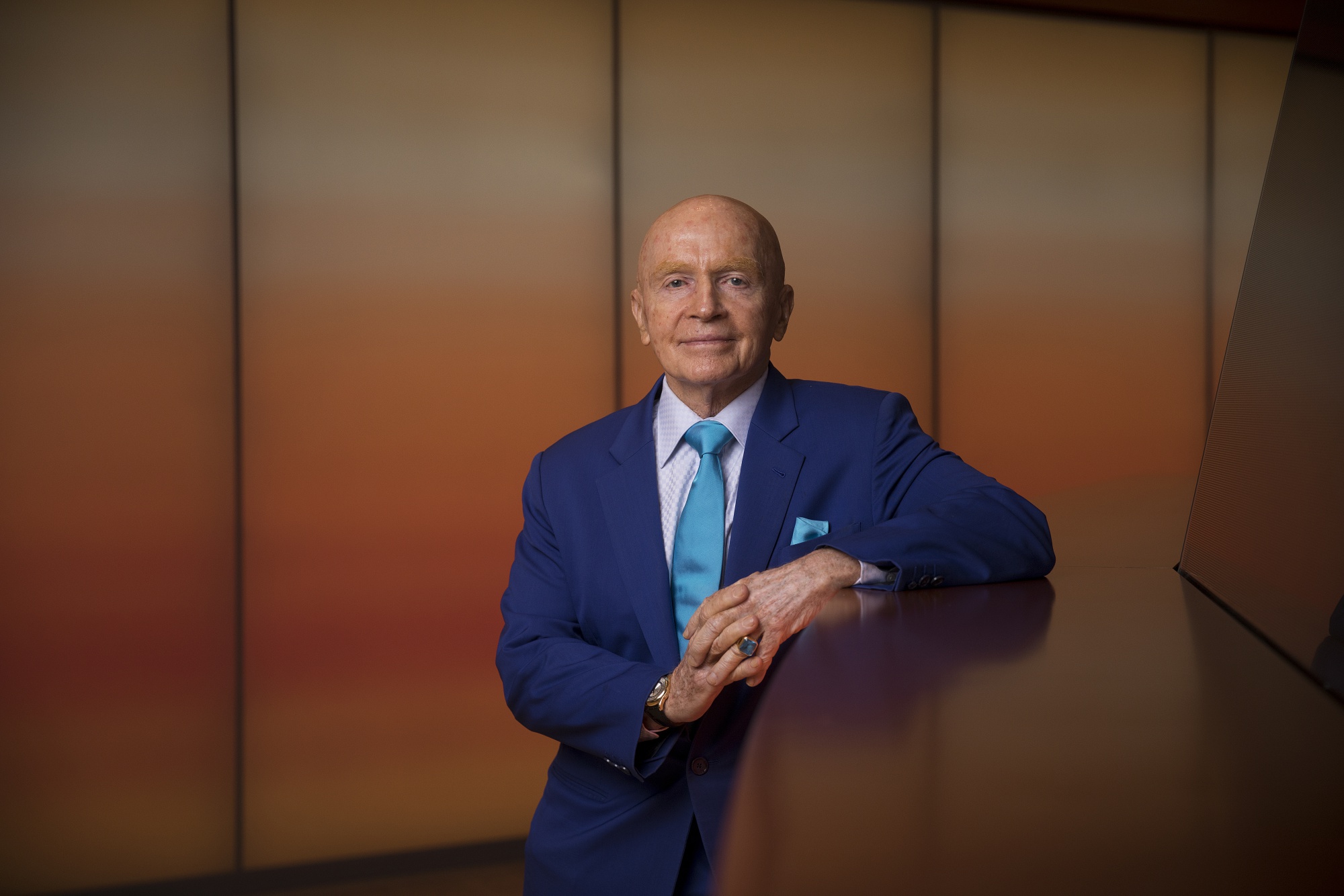
Veteran investor Mark Mobius says that gold’s set to push higher, potentially topping $1,500 an ounce, as interest rates head lower, central banks extend purchases, and uncertainty surrounding geopolitics and cryptocurrencies fans demand.
“I love gold,” Mobius, who set up Mobius Capital Partners LLP last year after three decades at Franklin Templeton Investments, said in an interview in Singapore, adding bullion should always form part of a portfolio, with a holding of at least 10%. “As these interest rates come down, where do you go?”
Photographer: Simon Dawson/Bloomberg
Gold has rallied in 2019, rising to the highest level in six years, as investors contemplate slowing economic growth, prospects for easier monetary policy in the U.S. and Europe and festering trade frictions. The upswing has been given added momentum as central banks, including authorities in Russia and China, step up purchases. A revival in cryptocurrencies may lead to spillover demand from investors for the older haven, according to Mobius.
“Interest rates are going so low, particularly now in Europe,” he said. “What’s the sense of holding euro when you get a negative rate? You might as well put it into gold, because gold is a much better currency.”
Spot gold -- which hit $1,439.21 an ounce on June 25, the highest since 2013 -- traded at $1,413.50 on Thursday. It’s up 10% this year after the Federal Reserve signaled a willingness to cut rates and other central banks considered fresh stimulus. It last topped $1,500 in April 2013.
Mobius isn’t the only high-profile gold fan as prices climb. Billionaire trader Paul Tudor Jones has listed the metal as his favorite pick over the next 12-to-24 months, saying that prices could move to $1,700 once they breach $1,400. BlackRock Inc. said last month it expects bullion to end the year higher.
(Updates with outlooks from Tudor Jones, BlackRock in final paragraph.) |



