SI
SI
discoversearch

We've detected that you're using an ad content blocking browser plug-in or feature. Ads provide a critical source of revenue to the continued operation of Silicon Investor.  We ask that you disable ad blocking while on Silicon Investor in the best interests of our community.  If you are not using an ad blocker but are still receiving this message, make sure your browser's tracking protection is set to the 'standard' level.
Politics : Formerly About Advanced Micro Devices -- Ignore unavailable to you. Want to Upgrade?


To: locogringo who wrote (1165589)9/22/2019 8:50:59 AM
From: sylvester80  Respond to of 1583396
 
OOPS! Rudy Giuliani’s viral CNN meltdown over Trump and Ukraine, explained.
vox.com

Giuliani tried to get ahead of the whistleblower scandal. He ended up making things worse.
By Aaron Rupar @atrupar Sep 20, 2019, 10:30am EDT

On Thursday, the Washington Post broke news that a whistleblower complaint about President Donald Trump’s communications with a foreign leader “centers on Ukraine” and involves a “promise” Trump made that was so alarming, a US intelligence official felt compelled to report it to the intelligence community inspector general.

While the precise details of the complaint remain murky, the Ukraine revelation prompted Trump’s personal lawyer, Rudy Giuliani — who was in the news months ago for his dealings with Ukraine — to go on CNN and made a disastrous attempt to get ahead of the story.

If anything, Giuliani made it worse, by seemingly confirming the long-standing, but vaguely sourced reports, that Trump’s administration was trying to pressure Ukraine into investigating former vice president (and frontrunner for the Democratic presidential nomination) Joe Biden — perhaps by withholding military aid to Ukraine unless they complied.

Giuliani insisted to CNN’s Chris Cuomo that he didn’t ask Ukrainian officials to investigate Biden — but then, less than 30 seconds later, did a complete about-face and admitted that “of course” he did just that.

“You just said you didn’t!” Cuomo replied, disbelievingly, as Giuliani struggled to make a distinction between Ukraine investigating Biden and “look[ing] into allegations that related to my client, which tangentially involved Joe Biden in a massive bribery scheme.”

Watch:


Aaron Rupar

?@atrupar


Rudy denying he asked Ukraine to investigate Biden followed by Rudy admitting he asked Ukraine to investigate Biden within 30 seconds of each other in this clip is just incredible to watch


5,904

7:34 PM - Sep 19, 2019 · Washington, DC
Twitter Ads info and privacy


2,351 people are talking about this


Beyond Giuliani contradicting himself within a 30-second span, he seemed to be copping to an egregious abuse of power, as the president is not supposed to be in the business of strong-arming foreign leaders to investigate political rivals at home. But Giuliani wasn’t done making things worse.

As footage of Giuliani’s interview went viral, he posted a tweet that read like a confession.

“A President telling a Pres-elect of a well known corrupt country he better investigate corruption that affects US is doing his job,” Giuliani wrote. “Maybe if Obama did that the Biden Family wouldn’t have bilked millions from Ukraine and billions from China; being covered up by a Corrupt Media.”


Rudy Giuliani

?@RudyGiuliani


A President telling a Pres-elect of a well known corrupt country he better investigate corruption that affects US is doing his job. Maybe if Obama did that the Biden Family wouldn’t have bilked millions from Ukraine and billions from China; being covered up by a Corrupt Media.


42.3K

7:54 PM - Sep 19, 2019 · Washington, DC
Twitter Ads info and privacy


31.7K people are talking about this


But what Giuliani seems to regard as the president “doing his job” actually may be a textbook abuse of power.

The Ukraine-Biden scandal that Giuliani is trying to gin up, briefly explainedReports that Trump, with an assist from Giuliani, has been trying to enlist the Ukrainian government in an effort to create a scandal surrounding Biden have been swirling for months.

Back in May, Gabriela Resto-Montero wrote for Vox about how Giuliani canceled a planned trip to Ukraine amid reports he was courting foreign election interference aimed at boosting Trump’s reelection prospects.

[Giuliani] has called off a trip to Ukraine during which he planned to ask the country’s prosecutors to investigate the origins of the Mueller investigation and to look into ties between Hunter Biden, Democratic presidential candidate Joe Biden’s son, and a Ukrainian oligarch.

With respect to Biden, Giuliani was particularly interested in a phone call Joe Biden made while serving as vice president in which he requested Ukraine’s top prosecutor, who had once been tasked with investigating a company Hunter Biden worked for, be removed from office.

But as the New York Times reported at the time, “[n]o evidence has surfaced that the former vice president intentionally tried to help his son by pressing for the prosecutor general’s dismissal” back in 2014. And as Politifact notes, Biden’s push to have Ukraine’s prosecutor general removed was in step with “the position of the wider US government, as well as other international institutions.”

While there’s no good reason to believe that Biden was involved in corrupt dealings involving his son, amid polling suggesting that Biden will trounce Trump in 2020 if he ends up being the Democratic nominee, the Times reported last month that Giuliani had “renewed his push for the Ukrainian government to pursue investigations into political opponents of Mr. Trump.” But Giuliani’s hand was seemingly forced on Thursday as more details trickled out about the whistleblower complaint.

On Friday morning, Trump himself got in on the act in tweets in which he sought to portray the as-of-yet unnamed whistleblower as “highly partisan.”


Donald J. Trump

?@realDonaldTrump

· Sep 20, 2019


The Radical Left Democrats and their Fake News Media partners, headed up again by Little Adam Schiff, and batting Zero for 21 against me, are at it again! They think I may have had a “dicey” conversation with a certain foreign leader based on a “highly partisan” whistleblowers..


Donald J. Trump

?@realDonaldTrump


....statement. Strange that with so many other people hearing or knowing of the perfectly fine and respectful conversation, that they would not have also come forward. Do you know the reason why they did not? Because there was nothing said wrong, it was pitch perfect!


61.2K

5:27 AM - Sep 20, 2019
Twitter Ads info and privacy


30K people are talking about this


Giuliani and Trump seem to be anticipating that more details will emerge about the president’s shady dealings with Ukraine, and are doing their best preemptively minimize them — just as Giuliani repeatedly did during the Mueller investigation.

Going on TV and copping to damaging stuff is one of Giuliani’s key duties working for TrumpGiuliani has a long history of going on TV to get ahead of damaging stories related to Trump.

During the Mueller investigation, Giuliani’s greatest hits included collusion isn’t a crime, the president may have lied but he wasn’t under oath, and you can’t investigate the president for mere “ unbecoming conduct.” On occasion, Giuliani would move the goalposts on multiple topics in a single interview.


Aaron Rupar

?@atrupar


Replying to @atrupar

Giuliani moved the goalposts on multiple topics during a single interview


305

6:12 AM - Dec 17, 2018
Twitter Ads info and privacy


113 people are talking about this


Giuliani has somewhat faded from public consciousness since the Mueller report ended. But with Trump under new scrutiny for seemingly trying to collude with a foreign government, he appears to be back in the limelight again. While that’s good news for people who enjoy TV interviews that leave your mouth agape, it appears to be bad news for American democracy.


To: locogringo who wrote (1165589)9/22/2019 8:52:23 AM
From: sylvester80  Respond to of 1583396
 
OOPS! Trump’s Trade War Hammering Farmers, Factory Workers In Crucial Wisconsin
huffpost.com

The state could be key to his reelection, but the tariff wars are devastating key voting blocs.
By S.V. Date
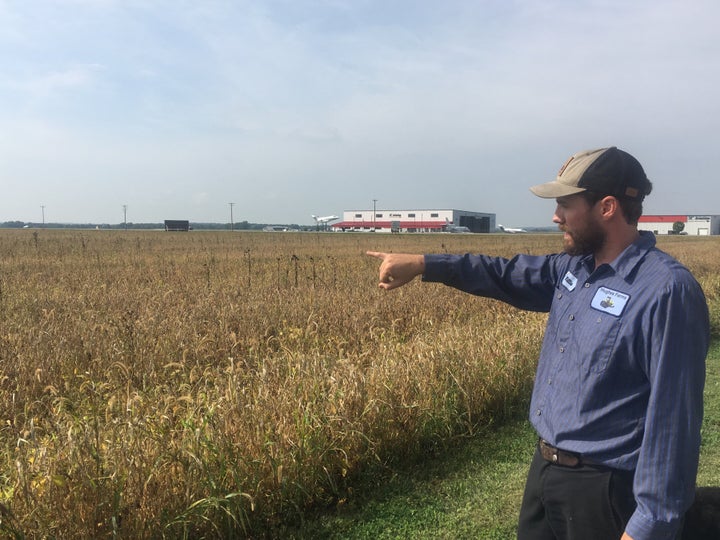

S.V. DATE/HUFFPOSTWill Hughes looks over 400 acres of organic soybeans at his family’s farm in Janesville, Wisconsin. The farm has lost about $500,000 in income because of President Donald Trump’s trade war with China.

EAST TROY, Wis. – Farm Aid musicians who over three-and-a-half decades have helped farmers cope with torrential floods, withering droughts and epidemics of bank foreclosures this year added a new calamity to their list: President Donald Trump’s trade war.

“With devastating weather, low prices and harmful farm and trade policies, America’s family farmers are facing immense challenges to hold onto their farms,” Farm Aid founder Willie Nelson said prior to his appearance her Saturday at the 2019 benefit concert. “It’s not right.”

REAL LIFE. REAL NEWS. REAL VOICES.
Help us tell more of the stories that matter from voices that too often remain unheard.

Join HuffPost Plus

Wisconsin has become ground zero for Trump’s tariff battles with an assortment of foreign foes ? battles that come following years of depressed milk prices that have driven dairy farmers out of business and a spring of drenching floods.

“It’s really salt on the wound,” said Alicia Harvie, Farm Aid’s advocacy and farm services director. “It’s happening at the worst possible time for farmers.”

In Wisconsin, though, they are not the trade war’s only victims. From Harley-Davidson factory workers worrying about their jobs as their company’s profits tanks, to a weather equipment maker forced to pay hefty import taxes, to a kidney beans processor facing retaliatory tariffs in Europe, a wide swath of voters are losing money and, in some cases, their livelihoods in a state that could determine Trump’s fate next November.

“I can’t imagine it isn’t going to hurt him,” said Randy Jasper, who with his son grows soybeans, one of the crops hardest hit when China closed its market to many U.S. agricultural products last year to retaliate against Trump’s import duties on Chinese goods.

Jasper added that Trump will not get away with downplaying the economic damage or claiming that his $28 billion-and-counting in bailouts have made everything better. Farmers and their families and friends understand full well what’s happening, he said. “Everybody knows. It’s out there in the real world.”

Tim Corkum, who owns an art gallery in the downtown strip of Menomonee Falls just blocks from the Harley-Davidson factory, said that even in his deeply Republican town ? “You can’t make this place any redder if you opened up an aorta and sprayed it all over” ? he’s hearing from people tired of Trump.

“It’s becoming clearer to them that putting a failed real estate tycoon in charge of the international economy wasn’t such a great idea,” he said.

The White House did not respond to numerous HuffPost queries about the trade war’s effects on Wisconsin.

Trump clearly continues to have his strong devotees, particularly among those who have not been personally affected by the tariffs. These supporters say they cannot think of any circumstance that would force them to reconsider their votes.

But even some of those loyal followers acknowledge that Trump could indeed lose critical support if the tariff battles end badly for him or, worse, don’t end at all.

“I think the tariffs are a tricky line to walk,” said Mark Baldwin, who works at a graphics packaging firm that neighbors the Harley plant. “If they bring about better trade, it will work for Trump. If they don’t, well, it could cost him some votes.”

For Trump, losing even a small fraction of the votes he won in 2016 could mean losing Wisconsin ? and a second term.

A key state in 2016, and again in 2020
Trump and his political advisers have been acutely aware of Wisconsin’s role in putting him in the Oval Office. It, along with Pennsylvania and Michigan, had not voted Republican in decades. Democrat Hillary Clinton’s campaign had assumed Wisconsin voters would support her and did not bother bringing her there ? a point that both Trump and his aides frequently make.

Yet Trump’s combined victory margin in those three states was just 77,744 votes. In Wisconsin, it was 22,748 votes, or 0.8 percent, and post-election analyses showed it largely resulted from a dramatic drop-off of support for Clinton compared to former President Barack Obama’s showing in 2012. Trump actually won fewer votes in Wisconsin than Obama’s opponent in the election, Republican Mitt Romney.

As Trump has ramped up his reelection campaign, his strategy, both in his message as well as his path to 270 electoral votes, has been to replicate his victory of three years ago. While his aides talk about picking up some states that voted for Clinton in 2016 ? such as Minnesota, New Hampshire and, improbably, New Mexico ? Trump’s deep and growing unpopularity among college-educated voters, particularly college-educated women, has made an exact repeat of 2016 his most likely path to a second term.

And even that strategy is revealing cracks. In each of the key Midwestern states, Democrats made strong gains in the 2018 midterms, and Trump’s approval rating is well below 50 percent in all three. In Pennsylvania and Michigan, in addition to winning both governor’s races and U.S. Senate races by blowout margins, Democrats flipped five U.S. House seats across the two states.

The strength of those Democratic victories, combined with automotive industry job losses in Michigan, raises the possibility that Trump could lose both of those states in 2020 ? thereby raising the stakes even further for Wisconsin.

If Trump loses Pennsylvania and Michigan but carries all the other states he won in 2016, Wisconsin’s 10 electoral votes would still give him exactly the 270 he needs for a second presidential term.

“The path to the White House runs through America’s Dairyland, and we aren’t taking that for granted,” said Guy Cecil, chairman of Priorities USA, a political group that supports Democratic candidates. “Wisconsin is one of the most likely states to decide this election and Priorities is fully committed to defeating Trump in the state,” Cecil said.

For Trump and his White House, the state has been a top priority from almost the day he took office.

Courting, then Twitter-fighting Harley
Barely two weeks after his inauguration, Trump donned his overcoat and walked along the South Lawn driveway inspecting a line of parked motorcycles. They were Harley-Davidsons, a brand Trump associates with the bikers who support him in addition to being a major manufacturer in Wisconsin.

In a Roosevelt Room photo opportunity a little later, Trump told company executives and union officials that his “America First” policies would help companies like Harley create new jobs for U.S. workers. “Thank you, Harley-Davidson, for building things in America,” he said. “And I think you’re going to even expand.”

A year-and-a-half later, the exact opposite had happened.

When Trump imposed tariffs on imported steel and aluminum in early 2018, the European Union responded by jacking up tariffs on imported U.S. motorcycles. Harley-Davidson’s European market evaporated. To bring it back, the company decided to make its bikes for Europe in Thailand, thereby avoiding the EU tariffs. Management also shuttered the company’s plant in Kansas City and passed out pink slips to its 800 workers there.

Trump reacted with fury, tweeting angrily at company executives just 18 months after welcoming them to the White House. “Many @harleydavidson owners plan to boycott the company if manufacturing moves overseas,” Trump wrote on Aug. 12, 2018. “Great! Most other companies are coming in our direction, including Harley competitors. A really bad move!”

Harley-Davidson officials declined to comment on the trade issue for this story. During a July 23 earnings call, though, the company acknowledged that retaliatory tariffs have already cost it $100 million.

“Our team has been working intensely to minimize the impact of tariffs on our business in a highly uncertain environment,” CEO Matt Levatich told analysts and reporters, by way of explanation of why both revenues and the stock price were down.

One United Steelworkers official said Trump’s attacks on Levatich brought a moment of schadenfreude at their office, given how deferential the company executives had been toward Trump originally.

“We all kind of laughed about it: ‘There’s your buddy Trump,’” the official said on condition of anonymity, allowing that many of the bargaining unit members remain fans of the president. “The man hasn’t accomplished anything. Unfortunately, some of our members bought into it and voted for him.”
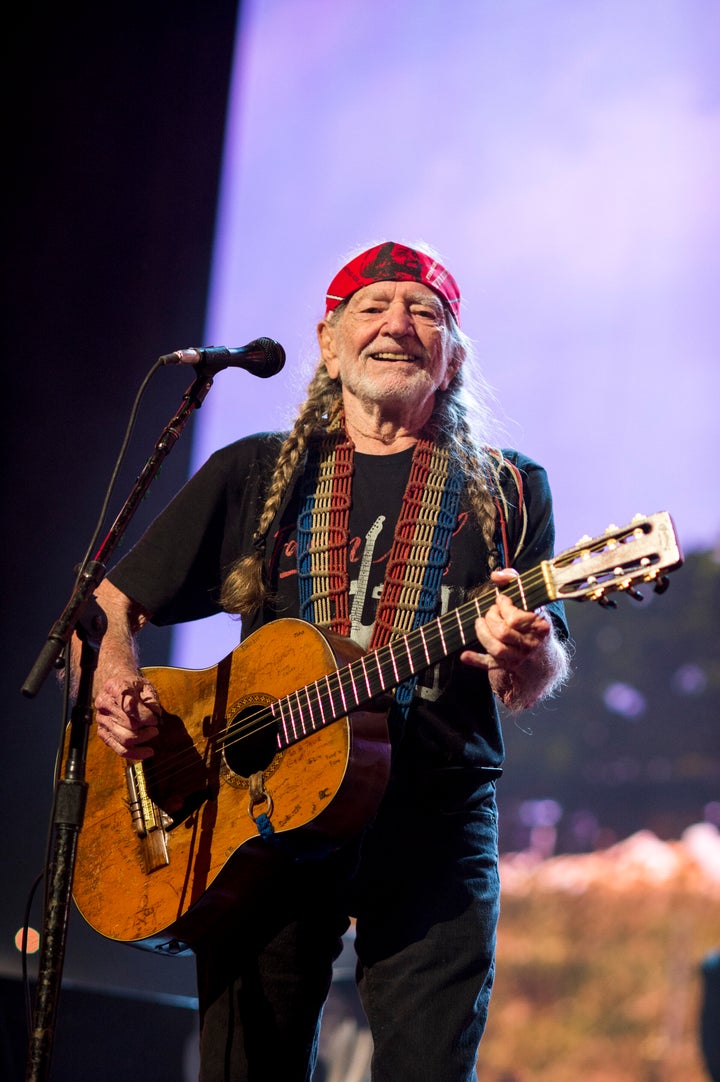

EBET ROBERTS VIA GETTY IMAGESWillie Nelson performs at the 2018 Farm Aid concert in Connecticut. Nelson helped organize the first Farm Aid concert in 1985, and Wisconsin — a pivotal political state — hosted the annual event on Saturday, with Nelson again among the performers.

James Hardiman, a Harley-Davidson analyst for Wedbush Securities, said the upshot for Trump is despite claiming his policies would keep manufacturing jobs in this country, they are instead sending them overseas. “From where I sit, there are a lot of unintended consequences hurting the American worker,” Hardiman said. “Whether or not Donald Trump gets this, nobody knows.”

At the Harley-Davidson powertrain plant in Menomonee Falls on the outskirts of Milwaukee, the number of permanent workers has dropped from about 900 three years ago to 500, while the company is using more “casual” workers without long-term job protection.

“Everyone’s afraid for their jobs,” said one such “casual” machinist, who also spoke on condition of anonymity to avoid angering both management as well as Trump-supporting co-workers. “We kind of have to have a hand-signal and a wink to talk about Trump here. That’s how fervent the pro-Trump people are.”

He compared the president to a “drunken spouse” who lashes out randomly and for whom everyone in the household finds coping tactics. “The whole world is developing tactics to cope with Trump,” he said.

He added that if Trump’s tenure so far offers any clues, the president will claim a tremendous victory, regardless of the tariff war’s status next autumn or how much damage it has caused.

“In the end, I don’t think that he’s going to be successful,” the machinist said.

“We’re just bargaining chips”
Will Hughes squinted into the sun as he showed off the 400 acres of food-grade, organic soybeans that help his family’s farm of 160 years just outside of Janesville soften the blow from Trump’s tariff war.

Soften, but not eliminate. While his farm’s organic corn, soy, green beans and other crops are sold almost entirely domestically, their prices still rise and fall with those of their conventional counterparts traded the world over. China’s shutting off its market to much of U.S. agriculture has cost Hughes’ 5,000-acre farm about $500,000 so far on their soybean and corn harvests.

“We’re just bargaining chips at this point,” he said.

His father, Randy Hughes, said he understands Trump’s efforts to end China’s unfair trade practices such as intellectual property theft, and he agrees with that goal, even if it means a short-term hit to his business. “Is it worth it? Well, I’m not one of those guys who’s been snuffed out yet,” he conceded. “I wonder if I would think it’s worth it if I was one of those guys.”

Cindy Brown’s Chippewa Valley Bean Company, meanwhile, should have been largely immune from Trump’s trade war with China. While her family business in the western part of Wisconsin does some farming, its more profitable activity is processing kidney beans for export to Europe. But when Trump hit the EU and other countries with tariffs on steel and aluminum, the tariffs that the EU responded with on U.S. goods included, along with motorcycles, kidney beans.

“We’re on pins and needles right now,” she said, explaining that she had to absorb much of the increased costs herself as some of her European buyers could not pass them along to their customers, many of whom had fixed-price contracts with supermarket chains.

“I don’t understand why if we’re using trade policy to set the world straight, why it has to be the farms that are taking the worst of it,” she said

She added that her family moved to Menomonie, not far from the Minnesota border, in 1858, and that the farm and processing company had gone through a number of ups and downs ? most of them caused by the vagaries of mother nature, not government policy. “This is the worst thing that the government has ever done to us,” she said.

Losing jobs already
A slew of statistics backs up Brown’s exasperation. Wisconsin led the nation in farm bankruptcies last year. Farm Aid’s hotline is fielding a record number of pleas. “We get calls every day from farmers thinking about suicide,” said Farm Aid’s Harvie. “We’re kind of in unprecedented territory.”

Trump’s frequent assertions that his taxpayer-financed bailouts of the nation’s farmers are making them whole, meanwhile, is largely falling on unbelieving ears.

Soybean grower Jasper said that the crop’s value has lost $3 per bushel because of Trump’s trade war, but farmers like him and his son are only getting about $1 per bushel in government payments. “I’m no genius, but if you lose three and you get back one, that’s a net loss of two,” he said, adding that for his son, the net loss last year was $60,000.

“No, it’s not sustainable,” he said with a shrug. “At some point you just give up.”

On the manufacturing side, Wisconsin will wind up losing 37,000 jobs because of Trump’s trade war, according to the pro-trade group Tariffs Hurt the Heartland, while the state’s businesses and residents have already paid $598 million in higher costs for goods and services because of U.S. tariffs.

And on Friday, a U.S. Labor Department release suggested those job losses are already underway. Wisconsin had 5,200 fewer manufacturing jobs in August than it did a year ago. That figure was exceeded only by Pennsylvania, which shed 7,700 manufacturing jobs.

In Lake Geneva, just a few miles south of where Willie Nelson and others took the stage Saturday afternoon, Paul Shekoski’s Primex for decades has been manufacturing health-care monitoring equipment and weather stations in China for the consumer market in the United States.

With the tariffs, suddenly a weather station priced at $150 carries a tariff of $23. The problem for Shekoski: While many Americans interested in home weather stations will pay $150, they are unwilling to pay $173. “We are seeing our demand dropping,” he said.

Unable to pass the U.S. tariff along to retailers, Shekoski said he has been eating much of that cost. “We will lose twice as much on tariffs annually than we make in any given year,” he said. “We’re not investing in our future. We’re fixing our supply chains.”

If Trump and his campaign are not paying attention to what’s happening in Wisconsin, they are making a big mistake, he said. “Maybe people with small businesses will give him a pass and want to give him another term,” Shekoski said. “But the farmers are getting hugely affected. We’ll see how long they stick with him.”

Jasper suspects the answer to that: not much longer.

“So many of them are seeing that Trump didn’t help them. He made it worse,” Jasper said. “A lot of people in rural America voted for him, and I understand why they did. They voted for change. Well, be careful what you wish for.”


To: locogringo who wrote (1165589)9/22/2019 8:57:09 AM
From: sylvester80  Respond to of 1583396
 
OOPS! U.S. Democracy Is In ‘Intensive Care’ After Ukraine Mess, Says Former Ethics Chief
huffpost.com
“And some of the hospital staff are trying to smother it with a pillow,” warns Walter Shaub.
By Mary Papenfuss

The former head of the U.S. Office of Government Ethics warned Saturday that American democracy is “in the ICU” in the wake of Donald Trump’s reported pressure on Ukraine’s president to become involved in the U.S. election by launching an investigation into his rival Joe Biden.

Yet even as the republic gasps for survival in the intensive care unit, some politicians are out to “smother it with a pillow,” Walter Shaub warned.


Walter Shaub

?@waltshaub

Trump claiming this morning that his effort to strong-arm Ukraine was a "perfectly fine and routine conversation" is a disturbing admission that his malfeasance has become "routine." Democracy is in the ICU, and some of the hospital staff are trying to smother it with a pillow.
16.4K
6:28 AM - Sep 21, 2019
Twitter Ads info and privacy
6,173 people are talking about this

A series of Shaub’s tweets on the issue followed Trump’s message Saturday morning defending his July call to Ukrainian President Volodymyr Zelensky. Yet several newspapers reported that Trump pressured Zelensky to launch an investigation into Biden and his son Hunter. Just weeks earlier, Trump had suspended some $400 million in military aid to the nation, The Washington Post reported, raising suspicions that Trump may have used the withheld funds to leverage compliance with his request that would help his reelection. (The Ukrainian foreign minister said Saturday: “ I think there was no pressure” in Trump’s call to Zelensky.)

A complaint filed by an American whistleblower in the intelligence community last month reportedly involved a troubling “promise” Trump had made to a foreign leader.The complaint has not been released to congressional leaders, who are demanding to see it. Trump is now referring to the whistleblower as a “spy.” (The Ukrainian foreign minister said Saturday: “ I think there was no pressure” in Trump’s call to Zelensky.)

Trump has alleged that Biden, while vice president, worked to shield a Ukrainian company linked to his son from a corruption probe. But a Ukrainian official said earlier this year that investigators found no evidence of any wrongdoing by Biden or his son.

The latest revelations have triggered calls to impeach Trump if he indeed wielded U.S. might to mobilize a foreign power against U.S. citizens to affect an American election. Biden has called Trump’s acts an “ abuse of power.”

Trump hasn’t denied he discussed Biden with Zelensky and told reporters Friday: “It doesn’t matter what was discussed.”

Shaub sees lack of action against Trump as a death watch for democracy.


Walter Shaub

?@waltshaub


Replying to @waltshaub

Our Lady of She Had a Good Run hospital, where our republic's on death watch, is administered by Senators who love power more than they love America. Our electoral process is what makes us a republic, and they're fine with Trump soliciting a foreign power to harm it. #betrayal


4,120

6:33 AM - Sep 21, 2019
Twitter Ads info and privacy


1,239 people are talking about this


Walter Shaub

?@waltshaub


What part of pressuring a foreign government to attack our elections don't you get? This should be the show stopper, for crying out loud.


22.4K

7:54 AM - Sep 21, 2019
Twitter Ads info and privacy


5,998 people are talking about this


Walter Shaub

?@waltshaub


Stop, you partisans, you justifiers of malfeasance, you power-drunk politicians trading love of country for fealty to the corrupter. Elections can’t keep us free if you let him solicit foreign interference. Unblind your eyes, unplug your ears, open your mouths and call it enough! t.co


Tom Nichols

?@RadioFreeTom

I have never made the case for impeaching Trump, despite my belief that he has long merited impeachment. Until now. Telling Ukraine to investigate Biden was a gross abuse of power, as I argue in @TheAtlantic:https://www.theatlantic.com/ideas/archive/2019/09/trumps-ukraine-call-clear-impeachable-offense/598570/ …


13.1K

8:30 AM - Sep 21, 2019
Twitter Ads info and privacy


4,676 people are talking about this


Walter Shaub

?@waltshaub


TRUMP SOLICITED FOREIGN INTERFERENCE IN OUR ELECTION AGAIN


28.7K

11:47 AM - Sep 21, 2019
Twitter Ads info and privacy


8,799 people are talking about this


Walter Shaub

?@waltshaub


Seems clear he extorted them, likely even offered a quid pro quo. But it's not necessary to show he extorted them or offered a quid pro quo. The man used his high office to solicit foreign election interference. If that's not enough, let's drop the pretense of being a republic.


22.9K

12:41 PM - Sep 21, 2019
Twitter Ads info and privacy


7,651 people are talking about this


Walter Shaub

?@waltshaub


Indeed. Yesterday, he called the whistle-blower a "partisan." Today his word is "spy." That's an admission that the whistle-blower's report is true. Trump must've learned there's corroborating evidence, so he's pivoted to trying to destroy the whistle-blower. This will get ugly. t.co


Neal Katyal

?@neal_katyal

This switch in strategy away from denial may mean Trump finally read something, the transcript of the call. Also .... isn’t this the same guy who 2 days ago denied the story because he knows his calls with foreign leaders are “heavily populated”? Now he’s saying the call wasn’t?
twitter.com


16.3K

6:28 PM - Sep 21, 2019
Twitter Ads info and privacy


6,968 people are talking about this


“We haven’t seen anything like this in my lifetime,” William Galston, a senior fellow in governance at the Brookings Institution, told The Washington Post. Trump “appears to be daring the rest of the political system to stop him — and if it doesn’t, he’ll go further.”


To: locogringo who wrote (1165589)9/22/2019 8:59:14 AM
From: sylvester80  Respond to of 1583396
 
OOPS! DHS Warns Against Growing Threat Of White Supremacist Extremism Online like locoLIAR
huffpost.com

The agency says the internet has become a breeding ground for domestic terrorism, following hate-based mass shootings in the U.S.
By Amy Russo

The Department of Homeland Security is sounding the alarm on the growing danger of white supremacy across the country, warning of the internet’s ability to serve as a meeting space and a breeding ground for nationalist extremism.

In a 37-page report called the Strategic Framework for Countering Terrorism and Targeted Violence released Friday, the department emphasized the ease at which potential domestic terrorists can network, drawing a parallel to foreign threats.

“Similar to how ISIS inspired and connected with potential radical Islamist terrorists, white supremacist violent extremists connect with like-minded individuals online,” the report read.

“In addition to mainstream social media platforms, white supremacist violent extremists use lesser-known sites like Gab, 8chan, and EndChan, as well as encrypted channels. Celebration of violence and conspiracy theories about the ‘ethnic replacement’ of whites as the majority ethnicity in various Western countries are prominent in their online circles.”

The report comes less than two months after a gunman killed 22 people at a Walmart in El Paso, Texas. The suspect later admitted to having targeted Mexicans, and is believed to have acted on a white supremacist manifesto shared on 8chan minutes before his rampage began. The currently de-platformed site ? which was dumped by its host, Cloudflare, following the shooting ? was widely known to be a hotbed of extremism.

Gab ? another site where white supremacy runs free ? entered the news in 2018 following the Pittsburgh Tree of Life synagogue shooting. Shortly before the attack, the alleged gunman posted anti-Semitic messages on the site, accusing a Jewish charity helping refugees of bringing “invaders in that kill our people.”

In a speech Friday at the Brookings Institution in Washington, D.C., Acting DHS Secretary Kevin McAleenan identified white supremacist extremism as “one of the most potent ideologies driving acts of targeted violence in this country.”

“In our modern age, the continued menace of racially-based violent extremism, particularly white supremacist extremism, is an abhorrent affront to our nation, the struggle and unity of its diverse population, and the core values of both our society and our department,” he said.

However, DHS’ concern over white supremacy appears to be at odds with President Donald Trump’s sometimes racist rhetoric, which has notoriously targeted lawmakers of color, immigrants, a Muslim Gold Star family and President Barack Obama ? to name a few examples.

According to a CNN report published in August, DHS officials had to spend over a year convincing the White House that more attention needed to be given to domestic threats.

