Re <<I will never "no">>
in response to Message 32394519
... <<I know what Chinese mock goose, duck, chicken etc taste like, all made out of tofu, and is okay if one wants a tofu burger, but not exactly a beef substitute unless one is a monk.>>
and having soon taste-tested a BYND burger and determined that it is not worthy Message 32402166
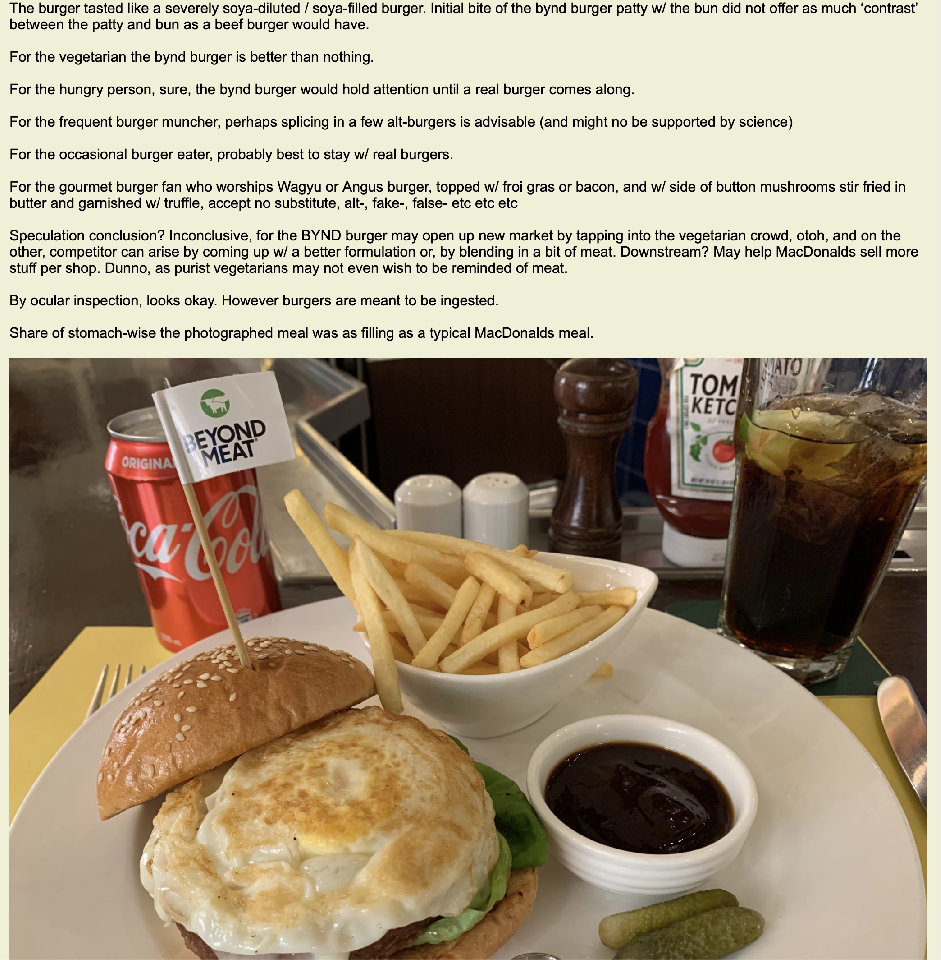
Now we wait for the market to express opinion
I am guessing initial success as curiosity leads folks to try, but once and never again
beyond-meat-s-fake-pork-faces-competition-from-tofu-in-china
Beyond Meat Faces an Ancient Rival in China -- Tofu
The original plant-based protein has been a central feature of mainland cuisine since the first millennium. Why would tastes change now?
David Fickling
22 November 2020, 08:00 GMT+8
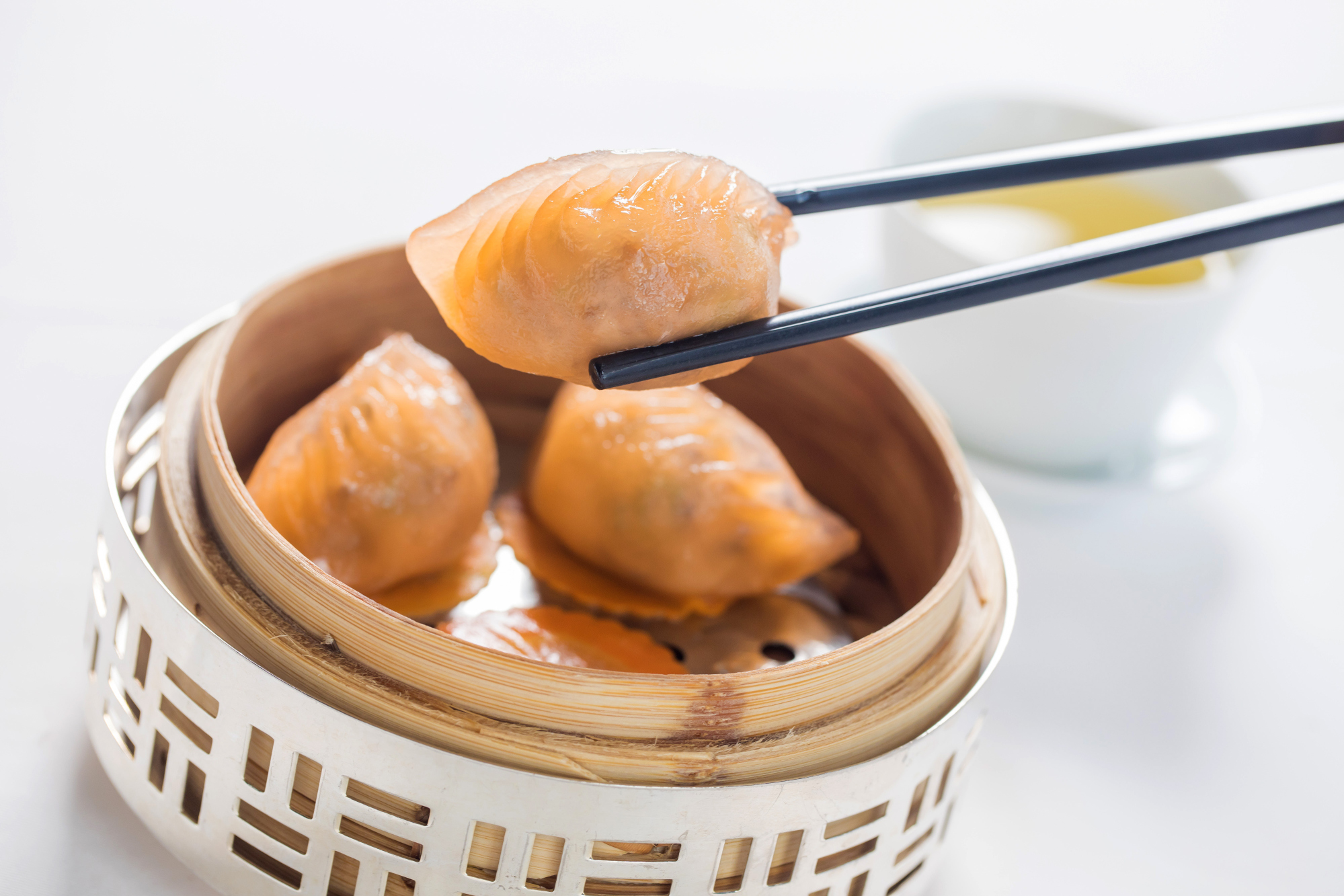
I mean, who knows what's inside, really.
Photographer: Paul Yeung/Bloomberg
You wouldn’t try to sell coal to Newcastle. So how would you rate your chances of peddling meat substitutes to the country that invented tofu?
Beyond Meat Inc., the U.S. maker of plant-based burgers and sausages, on Wednesday announced a new productdesigned to crack China, the world’s biggest meat market: imitation ground pork.
It’s not hard to see why this was a necessary step. For decades, China has consumed about half the world’s pork. Even in the wake of an epidemic of African swine fever, which caused the domestic herd to shrink by nearly a third, pig meat still accounted for about two-thirds of China’s livestock consumption in 2019. (In a good year, it’s more like three-quarters.)
We'll Meat Again
China's per-capita meat consumption has already caught up with Japan
Source: U.S. Department of Agriculture, World Bank, Bloomberg Opinion calculations
Note: No data available for Argentina and India pork consumption. Data is for carcass weight (beef, pork) and ready-to-cook weight (poultry).
That makes a pork substitute absolutely necessary for the factories Beyond Meat plans to open near Shanghai. Despite decades of relatively rapid growth in China, the company's core imitated product, beef, isn’t consumed at anything like the rates in other countries — particularly relative to the one-time ranching cultures of the Americas.
If Beyond Meat wants to get in on vegetarianism among China’s affluent classes, it needs a product to match the market. Hong Kong’s OmniFoods is already widely distributing a ground pork substitute in the city, and mainland player Whole Perfect Food sells vegan bacon. Startups Zhenmeat and Starfield Food Science & Technology, meanwhile, have sought funding to develop their own meat-substitute products.
The real problem is not those young rivals, though, but a much older challenger. Tofu and its soy-based relatives have been a central feature of Chinese cuisine since the first millennium. In the Suiyuan Shidan, an 18th-century cookbook, there are as many recipes for tofu skin-based imitation poultry as there are for beef, which at the time was an exotic food grouped alongside curiosities like palm civet and water deer.
Bean There, Done ThatIn Shanghai, consumption of soy-based foods already accounts for about a fifth of people's diets
Source: Zheng et al, "The Shanghai Women's Health Study: Rationale, Study Design, and Baseline Characteristics", American Journal of Epidemiology, Volume 162, Issue 11, 1 December 2005, Pages 1123–1131; Shu et al, "Cohort Profile: The Shanghai Men’s Health Study", International Journal of Epidemiology, Volume 44, Issue 3, June 2015, Pages 810–818
That hasn’t changed all that much, even today. Studies of around 136,000 Shanghainese men and women in the late 1990s and early 2000s found that soy-based foods comprised about 20% of their diet, roughly twice as large a share as meat products.
You might have expected that mix to change dramatically as China has grown more affluent over the past few decades, but shifts have been surprisingly modest. While poultry and beef consumption increased at a rapid clip in the early 2000s, that pace has slowed over the past decade. The 75 million tons of meat that China consumed in 2017 before swine fever took hold was just slightly less than the 76 million tons eaten five years earlier.
Problems in the food chain can cause more dramatic declines. The 10.4 million metric-ton decline in pork consumption in 2018 amid the African swine fever epidemic was sizeable, but scarcely the only such event in recent Chinese history. In 2011, when a government crackdown on the food additive clenbuterol led to one of the country’s perennial food safety scandals, pork consumption fell by 7.3 million tons. Similar dips occurred after a 2005 streptococcus outbreak.
Where's the Beef?
China's per-capita consumption of meat hasn't increased significantly since the mid-2000s
Source: U.S. Department of Agriculture, World Bank, Bloomberg Opinion calculations
The slowing growth rate of carnivory suggests that, as we’ve argued in the past, the country’s hunger for meat may be nearly sated. Chinese people already consume beef, for instance, in similar quantities to people in Taiwan, Singapore, and Japan. It’s far from certain that appetites will converge on the higher levels seen in some western countries as incomes rise.
China’s official dietary guidelines to halve meat consumption and a more recent campaign against food waste are further signs that the challenges of feeding 1.4 billion people are starting to butt up against hard limits. That’s especially the case at a time when the government is growing more worried about its import dependence on foreign powers.
The selling proposition for meat substitutes in countries like the U.S., Australia, Canada and New Zealand is relatively straightforward. Beef consumption has already been in decline for decades, driven initially by health concerns and the sheer volumes that locals traditionally ate. Many of those who become vegetarians or vegans still have fond memories of the meaty flavors they grew up with. Selling a realistic plant-based alternative is just a way to take advantage of a trend that’s already well underway.
In China, it’s more complicated. The country has about 50 million vegetarians, according to official newswire Xinhua, but meat consumption has risen so fast since the 1980s that fewer will have the atavistic hankering for animal products suffered by their peers elsewhere. On top of that, there’s a rich domestic vegetarian tradition to draw on that’s more affordable than the current wave of imitation muscle. Plant-based pork may yet find a place in China — but this country started moving beyond meat hundreds of years ago.
This column does not necessarily reflect the opinion of the editorial board or Bloomberg LP and its owners.
To contact the author of this story:
David Fickling at dfickling@bloomberg.net
To contact the editor responsible for this story:
Rachel Rosenthal at rrosenthal21@bloomberg.net
Before it's here, it's on the Bloomberg Terminal.
LEARN MORE |



