BOMBSHELL: Sweden hoped herd immunity would curb COVID-19. Don't do what we did. It's not working.
Sweden's approach to COVID has led to death, grief and suffering. The only example we're setting is how not to deal with a deadly infectious disease.
usatoday.com
Sweden has often been considered a leader when it comes to global humanitarian issues, regarded as a beacon of light in areas such as accepting refugees and working against global warming. In the COVID-19 pandemic, Sweden has also created interest around the world by following its own path of using a “soft” approach — not locking down, introducing mostly voluntary restrictions and spurning the use of masks.
This approach has been perceived as more liberal and has shown up in “ Be Like Sweden” signs and chants at U.S. protests. Wherever measures have been lenient, though, death rates have peaked. In the United States, areas that are coming out of lockdown early are suffering, and we are seeing the same in other countries as well.
The motives for the Swedish Public Health Agency's light-touch approach are somewhat of a mystery. Some other countries that initially used this strategy swiftly abandoned it as the death toll began to increase, opting instead for delayed lockdowns. But Sweden has been faithful to its approach.
Why? Gaining herd immunity, where large numbers of the population (preferably younger) are infected and thereby develop immunity, has not been an official goal of the Swedish Public Health Agency. But it has said immunity in the population could help suppress the spread of the disease, and some agency statements suggest it is the secret goal.
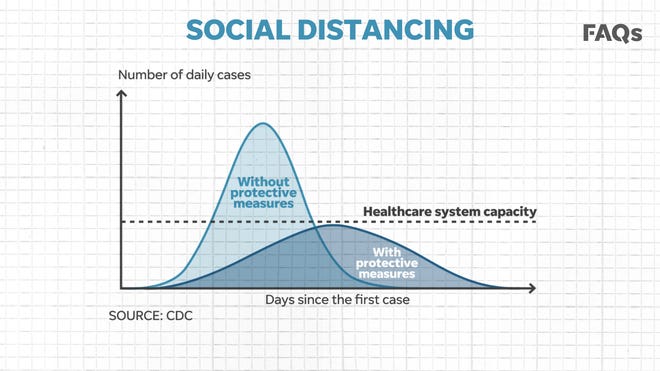
An unnerving death rate Further evidence of this is that the agency insists on mandatory schooling for young children, the importance of testing has been played down for a long time, the agency refused to acknowledge the importance of asymptomatic spread of the virus (concerningly, it has encouraged those in households with COVID-19 infected individuals to go to work and school) and still refuses to recommend masks in public, despite the overwhelming evidence of their effectiveness. In addition, the stated goal of the Swedish authorities was always not to minimize the epidemic, but rather slow it down, so that the health care system wouldn’t be overwhelmed.
Several authorities, including the World Health Organization, have condemned herd immunity as a strategy. "It can lead to a very brutal arithmetic that does not put people and life and suffering at the center of that equation,” Dr. Mike Ryan, executive director of WHO's Health Emergencies Program, said at a press conference in May.
With COVID-19, don’t only focus on death: Too many Americans are alive and in misery.
Regardless of whether herd immunity is a goal or a side effect of the Swedish strategy, how has it worked out? Not so well, according to the agency’s own test results. The proportion of Swedes carrying antibodies is estimated to be under 10%, thus nowhere near herd immunity. And yet, the Swedish death rate is unnerving. Sweden has a death toll greater than the United States: 556 deaths per million inhabitants, compared with 425, as of July 20.
Sweden also has a death toll more than four and a half times greater than that of the other four Nordic countries combined — more than seven times greater per million inhabitants. For a number of weeks, Sweden has been among the top in the world when it comes to current reported deaths per capita. And despite this, the strategy in essence remains the same.
Learn from Sweden's mistakesIt is possible that the Public Health Authority actually believed that the Swedish approach was the most appropriate and sustainable one, and that the other countries, many of which went into lockdown, would do worse. Perhaps this, and not herd immunity, is the main reason the authorities are desperately clinging to their strategy. Or perhaps an unwillingness to admit early mistakes and take responsibility for thousands of unnecessary deaths plays into this resistance to change. Nevertheless, the result at this stage is unequivocal.
Adopting the Swedish model: Coronavirus doesn't care about public opinion and it still kills
We do believe Sweden can be used as a model, but not in the way it was thought of initially. It can instead serve as a control group and answer the question of how efficient the voluntary distancing and loose measures in Sweden are compared to lockdowns, aggressive testing, tracing and the use of masks.
In Sweden, the strategy has led to death, grief and suffering and on top of that there are no indications that the Swedish economy has fared better than in many other countries. At the moment, we have set an example for the rest of the world on how not to deal with a deadly infectious disease.
In the end, this too shall pass and life will eventually return to normal. New medical treatments will come and improve the prognosis. Hopefully there will be a vaccine. Stick it out until then. And don’t do it the Swedish way.
Sigurd Bergmann, Ph.D., Emeritus Professor, Norwegian University of Science and Technology
Dr. Leif Bjermer. Ph.D., Professor, Respiratory Medicine and Allergology, Lund University
Barbara Caracciolo, Ph.D., in Epidemiology
Marcus Carlsson, Ph.D., Associate Professor of Mathematics, Lund University
Dr. Lena Einhorn, Ph.D., in Virology
Dr. Stefan Einhorn, Ph.D., Professor of Molecular Oncology, Karolinska Institutet
Andrew Ewing, Ph.D., Professor of Chemistry and Molecular Biology, University of Gothenburg
Dr. Manuel Felices, Ph.D., Head of Endocrine Surgery, NÄL Hospital
Dr. Jonas Frisén, Ph.D., Professor of Stem Cell Research, Karolinska Institutet
Marie Gorwa, Ph.D., Professor of Microbiology, Lund University
Dr. Åke Gustafsson, Ph.D., Clinical Microbiology, Uppsala University Hospital
Dr. Olle Isacsson, Ph.D., Professor of Endocrinology, University of Gothenburg
Dr. Claudia Hanson, Ph.D., Associate professor, Global public health, Karolinska Institutet
Dr. Stefan Hanson, Ph.D., International Health, Karolinska Institutet.
Dr. Jan Lötvall, Ph.D., Professor of Clinical Allergy, University of Gothenburg
Dr. Bo Lundbäck, Ph.D., Professor of Epidemiology of Respiratory Diseases, University of Gothenburg
Åke Lundkvist, Ph.D., Professor of Virology, Uppsala University
Dr. Cecilia Söderberg-Nauclér, Ph.D., Professor of Microbial Pathogenesis, Karolinska Institutet
Finn Nilson, Ph.D., Associate Professor of Risk Management, Karlstad University
Andreas Nilsson, Ph.D., Professor of Psychology, University of Gothenburg
Dr. Björn Olsen, Ph.D., Professor of Infectious Diseases, Uppsala University
Jens Stilhoff Sörensen, Ph.D., Associate Professor, School of Global Studies, University of Gothenburg
Jakob Svensson, Ph.D., Scientific Data Analysis, Max Planck Institute, Greifswald
Dr. Anders Vahlne, Ph.D., Professor of Clinical Virology, Karolinska Institutet
Dr. Anders Wahlin, Ph.D., Professor Emeritus of Hematology, University of Umeå |



