Russians’ stuff, apparently
zerohedge.com
"He Abandoned The Deadly Cargo": Meet The Mysterious Businessman At Center Of The Beirut Blast Saga
Thus far an official ongoing investigation by Lebanese authorities into the cause of Tuesday's Beirut port blast, now considered the largest non-military munitions explosion in history, has dubbed it severe "negligence".
It's now well known that over 2,500 tons of ammonium nitrate, an ultra-combustible chemical compound utilized in fertilizers and production of explosives, was allowed to sit at the port in a warehouse going back seven years.
Specifically, President Michel Aoun identified that it was no less than 2,750 metric tons of ammonium nitrate that detonated as it was "stored unsafely" — though port officials reportedly attempted to warn the government for years that it must be moved. A number of port officials have been placed under house arrest pending the investigation.
An undated photo of the vessel Rhosus, via The National/EPA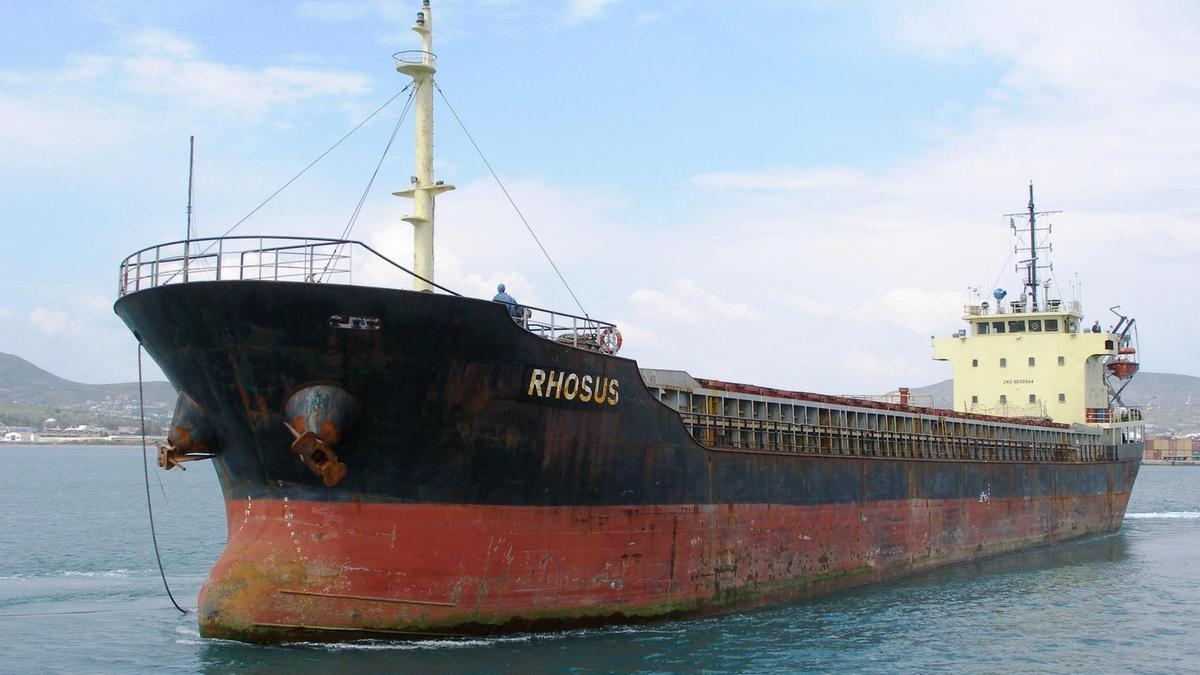
Detroit man from Beirut talks about explosions in capital
Customs chief Badri Daher has told international media that his agency pleaded with Lebanese courts and high officials to order the chemical removed. Daher says the request for urgent removal was made six times to the judiciary over the years, all denied.
"This did not happen," he said. The end result after the dangerous chemical — which is the same use in the deadly 1995 Oklahoma City bombing — was stored there since 2013 (also in undiluted form), was the most destructive blast in Lebanese history, killing over 135 people and injuring more than 5,000 - not to mention an estimated three billion dollars in damage.
"Legal documents, court correspondence and statements by public officials now trying to pass the buck shed light on the operations of the port, which has been dogged by allegations of widespread bribery and controlled in large measure by the militant Hezbollah group," The Washington Postreports.
And the almost unbelievable story of how the explosive substance got there has emerged. It's centered on a derelict and leaking vessel leased by a Russian businessman living in Cyprus. In 2013 the man identified as Igor Grechushkin, was paid $1 million to transport the high-density ammonium nitrate to the port of Beira in Mozambique. That's when the ship, named the Rhosus, left the Black Sea port of Batumi, in Georgia.
UK Daily Mail and The Siberian Times has published the above photograph of Igor Grechushkin, reported to be still residing in Limassol, Cyprus with his wife. Image: Ren TV But amid mutiny by an unpaid crew, a hole in the ship's hull, and constant legal troubles, the ship never made it. Instead, it entered the port of Beirut where it was impounded by Lebanese authorities over severe safety issues, during which time the ammonium nitrate was transferred off, and the largely Ukrainian crew was prevented from disembarking, leading to a brief international crisis among countries as Kiev sought the safe return of its nationals. But amid mutiny by an unpaid crew, a hole in the ship's hull, and constant legal troubles, the ship never made it. Instead, it entered the port of Beirut where it was impounded by Lebanese authorities over severe safety issues, during which time the ammonium nitrate was transferred off, and the largely Ukrainian crew was prevented from disembarking, leading to a brief international crisis among countries as Kiev sought the safe return of its nationals.
Meanwhile, Igor Grechushkin - believed to still be living in Cyprus - reportedly simply abandoned the dangerously subpar vessel he leased, as well as its crew, never to be heard from again.
According to a damning legal briefing at the time:
"...the vessel was abandoned by her owners after charterers and cargo concern lost interest in the cargo. The vessel quickly ran out of stores, bunker and provisions."
The ammonium nitrate was supposed to be auctioned off, but this never happened. Apparently exasperated customs and dock officials even suggested Lebanese farmers could simply spread it across their fields for a good crop yield. But not even this simple solution was heeded, nor proposals to give it to the Lebanese Army.
During the standoff which created a diplomatic rift between Ukraine and Lebanon: the largely Ukrainian crew was prevented from leaving the ship, even at times struggling to get food.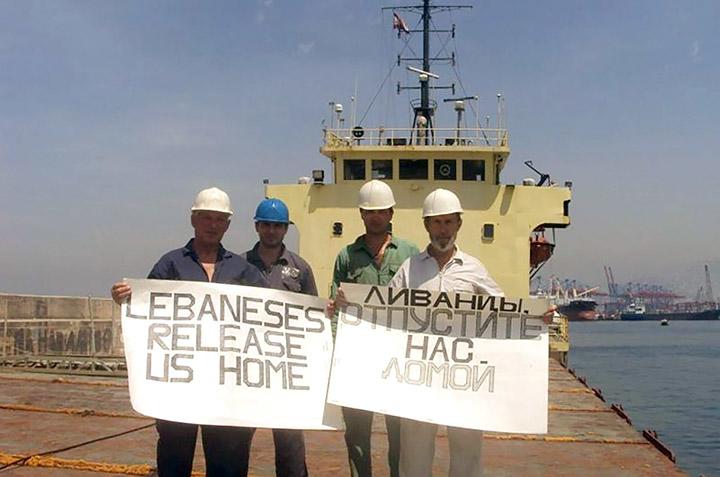 Via The Siberian Times: "The crew - eight Ukrainian and two Russian men - was forced to stay on board of the vessel while the owner Grechushkin declared himself bankrupt and ‘abandoned the ship’. Lebanese authorities agreed to let six out of ten sailors to leave the country, others were left stranded on the ship for almost a year. Via The Siberian Times: "The crew - eight Ukrainian and two Russian men - was forced to stay on board of the vessel while the owner Grechushkin declared himself bankrupt and ‘abandoned the ship’. Lebanese authorities agreed to let six out of ten sailors to leave the country, others were left stranded on the ship for almost a year.
Instead the deadly substance languished at port, and the Rhosus sank in the harbor years later. The last crew members weren't allowed to leave the ship and return home until August 2014. Grechushkin may have paid for their return tickets at that time.
WaPo relates:
“Owing to the risks associated with retaining the Ammonium Nitrateon board the vessel, the port authorities discharged the cargo onto the port’s warehouses,” lawyers acting on behalf of creditors wrote in 2015. “The vessel and cargo remain to date in port awaiting auctioning and/or proper disposal,” it added.
And then later, more warnings, which apparently are in writing in legal documents:
“In view of the serious danger posed by keeping this shipment in the warehouses in an inappropriate climate,” Shafik Marei, the director of Lebanese customs, wrote in May 2016, “we repeat our request to demand the maritime agency to re-export the materials immediately.”
Astoundingly, even lawyers which had represented the effectively abandoned crew of the ship (which Ukrainian media at the time said were "hostages" of the Lebanese government) while it had been detained at port warned Lebanese government officials that the sensitive cargo was in danger “of sinking or blowing up at any moment”.
Yet these series of warnings went unheeded for years amid a notoriously corrupt and inept Lebanese system.
Meanwhile, the fate of the man originally at the center of the saga, whose decision to simply abandon the leaky ammonium nitrate laden ship in the first place, remains somewhat of a mystery and is now largely being overlooked in international media reports. Strangely, it doesn't even appear that Lebanese law enforcement is eager to talk to him just yet.
Cypriot media is saying Igor Grechushkin is not a Cypriot passport holder but is indeed residing in the EU country. Local authorities have indicatedthey are ready to bring him in for questioning, but they haven't received a request from either Lebanese authorities or Interpol. Cypriot police spokesman Christos Andreou announced Thursday: “We have already contacted Interpol Beirut and expressed our readiness to provide them with any assistance they need, if and when our assistance is requested.”
Why hasn't this happened? So far a few scant details have emerged via a Russia-based English language publication called The Siberian Times. It's also included what it says is the first photographs to have emerged of Grechushkin.The publication reports the following details:
‘The owner of the ship Igor Grechushkin effectively abandoned the ship and the remaining crew.'
'He is not providing us with money, he completely deprived us of all means of communication.
'He told us that he went bankrupt and while I don’t believe him, the most important thing is that he gave up on both the people and the cargo’, wrote captain Boris Prokoshev back in June 2014 in a desperate plea to international organisations, diplomats, authorities of Ukraine and the authorities of the port of Beirut to release them.
Igor Grechushkin is reported to be still residing in Cyprus with his wife.
The Daily Mail has since republished the photographs of Grechushkin and his wife, writing that the Russian businessman "currently lives in Cyprus with wife Irina - has been accused of abandoning his ship in Beirut loaded with the lethal load."
Given that Lebanese officials are now decrying a "crime against humanity" in having stored the deadly cargo at the port in the first place, one would think Grechushkin would at least be subject of investigation along with whatever top Lebanese officials willfully ignored the ticking time bomb in their midst.
Sent from my iPad |



