Re <<History not taught here>>
that sort of history taught in China as a matter of course Message 33006127
along with all sorts of other histories, as a matter of course
however the neo people insist on fight fight fight china china china, and so it goes, per history doesn't matter even if one does not know it crowd, and the more one fights, and spend pointlessly, the weaker the state of the fight, per history, once-in-800-years, returning sovereign, etc etc
just mathematics, arms, legs, but most important, brains, a guess
it is interesting that Team America is getting Teams India and Taiwan and and and to spend pointlessly on weapons to expensive and ill-fit purpose especially given current days total lack of strategic depth of any domain not of strategic depth
N. Korea has its uses, for a small cost triggers billions and billions of counter-spending that at best is a distraction and worst a trap. Iran is a self-made distraction / trap. Another guess.
best to let nature take natural cyclical course, but that is against the tenet which spawns central banks, and so we have fractal / multi-level / systemic happenings, all confluenc-ing towards 2026 / 2032
so, in the meantime, small prairie fires here, there, and a lot of places
bloomberg.com
China’s Inexorable Rise to Superpower Is History Repeating Itself
The country looks like a latecomer to Americans and other Westerners—but from its own perspective, this is a restoration.
More stories by Michael Schuman
27 October 2020, 16:00 GMT+8
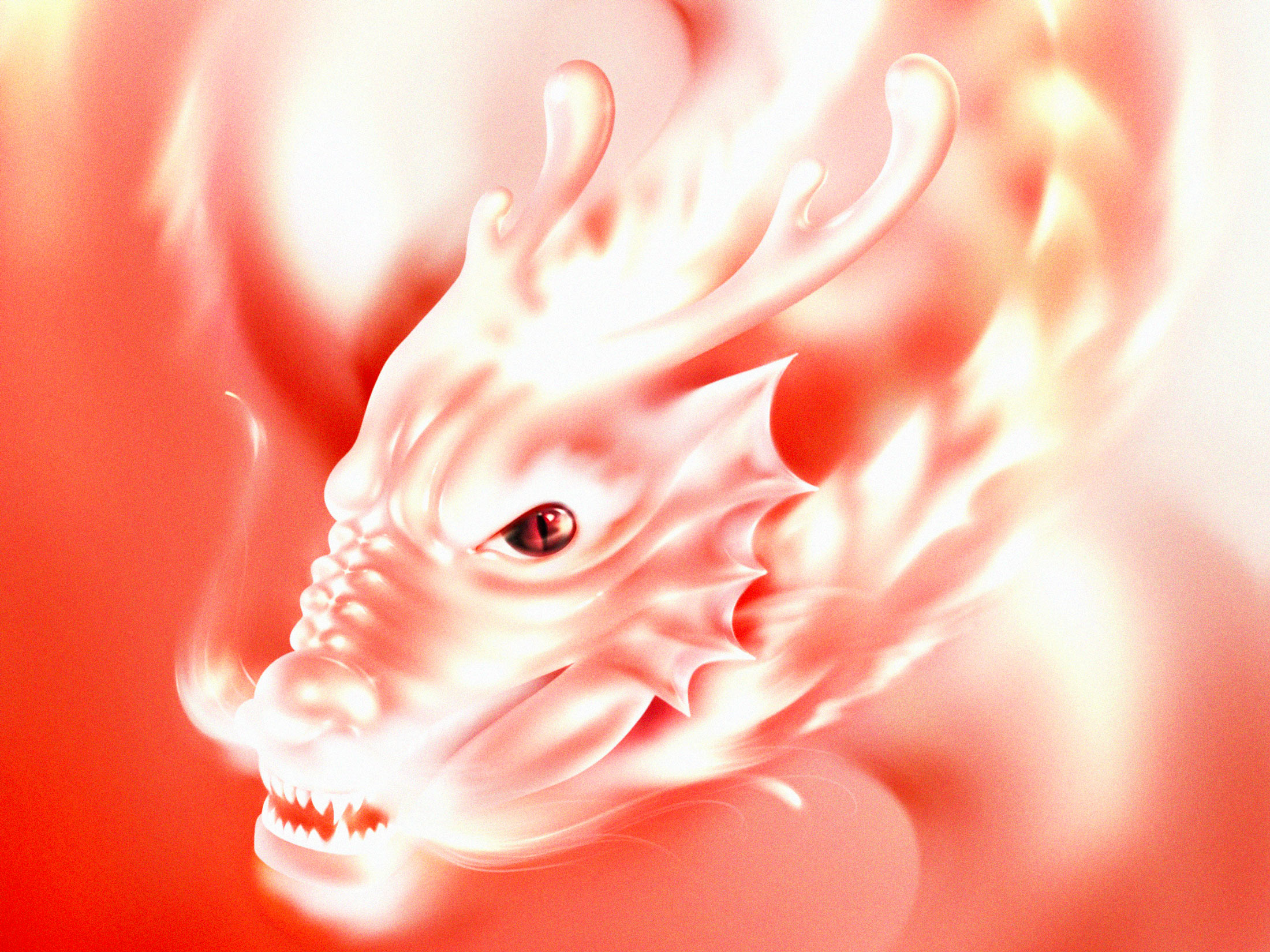
Illustration: Shuhua Xiong for Bloomberg BusinessweekNo foreign policy issue will plague the winner of the White House more than China. There’s already a debate raging among China watchers over what Washington’s next steps should be. Some favor a “reset” to tamp down tensions and return to more constructive diplomacy. Others are fearful of that very reset and argue the U.S. mustn’t stray from the hard line.
The choices made by the next administration will be critical. As the U.S. struggles to contain the coronavirus outbreak and restart its economy, China appears to be gaining strength. Its gross domestic product expanded 4.9% in the third quarter, an astounding rebound in a world still mostly mired in a pandemic-induced paralysis. (Official Chinese data have to be taken with several grains of salt, but economists generally agree the economy is rapidly on the mend.) In its own foreign policy, Beijing has barely flinched under U.S. pressure and instead has become more assertive—enhancing its influence in global institutions such as the World Health Organization, crushing the pro-democracy movement in Hong Kong, turning up the heat on Taiwan, and brawling ( literally) with India along their disputed border.
But before the U.S. and its allies can move forward, they have to look back to figure out how the world got to this point with China in the first place. The consensus holds that Washington’s policy of engagement was a grave error that created a dangerous adversary to the U.S. and democracy itself. But that’s certainty born of hindsight.
The West really got China “wrong” by understanding the country’s arrival as a major power within the confines of its own—not China’s—historical experience. Because of that, we in the U.S. and the West talk and think about China the wrong way and craft policies mismatched to the deep historical trends shaping today’s China and its role in the world.
The key is to see the country as the Chinese see it and to place China within the context of its history, not ours in the West. With that, another China emerges that demands a different set of policies. Without this altered understanding of China, Washington policymakers will struggle to contend with Beijing and its intensifying challenge to American global primacy.
The problem starts in high school. Mine, in Clifton, N.J., offered the option of U.S. history or U.S. history. We learned about other parts of the world only when they drifted into the American narrative. China made an occasional cameo: John Hay’s Open Door Policy, or Chiang Kai-shek’s World War II alliance against Japan. A lot of us were probably taught history in a similar manner—through the prism of our own story.
Prisms, though, distort. It just so happens Americans encountered China at one of the darkest points in its history. China in the 19th and early 20th centuries was politically decrepit, militarily inept, economically archaic, and, as Westerners saw it, socially backward. We were left with an image of the country that at best was an unmodern realm of quaint rice paddies and silk-robed mandarins; at worst, a war-torn basket case drenched in destitution and decay. Sure, we all know something of China’s glittering past—of bejeweled emperors, their grand palaces, and the engineering genius of the Great Wall. But that China is beyond our prism.
That skews the way we describe and discuss China today. We call it an “emerging market,” which it is within the boundaries of our own view. But twist the prism, and Chinese poverty is a fairly recent aberration. The country had consistently been one of the world’s largest economies over the past 2,000 years—and still was well into the 19th century. That’s why Westerners who visited China were awestruck by riches exceeding anything they’d witnessed in Europe. When the first Portuguese seafarers made their way to Guangzhou in the early 16th century, they gasped at silk flags as large as sails. “Such is the wealth of that country,” reads one contemporary Portuguese account, “such is its vast supply of silk, that they squander gold leaf and silk on these flags where we use cheap colors and coarse linen cloth.”
Rather than something startling, China’s growth into the world’s second-largest economy is a return to the norm. So is the critical role it plays in modern manufacturing and trade. We grouse that China has “stolen” our factories and fret over how much stuff at Target is “ Made in China.” Historically, though, the country had been a major manufacturing center and premier exporter, capable of producing valuable goods on a mind-boggling scale. The Song dynasty (960-1279) experienced a near-industrial revolution seven centuries before England’s. Silk and porcelain, both Chinese inventions, were among the world’s first truly global consumer products, the iPhones of their age. Centuries before Vasco da Gama felt his way to India in 1498, China was the beating heart of a global economic system, with trade links stretching from South China, across Southeast Asia and the Indian Ocean, to the Persian Gulf and Red Sea.
We also talk of the “rise of China” as if it’s astonishing and unique. Yet China has “risen” many times before. One of the most remarkable features of its history is how frequently the Chinese were able to rebuild their society into a major power after periods of decline, political disorder, and invasion. This latest period of weakness, with China subordinated to the Western world, hasn’t been all that long by the standards of Chinese history. For the first 300 years of direct and consistent contact between China and the West—beginning in the early 16th century—the emperors retained the upper hand over the seaborne Europeans. It wasn’t until the Qing dynasty’s defeat by the British in the first Opium War (1839-42) that the balance of power swung to the West. From the standpoint of Chinese history, what’s unusual about modern Asia is the dominance of the West, not the return of China as a regional powerhouse.
A much better way to describe the country’s 21st century ascent is as a “restoration,” not so unlike the many imperial restorations of the past. The current regime, though not a dynasty topped by an emperor (at least officially), is rebuilding the traditional pillars of Chinese greatness—economic, political, military, and (less successfully) culturally—much like the Tang, Song, or Ming dynasties had in their day.
Thinking of modern China’s growing power as a restoration forces a shift in how we contend with it. We in the West discuss how to fit China into the global political and economic order we created. But China was never going to be content being a mere cog in the Western machine. For much of its history, it sat at the center of its own world order, based on a distinctly Chinese form of foreign relations and governed by Chinese diplomatic ideals and practices, with roots dating back more than 2,000 years. The Chinese rules of diplomacy and trade were based on the at least ceremonial stature of China as a superior civilization, perched at the top of a hierarchy of societies. Other kings and chiefs had to display their respect by giving tribute to the emperors, who then considered them vassals. With the resurgence of Chinese political and economic clout, Beijing is resurrecting some of these traditional foreign policy precepts. President Xi’s pet project, the infrastructure-building “ Belt and Road” initiative, treats its participants as little more than supplicants to the throne, which can benefit from China’s bounty only by playing by Beijing’s rules and performing the proper kowtows.
The first step in dealing with a Chinese restoration is to accept that China wants to be and most likely will be a global superpower. The notion that the U.S. can “stop” China is a nonstarter. Washington can slow things up by withholding technology and disrupting trade. But the Chinese believe that, based on their history, they have a right to be a superpower, and an approach meant to “keep China down,” as they see it, will generate conflict but few tangible results. Similarly, efforts to compel China to “play by the rules,” as in our rules, are almost equally hopeless. The Chinese perceive the Western world order as an imposition on an East Asia they’d usually dominated, so they’re far more likely to assert their own rules than follow ours.
A better route is to allow China more diplomatic space in areas where it doesn’t fundamentally damage U.S. interests. Washington has fallen into a pattern of contesting Beijing on everything, which makes the Chinese feel unduly contained. If Washington stops opposing their initiatives at every turn, and is occasionally even supportive, the Chinese will sense they’re getting the respect they deserve, at minimal cost to U.S. influence. So if Beijing wants to set up its own international institutions, as it did with the Asian Infrastructure Investment Bank, just let it. Maybe even join, to sway the projects from within. Ditto with Belt and Road. If Beijing wants to lose money and alienate other governments building uneconomic railways and roads, we should wish it the best. Still, today’s China does present a threat. Its history suggests Beijing will expect to be the dominant power in East Asia (at the very least). That’s too vital a region to concede to China, and the U.S. will need to protect its core interests there. Best to do so with deft diplomacy through international organizations or alliances rather than vitriol-filled, one-on-one slugfests, as the Trump administration has attempted. A restored Chinese “empire” will likely be too strong, and too determined, to assert its normal position in Asia to be taken on alone. For instance, to contain China in the South China Sea, which the Chinese consider to be almost entirely their territory, organize the contending parties in Southeast Asia into a collective and prod Beijing to negotiate. Perhaps cooperate with the Association of Southeast Asian Nations as a possible forum. Working within the World Trade Organization to influence China, rather than outside of it, is also smarter. Chinese leaders badly crave international stature and acclaim, and that desire can be turned against them within these bodies to alter Chinese policy.
Most of all, a U.S. policy that recognizes Chinese history doesn’t equal a soft one. Washington must still target China’s bad practices, more carefully but also more forcefully. Chinese companies and officials with proven records of stealing technology or participating in human-rights abuses, such as the mass detention of minority Uighurs, should be sanctioned. Duties ought to be slapped on Chinese exports that are unduly subsidized by the state. When possible, draft policies to deal with the risks China presents without making them blatantly anti-China. For example, instead of banning Chinese apps such as WeChat, devise a broader policy to protect U.S. privacy and data from all possible foreign threats. The U.S. should continue to loudly proclaim support for civil liberties by backing Hong Kong democracy advocates and the democratic government of Taiwan.
Contesting these outrages are not a fight with “China,” but with the Chinese Communist Party. The party asserts the two are equivalent, but they aren’t. The scholar-statesmen who managed imperial China, steeped in Confucianism, believed good government was founded on benevolence, not brutality, and Chinese history’s most tyrannical rulers were usually looked upon with scorn by the Confucians. We should follow their lead.
I don’t believe in historical inevitabilities: Just because China has restored itself to great power status in the past doesn’t automatically mean it will now. Contemporary China is still a middle-income country lacking key technologies and plagued by an artificially aging population; it has a long way to go to become a global superpower. Yet from a policy standpoint, it’s wiser to recognize the historical trends propelling it forward and rejigger the world order to address Chinese aspirations (though not its autocracy). It won’t be easy. But neither is denying history.
Read next: China Made an Epic Dash for PPE That Left the World Short on Masks |



