Re <<China choosing to eat less ... Mercantilism is inherently brittle ...>>
Yeup, less Australian eats. Mercantilism brittle, doubtless, but Neo-lapdog-ism possibly more fragile.
More for HK. Australian wines and beef on sale. All seems good.
(1) My read re the dragon in the middle of the living room ... all about the deep-state Neo boys trying at isolating / encircling China China China, and as events go, China more integrated w/ what remains of globalisation, than ever, since 2016, and trending well, by all the numbers that matter, MSM spin notwithstanding. The Boyz frustrations palpable, and desperation clear, just by reading between the lines of suspect MSM.
(2) Am sure a regime-change shall happen in Australia and same same in Canada, ... on down the line, and as the Aussies know well exactly what their leaders did as lapdog for Pompeo pat on the head, they shall make leaders better understand not to mistreat best customers. One cannot eat missiles for breakfast and pitch spin for revenue, especially when such cost treasure that must be borrowed or taxed, or printed. The printing has been astounding in 2020.
(3) Am going to guess that Team Biden shall fail w/r to China China China policies whatever they may be over the next 4 years, simply because the get-ho premise all wrong such that no workable policy can arise from wrong premise, and shall be replaced in 2024, then ... and on down the eons until history replays decisive moments that make the cover of magazines.
(4) Currently Australian leadership is put in a position to try to soft paddle war crimes, and am unsure that they have a pardon-system for outgoing prime ministers. Good luck to such leaders.
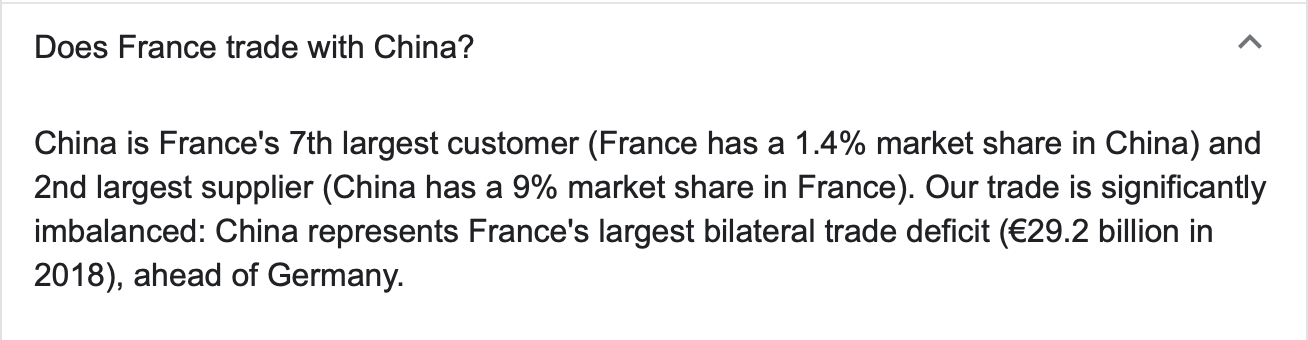
(5) Interestingly the French leadership tried to come to Australia's defence on excuse that Chinese individuals should not use caricature artwork on twitter posts, so conveniently forgetting that France was and is defending right to do exactly the same at risk to its social tranquility between the various religious followers in that land. Team China already pointed out French hypocrisy, signalling the possibility of stirring the French social pot unless the French behaves better towards their best customer.
Basically we are talking about hipocritical lesser domains pretending that days of empire still around.
(6) Team America a/k/a Pompeo did come to Australia's defence w/r to the war crimes controversy, but that is understandable, as the criminal troops are in Afghanistan because they are all in Afghanistan as part of the coalition of the willing, sharing 'shared values' according to the pitching politicians.
(7) Team China, usually silent on affairs elsewhere, now choosing to call out spins and spinners, and that is proving inconvenient, because the global south is tee-ed up and not morons at the grassroots level, unlike in the 'developed' domains.
(8) There are a lot of unusual diplomacy manners / happenings since 2016, and from look of trends, becoming usual going forward.
(9) But, less controversial, re wine, and stuff that go with such ...
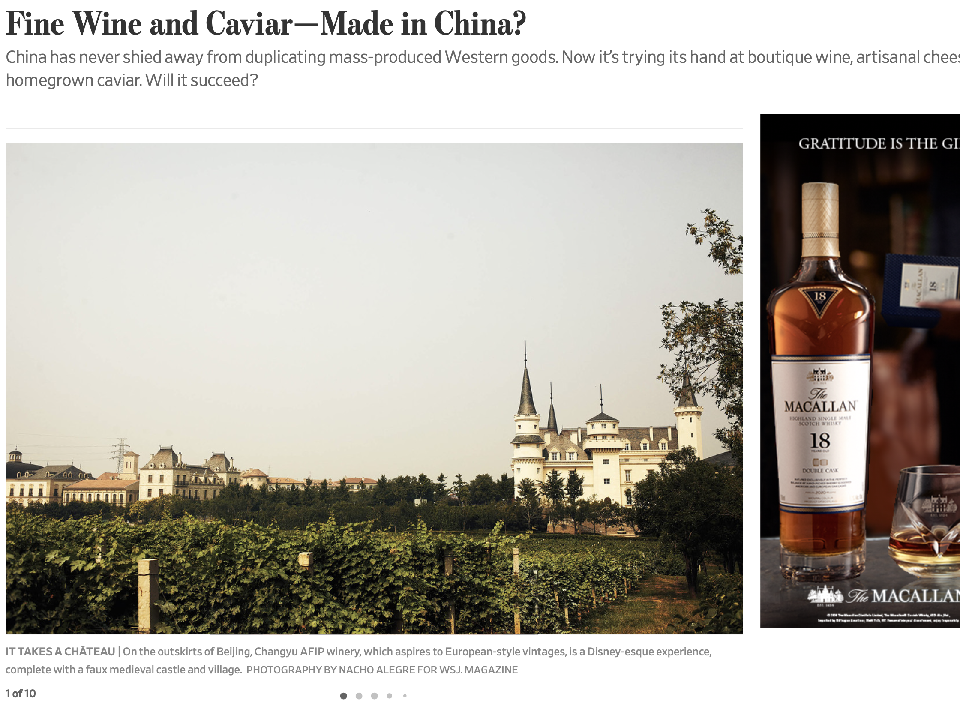
I have paid attention to China wine, cheese, and caviar sectors, and although have not made a habit of Chinese wine and cheese, preferring products from my other ancestral land, had grown fond of China caviar sold at CitySuper at IFC and TimeSquare, alongside the usual from Iran, Russia, and Japan. The stuff is slightly different but covers the range from sharp to less sharp, per individual taste, and certainly cost less due to supply / demand, as opposed to taste / quality. It is good when stuff is mis-priced but needed Message 29835928 (China ... wine ... cheese ... caviar, circa 6 years ago ... when WSJ asked a what I would consider silly question)
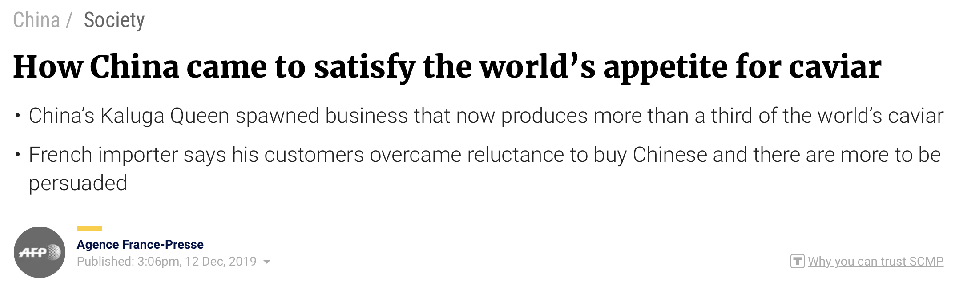
Now, 6 years later, in the case of caviar, almost being Rare Earth-ed scmp.com
A guess, that before 2032 China should be able to replace Australia as #6 wine producer on the planet.
in the meantime, SCMP asks another of what I would consider a silly question ...
abc.net.au
China's wine industry is growing fast, but can it replace Australian exports?
updated Yesterday at 11:35am

The wine industry in China has significantly grown in the past decade.(Flickr: Matt Kowalczyk)Grape wine has become a status symbol in China's growing middle class in recent years, and the country has quickly become Australia's largest wine export market.
But on Saturday, Beijing imposed punishing tariffs of up to 200 per cent on Australian wine imports after accusing Australian producers of selling wine below the cost of production.
It's a blow worth $1.2 billion a year, and yet another broadside in escalating trade disputes which have also hit Australia's barley, timber, beef and lobster industries.
China's Ministry of Commerce said importers of Australian wine would need to pay temporary "anti-dumping security deposits" to undo the harm caused to the Chinese wine industry.
Iron ore out of bounds

China has targeted everything from Australian barley to coal, wine to tourists and students, but it isn't likely to come after our biggest export, iron ore. Ian Verrender explains why.
Read more
While the Chinese wine industry is not as established as Australia's, it's also not one which should be discounted.
Some experts have said China is one of the most important emerging grape wine markets in the world.
Last year alone, China produced more than 800 million litres of grape wine and had the second largest vineyard area worldwide, according to German consumer and market database Statista.
That makes it the tenth largest wine producer in the world. By comparison, Australia is the sixth largest, producing 1.2 billion litres of wine between 2018–2019.
What's unique about 'made in China' wines?

Red and white wine makes up just a small percentage of alcohol consumption in China.(ABC News: Brant Cumming)Chinese wines, like Australian wines, are considered new world wines — a term used by sommeliers to describe wines which are not grown from traditional regions such as Italy or France.
Kym Anderson, executive director at the Australian-based Wine Economics Research Centre, said winemaking in China goes back 3000 years, but only recently began to be treated as a commercially viable product for the burgeoning elites to enjoy.
China's eastern Shandong province and northern Hebei province count for more than half of China's domestic wine production.
And large wineries, such as Changyu, have plenty of capital behind them and employ "high-quality winemakers", including from Australia and France.
While the industry is still considered relatively small, there is "plenty of scope for it to rise" with the quality of its wine continuously improving, Mr Anderson said.
China also has several award-winning boutique wineries which are internationally recognised — one of them is owned by Wang Fang.

Wang Fang owns an award-winning boutique Chinese winery.(ABC News)Her winery is on the Helan mountains in the north-central region of Ningxia — an area that is considered a rising star in wine production and locally known as the Bordeaux of China.
"So many wines from around the world are being sold in China, that made me feel like we need to have our own good wines," she told the ABC.
Ms Wang has won top international awards and produced one of the first Chinese grape wines to break into the Australian market.
She said the clay and limestone gravel soil in the area was very rich in minerals and polyphenol materials, which give the grapes a distinct taste.
"For wine grapes, products from Ningxia have great sugar-acid ratio, layering and thickness that fit Chinese palettes. It's especially popular in the Chinese market," she said.
"Wines from our region, which consists of large areas of deserts, are really strong and powerful, and the colour is very beautiful as well.
"As long as us Chinese winemakers don't rush too much and take it slowly step by step, we can definitely make great wines."
Consumers prefer rice wine to grape
 Wine has joined other Australian export products in attracting Chinese tariffs.(Pixabay) Wine has joined other Australian export products in attracting Chinese tariffs.(Pixabay)
The Chinese market has an overarching preference for red wine — with 90 per cent of imported wines being of a red variety, according to Mr Anderson.
But overall, both red and white wines account for only 4 to 5 per cent of China's alcoholic beverage consumption, with traditional rice wine and beer still the most popular across the country.
Lu Jiang, a Beijing-based Chinese wine industry consultant, told the ABC there hadn't always been local interest in drinking wine.
"The Chinese wine industry had a low starting point … [it] doesn't have a history of drinking wine [because] people mostly drink Chinese liquor," he said.
However, as the country's middle class grew, so did the industry.
Have we hit peak China?
As trade and political tensions simmer, speculation swirls about what's really going on between the two nations — and what's next on a Chinese sanctions "hit list".
Read more
Mr Lu said it had been put through a "forced transformation" to compete with imported wines from regions like Europe and Australia, which have "a better balance of cost and quality".
Chinese wine is not only popular domestically with consumers seeking "the latest thing", according to Mr Anderson, but also exported internationally — often making its way to Chinese restaurants around the world.
While the industry is still considered relatively small, there is "plenty of scope for it to rise" with the quality of its wine continuously improving, Mr Anderson said.
"Like in North Europe, for example, where there were mostly spirits or beer drinkers until 20 to 30 years ago, now they drink as much wine as Australia or England does per capita," he said.
"You can see these rapid transformations as something becomes fashionable, so it isn't out of the realms of possibility that the Chinese consumption could grow rapidly."
Can it replace Australian wine exports?
 The Chinese wine industry will be affected without Australian wines, an expert says.(Penfolds: AAP) The Chinese wine industry will be affected without Australian wines, an expert says.(Penfolds: AAP)
China certainly has the ability to become one of the world's biggest winemakers, but it's not quite there yet.
However, Mr Anderson said it was difficult to gather up-to-date data from China's wineries and export market, and the figures could often be "exaggerated".
He co-wrote that China has a "double-counting issue" in a study published in the Journal of Wine Economics titled: How much wine is really produced and consumed in China, Hong Kong, and Japan?
"Domestic wine produced in one region of the country may be blended with wine produced in and packaged for final sale from another region, with both regions claiming it as their contribution to national wine output," the article reads.
Australia's place in the global order is shifting
Scott Morrison has sent a message to China that Australia will not be America's "deputy sheriff" and Canberra won't be making decisions based on a choice between Washington and Beijing, writes Stan Grant.
The journal article also states: "Much of the wine that is imported by China in bulk containers is bottled as is or blended with domestic wine and sold in bottles labelled 'Product of China'," which then decreases the country's ability to strictly rely on their own products to fulfill the domestic market demands.
However, that doesn't mean it's reliant on Australian imports, as the Chinese Government could replace Australian wines by seeking out other foreign markets such as Italy or Chile.
"Wine importers are considering replacements with the possible exit of Australian wine and already initiated other countries' wine companies and Chinese domestic brands to compete for the market share," Mr Lu said.
He added that although the Chinese wine industry would be affected without Australian wines, the gap would also help grow the Chinese wine industry. |



