The life span of humans – opposed to life expectancy, which is a statistical construct – hasn’t really changed much at all – Walter Scheidel
“There is a basic distinction between life expectancy and life span,” says Stanford University historian Walter Scheidel, a leading scholar of ancient Roman demography. “The life span of humans – opposed to life expectancy, which is a statistical construct – hasn’t really changed much at all, as far as I can tell.”
Life expectancy is an average. If you have two children, and one dies before their first birthday but the other lives to the age of 70, their average life expectancy is 35.
That’s mathematically correct – and it certainly tells us something about the circumstances in which the children were raised. But it doesn’t give us the full picture. It also becomes especially problematic when looking at eras, or in regions, where there are high levels of infant mortality. Most of human history has been blighted by poor survival rates among children, and that continues in various countries today.
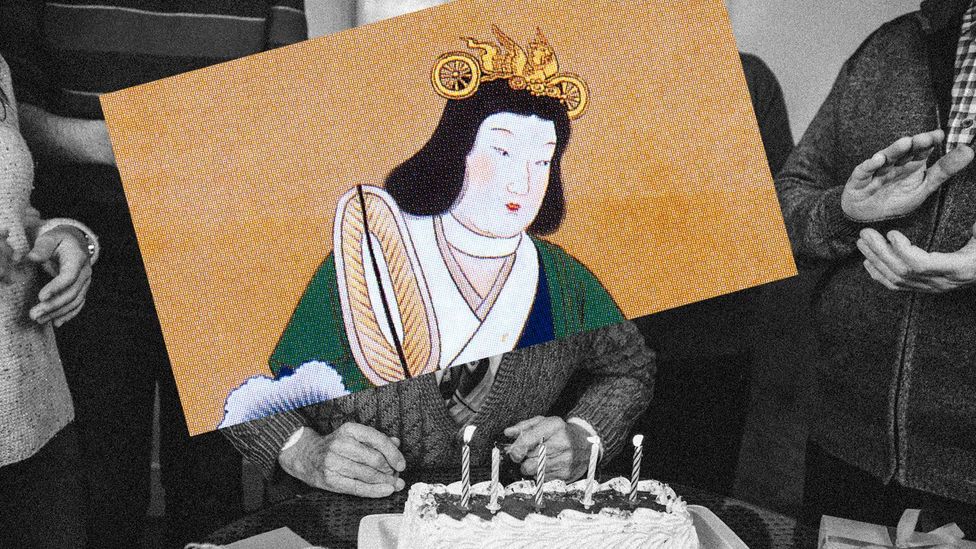
The 6th-Century ruler Empress Suiko, who was Japan’s first reigning empress in recorded history, died at 74 years of age (Credit: BBC/Getty)
This averaging-out, however, is why it’s commonly said that ancient Greeks and Romans, for example, lived to just 30 or 35. But was that really the case for people who survived the fragile period of childhood, and did it mean that a 35-year-old was truly considered ‘old’?
If one’s thirties were a decrepit old age, ancient writers and politicians don’t seem to have got the message
If one’s thirties were a decrepit old age, ancient writers and politicians don’t seem to have got the message. In the early 7th Century BC, the Greek poet Hesiod wrote that a man should marry “when you are not much less than 30, and not much more”. Meanwhile, ancient Rome’s ‘cursus honorum’ – the sequence of political offices that an ambitious young man would undertake – didn’t even allow a young man to stand for his first office, that of quaestor, until the age of 30 (under Emperor Augustus, this was later lowered to 25; Augustus himself died at 75). To be consul, you had to be 43 – eight years older than the US’s minimum age limit of 35 to hold a presidency.
In the 1st Century, Pliny devoted an entire chapter of The Natural History to people who lived longest. Among them he lists the consul M Valerius Corvinos (100 years), Cicero’s wife Terentia (103), a woman named Clodia (115 – and who had 15 children along the way), and the actress Lucceia who performed on stage at 100 years old.
Then there are tombstone inscriptions and grave epigrams, such as this one for a woman who died in Alexandria in the 3rd Century BC. “She was 80 years old, but able to weave a delicate weft with the shrill shuttle”, the epigram reads admiringly.
Not, however, that ageing was any easier then than it is now. “Nature has, in reality, bestowed no greater blessing on man than the shortness of life,” Pliny remarks. “The senses become dull, the limbs torpid, the sight, the hearing, the legs, the teeth, and the organs of digestion, all of them die before us…” He can think of only one person, a musician who lived to 105, who had a pleasantly healthy old age. (Pliny himself reached barely half that; he’s thought to have died from volcanic gases during the eruption of Mt Vesuvius, aged 56).
In the ancient world, at least, it seems people certainly were able to live just as long as we do today. But just how common was it?
Age of empires
Back in 1994 a study looked at every man entered into the Oxford Classical Dictionary who lived in ancient Greece or Rome. Their ages of death were compared to men listed in the more recent Chambers Biographical Dictionary.
Of 397 ancients in total, 99 died violently by murder, suicide or in battle. Of the remaining 298, those born before 100BC lived to a median age of 72 years. Those born after 100BC lived to a median age of 66. (The authors speculate that the prevalence of dangerous lead plumbing may have led to this apparent shortening of life).
The median of those who died between 1850 and 1949? Seventy-one years old – just one year less than their pre-100BC cohort.
Of course, there were some obvious problems with this sample. One is that it was men-only. Another is that all of the men were illustrious enough to be remembered. All we can really take away from this is that privileged, accomplished men have, on average, lived to about the same age throughout history – as long as they weren’t killed first, that is.
Still, says Scheidel, that’s not to be dismissed. “It implies there must have been non-famous people, who were much more numerous, who lived even longer,” he says.
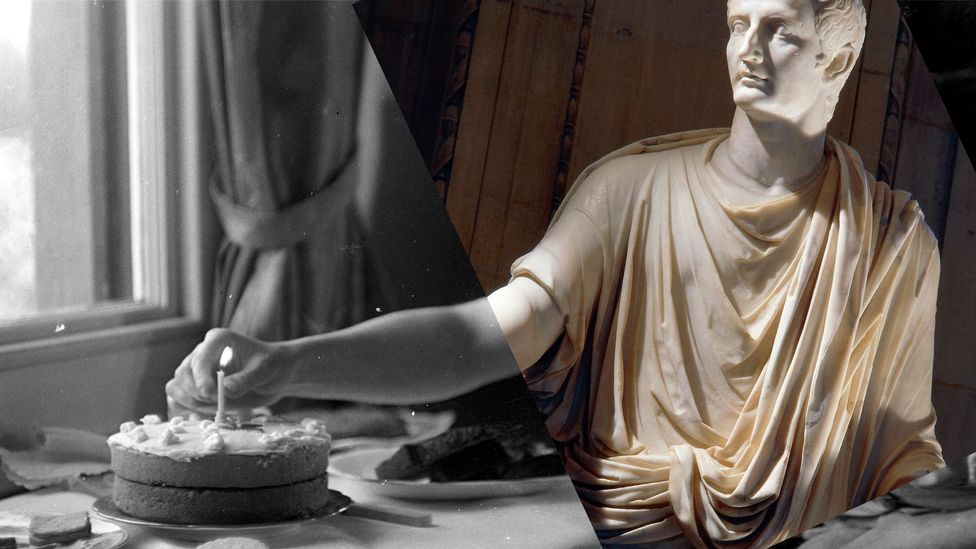
The Roman emperor Tiberius died at the age of 77 – some accounts say by murder (Credit: BBC/Getty)
Not everyone agrees. “There was an enormous difference between the lifestyle of a poor versus an elite Roman,” says Valentina Gazzaniga, a medical historian at Rome’s La Sapienza University. “The conditions of life, access to medical therapies, even just hygiene – these were all certainly better among the elites.”>
bbc.com
Elephant In The Room Question!
If Americas current extreme income disparity continues decades into the future, will it bring a return to much higher infant mortality among the 50 to 80% which characterized prior historical eras? My opinion is YES,
Unless we can somehow restore constitutional representative government & equal protection under the rule of law? It's inevitable.
Propaganda organs of the 1/10 of 1% elite ruled central regime will do their best to hide it. But,will fail over time. The Elephant is getting bigger and the room is getting smaller. |



