SI
SI
discoversearch

We've detected that you're using an ad content blocking browser plug-in or feature. Ads provide a critical source of revenue to the continued operation of Silicon Investor.  We ask that you disable ad blocking while on Silicon Investor in the best interests of our community.  If you are not using an ad blocker but are still receiving this message, make sure your browser's tracking protection is set to the 'standard' level.
Strategies & Market Trends : 2026 TeoTwawKi ... 2032 Darkest Interregnum -- Ignore unavailable to you. Want to Upgrade?


To: Julius Wong who wrote (172348)5/27/2021 2:33:28 AM
From: TobagoJack  Respond to of 220085
 
Am watching the evolution of the narrative re vaccines in general and China vaccines in particular

Funny the way Bloomberg / MSM tries to spin it even as they hedge themselves

“what’s also apparent, so far, is that though there’s been a surge in cases in Seychelles, very few people are getting seriously ill. “We have only a few people needing intensive care. Two out of 40” in hospitals, said Seychelles President Wavel Ramkalawan in a May 10 interview. “The vaccine will protect people from getting serious symptoms.””

bloomberg.com

Seychelles’s Covid Mysteries Pit Anti-Vaxxers Against Scientists
Cases in the world’s most vaccinated nation are ticking up, forcing researchers to wage war against misinformation on whether jabs are effective.

More stories by Antony Sguazzin

27 May 2021, 12:01 GMT+8
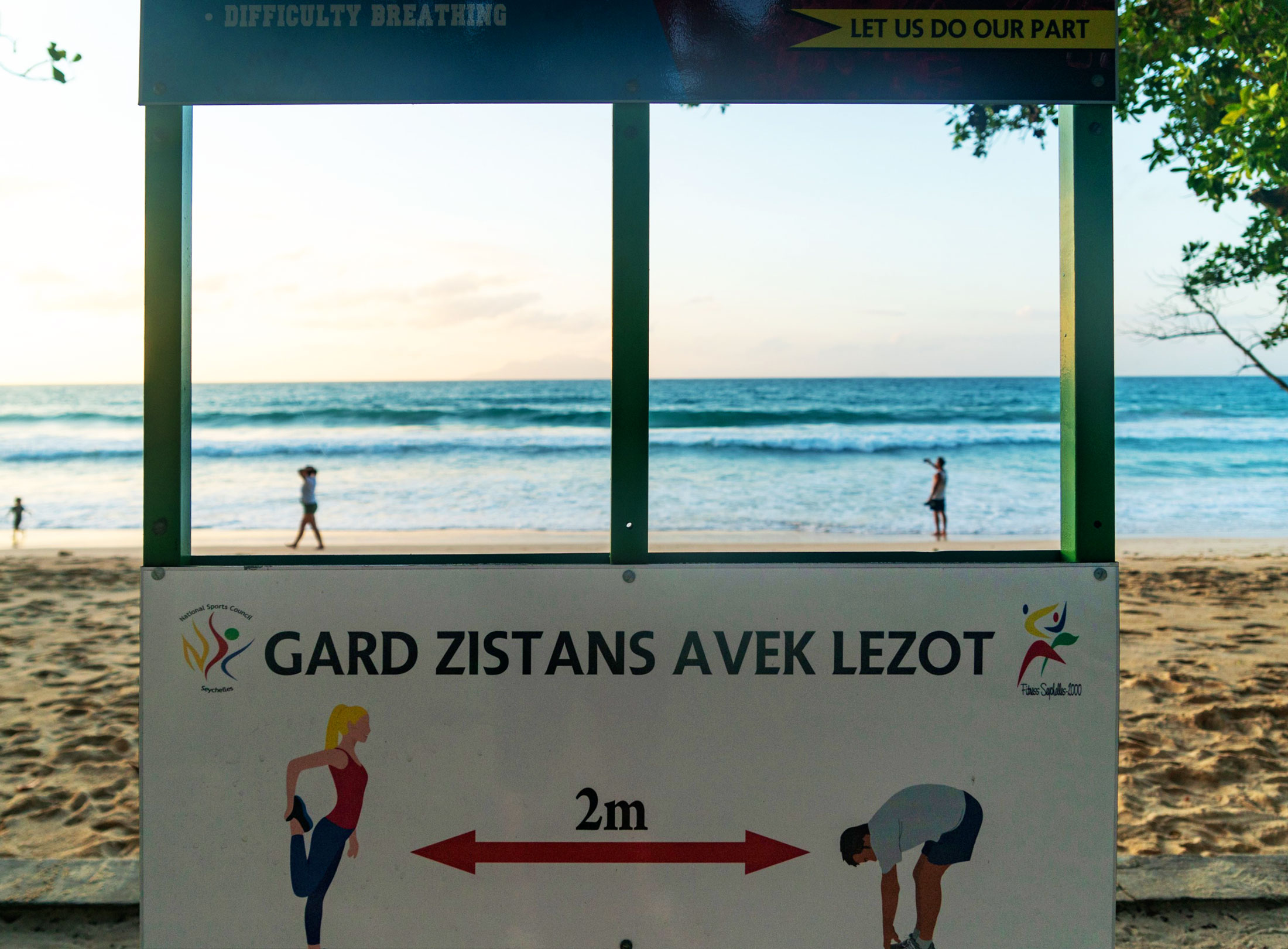


A sign for social distancing in Seychelles on Jan. 12.

Photographer: Li Yan/Xinhua/Getty ImagesFor epidemiologists, the past year and a half has been a voyage of discovery. Recently their journey aboard SARS-CoV-2 took an unexpected turn toward Seychelles, a palm-fringed archipelago in the Indian Ocean with fewer than 100,000 inhabitants. A country that few could pinpoint on a map suddenly became internet-famous as the most vaccinated nation on Earth, with 64% of the population having received the requisite two shots. Yet to the surprise of virologists—and the dismay of the government, which had been counting on the immunization drive to reopen the tourism-dependent economy—the infection count has been ticking up. As of May 13 a third of active cases—about 900 in all—were among residents who’d been fully vaccinated.

Vaccine skeptics pronounced themselves vindicated, while international health experts have been scrambling to answer a host of questions without the benefit of robust data. Did one or both of the vaccines used in Seychelles fail? Has herd immunity not been reached? Is the nation grappling with a more infectious variant capable of evading the defenses that certain types of vaccines provide?

“So what’s going on?” asked Raina MacIntyre, professor of global biosecurity at the Sydney campus of the University of New South Wales, during an online presentation on May 18. “It’s probably that the herd immunity threshold hasn’t been reached, plus or minus, if it’s the South African variant in there.”

How Well Vaccines Prevent Covid Disease After a Second DoseData: Shapiro, Dean, Longini et al. “Efficacy Estimates for Various COVID-19 Vaccines” (Pre-print paper)

The answers to the questions MacIntyre and other experts are posing may influence the future course of the pandemic. For starters, the tiny nation has become a test case for two of the world’s most widely used vaccines. In the Seychelles, 57% of the vaccinated population received Sinopharm’s shot, and 43% got the Covishield vaccine developed by AstraZeneca Plc. Sinopharm’s inoculation has been donated or sold to countries around the globe, including Indonesia, Venezuela, and Zimbabwe; Covishield makes up the bulk of shots distributed to poor nations in Africa and elsewhere through the Covax initiative, which seeks to make vaccine distribution more equitable.

What’s happening in Seychelles is very different from the experience of Israel, the second-most vaccinated nation, where Covid-19 infections have plummeted. The contrast could yield crucial insights into the efficacy of the different types of immunizations. In Israel the dominant vaccine was the messenger ribonucleic acid shot made by Pfizer Inc. and BioNTech SE.

The pandemic has seen mRNA vaccines— Moderna Inc. makes another—being used in scale for the first time. Data from clinical trials so far suggest they are better at stopping Covid, tackling variants, and preventing the virus from spreading in the community. Sinopharm’s and AstraZeneca’s vaccines rely on more traditional methods, and their shots have been shown to have lower efficacy in studies.

What’s also apparent, so far, is that though there’s been a surge in cases in Seychelles, very few people are getting seriously ill. “We have only a few people needing intensive care. Two out of 40” in hospitals, said Seychelles President Wavel Ramkalawan in a May 10 interview. “The vaccine will protect people from getting serious symptoms.”

Still, more answers are needed. The government hasn’t disclosed what vaccine was administered in the breakthrough cases that make up a third of the total count. No agency has done any genomic sequencing to determine which variant is dominant on the islands, though the one first identified in South Africa, B.1.351, was detected in Seychelles in February.

On May 13, Jude Gedeon, the country’s public-health commissioner, said samples were to be sent to the Kenya Medical Research Institute for testing. The World Health Organization is also taking action. “We are very concerned, and we are sending a multidisciplinary team there to help the Seychelles government address the situation,” says Richard Mihigo, program area manager for immunization and vaccine development at the WHO’s regional office for Africa in Brazzaville, Republic of Congo. “We are also in discussion with the government to conduct a vaccine effectiveness study.”

The latest Covid updatesMake sense of the headlines and the outbreak's global response with the Coronavirus Daily.

The situation in Seychelles also offers a fresh reminder that our understanding of herd immunity—the theoretical threshold at which the virus can’t find enough hosts to keep spreading—continues to evolve. Scientists once estimated that 55% to 82% of the population would need to have immunity against SARS-CoV-2, either from recovering from an infection or through vaccination. But 17 months into the pandemic, there’s recognition that the threshold may vary depending on the susceptibility of a population to the circulating strains, adherence to physical distancing, mask-wearing, and other practices known to reduce transmission, as well as the season—epidemics typically worsen as either colder or hotter weather encourages people to congregate indoors.

“It’s probably not likely that we are going to drive to zero the transmission of this virus or have it disappear,” says Jennifer Nuzzo, an epidemiologist and senior scholar at the Johns Hopkins Center for Health Security in Baltimore. Still, she see vaccines “doing the thing that we care most about, which is preventing serious illness.”

Lessons from Seychelles could be valuable to other countries in assembling their own vaccine arsenals, through purchases or donations—or a combination of the two, as the tropical nation did. “It’s about quality vaccines that are shown to be effective against your variant,” says Glenda Gray, president of the South African Medical Research Council and co-lead of a Johnson & Johnson Covid vaccine trial in the country.

Finance Minister Naadir Hassan, who had to steer Seychelles’s economy through a 13% contraction in 2020, says the government cannot afford to stand still while it awaits answers to these Covid riddles. The country is “an open, vulnerable economy,” he said in a May 13 interview. “The country needs to be safe, and the country needs to be open.”

Sent from my iPhone


To: Julius Wong who wrote (172348)5/27/2021 2:36:46 AM
From: TobagoJack  Read Replies (1) | Respond to of 220085
 
This thread can get interesting
Let’s see if the cavalry from Washington can ride in in time

Suspect BioNTech-Fosun JV has a clause re sales territory, defined as China. Should anyone supply grey market import from Germany or Washington DC, such IP infringers would be cut off from BioNTech by pulling of license, from, for example, Pfizer. Just a guess.

America wanted China to hard-enforce IP protection. A geopolitical / political pickle.

Moderna can save the situation.

bloomberg.com

Taiwan Faces More Pressure to Work With China to Secure Vaccines

27 May 2021, 12:15 GMT+8
Taiwan’s government faces mounting pressure to work with China to obtain Covid-19 vaccines, a politically unpalatable option for officials in Taipei struggling with an outbreak that risks disrupting tech supply chains.

President Tsai Ing-wen’s administration this week ruled out attempts by some local officials to directly obtain Pfizer Inc.-BioNTech SE vaccines from Shanghai Fosun Pharmaceutical Group Co. The China-based drugmaker, which has an agreement to develop and distribute them in the greater China region that includes Hong Kong, Macau and Taiwan, has repeatedly said it wants to supply the BioNTech vaccine to Taiwan.

Tsai and her party have blamed China for scuttling an earlier order of millions of BioNTech jabs, although Beijing has rejected that claim. Chen Tsung-yen, a member of Tsai’s cabinet and deputy head of the Central Epidemic Control Center, said the central government would continue to helm the vaccine drive, Taiwan’s Central News Agency reported.

“We reject outside interference in our work to bring vaccines to Taiwan, & oppose attempts to exploit vaccine supply for political purposes,” Tsai said in a tweet on Wednesday evening.

Tsai, who was re-elected in a landslide last year after taking a strong stance against China’s interference in Hong Kong, has seen her approval rating dip below 50% for the first time in a year in the wake of Taiwan’s worst outbreak during the pandemic. After months with zero daily Covid cases, health authorities in Taipei are now grappling with more than 500 cases a day along with growing criticism for being complacent with a vaccination drive.

The latest in global politicsGet insight from reporters around the world in the Balance of Power newsletter.

While the Biden administration has said it will donate tens of millions of spare vaccine doses following a successful vaccination drive at home, it’s unclear how many -- if any -- might be sent to Taiwan as more deadly outbreaks occur in places like India. A senior Taiwanese official in the U.S. last week called for the world to send vaccines to avoid more chip shortages from Taiwan Semiconductor Manufacturing Co. Ltd. and other companies.

World’s Supply of Chips Is in Danger Unless Taiwan Gets Vaccines

On Wednesday, a Chinese official criticizedTsai’s ruling Democratic Progressive Party for blocking the entry of a mainland company’s Covid shot.


Employees check the temperature of a customer entering a store in Taipei on May 21.

Photographer: Billy H.C. Kwok/Bloomberg

“Covid-19 is rapidly spreading in Taiwan, but the DPP authorities are still turning a blind eye to the shortfall of vaccines and to the expectation of Taiwan people,” said Zhu Fenglian, a spokeswoman for the Chinese State Council’s Taiwan Affairs Office. “They not only block Taiwan people from using mainland-made vaccines with various excuses, but also obstruct vaccines represented by a mainland company from entering Taiwan.”

Fosun Pharma has long said it hoped to provide Taiwan with vaccines. In an interview with Bloomberg News in March, Guo Guangchang, chairman of the Chinese drugmaker’s parent company Fosun International Ltd., said the company “has the responsibility, duty and willingness to offer the best vaccine to the Greater China region, including Taiwan.” Fosun Pharma’s CEO Wu Yifang toldChina’s official Xinhua News Agency this week that the company has actively pushed to provide the vaccine to Taiwan through multiple channels going back to last year.

The government in Taipei views Taiwan as a de-facto sovereign nation, even while it avoids a formal declaration of independence that could trigger a war. China, meanwhile, claims the set of islands as its own territory and hopes for “reunification” -- a term disputed in Taiwan.

— With assistance by Iain Marlow, Dong Lyu, Miaojung Lin, and Jing Li

Sent from my iPhone


To: Julius Wong who wrote (172348)5/27/2021 2:47:50 AM
From: TobagoJack  Respond to of 220085
 
Bloomberg spinning rearguard move

And have little to say about Pfizer / Moderna, apparently all-perfect

bloomberg.com

China’s Sinopharm Publishes Awaited Covid Vaccine Study Details

27 May 2021, 12:05 GMT+8
Vaccines from China’s Sinopharm successfully contained Covid-19, according to a study published in a prestigious U.S. medical journal, the first time detailed findings from a late-stage trial of a Chinese shot have appeared in the scientific literature.

The two inactivated vaccines developed by Sinopharm’s vaccine-making unit China National Biotec Group Co. prevented symptomatic infections by 72.8% and 78.1%, largely in-line with what the state-owned drugmaker previously announced. The findings were reported in the May 26 Journal of the American Medical Association.

Chinese shots, including those from Sinopharm and Sinovac Biotech Ltd., another Beijing-based vaccine maker, have formed the backbone of the vaccine rollout in developing countries ranging from Hungary and Serbia to Seychelles and Peru. The immunizations have come under scrutiny and their manufacturers have been criticized for not sharing adequate data about the shots’ safety and efficacy.

Read More: WHO Says China’s CovidShots Are Safe But Need More Data

The lack of transparency fueled doubts about the shots’ ability to contain Covid, especially after cases continued to spike in countries such as Seychelles and Chile that used them to vaccinate a sizable share of their populations. It also stalled approvals by stringent drug regulators and the World Health Organization. While Hong Kong waived the requirement for a peer-reviewed publication to approve the Sinovac vaccine earlier this year, regulators in Singapore are still demanding additional data.


A healthcare worker administers a dose of the Sinovac Biotech Ltd.'s CoronaVac Covid-19 vaccine in Santiago, Chile, earlier in March.

Photographer: Cristobal Olivares/Bloomberg

No Serious InfectionsThe study published in JAMA included 40,832 volunteers from across the United Arab Emirates, Bahrain, Egypt and Jordan. They were equally split into three groups and received either two doses of the vaccines, three weeks apart, or a placebo. Two weeks after the second shot, infections developed in 26 people given the vaccine known as WIV04, 21 of those given the vaccine known as HBO2 and 95 given a placebo shot.

None of the volunteers given an active vaccine developed severe disease, compared with two of those given placebo. The results were initially submitted to JAMA on March 17, Sinopharm’s subsidiary China National Biotec Group said in a statement. The paper was accepted for publication on May 12.


A healthcare worker administers a dose of the Sinopharm Group Co. Covid-19 vaccine in Tangerang, Indonesia, on May 19.

Photographer: Dimas Ardian/Bloomberg

The published study revealed some limitations in the vaccine trial. The testing was heavily skewed toward men, who accounted for nearly 85% of the participants. Less than 2% were aged 60 or older, and most were healthy. As a result, there is little evidence about the efficacy and safety among women, the elderly and those with underlying diseases.

Still, the World Health Organization cleared one of Sinopharm’s Covid shots earlier this month, paving the way for it to be more widely distributed around the world through the Covax facility that provides access to safe and effective vaccines.

Read More: Sinopharm Vaccine Gets WHO Backing, Facilitating Broader Use

Key details on another Sinovac shot were released in pre-print form, without a formal peer-review or publication. That vaccine has yet to get the green light from the WHO, though more than 380 million doses have been distributed around the world.

— With assistance by Yanping Li, and Dong Lyu

Sent from my iPhone

