SI
SI
discoversearch

We've detected that you're using an ad content blocking browser plug-in or feature. Ads provide a critical source of revenue to the continued operation of Silicon Investor.  We ask that you disable ad blocking while on Silicon Investor in the best interests of our community.  If you are not using an ad blocker but are still receiving this message, make sure your browser's tracking protection is set to the 'standard' level.
Politics : Formerly About Advanced Micro Devices -- Ignore unavailable to you. Want to Upgrade?


To: Brumar89 who wrote (1309079)7/23/2021 12:34:15 PM
From: Brumar892 Recommendations

Recommended By
pocotrader
Wharf Rat

  Read Replies (1) | Respond to of 1579368
 
Ivermectin Shows Us the Consequences of Politicized Science

Ivermectin is the new hydroxychloroquine.

by JOHN HAVLIK, PRANAM DEY, AND HOWARD P. FORMAN
JULY 23, 2021 5:04 AM


A health worker shows a box containing a bottle of Ivermectin, a medicine authorized by the National Institute for Food and Drug Surveillance (INVIMA) to treat patients with mild, asymptomatic or suspicious COVID-19, as part of a study of the Center for Paediatric Infectious Diseases Studies, in Cali, Colombia, on July 21, 2020. (Photo by Luis ROBAYO / AFP) (Photo by LUIS ROBAYO/AFP via Getty Images)

Acontingent of Americans has embraced the anti-parasite drug ivermectin as a miracle cure for COVID-19 despite warnings from the American scientific community that little to no evidence exists of its efficacy.

At the same time, many Americans have rejected the COVID-19 vaccines in spite of enormous evidence supporting their efficacy.

The persistent trust in ivermectin and hesitancy to take a widely-proven vaccine is a logical consequence of rejecting American institutions, and a consequence exacerbated by those who have politicized science.

How did ivermectin become the new hydroxychloroquine?

Last November, Egyptian scientists published a study suggesting that ivermectin, an antiparasitic drug used to prevent heartworm in dogs and river blindness in humans, was supposedly effective in reducing COVID-19 mortality by 90 percent. The study attracted substantial interest from physicians and scientists around the world who were starving for solutions to the COVID crisis. The study has been cited as an argument to treat “ thousands, or perhaps even millions” of people around the world with ivermectin. It was even cited in Congressional testimony about the need to fast-track widespread distribution of this so-called “miracle drug” for COVID-19.

Unfortunately, ivermectin is not a miracle cure. At best, the Egyptian study was poorly performed and partially plagiarized; at worst, the data were outright fraudulent. The study had faced substantial criticism since its release, and was recently retracted by the preprint website where it was published. Subsequent meta-analyses that partially relied on the data in the original study have also come under intense scrutiny. While ivermectin’s side-effects are (thankfully) mild, minimal evidence supports its use over any random medication in your home medicine cabinet in the fight against COVID-19.

This bears repeating: even in hospitals that have used ivermectin as a last-ditch attempt to help COVID-19 victims, there is little to no peer-reviewed data supporting its use.

Even the pharmaceutical company that manufactures ivermectin states that there is “no meaningful evidence for clinical activity or clinical efficacy in patients with COVID-19 disease” in studies assessing ivermectin’s effectiveness.

What we do have are case reports, small series, and even some small trials of ivermectin being given to patients who later recovered from COVID-19. But these reports are far from the high level of evidence that would be needed to prove ivermectin’s efficacy against COVID-19. In India, a country previously thought to have saved millions of lives through the use of ivermectin, more recent studies suggest a fatality rate among the worst in the world. In medicine as in life, we must remember post hoc ergo propter hoc: anecdotes of patients recovering post-ivermectin treatment do not prove ivermectin caused their recovery.

From a management perspective, the global system of biomedical science (long dominated by American institutions) has done what it is supposed to by assessing and rejecting findings that did not meet the high academic standards for publication. The ivermectin paper was released on a pre-print server prior to careful review by expert scientists, but was never accepted for publication in a peer-reviewed medical journal because so many questions were raised about its data, analysis, and even text.

Pre-prints can and do play an important role in accelerating the dissemination of new research. But pre-prints are far from fully published peer-reviewed papers in scientific journals. Our academic system’s process of disseminating scientific knowledge is one based on peer review. The peer-review process is not always perfect. It can be slower than we would sometimes like. But it balances the need to spread findings fast with the need to only embrace and act on reliable findings.

Despite this generally accepted commitment to the process of peer review, a subset of American physicians and politicians took the Egyptian pre-print and ran with it. They endorsed ivermectin in front of Congress, on cable news shows, and in viral social media posts.

We have seen this behavior before from irresponsible actors creating conspiracies about “big science” covering up the wonders of a supposed miracle drug.
Playing into anti-vaccine fears, some went as far as to argue “ there shouldn’t be vaccines that we’re administering” if ivermectin was so safe and effective.

The words of these “experts” have caused substantial harm by contributing to our current “ pandemic of the unvaccinated.” They have re-directed efforts away from meaningful scientific discussions and toward putting out the fires of misinformation circulating not only in the dark corners of the internet, but also under the bright studio lights of the most-watched shows on cable news. And it wasn’t just Americans who took note of the supposed miracle cure: ivermectin is now popular in Brazil, whose populist leader has used the cheap drug to divert attention from the country’s poor institutional management of the pandemic.

This is not a game. There are real lives at stake. And those who continue to push the idea that ivermectin is an effective treatment for COVID-19 know exactly what they are doing.

thebulwark.com


To: Brumar89 who wrote (1309079)7/23/2021 1:49:58 PM
From: Broken_Clock  Read Replies (2) | Respond to of 1579368
 
Tony Podesta Hired By Huawei To 'Warm Relations With Biden Administration'

by Tyler Durden

Friday, Jul 23, 2021 - 01:10 PM

Chinese telecom giant Huawei is hiring Democratic lobbyist Tony Podesta to try and 'warm relations with the Biden administration,' according to Politico which cites two people familiar with the matter.

[url=][/url]
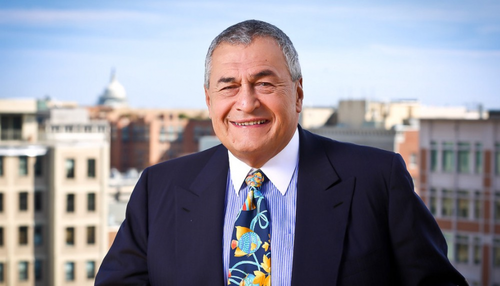
Podesta will work to advance a variety of the company’s goals in Washington, according to one of the people. He declined to comment. A spokesperson for Huawei also declined to comment.

Huawei faces a host of challenges in Washington. In February 2020, the Justice Department charged the company with violating the Racketeer Influenced and Corrupt Organizations Act, or RICO — a key DOJ tool for going after organized crime. DOJ alleged that Huawei helped Iran’s authoritarian government build out its domestic surveillance capabilities and tried to secretly do business in North Korea. The Justice Department has also brought charges against the company’s chief financial officer, Meng Wanzhou. She was arrested in Canada, where she is fighting extradition to the U.S. Huawei and Meng maintain their innocence. Huawei has said the accusations are an effort to “irrevocably damage” its reputation and business, as CNBC has reported.


Podesta, the art-collecting, red-shoe wearing, K-street lobbyist whose firm self-destructed after he became a target in the Mueller probe, was reportedly offered immunity to testify against former partner Paul Manafort.

Manafort and Podesta both made millions together as unregistered agents on a pro-Russia project in Ukraine. While Podesta had the uncanny foresight to retroactively file as a foreign agent in April 2017, Manafort did not, and was subsequently found guilty of tax fraud, failing to disclose foreign bank accounts, and bank fraud.

[url=][/url]
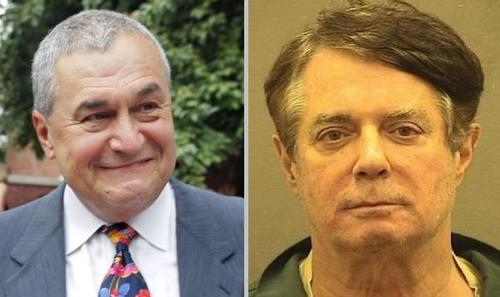
One week after Mueller announced he was targeting Manafort and an unnamed "Company B" in October, Podesta resigned from his position as chairman of the Podesta Group, which he co-founded with his brother Tony in 1988.

As we noted in 2018, Manafort and Podesta worked with the Pro-Russia European Centre for a Modern Ukraine (ECMU), a Brussels based think tank tied to former Ukrainian president Viktor Yanukovych which was pushing for Ukraine's entry into the European Union. Manafort oversaw the ECMU project, on which the Podesta Group made some $1.2 million, Manafort's firm also earned $17 million between 2012 - 2014 consulting for Yanukovychs centrist, pro-Russia Party of Regions. Yanukovych fled from Ukraine to Russia after he was unseated in a 2014 coup.

The Podesta Group received more than $1.2 million from the European Centre for a Modern Ukraine for its work from 2012 to 2014, according to the new disclosures. The Podesta Groups work included meetings with State Department officials Tom Nides and Jake Sullivan and staffers of Sens. John McCain (R-Ariz.) and Dick Durbin (D-Ill.), as well as contacting congressional staff, reporters and think tank researchers. - Politico

As Mueller began to close in on Paul Manafort, Podesta Group clients became spooked.

Before dawn on Monday Oct. 23, 2017, NBC News reported that Mr. Mueller was preparing to indict Mr. Manafort and implicate Mr. Podesta regarding the Ukraine work. The phones started ringing: Clients wanted to know what was going on. The firms bank wanted to discuss its account.

The following night, Mr. Podesta threw himself a birthday party, serving hundreds of guests pizza from a brick-oven stove in his backyard in Kalorama. - WSJ

[url=][/url]
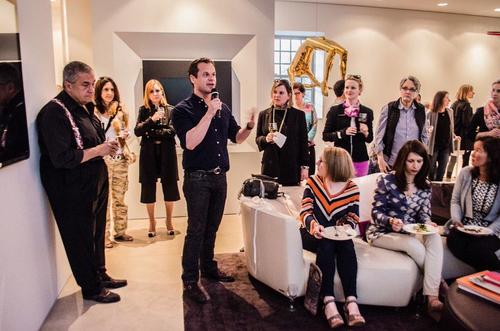
Podesta's problems began long before Mueller's probe grazed his orbit. During the summer of 2016, SunTrust bank severed ties with the Podesta Group over their work for a U.S. subsidiary of a sanctioned Russian bank - presumably Russias Kremlin-owned Sberbank - which paid the Podesta group $170,000 over a 6 month period through September 2016 to lobby against economic sanctions handed down by the Obama administration over the 2014 annexation of Crimea.

SunTrust Banks Inc. sought to sever ties with the firm over the sanctioned Russian bank. The Podesta Groups chief executive sent an exasperated email to a colleague. Tony thinks these types of clients have no repercussions on the firm, she said, but this should really provide evidence that we have to take the clients we bring on seriously.

Following Mrs. Clintons defeat that November, the Podesta Group cut bonuses and commissions. - WSJ

Fast forward to October, 2017 - just one day after US prosecutors announced the indictments of Manafort and Gates, "an official with the firm's new bank, Chain Bridge Bank, demanded $655,000 in cash or collateral within 24 hours - or it would cut the firm's credit line."

Mr. Trump, who occasionally pointed an unwelcome spotlight on the firm, tweeted that day: The biggest story yesterday, the one that has the Dems in a dither, is Podesta running from his firm. -WSJ

Finally, in April of this 2018, the Podesta Group shuttered its doors in what the Wall Street Journal described as a "calamitous collapse":

Then he fell, a calamitous collapse propelled by unexpected blows, delivered by fate and made worse by hubris. Financial problems, legal threats and the election of President Donald Trump took it all awaythe clients, the firm and, finally, Mr. Podestas position as one of Washingtons most influential players. - WSJ

Last but not least; in October 2017 a "long time" former Podesta Group executive with "direct personal knowledge" of the operation divulged several other aspects of life inside Tony Podesta's lobbying machine to Tucker Carlson, after he says he was interviewed by special counsel Robert Mueller. Perhaps he felt his testimony would end up on the cutting room floor, which detailed potential money laundering through Tony's art collection, Clinton Foundation links to Uranium One, and claims that the Russians were trying to establish inroads to the Obama White House through the Podestas.

According to the Politico report, "Podesta is expected to soon pick up more clients. He has known President Joe Biden for decades and is friendly with a number of his advisers. Podesta also lives down the street from former President Barack Obama in the glitzy D.C. neighborhood of Kalorama. His brother John was a counselor for Obama as well as chief of staff to President Bill Clinton."

Let's see if the ol' Podesta magic can help Huawei worm its way into the Biden administration's good graces.

