Re <<you just described the Moderna and Pfizer jabs?>>
I do not make the rules as far as the kids vaccinations go; my wife does. I only make the rule for myself. I asked wife about her view of the Covid vaccines, and she clearly commented and I paraphrase,…
“Hong Kong is generally safe than other places in the world, and we live in a safer area of Hong Kong. We do not mingle in crowds. We live healthy as far as food, exercise and sleep go. We are not traveling anytime soon. The vaccines efficacies are unclear, especially against the variants and also whatever the efficacies the effects do not seem to last very long (8 months). The risk of the vaccines seem to be more than the risk of the virus. We can wait a year for better vaccine.” I figure I would know more about mRNA / deactivated-virus vaccines against Delta in a matter of 3-4 weeks.
I do not expect to learn much more about the longer term cumulative side effects of mRNA vaccine in a matter of 3-4 weeks.
If I was forced to choose a vaccine, I would go traditional, which seems to also be questionable as far as efficacy is concerned, though it seems safe as far as side effects concerned. I am not being forced to choose now.
reuters.com
How the Delta variant upends assumptions about the coronavirus
Julie SteenhuysenAlistair SmoutAri Rabinovitch
July 27, 202112:38 AM HKTLast Updated 13 hours ago
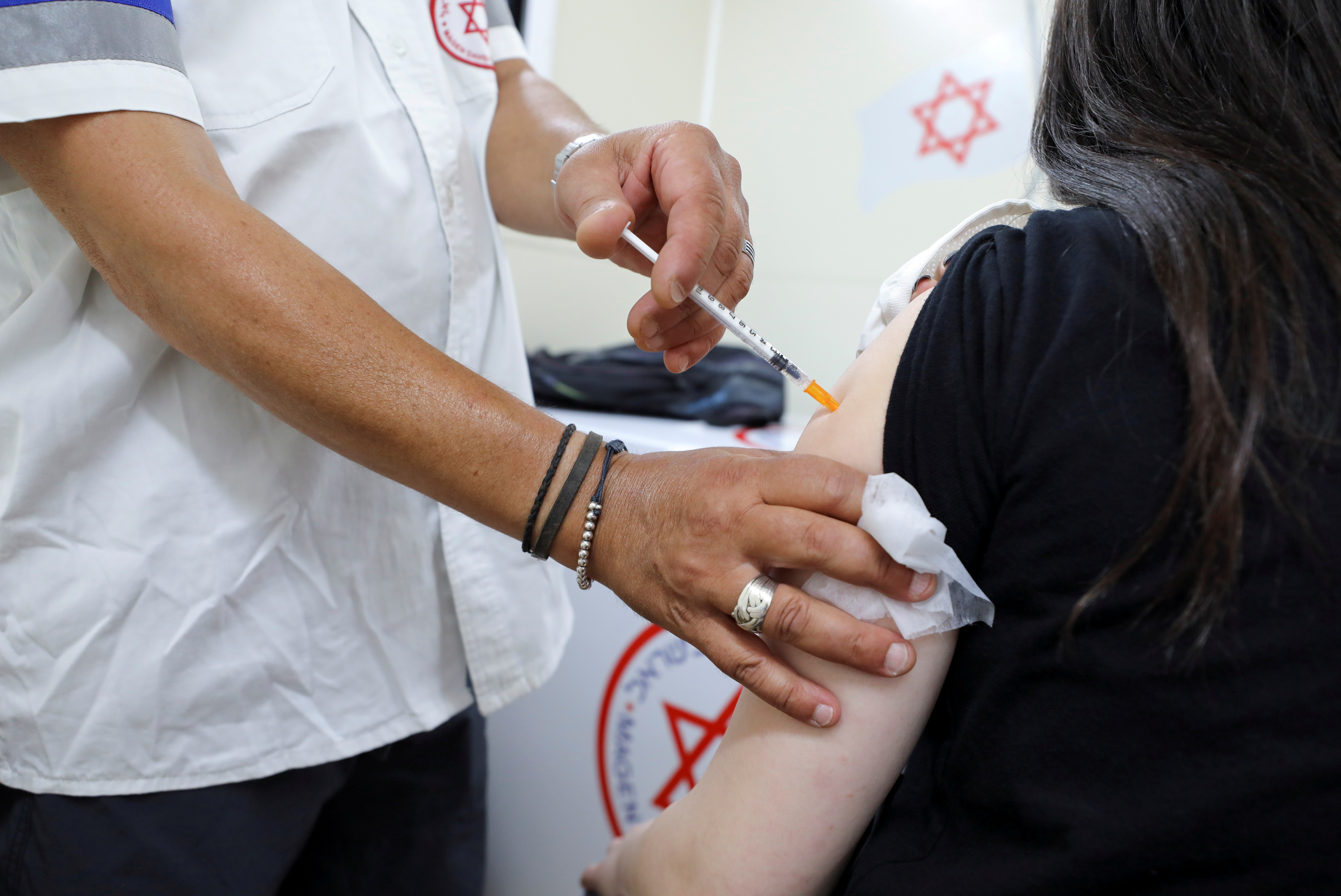
July 26 (Reuters) - The Delta variant is the fastest, fittest and most formidable version of the coronavirus that causes COVID-19 the world has encountered, and it is upending assumptions about the disease even as nations loosen restrictions and open their economies, according to virologists and epidemiologists.
Vaccine protection remains very strong against severe disease and hospitalizations caused by any version of the coronavirus, and those most at risk are still the unvaccinated, according to interviews with 10 leading COVID-19 experts.
But evidence is mounting that the Delta variant, first identified in India, is capable of infecting fully vaccinated people at a greater rate than previous versions, and concerns have been raised that they may even spread the virus, these experts said.
As a result, targeted use of masks, social distancing and other measures may again be needed even in countries with broad vaccination campaigns, several of them said.
Israel recently reinstated mask-wearing requirements indoors and requires travelers to quarantine upon arrival.
U.S. officials are considering whether to revise mask guidance for the vaccinated. Los Angeles County, the most populous in the United States, is again requiring masks even among the vaccinated in indoor public spaces.
"The biggest risk to the world at the moment is simply Delta," said microbiologist Sharon Peacock, who runs Britain's efforts to sequence the genomes of coronavirus variants, calling it the "fittest and fastest variant yet."
Viruses constantly evolve through mutation, with new variants arising. Sometimes these are more dangerous than the original.
The major worry about the Delta variant is not that it makes people sicker, but that it spreads far more easily from person to person, increasing infections and hospitalizations among the unvaccinated.
Public Health England said on Friday that of a total of 3,692 people hospitalized in Britain with the Delta variant, 58.3% were unvaccinated and 22.8% were fully vaccinated.
In Singapore, where Delta is the most common variant, government officials reported on Friday that three quarters of its coronavirus cases occurred among vaccinated individuals, though none were severely ill.
Israeli health officials have said 60% of current hospitalized COVID-19 cases are in vaccinated people. Most of them are age 60 or older and often have underlying health problems.
In the United States, which has experienced more COVID-19 cases and deaths than any other country, the Delta variant represents about 83% of new infections. So far, unvaccinated people represent nearly 97% of severe cases.
Dr. Monica Gandhi, an infectious diseases doctor at the University of California, San Francisco, said many vaccinated people are "so disappointed" that they are not 100% protected from mild infections. But the fact that nearly all Americans hospitalized with COVID-19 right now are unvaccinated "is pretty astounding effectiveness," she said.
'TEACHING US A LESSON'
"There is always the illusion that there is a magic bullet that will solve all our problems. The coronavirus is teaching us a lesson," said Nadav Davidovitch, director of Ben Gurion University's school of public health in Israel.
The Pfizer Inc (PFE.N)/BioNTech vaccine, one of the most effective against COVID-19 so far, appeared only 41% effective at halting symptomatic infections in Israel over the past month as the Delta variant spread, according to Israeli government data. Israeli experts said this information requires more analysis before conclusions can be drawn.
"Protection for the individual is very strong; protection for infecting others is significantly lower," Davidovitch said.
A study in China found that people infected with the Delta variant carry 1,000 times more virus in their noses compared with the original version first identified in Wuhan in 2019.
"You may actually excrete more virus and that's why it's more transmissible. That's still being investigated," Peacock said.
Virologist Shane Crotty of the La Jolla Institute for Immunology in San Diego noted that Delta is 50% more infectious than the Alpha variant first detected in the UK.
"It's outcompeting all other viruses because it just spreads so much more efficiently," Crotty said.
Genomics expert Eric Topol, director of the Scripps Research Translational Institute in La Jolla, California, noted that Delta infections have a shorter incubation period and a far higher amount of viral particles.
"That's why the vaccines are going to be challenged. The people who are vaccinated have got to be especially careful. This is a tough one," Topol said.
In the United States, the Delta variant has taken hold just as many Americans - vaccinated and not - have stopped wearing masks indoors.
"It's a double whammy," Topol said. "The last thing you want is to loosen restrictions when you're confronting the most formidable version of the virus yet."
The development of highly effective vaccines may have led many people to believe that once vaccinated, COVID-19 posed little threat to them.
"When the vaccines were first developed, nobody was thinking that they were going to prevent infection," said Carlos del Rio, a professor of medicine and infectious disease epidemiology at Emory University in Atlanta. The aim was always to prevent severe disease and death, del Rio added.
The vaccines were so effective, however, that there were signs they also prevented transmission against prior coronavirus variants.
"We got spoiled," he said.
Reporting by Julie Steenhuysen in Chicago, Alistair Smout in London, Ari Rabinovitch and Maayan Lubell in Jerusalem; Editing by Will Dunham and Bill Berkrot
Our Standards: The Thomson Reuters Trust Principles.
Sent from my iPad |



