The race for EVs' mining assets is on!
Sibanye outbids rivals and carmakers to buy Brazilian mines
Sibanye-Stillwater adds to green metals portfolio acquiring Santa Rita and Serrote in Brazil from Appian
Posted by Paul Moore on 27th October 2021
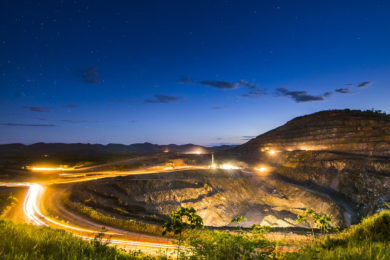
This week Sibanye–Stillwater announced that it has signed definitive purchase and sale agreements with affiliates of funds advised by Appian Capital Advisory LLP to purchase 100% of both the Santa Rita nickel mine and the Serrote copper mine in Brazil for $1 billion plus a 5% net smelter return (NSR) royalty over potential future underground production at Santa Rita.
Appian acquired Atlantic Nickel (previously Mirabela Nickel), owner of Santa Rita, one of the largest open pit nickel sulphide mines in the world, located in Bahia, Brazil out of bankruptcy in 2018. The same year it also purchased MVV, owner of the Serrote greenfield open-pit copper-gold asset located in Alagoas, Brazil. Appian said the transaction: “reflects the company’s progress in successfully de-risking and improving the Assets, demonstrating the strength of the Appian model and the company’s ability to identify, acquire and optimise undervalued mining projects using technical arbitrage, creating significant value for its investors.”
In line with Sibanye–Stillwater’s strategy to build an operating portfolio of green metals and related technologies, Sibanye-Stillwater said the transaction is a further meaningful step, “adding two low–cost, producing assets to its green metals portfolio. Both assets have been substantially pre–capitalised and as a result the transaction will be immediately accretive to Sibanye–Stillwater’s cash flow and earnings.”
Santa Rita is one of the largest nickel–cobalt sulphide open pit mines in the world, located in the State of Bahia, Brazil and includes a preliminary economic assessment (PEA)–stage underground project. The mine produces a sulphide concentrate suitable for downstream processing to produce battery precursors and has outstanding infrastructure resulting from significant historical investment. Serrote is a producing open pit copper mine, currently in ramp up, located in the State of Alagoas, Brazil and developed at a cost of $195 million.
The statement said: “Santa Rita and Serrote are both low–cost and low carbon intensity operations with strong cultural alignment with Sibanye–Stillwater’s focus on health and safety, the environment and local communities. In addition, each asset has a well–defined pipeline of organic growth opportunities including mine optimisation, on site resource potential and regional exploration opportunities.”
Commenting on the Transaction, Neal Froneman, CEO of Sibanye–Stillwater said: “The transaction is a significant additional step in Sibanye–Stillwater’s ongoing strategy to position the business for continued value creation during our transition into a climate change resilient business, and follows and complements the Keliber, Sandouville and Rhyolite Ridge transactions announced earlier this year. The transaction represents a unique opportunity for Sibanye–Stillwater to acquire significantly pre–developed and pre–capitalised, low–cost, producing nickel and copper assets with strong ESG credentials, which will continue to be managed by a high–quality team with a wealth of operating experience in Brazil.”
In more detail, Santa Rita is an open pit operation mined with conventional equipment over a seven year mine life, with average annual production of 16,000 t per annum nickel equivalent. The existing processing plant which has a capacity of 6.5 Mt/y consists of crushing, grinding, flotation, thickening and filtration producing a saleable nickel concentrate, with 13.50% Ni, 4.57% Cu, 0.25% Co and 1.17g/t Au. Flotation tailings are pumped to a tailings storage facility constructed via downstream raises. Mineral reserves are 43.3 Mt at an average grade of 0.31% nickel, 0.11% copper and 0.01% cobalt, containing approximately 134,000 t of nickel, 49,000 t of copper and 5,000 t of cobalt.
Serrote is an advanced and pre–developed open pit copper mine with a current reserve life of 13 years and significant resource and optimisation potential. The mine is currently in a ramp up phase of approximately 18 months and is on track to achieve commercial production in the fourth quarter of 2021, having completed construction in May 2021, with world class safety records. It is an open pit operation mined with conventional equipment over a 13 year mine life, with average annual production of 20,000 t per annum copper equivalent. The existing processing plant with a capacity of 4.1 Mt/y consists of crushing, grinding, flotation, thickening and filtration producing a saleable copper concentrate. Flotation tailings are also pumped to a tailings storage facility constructed via downstream raise. Mineral reserves are 50.4 Mt at an average grade of 0.60% copper and 0.10 g/t gold, containing approximately 299,000 t of copper and 159,000 oz of gold. |



