SI
SI
discoversearch

We've detected that you're using an ad content blocking browser plug-in or feature. Ads provide a critical source of revenue to the continued operation of Silicon Investor.  We ask that you disable ad blocking while on Silicon Investor in the best interests of our community.  If you are not using an ad blocker but are still receiving this message, make sure your browser's tracking protection is set to the 'standard' level.
Strategies & Market Trends : 2026 TeoTwawKi ... 2032 Darkest Interregnum -- Ignore unavailable to you. Want to Upgrade?


To: ggersh who wrote (180399)11/17/2021 5:34:21 PM
From: TobagoJack  Read Replies (1) | Respond to of 218721
 
Seems the Pentagon wishes to have a ‘zero-nuke’ protocol in place whereas the rest of the governance construct adopted ‘live-with-covid’ protocol

Both approaches are problematic.

‘They’ shall sort it out by and by.

In the meantime we watch the news flow but more important, follow the actions.


To: ggersh who wrote (180399)11/21/2021 9:03:33 PM
From: TobagoJack  Read Replies (1) | Respond to of 218721
 
Must really be <<budget season>>, or just a game of "Go" fetch, and plain mathematics of levelling the playing field :0)

Some Pentagon experts believe the projectile was an air-to-air missile. Others think it was a countermeasure to destroy missile defence systems so that they could not shoot down the hypersonic weapon during wartime ...
... The Chinese embassy said it was “not aware” of the missile test.

ft.com

Chinese hypersonic weapon fired missile over South China Sea

Pentagon struggles to understand how Beijing mastered technology that tests constraints of physics

8 hours ago


The Pentagon believes China launched the hypersonic glide vehicle on a Long March rocket, seen here at the Wenchang Space Center on China’s southern Hainan Island last year © AFP via Getty Images

China’s hypersonic weapon test in July included a technological advance that enabled it to fire a missile as it approached its target travelling at least five times the speed of sound — a capability no country has previously demonstrated.

Pentagon scientists were caught off guard by the advance, which allowed the hypersonic glide vehicle, a manoeuvrable spacecraft that can carry a nuclear warhead, to fire a separate missile mid-flight in the atmosphere over the South China Sea, according to people familiar with the intelligence.

Experts at Darpa, the Pentagon’s advanced research agency, remain unsure how China overcame the constraints of physics by firing countermeasures from a vehicle travelling at hypersonic speeds, said the people familiar with details of the demonstration.

Military experts have been poring over data related to the test to understand how China mastered the technology. They are also debating the purpose of the projectile, which was fired by the hypersonic vehicle with no obvious target of its own, before plunging into the water.

Some Pentagon experts believe the projectile was an air-to-air missile. Others think it was a countermeasure to destroy missile defence systems so that they could not shoot down the hypersonic weapon during wartime.

Russia and the US have also pursued hypersonic weapons for years, but experts say the firing of countermeasures is the latest evidence that China’s efforts are significantly more advanced than either the Kremlin or the Pentagon.

The White House declined to comment on the countermeasure, but said it remained concerned about the July 27 test, which was first reported by the Financial Times last month.

“This development is concerning to us as it should be to all who seek peace and stability in the region and beyond,” said a spokesperson for the National Security Council. “This also builds on our concern about many military capabilities that the People’s Republic of China continues to pursue.”

The NSC added that the US would “continue to maintain the capabilities to defend and deter against a range of threats” from China.

What is a hypersonic glide vehicle?


A Long March 7 orbital launch vehicle used to send a Chinese cargo spacecraft into orbit in 2017 © AFP via Getty Images

There are two kinds of hypersonic weapons. The first is a highly manoeuvrable missile propelled by an engine. The second is a glide vehicle.

The hypersonic glide vehicle is a spacecraft — not unlike the space shuttle — that is launched into orbit on a rocket. It then re-enters the atmosphere and flies towards its target at more than five times the speed of sound.

The HGV can act as a conventional weapon by using its speed to destroy a target on impact. But China is developing HGVs that can carry nuclear warheads.

Pentagon officials have been increasingly public with their concerns about the July test. The hypersonic glide vehicle was propelled into space on an “ orbital bombardment system” rocket that can fly over the South Pole, putting the weapon out of reach of US missile defence systems, which are focused on ballistic missile threats coming over the North Pole.

The orbital bombardment system gives China more ways to hit US targets. Moscow deployed a system called “fractional orbital bombardment system” during the cold war, but it was less advanced and did not carry a manoeuvrable hypersonic glide vehicle.

US officials are well aware that China is ahead of the Pentagon in hypersonic weapons. But the July 27 test showed that the People’s Liberation Army Rocket Force was making even faster progress than many had projected. That has been reinforced by Beijing successfully combining an orbital system with a hypersonic weapon that can shoot a missile.

The hypersonic test comes as China rapidly expands its nuclear forces, in a way that suggests it is abandoning the “minimum deterrence” posture it has maintained for decades. The US recently said it would quadruple its nuclear warheads at least 1,000 weapons this decade.

The Chinese embassy said it was “not aware” of the missile test.

“We are not at all interested in having an arms race with other countries,” said Liu Pengyu, the embassy spokesperson. “The US has in recent years been fabricating excuses like ‘the China threat’ to justify its arms expansion and development of hypersonic weapons.”

Beijing dismissed the FT’s first disclosure of the hypersonic weapons test, saying it was instead a test of a reusable space vehicle. But a test of that space vehicle occurred 11 days before the hypersonic weapons test, according to people familiar with both launches. The FT has also reported that China conducted another hypersonic weapons test on August 13.

General David Thompson, vice-chief of space operations at the US Space Force, said the US was “not as advanced” as China or Russia in hypersonic weapons.

“We have catching up to do very quickly. The Chinese have had an incredibly aggressive hypersonic programme for several years,” Thompson told the Halifax International Security Forum on Saturday.

General Mark Milley, chair of the US joint chiefs of staff, recently called the weapons test close to a “ Sputnik moment”, a reference to the Soviet Union becoming the first to put a satellite in space in 1957.

Lloyd Austin, defence secretary, this week said he would not use the same language. But earlier this week as he prepared to retire as vice-chair of the joint chiefs, General John Hyten voiced significant concern.

“Sputnik created a sense of urgency in the United States,” Hyten told CBS News. “The test on July 27 did not create that sense of urgency. I think it probably should create a sense of urgency.”

Follow Demetri Sevastopulo on Twitter


To: ggersh who wrote (180399)1/27/2023 4:47:22 AM
From: TobagoJack1 Recommendation

Recommended By
marcher

  Read Replies (1) | Respond to of 218721
 
Following up ...

Message 33585021
Pentagon struggles to understand how Beijing mastered technology that tests constraints of physics ... Some Pentagon experts believe the projectile was an air-to-air missile. Others think it was a countermeasure to destroy missile defence systems so that they could not shoot down the hypersonic weapon during wartime.
... the puzzle might have an answer, one not quite expected, because currently there are not peer-competitor hypersonic weapons threatening China, since the supposed peer-, or self-certified peer, is actually not so peer-peer

in any case, let's wait & see

scmp.com

China just got closer to defeating hypersonic weapons with reusable tech

- Chinese engineers say they’ve solved a big problem that could allow major advances in air defence

- System is based on a drone that can fly at Mach 5

Published: 6:00am, 27 Jan, 2023
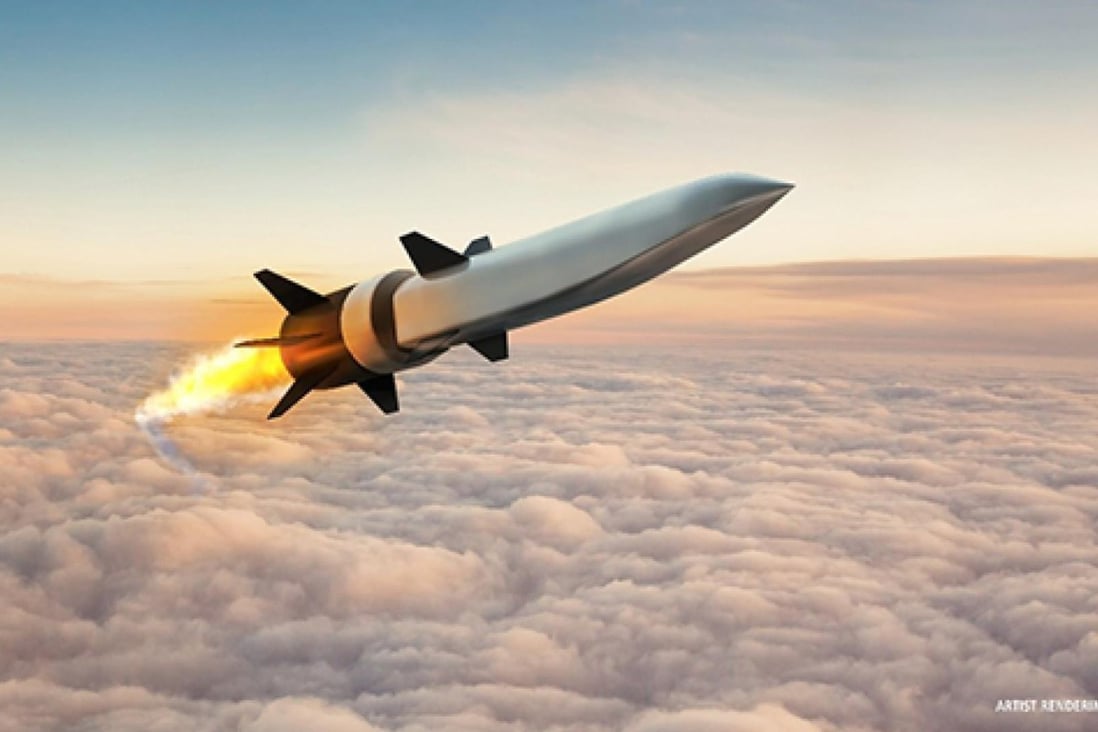


Chinese engineers say they’ve solved a major mathematical problem that could be a big leap in the country’s air defence. Photo: Raytheon Missiles & Defense

A team of Chinese aerospace engineers say they have overcome a major barrier in protecting the country from a potential hypersonic weapon attack.

The achievement came in the development of a reusable air defence system, which is based on an unmanned aircraft powered by an air-breathing engine that can fly at more than five times the speed of sound over a long distance, the scientists said.

By using early warning satellites and ground radar stations, the aircraft can predict the trajectory of an incoming hypersonic missile, and then launch a small kinetic energy weapon to neutralise the threat in mid-flight.

With the attack over, the aircraft can then return to an airport and be prepared for its next mission, according to the researchers.
But implementing this advanced system design had proved challenging.

The effort ran into a sophisticated mathematical problem, according to research team leader Yin Zhongjie, from the Shanghai Institute of Mechanical and Electrical Engineering, a defence contractor that develops drones for the Chinese military.
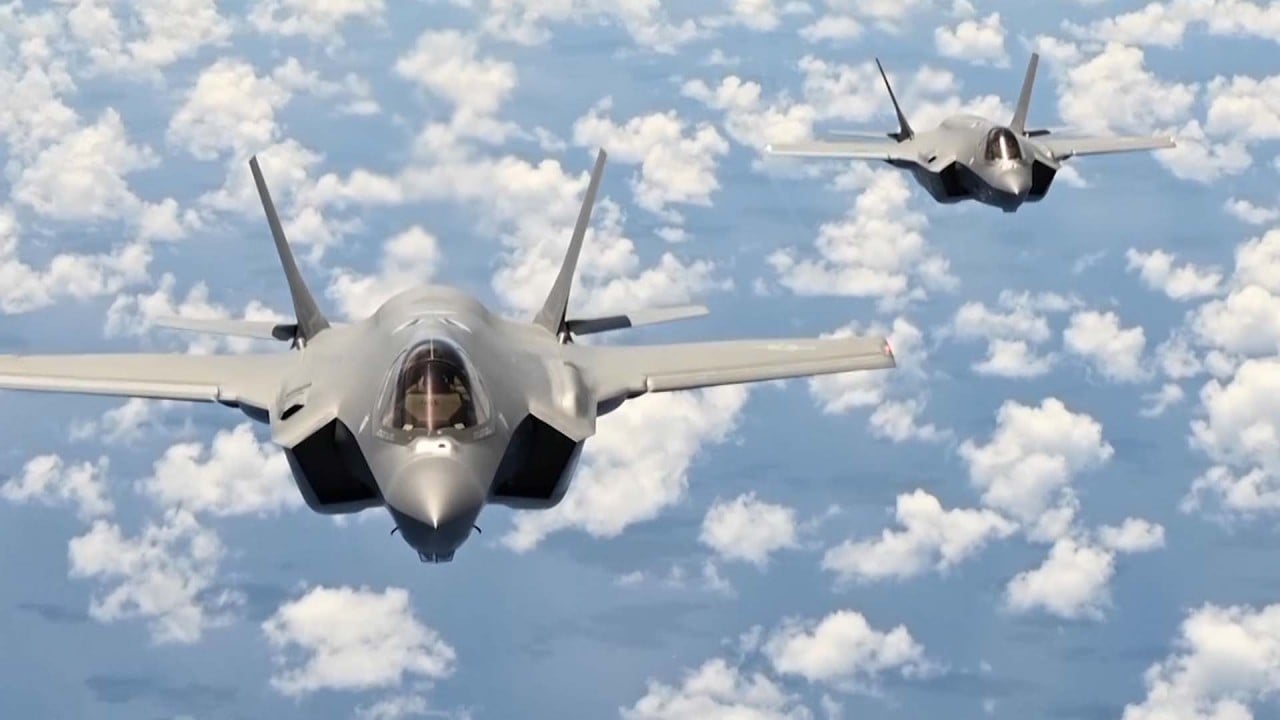


02:11 Autonomous ‘wingman’ drone technology being developed for tomorrow’s ‘Top Gun’ fighter pilots

Existing algorithms for midcourse interceptions are written for conventional missile platforms powered by rocket motors, said Yin and his colleagues in a paper published in the domestically peer-reviewed journal Aerospace Technology on January 1.

If a flight trajectory was planned for an air-breathing hypersonic aircraft using those equations, it could lose control or even crash, they said.
Hypersonic engines, such as a scramjet, rely on high aircraft speeds to compress hot, fast-moving air to ignite fuel in a combustion chamber with no moving components.

The hypersonic aircraft can therefore fly further and more efficiently than rocket-powered missiles since they do not need to carry their own oxygen. In addition, such aircraft are not subject to the yank or roll that rockets undergo, which can significantly alter airflows and choke the engine.

And there are some other mathematical problems, according to Yin.
To accurately predict the course of a hypersonic threat, which not only travels extremely fast but also makes complex manoeuvres, a practical algorithm can require many calculations.

But the on-board computer on the aircraft can provide only a fraction of the resources needed to make such calculations, the researchers said.

Computer simulations suggested the new algorithm developed by Yin’s team tended to chart a flight path that took more time to complete than usual because more constraints needed to be considered.

Still, the calculations were accurate enough to steer the aircraft to within 6.8km (4.2 miles) from the target, well within the kill zone of a kinetic weapon that could be deployed by the aircraft, the paper said.

The flight computers could handle the task easily because the algorithm had significantly simplified the calculation process.

The Chinese team said that their new method was in large part based on the work of David Benson, then a graduate student at MIT. In his PhD thesis completed in 2004, Benson proposed a mathematical solution known as Gauss pseudospectral transcription that could significantly reduce the complexity of flight control for launch vehicles.

Benson now works as a principal member of the technical staff at Charles Stark Draper Laboratory, a leading research institute involved in the development of cutting-edge defence technology, including hypersonic weapons in the US, according to his LinkedIn account.

Yin’s team said that they had also used an algorithm developed by Nasa for its X-33 hypersonic aircraft. Though it was near completion, the X-33 project never took flight and was cancelled in 2001 by Nasa, citing technical difficulties.

In recent years, hypersonic weapon technology has seen rapid development in Russia and China. In response, in 2020, the US military launched the Glide Phase Interceptor (GPI), a programme aimed at building up an effective midcourse air defence system against hypersonic threats.

The huge, complex system includes a new generation of spy satellites that can detect and track a hypersonic missile launched from any location on the planet.

The programme awarded major defence contracts last year to companies like Northrop Grumman and Raytheon to develop ground to air hypersonic missiles based on proven platforms that employ missiles powered by rocket engines.

Critics have said the strategy would be expensive because in a real battle, several hypersonic missiles could be needed to intercept one incoming threat.

Directed energy weapons, such as lasers and high-powered microwaves, can operate with considerably lower cost, but their effective range is limited by weather conditions and the need for large facilities to supply energy.

The Chinese government has invested heavily in the development of air-breathing hypersonic flight technology. Universities are being funded to build and fly prototype aircraft powered by advanced propulsion systems, including scramjet and rotating detonation drive.

Last July, a team with Northwestern Polytechnical University in Xian, Shaanxi province carried out a test flight of a hypersonic aircraft with a scramjet engine powered by low-cost kerosene.

Since then, China’s foreign ministry has accused the US National Security Agency of hacking into the university’s campus network and stealing data related to sensitive technology.

